
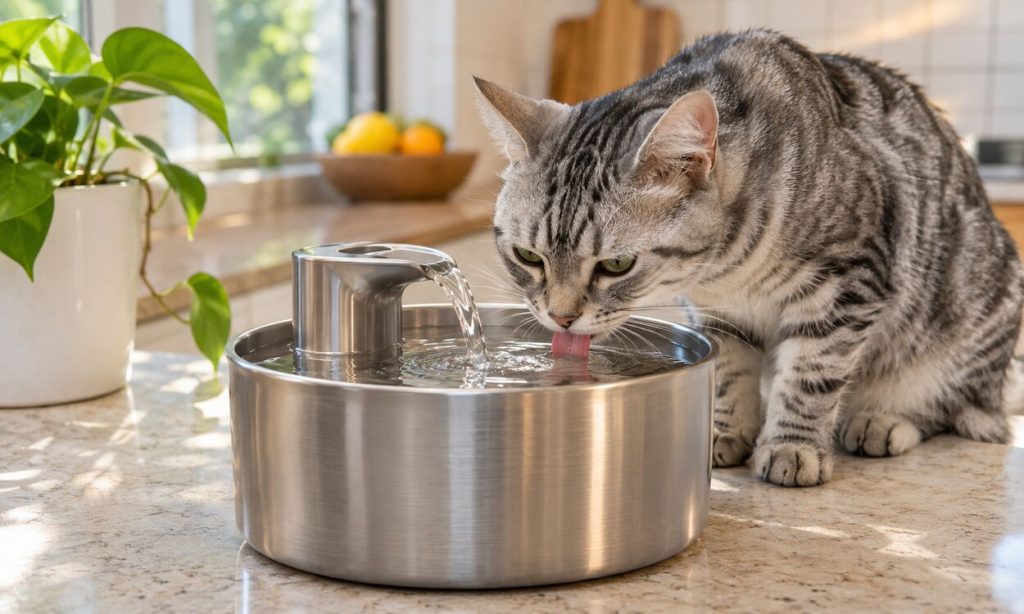
A stainless steel water fountain can make fresh drinking water accessible to a cat, but it is not a permanent appliance. Pumps wear out, tubing collects buildup, and surfaces eventually become hard to clean. The key question is not how many months the fountain has been in use. It is whether the parts still operate safely, remain clean after washing, and offer water your cat will actually drink. A well-maintained fountain may last much longer than a neglected one.
This article explains when to replace a stainless steel water fountain for cats, how to distinguish a minor maintenance issue from failure, and what signs deserve immediate attention. It also covers filters, pumps, electrical safety, and adjustment to a new fountain. If your cat drinks very little, our guide to water fountains for reluctant drinkers gives additional context.
Replace the Fountain When Its Water-Contact Surfaces Cannot Be Cleaned
Inspect the basin, lid, spout, seams, and underside after cleaning and drying. Stainless steel normally tolerates regular washing, but deep scratches, pitting, persistent discoloration, or damaged welds can create rough areas that are difficult to clean. A cloudy film may simply be mineral scale from hard water, which often responds to the manufacturer’s recommended cleaning method. Rust-colored marks that persist, flaking material, or surfaces that feel damaged warrant closer scrutiny and potentially replacement.
Pay particular attention to hidden channels or silicone seals. If grime remains trapped in a place you cannot reach or disassemble, clean water added to the fountain may quickly contact that residue. Do not use harsh metal abrasives that scratch the basin. A fountain that develops sharp edges, broken fittings, or leaking seams should leave service immediately. IMO, a shiny outer shell is not proof that the water path is hygienic; inspect the less glamorous parts too.
Notice Pump Problems Before the Fountain Stops Completely
A circulating fountain relies on an appropriate pump and adequate water level. New rattling, grinding, repeated starting and stopping, weak flow after cleaning, or unusual warmth can signal an issue. First unplug the unit. Follow the manual to check for hair, sediment, and debris obstructing the intake or impeller. Verify that the fountain has enough water and that all removable parts are seated correctly. Never run the pump dry to test whether it is still working.
Sometimes a replacement pump restores function without replacing the entire stainless steel water fountain for cats. That only makes sense if a compatible component exists and the basin, seals, cord, and other parts are in sound condition. Stop using equipment with exposed wiring, a damaged plug, water intrusion into an electrical housing, or repeated tripping of an outlet. Do not improvise a repair with tape or incompatible parts around water and electricity.
Understand Filters, Cleaning, and Replacement Intervals
A filter and a fountain are different maintenance items. Filters may contain mechanical media, carbon, or other materials, and their replacement schedules vary by model. Follow the maker’s specific directions and replace filters sooner if they become visibly clogged or water flow drops. A filter does not disinfect the fountain and cannot substitute for washing the basin and pump housing. Reusing a dirty filter for months can undermine the reason you chose circulating water.
The CDC and FDA advise daily cleaning of pet drinking bowls. For fountains, refresh water frequently, clean water-contact parts thoroughly, and follow any additional disassembly steps in the model’s manual. Use pet-safe cleaning methods, rinse away detergent, and allow parts to dry when appropriate. A fountain with a dead pump can become an ordinary stagnant bowl, so check operation daily. FYI, the cheapest maintenance step is often simply noticing yesterday’s hair and slime before they accumulate.
Distinguish Normal Mineral Deposits From Permanent Damage
Hard water can leave pale rings or chalky deposits on stainless surfaces and plastic pump housings. Those deposits do not automatically mean the metal is ruined. Consult the manufacturer’s guidance about descaling, since components and protective materials differ. Unplug the fountain before cleaning, keep electrical components dry where required, and rinse all surfaces thoroughly afterward. Avoid combining cleaning chemicals or letting cats contact cleaning solutions. If a residue remains, seek the correct cleaning method rather than scrubbing harder.
Persistent odor, slime that returns immediately after thorough cleaning, rough patches that trap debris, or recurring contamination in inaccessible channels may indicate that replacement is the safer practical option. Also inspect silicone pieces for cracking or permanent deformation. Over time, seals can stop seating well, leading to leaks. If the unit cannot hold water reliably, a replacement may be more sensible than repeatedly cleaning a failing assembly.
Watch Your Cat’s Drinking Behavior and Health
A fountain is useful only if the cat can use it comfortably. Notice whether your cat avoids the stream, startles at a new mechanical noise, or begins searching for other water sources. Cats can have individual preferences for bowl depth, location, water movement, and sound. Before replacing a still-safe fountain, see whether a quiet location, adequate water level, or proper cleaning resolves the issue. Keep a separate clean water bowl available so access is never dependent on a single motor.
Changes in drinking or urination need veterinary attention when they are pronounced or persistent. Drinking much more may occur with conditions such as kidney disease or diabetes, while reduced intake during illness raises dehydration concerns. Do not assume a new fountain solves a medical problem. Our guide context on stainless steel cat feeding bowls is a useful reminder that clean, comfortable food and water surfaces matter together.
Choose a Replacement Without Creating a New Problem
If the existing unit must go, identify why it failed. Look for accessible water paths, readily removable components, a stable base, a quiet pump, appropriate electrical protection, and replacement parts compatible with your use. Choose an arrangement that is easy to wash thoroughly; cleaning accessibility often matters more over time than decorative complexity. Verify that the bowl is large enough for the number of cats using it, and that there is no exposed sharp metal or unstable cord placement.
Introduce the new fountain while maintaining a familiar water source. Some cats approach moving water immediately, while others need time to investigate. Allow the animal to examine the switched-off fountain first if needed, then monitor use once running. Avoid placing cords where they can be chewed or pulled. For background on everyday hydration arrangements, our cat water dish considerations may help identify household constraints without replacing daily cleaning.
A Simple Inspection Routine That Extends Useful Life
Each day, check water level, clarity, pump movement, cord condition, and the cat’s normal access to drinking water. Remove visible hair or food debris, replace drinking water, and wash the basin as appropriate. On the model’s advised schedule, unplug and disassemble the pump and channels for deeper cleaning. Record when a filter or pump was last replaced. This avoids mistaking ordinary maintenance needs for a whole-fountain failure.
At a less frequent inspection, look for wear at the base, lid, seams, seals, and electrical fittings. Compare water flow with normal operation, not an imagined standard. If cleaning repeatedly fails to restore safe performance, document the problem and retire the unit. The decision to replace a stainless steel water fountain for cats is best based on hygiene, safe operation, and the cat’s needs—not a calendar date printed by guesswork.
Frequently Asked Questions
Replacement questions often concern one worn part rather than the whole fountain. Identify which component is failing before spending money or returning the equipment to your cat.
Continue to provide clean drinking water in a separate bowl while inspecting or changing equipment. Never leave a pet dependent on an unplugged, empty, or malfunctioning fountain.
How long does a stainless steel cat fountain usually last?
There is no universal lifespan. Durability depends on the pump, design, water quality, cleaning practices, and availability of compatible parts. Replace it based on safety and condition, not an assumed expiration date.
Should I replace the whole fountain when the filter clogs?
Usually not. A filter is a replaceable consumable when the model is designed that way. Clean the water path and install the correct replacement filter on the schedule specified in its instructions.
Is white mineral scale a reason to throw away the fountain?
Not necessarily. Deposits may be removable with manufacturer-approved cleaning. Replace the unit if underlying surfaces remain damaged, inaccessible, or impossible to keep hygienic after proper care.
Can a cat drink from a fountain with a silent pump?
Only if the fountain still offers safe, clean, accessible water. An inactive fountain may hold stagnant water, and a failed motor needs inspection. Keep a separate clean water bowl available.
When is a damaged cord a replacement issue?
Immediately stop using a fountain with a damaged plug, frayed cord, or possible water intrusion into electrical parts. Follow the manufacturer’s service guidance; do not attempt makeshift electrical repairs.
Final Words
Replace a stainless steel water fountain for cats when the basin is damaged, the water path cannot be cleaned, electrical safety is compromised, or compatible repairs no longer restore dependable use. A worn filter alone usually means replacing the filter, while an accessible failed pump may be serviceable. Consult the product’s manual rather than assuming one schedule fits all designs.
Keep the fountain clean and watch your cat’s drinking habits. Early maintenance often extends safe use, but retirement is sensible when continued operation creates more risk than benefit. A simple clean bowl remains an important backup, even in a home with an otherwise reliable fountain.









