
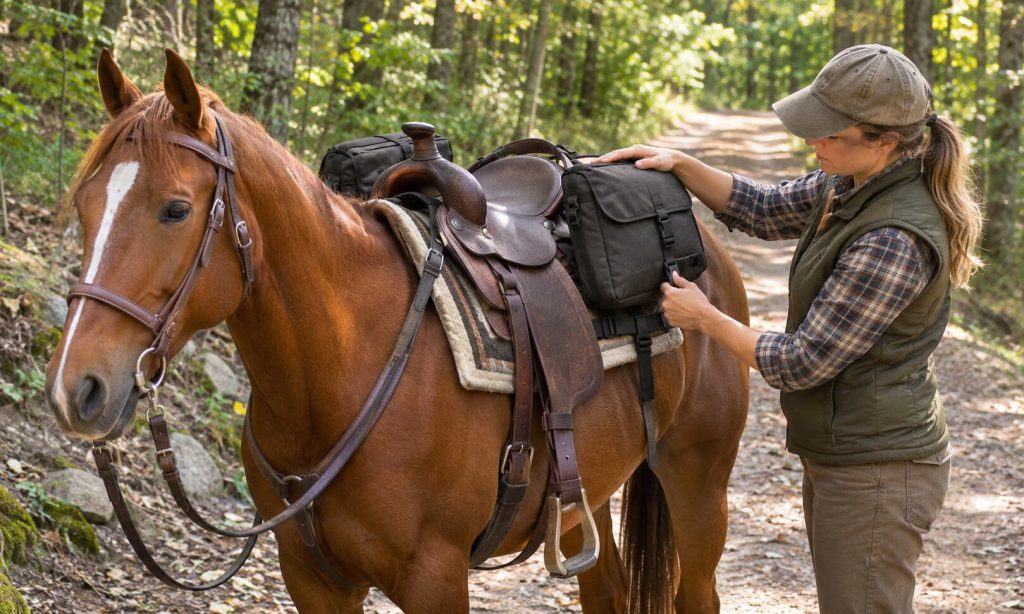
Learning how to compare insulated saddle bags for horses by fit and use starts with your actual trail routine. These bags can help organize food, cold drinks, and small essentials during a ride. Yet storage space means little if a bag swings, presses against a horse, or interferes with saddle equipment. Insulation is only one consideration. Attachment style, load balance, access, weather resistance, and cleaning all affect whether the setup works.
This guide explains how to assess those practical differences without assuming that one design fits every saddle. The best insulated saddle bags for horses article gives background on common formats, while this guide focuses on the checks behind a sound decision. Think about what you carry, how far you travel, and what your horse tolerates. A secure modest load is more useful than a large cooler that shifts on every turn.
Start With Your Saddle and Riding Discipline
The first step in how to compare insulated saddle bags for horses by fit and use is identifying where the bags will attach. Western and English saddles offer different structures and available attachment points. Some bags are intended for a saddle’s rear ties or rings, while others sit near the pommel. A design that looks convenient in a catalog may not fit your particular saddle without modifications.
Check the actual straps, rings, hardware, and clearance. Do not rely only on a broad label such as “universal fit.” The added load must not pull the saddle out of balance or interfere with the rider’s seat, stirrups, reins, girth, or other tack. Utah State University Extension emphasizes the importance of a saddle that fits horse and rider. Adding carrying equipment should not compromise that foundation.
Map Available Attachment Points
Lay the empty bags alongside the saddled horse before packing. Locate secure designed attachment points and trace where each strap would travel. Keep loose ends away from legs, brush, and moving tack. Do not knot equipment to fragile fittings or improvise hardware without guidance. If the bags push against the flank or bounce against the seat, the shape or mounting position may be unsuitable.
Compare Insulation Against the Actual Trip
When deciding how to compare insulated saddle bags for horses by fit and use, ask what temperature-sensitive items you really need. An insulated compartment can slow temperature change for a period, but it is not an electric refrigerator. Performance depends on starting temperature, ambient heat, sun exposure, openings, contents, and how often you unzip the compartment. Avoid treating an advertised cold-time claim as a guarantee for every trail.
Insulation also occupies space and adds some bulk. For a short cool-weather ride, a smaller easy-access compartment may be adequate. For a long hot-weather outing, planning safe drinking water and food handling becomes more important. Perishable food should be managed under appropriate food-safety practices rather than assumed safe because the bag feels cool. Keep ice packs enclosed to prevent leakage into tack.
Check the Liner, Seams, and Closure
Inspect whether the lining is intact and simple to wipe. Seams, zippers, and openings can let warm air in or moisture out. A water-resistant exterior is not necessarily a waterproof internal compartment. Ask how the bag handles condensation and whether the liner can dry fully. Avoid relying on storage that requires frequent tipping, because spills can soak the horse’s tack or the bag’s padding.
Plan for Realistic Access on the Trail
Consider whether items can be reached during a safe stop without unloading the entire arrangement. Heavy items buried far from the attachment point may encourage shifting. Do not reach behind the saddle or twist dangerously while riding to open a cooler. Stop in a safe area, control the horse, and retrieve the item then. FYI, a handy zipper is less useful if reaching it requires circus-level flexibility.
Balance Weight and Protect Your Horse’s Back
How to compare insulated saddle bags for horses by fit and use includes the weight of the contents, not just the empty bag. Fill comparable left and right compartments evenly when the design uses a pair. Pack heavier items low and securely so they cannot swing. Avoid placing rigid objects against the horse or saddle panels. Weight carried behind the seat can affect the rider’s and horse’s balance.
How to compare insulated saddle bags for horses by fit and use also requires observing the actual load. A horse’s acceptable overall load depends on body size, condition, work, terrain, rider, tack, and other factors. Do not use a universal bag-weight rule as permission to overload an individual animal. If the saddle already feels unstable or the horse has back soreness, ask a qualified fitter or veterinarian before adding equipment. Our horse saddle bag format overview explains additional placement styles.
Perform a Low-Stakes Test Ride
Start with the bags empty or lightly packed in a controlled environment. Have someone observe whether the attachment stays centered while the horse walks and turns. Add normal items gradually, keeping their weight balanced. Stop if the horse reacts to swinging or noise, or if straps begin loosening. A successful short test does not guarantee suitability on steep, rocky, or brushy terrain.
Match Capacity, Organization, and Weather Resistance
What makes a good option depends on the ride. University of Missouri Extension’s trail riding checklist includes saddlebags alongside horse, rider, and campsite essentials. Use a checklist to decide what truly needs to be carried on the horse and what belongs elsewhere. Emergency supplies, water, and basic horse-care items deserve priority over filling every available pocket. Do not add bulk just because a bag has room.
How to compare insulated saddle bags for horses by fit and use also means checking pocket shape and closure reliability. Small items should remain organized and secured. Large insulated compartments may suit drinks or snacks, while separate dry pockets protect supplies that cannot get wet. Note whether the material sheds rain, holds mud, or becomes heavy when saturated. In wet weather, inspect seals and consider additional protected packaging for sensitive supplies.
Consider the Route and Duration
A short arena outing may need no saddlebag at all. A day trail ride requires more deliberate planning for weather, safe hydration, and unforeseen delays. A remote route may call for supplies beyond a small cooler’s capacity. Always plan communications and emergency arrangements separately. Check trail rules, forecast, horse fitness, and available water before deciding on what to pack.
Choose Durability That Can Be Inspected
Look at stitching, reinforced corners, strap mounts, buckles, and zipper movement. A worn attachment is a risk even if the insulating liner remains sound. Avoid sharp clips or loose metal ends that could rub the horse. Check abrasion after the first rides and after passing through brush. Durability should mean reliable function under your conditions, not merely thick fabric.
Cleaning and Storage Are Part of the Comparison
How to compare insulated saddle bags for horses by fit and use should include what happens when the ride ends. Empty the compartments promptly. Clean food residue and spilled liquids according to the fabric’s instructions. Dry the interior fully before closing it for storage. Moisture trapped behind insulation may cause odor or material damage. Keep the bags away from intense heat that could harm adhesives and liners.
When considering how to compare insulated saddle bags for horses by fit and use, count the ease of cleaning as a genuine feature. Check mounting straps and stitching during every cleaning session. Replace damaged fasteners before the next trip. The guide on cleaning saddle bags for horses covers regular maintenance in more detail. An easy-to-clean shape is often a sensible choice for owners who ride frequently and carry food or water in mixed weather.
Build a Short After-Ride Checklist
Remove contents, check for leaks, wipe the liner, clear trail dirt from closures, and air-dry. Confirm that both left and right bags retained their shape. Inspect attachment points for rubbing or unusual wear. Keep a note of any item that shifted, leaked, or was difficult to access. That record can inform a future fit change more reliably than remembering only the color or size.
Frequently Asked Questions
Insulated saddle bags combine ordinary storage with temperature-sensitive contents. The important tradeoffs involve comfort, stability, access, and realistic insulation performance. These answers address frequent trail-riding concerns.
Always preserve the saddle’s safe fit and the horse’s ability to move freely. If an attachment creates rubbing, distress, or persistent imbalance, remove it and reassess the setup.
Do insulated saddle bags keep food cold all day?
Not reliably. Temperature retention varies with weather, contents, insulation, and openings. Use appropriate food-safety practices for perishables.
Can I attach any saddle bag to an English saddle?
No. Compatibility depends on saddle design and secure attachment points. Avoid improvised mounting that interferes with tack or balance.
Should both bags carry exactly the same items?
Not necessarily, but keep weight reasonably balanced and tightly secured. Check how the complete load behaves during movement.
Are waterproof and insulated the same thing?
No. Insulation slows heat transfer, while water resistance addresses moisture. Check each feature separately instead of assuming one implies the other.
When should I replace insulated saddle bags?
Reassess them when straps fail, stitching tears, closures cannot secure contents, or liners leak or cannot be cleaned properly.
Final Words
How to compare insulated saddle bags for horses by fit and use comes down to fit first, secure load distribution, useful storage, realistic insulation, and simple maintenance. Match the equipment to the actual saddle and ride. Test attachment with a calm horse before carrying a full load. A large pocket is no advantage if it swings, rubs, or crowds other tack.
For information about available layouts, see the best insulated saddle bags for horses overview. Then check your own attachment points, packing list, and trail conditions. How to compare insulated saddle bags for horses by fit and use is ultimately a practical comfort and safety decision, not a search for the biggest cooler.









