
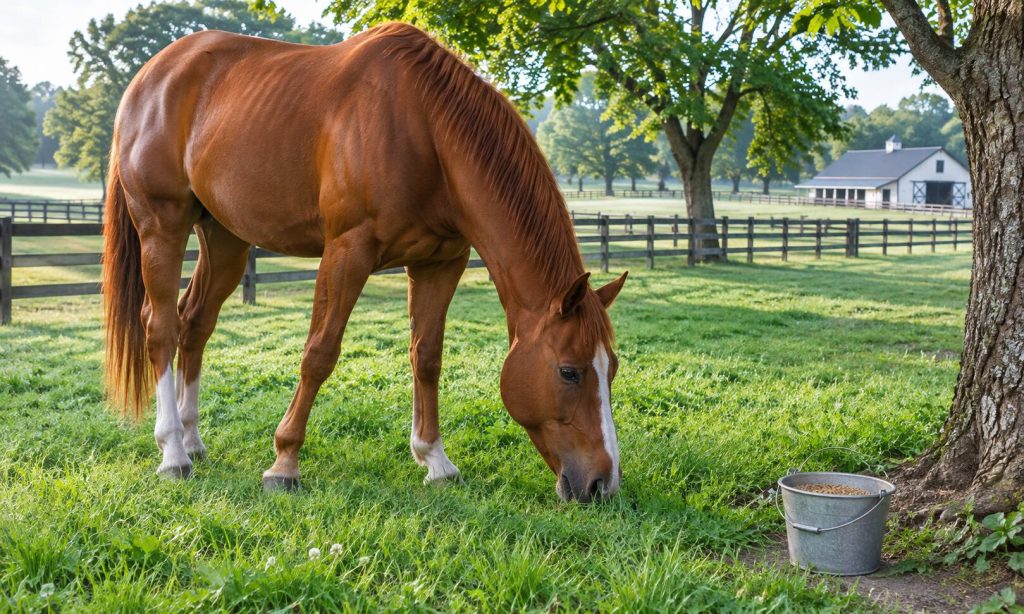
Learning how to use and care for natural vitamin E for horses starts with a question: does your horse actually need more? Vitamin E helps protect cells from oxidative damage and is involved in normal nerve and muscle function. Fresh green pasture can contribute this nutrient, but access and dietary supply vary. A supplement may be appropriate in some circumstances, yet too much guesswork can distract from a real nutritional or medical problem.
This guide explains natural vitamin E terminology, how to review a horse’s ration, safe administration practices, storage, and when veterinary testing matters. The phrase best natural vitamin E for horses is not a substitute for an individualized plan. Start with forage, existing fortified feeds, workload, age, and health. A veterinarian or equine nutrition professional can help decide whether extra vitamin E is warranted and how to monitor it.
Understand What “Natural Vitamin E” Means
How to use and care for natural vitamin E for horses involves reading beyond the word “natural.” Vitamin E is a family of compounds, and supplement labels may describe alpha-tocopherol in different forms. American Association of Equine Practitioners proceedings discuss the natural RRR-alpha-tocopherol form and its biological availability. However, a technical name on a label does not by itself establish that your horse requires supplementation.
Compare the stated form, amount, and directions with a complete ration assessment. Do not assume all formulations with similar front-label wording deliver the same amount of usable nutrient. Ask a veterinarian to interpret the label if it is unclear. Check whether the horse already receives a ration balancer, fortified concentrate, or other vitamin products. Several overlapping supplements can make total intake difficult to track.
Review the Whole Feeding Program
University of Minnesota Extension recommends choosing vitamin and mineral supplementation that complements existing feed. List the horse’s hay, pasture access, concentrates, and supplements. Note the weight or measured portion of each. Forage quality and time since harvest can influence nutrient supply. The goal is to identify a genuine gap, not to add a product because it appears popular.
Ask About Testing Before Choosing a Dose
How to use and care for natural vitamin E for horses safely begins with veterinary guidance when deficiency or neurological disease is suspected. Clinical assessment and appropriate laboratory testing may be needed. Vitamin E status is not determined by coat shine or a single photograph. The veterinarian can interpret blood results in the context of the horse’s signs, diet, age, and possible underlying conditions.
Some neurological and neuromuscular disorders are associated with inadequate vitamin E status, but their causes and diagnostic pathways differ. Do not use a supplement as a home diagnostic test. If your horse develops weakness, abnormal gait, muscle wasting, stumbling, or unexplained performance decline, contact a veterinarian promptly. Delaying assessment may allow a serious condition to progress, regardless of what supplement is being considered.
Avoid Universal Serving Rules
A single daily amount cannot be inferred safely from weight alone in every situation. Requirements and veterinary treatment protocols depend on diet, health, exercise, and the reason for supplementation. Follow the veterinarian’s exact plan and the actual product directions. Never double a serving to compensate for a missed day without advice. Use a consistent measuring method so different caregivers do not accidentally administer different amounts.
Introduce an Approved Supplement Carefully
When a professional recommends supplementation, how to use and care for natural vitamin E for horses becomes a matter of consistency and observation. Record the product’s exact ingredient form, stated concentration, recommended amount, lot number, and start date. Introduce it in the manner specified for that formulation. Do not assume that a powder, liquid, and pellet can be exchanged at equal scoop volumes.
Watch whether the horse eats the complete portion and whether its overall appetite or behavior changes. Some animals reject unfamiliar textures or odors. If a supplement is left behind, do not guess how much was consumed. Discuss the problem with the veterinarian or nutrition professional. Never conceal a large amount of unfamiliar supplement in feed to force consumption without understanding its suitability.
Use a Clear Feeding Record
Keep a simple daily record that includes date, amount as instructed, method of delivery, and any important observations. If multiple people feed the horse, use one shared log. The record can prevent accidental duplicate servings and help explain changes during follow-up. For context on other nutrients, our horse vitamin comparison guide explains the broader role of a balanced ration.
Do Not Rely on Supplements to Treat Symptoms
Vitamin E may be relevant to certain diagnosed conditions, but it does not treat every cause of muscle loss, weakness, or poor movement. Appropriate veterinary care can include examination, testing, nutrition planning, and other treatment. A horse showing new neurological signs should not wait for a package to arrive. If you notice severe weakness or difficulty standing, seek urgent veterinary help.
Store Vitamin E Safely and Check Its Condition
How to use and care for natural vitamin E for horses also means protecting the supplement after purchase. Follow the label’s storage temperatures, moisture precautions, and expiry guidance. Keep containers tightly closed and in a clean area away from direct sunlight and extreme heat. Do not use a damp feed room as long-term storage if the formulation requires dry conditions. Keep all supplements out of reach of animals and children.
Knowing how to use and care for natural vitamin E for horses includes keeping handling tools clean. Use a clean, dry scoop and avoid transferring contents into an unlabeled container. When you retain the original packaging, you also keep the serving instructions, batch number, and expiry date. Discard products with changes suggesting contamination, damaged seals, or uncertain identity. Do not assume a powder that has become wet or clumped remains suitable. Ask the manufacturer or veterinarian when product stability is unclear.
Pay Attention to Expiration and Handling
Use the recommended storage period after opening when one is provided. Never combine old and new batches in one unlabeled tub. Keep the feeding area clean and prevent contact with manure, chemicals, pesticides, or dirty tools. If the supplement is stored near equipment used for other species, clearly separate it to prevent confusion. A tidy, documented process helps more than relying on memory.
Monitor Results Without Assuming a Cure
How to use and care for natural vitamin E for horses includes agreed follow-up, especially when supplementation responds to a confirmed deficiency. Ask the veterinarian whether repeat testing is appropriate and what changes should be monitored. Depending on the situation, the plan may involve blood measurements, neurological assessment, or a broader diet review. Do not interpret improved coat appearance as proof that a neurological condition has resolved.
The answer to how to use and care for natural vitamin E for horses may change with the ration and medical plan. If the horse’s feeding, pasture access, or medical condition changes, reassess the entire plan. A fixed serving may no longer match current needs. University research and veterinary guidance emphasize that diet should be considered as a whole. Our weight and body-condition tracking guide can support general records, although it cannot replace specialized vitamin E assessment.
When to Stop and Ask for Help
Contact the veterinarian if the horse develops new weakness, stumbling, abnormal behavior, weight loss, or other concerning signs. Report any suspected dosing error rather than quietly adjusting future servings. Keep the product label available for the call. For an ongoing medically directed plan, do not discontinue or change the amount without discussing the reason and the next steps.
Frequently Asked Questions
Vitamin E discussions can become confusing because labels describe different forms and concentrations. These questions highlight why an individualized feeding plan matters more than a generic “natural” claim.
The answers are educational and do not prescribe treatment. If your horse has neurological or muscle symptoms, veterinary assessment should take priority over self-directed supplementation.
Does fresh pasture provide vitamin E?
Fresh green forage can provide vitamin E, but actual intake and nutritional needs vary. Ask for a ration review when supply is uncertain.
Is natural vitamin E always better for every horse?
Different forms have different characteristics, but the appropriate choice depends on the animal’s diet, condition, and veterinary plan.
Can I diagnose vitamin E deficiency from coat condition?
No. Coat appearance is not a reliable diagnostic test. The veterinarian may use an examination and appropriate laboratory tests.
Should I give extra vitamin E after hard exercise?
Not automatically. Exercise affects nutritional planning, but an additional dose should have a specific professional rationale.
What should I do after an accidental double serving?
Contact your veterinarian with the product name, concentration, amount, and horse’s details. Do not improvise a corrective dose.
Final Words
How to use and care for natural vitamin E for horses is about a justified need, accurate formulation, careful administration, and reliable follow-up. Natural does not mean unlimited or universally necessary. Review forage and existing fortified feeds first, especially when a veterinarian is investigating possible deficiency. Keep a feeding record and store the supplement under its stated conditions. A search for the best natural vitamin E for horses should begin with the veterinarian’s assessment, not a claim of universal benefit.
If you want background on available forms, our vitamin E supplement format overview for horses discusses common distinctions without replacing medical advice. How to use and care for natural vitamin E for horses should always remain part of an individualized plan, particularly when muscle or neurological signs are present.
Reference
These veterinary and university resources informed the explanation of vitamin E forms, deficiency considerations, and balanced equine nutrition. They do not establish a universal supplement dose.
A veterinarian should interpret suspected deficiency and any medical treatment plan for the individual horse. Use current clinical advice rather than treating a source excerpt as a prescription.









