
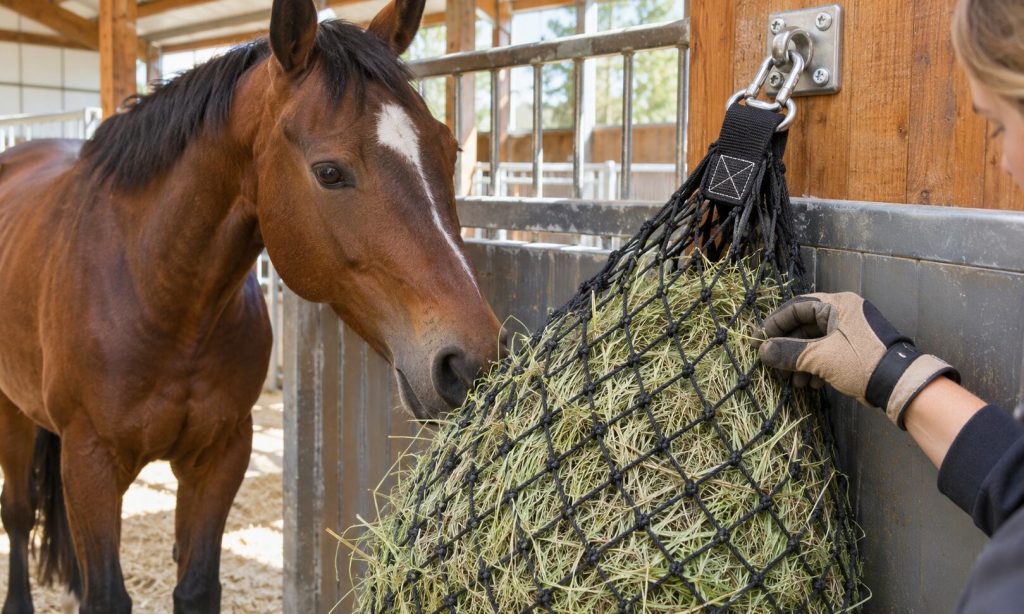
When should you replace a slow feeder hay net for horses? Replace it when wear, damage, contamination, or unreliable attachment makes safe use doubtful. Hay nets take repeated pulling, moisture, dust, and contact with teeth or hooves. A net that looked sturdy at the beginning of the season may develop stretched openings, broken knots, or frayed suspension points. These defects can change how horses reach forage and introduce snagging risks.
This guide explains the signs worth watching, how to inspect netting and fasteners, and what to do when you find a problem. Our best slow feeder hay net for horses related guide reviews feeding formats, but replacement should be decided from the condition of your actual setup. No calendar date guarantees safety. Daily observation and prompt action are more useful than waiting for an obvious break.
Replace Nets With Damaged Mesh or Knots
When should you replace a slow feeder hay net for horses if the mesh begins unraveling? Treat broken or opening knots as a serious warning. Gaps can widen under feeding pressure and change how a muzzle or hoof interacts with the net. Loose strands can also dangle. Do not assume a single improvised knot restores the original design or strength.
For anyone asking when should you replace a slow feeder hay net for horses, a full mesh inspection is the clearest starting point. Inspect the full net after emptying it. Look for frayed fibers, holes, uneven stretching, broken stitching, and areas that have become thin or stiff. Compare damaged sections with intact mesh. If the shape or integrity cannot be restored according to the maker’s safe instructions, take the net out of service. Keep horses away from loose cords while you remove equipment.
Watch for Enlarged Openings
Small-hole nets are designed to affect how quickly horses obtain hay. University of Minnesota Extension research found that different net opening sizes changed feeding time and intake in a controlled study. A stretched net may no longer perform as intended. More importantly, damaged openings can create unexpected snag points. Check the entire surface rather than judging only the first few rows of mesh.
Avoid Risky Quick Repairs
String, wire, tape, and improvised clips may introduce abrasive edges or loose loops. A repair that holds while the net is empty may fail when a horse pulls hay. Follow written manufacturer instructions for replaceable parts, if offered. If there is no approved repair, replace the net. You should never test a questionable repair while an animal is actively feeding.
Check Hangers, Straps, and Mounting Hardware
When should you replace a slow feeder hay net for horses because of its attachments? A failing suspension point can make an otherwise intact net unsafe. Check rings, straps, clips, knots, and the fixed mounting surface. Rust, sharp edges, loose bolts, and cracked hardware require attention. A net that slides down or swings far beyond its intended position can become accessible to hooves or other tack.
Inspect the mounting point separately from the netting. If the anchor is loose, correct the structural problem before using any net. A new net cannot compensate for damaged fixtures. Choose a placement recommended for the specific net and stable situation, with attention to the horse’s height, feeding behavior, and possible entanglement. Your safety check should include what happens when the net becomes nearly empty.
Notice Changes in How the Horse Uses It
A horse that paws at the net, pushes against it, or pulls aggressively may expose weak points quickly. Watch behavior without encouraging risky interaction. If the horse repeatedly catches a halter or equipment, stop use and rethink the whole station. Some horses may need another forage delivery method. No feeding gadget is worth an avoidable entanglement risk.
Consider Moisture, Mold, and Persistent Odor
When should you replace a slow feeder hay net for horses after bad weather? Remove it for inspection when it has remained damp, collected spoiled hay, or developed a persistent odor. Washable nets should be cleaned only according to their materials and care instructions. Let them dry completely before filling. If discoloration, residue, or odor cannot be removed safely, replacement is prudent.
Damp conditions can affect both forage quality and equipment. Never use a net to conceal moldy hay. Remove unsuitable forage and correct leaks, drainage, or storage problems. A fresh net placed back in the same wet spot may deteriorate just as quickly. Our horse hay-net cleaning guide describes routine care steps that can make deterioration easier to spot.
Know the Difference Between Stains and Damage
A harmless-looking stain alone does not always mean the fibers have failed. Equally, a clean appearance does not prove strength. Examine the texture and structure, not only the color. Discard material that has become brittle, cracked, or weakened. Avoid harsh chemicals that could damage fibers or leave residues around hay. Consult the maker when the cleaning method is unclear.
Reassess Fit and Feeding Behavior as Needs Change
When should you replace a slow feeder hay net for horses even when it looks intact? Reconsider the design if the horse can no longer eat comfortably or access enough suitable forage. Dental changes, age, mobility limitations, illness, or group competition may alter what works. The net’s original opening size may not suit the current animal. A veterinarian or qualified equine nutrition professional can help when feeding adequacy is uncertain.
Slow feeding is not a goal at the expense of nutrition. University research shows that smaller holes can change feeding time, but every horse still needs adequate hay. Monitor intake and body condition rather than assuming that slower always means better. A new net may need a different size, design, or location, or the horse may need an entirely different feeder. The hay-net fit and use comparison guide explains those broader choices.
Observe a New Setup Before Leaving It Unattended
Install the replacement following its instructions and inspect secure attachment. Watch the horse access hay at the beginning and near the end of the fill. Ensure there are no long loose loops or moving hardware that could trap a foot or halter. If multiple horses share the area, observe whether one blocks another. Adjust the feeding arrangement before making it routine.
Make Inspections Part of Daily Barn Care
When should you replace a slow feeder hay net for horses is easier to answer when you notice small changes early. Check the structure as you refill hay. Run your eyes over the mesh, corners, seams, and attachments. Remove wet leftovers and check whether the net hangs at its intended height. At regular intervals, empty it and inspect areas hidden by hay.
When should you replace a slow feeder hay net for horses is a question worth asking during each refill, not only after failure. Keep a spare clean net or an alternative safe forage arrangement available when practical. If the current net must be removed, a horse still requires an appropriate feeding plan. Do not leave forage unavailable because a replacement has not arrived. Our guide to storing slow hay feeders for horses offers related maintenance and storage context.
Use a Simple Replace-or-Keep Decision
Ask four questions: Are the fibers and knots intact? Is the mounting secure? Is the net clean and dry enough for its intended use? Can the horse feed safely and adequately? Any uncertain safety answer calls for removal and closer inspection. FYI, waiting until the net reaches “obvious fishing net” condition is not a sensible maintenance schedule.
Document Recurring Problems
Note where wear appears, how long the net has been in service, and whether the horse uses it roughly. Repeated damage at one attachment point may indicate placement problems rather than poor luck. A record helps identify patterns and prevents the same issue after replacement. Avoid assuming a particular lifespan without considering daily use and exposure.
Frequently Asked Questions
There is no universal replacement date for every slow-feed hay net. Wear depends on fiber, attachment, location, cleaning, and the horse’s feeding behavior. These questions focus on practical warning signs.
If a net has loose cords or damaged hardware, remove it before the next feeding. Ensure the horse still has a safe way to receive appropriate forage while you inspect or replace equipment.
Should I replace a hay net after one broken knot?
Remove it from service. Follow only a maker-approved repair, if available; otherwise replace it. An improvised knot may not restore strength.
Can a stretched hay net still be useful?
Not if stretching changes intended openings, creates snag risks, or makes the setup unstable. Reassess the complete net and mounting.
Does a bad smell mean replacement?
Persistent odor after proper cleaning and drying is a concern. Remove contaminated material and correct the damp conditions causing it.
Is a small-hole net suitable for every horse?
No. Feeding ability, dental status, intake, and safe placement vary. Review individual needs with a qualified professional.
Can I use a hay net with a horse wearing a halter?
Entanglement risk requires careful management. Follow stable-specific safety guidance and avoid any arrangement where halter hardware can snag.
Final Words
When should you replace a slow feeder hay net for horses? Act when mesh is damaged, attachments fail, contamination persists, or the horse’s needs outgrow the setup. Inspect before refilling, watch how the net hangs as it empties, and correct wet or crowded feeding areas. No calendar lifespan replaces hands-on checks and horse-specific observation. Even the best slow feeder hay net for horses must be retired when safety checks fail.
If you are considering another format, our slow-feeding hay net overview for horses explains the basic choices. When should you replace a slow feeder hay net for horses is ultimately a safety decision: if you cannot trust the material, mounting, cleanliness, and feeding access, remove the old net and use a safer arrangement.









