
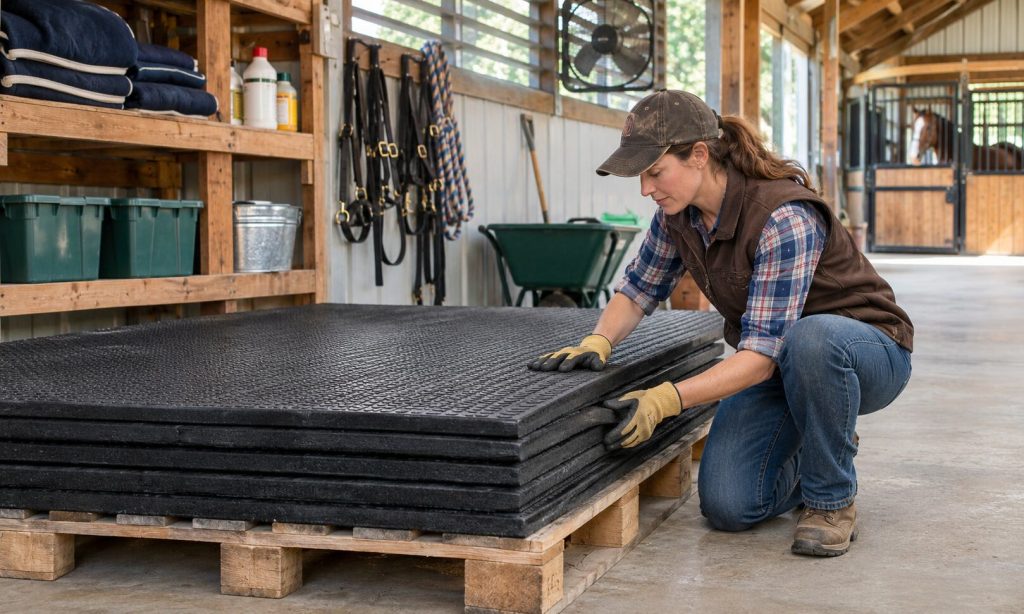
Knowing how to store stall mats for horses safely matters whenever a barn replaces flooring, renovates stalls, or keeps spare mats for later use. Thick rubber mats can be heavy, awkward to move, and slippery when wet. A stack placed in the wrong location can block an exit, collect moisture, or tip toward people and animals. Some mats also curl or deform if stored contrary to the maker’s directions.
This guide explains how to clean, dry, move, stack, and inspect removable horse stall mats before returning them to service. Our best stall mats for horses overview discusses flooring characteristics, while this article focuses on safe storage and handling. Plan the space before lifting anything. Keep horses out of the work area and enlist help when a mat is too heavy or unwieldy for one person.
Choose a Dry, Stable Storage Area
How to store stall mats for horses safely begins with the floor beneath the stack. Choose a level, solid, well-drained area away from horse traffic and routine vehicle movement. Do not place mats where they obstruct stall doors, fire exits, feed routes, or access to emergency equipment. Avoid wet corners that encourage odor, grime, or material deterioration.
A low, stable platform can help keep clean mats off a damp floor when its load capacity is suitable. Confirm the pallet or support cannot collapse or tip. Keep the pile low enough to remain stable and easy to handle. Never use an improvised tall stack that could fall when someone removes the top piece. If your storage area floods seasonally, move mats before the wet period.
Protect Against Sunlight and Temperature Extremes
Follow the specific material’s temperature and exposure guidance. Some rubber and composite materials change properties with prolonged heat or weathering. Avoid storing mats next to heaters, open flames, or chemical containers. A shaded ventilated utility area is often easier to manage than an exposed pile. Do not assume a mat designed for a stall floor is automatically suitable for permanent outdoor storage.
Clean and Dry Mats Before Stacking
One overlooked part of how to store stall mats for horses safely is removing bedding, manure, mud, and urine residue first. Scrape off loose debris with an appropriate tool, then clean according to the mat maker’s instructions. Use care with strong chemicals that could damage the surface or leave irritating residues. If disinfection is required by a barn’s veterinary biosecurity plan, use a material-compatible method and follow the stated contact time.
Rinse or wipe as directed, and allow every surface to dry before placing mats together. Trapped moisture can create odors and make layers harder to separate. Pay attention to textured grooves and the underside, not only the visible top. If a mat remains slimy or has deep contamination that cannot be safely removed, ask whether reuse is appropriate rather than hiding it in the middle of a stack.
Inspect Edges and Interlocking Sections
Look for torn corners, missing tabs, cracked seams, or unusually worn areas before storage. A small damaged edge may catch on another mat during handling. Record any defect and separate questionable pieces from those ready for reuse. Penn State Extension notes that stall flooring should provide durability, slip resistance, and manageable sanitation. Storage should preserve those useful properties, not conceal damage.
Move Heavy Mats Without Creating an Injury Risk
How to store stall mats for horses safely also requires a lifting plan. Rubber mats can be heavier than their flat shape suggests, and broad sheets are awkward to grip. Check the manufacturer’s stated weight where available. Use appropriate gloves, clear the path, and remove clutter before moving a mat. Ask for a second handler or mechanical assistance when necessary.
Avoid twisting while carrying a heavy, flexible sheet. Keep the load controlled and move slowly over dry, clear footing. Occupational Safety and Health Administration guidance on material handling highlights the importance of reducing manual lifting demands and maintaining safe work surfaces. Do not drag mats across sharp objects or leave a partially moved sheet where it becomes a trip hazard.
Do Not Rush the Handling Setup
Measure doorways and corners before moving a large mat through a barn. Keep children, visitors, and horses away from the route. Use a suitable cart or lifting aid if one is available and rated for the load. Stop if the mat folds or starts slipping uncontrollably. FYI, a mat that is easy to slide across the floor can still be far too awkward to lift safely.
Stack Flat or Roll Only as Directed
When learning how to store stall mats for horses safely, find out whether the specific mat may be rolled. Thick interlocking rubber panels may be intended to remain flat. Forcing a tight roll can distort material, damage edges, or create a springing hazard when the mat is released. Do not bind a rolled mat with improvised cords that could fail unexpectedly. Follow the maker’s permitted storage method.
For mats designed to be stacked, align them on a firm support and keep the edges within the base. Avoid mixing very large and small pieces into an unstable tower. Never lean a heavy sheet upright where it can fall on a person or horse. If the maker allows rolling, secure and handle it with the specified equipment. Do not place heavy objects on a curled edge to force it flat.
Label Sizes and Keep Matching Sets Together
How to store stall mats for horses safely also includes labeling pieces before they disappear into storage. Record mat dimensions and interlocking patterns so replacement pieces can be found without lifting the entire stack. A simple written inventory may prevent unnecessary handling. Keep damaged mats separately marked for inspection or disposal. If two stalls use different floor layouts, note which pieces belong together. A tidy storage system saves time while preserving safe access.
Reinspect Before Reinstalling in a Horse Stall
How to store stall mats for horses safely has a second stage: confirming they are fit for use when retrieved. Inspect both surfaces, edges, and underside for cracks, warping, persistent contamination, or damage during storage. A mat that slides or curls can create a trip or hoof-catching risk. Do not install a visibly defective piece just to finish a stall quickly.
Check the underlying stall floor and drainage before putting mats back. Penn State Extension’s horse stall design guidance emphasizes slip resistance and appropriate flooring characteristics. If water accumulates underneath, correct the source of moisture and follow proper installation practice. Cleaning a mat cannot solve an ongoing drainage failure. Ensure the finished floor lies stable and does not create raised corners.
Remember Bedding and Horse Comfort
Rubber flooring may support a stall setup, but it does not automatically replace suitable bedding or routine sanitation. Observe whether the horse stands, turns, and lies down comfortably after installation. Inspect seams and corners during normal mucking out. If mat movement, odor, or new discomfort appears, reassess the floor and stall management before carrying on.
When Storage Conditions Change
How to store stall mats for horses safely should be reviewed when a barn changes layout, stores chemicals nearby, adds equipment, or experiences flooding. A once-convenient corner may become a fire-access obstruction or a crowded work route. Keep stored materials separated from feed, hay, and veterinary supplies when contamination is possible. Revisit both the area and handling plan at the start of each season.
For rubber flooring used in transport, different securing and handling needs may apply. Our horse-trailer rubber mat overview discusses a separate environment where slip resistance and weight also matter. Do not assume a trailer mat and a stall mat have identical fit, anchoring, or storage instructions. Follow the exact material’s directions.
When to Discard a Mat
Remove mats that cannot lie safely flat, have dangerous broken edges, or retain contamination that prevents hygienic use. Ask local waste services about appropriate disposal or recycling routes; do not burn rubber or abandon it outdoors. A mat’s apparent thickness does not guarantee it remains structurally suitable. Replacement is safer than leaving an unstable panel under a horse.
Frequently Asked Questions
Horse stall mats vary in material, thickness, weight, and construction. The exact storage method should reflect those properties and the maker’s directions. These answers cover common barn situations.
Whenever movement or stacking exceeds your ability to control the load, use appropriate help or equipment. Keep horses and bystanders out of the area until storage is complete.
Can I leave stall mats outside all winter?
Only if the material is rated for that exposure and the storage area is safe. Prefer dry, stable storage where possible.
Should I roll thick interlocking mats?
Not unless the manufacturer permits it. Some thick panels should remain flat to avoid damage or dangerous spring-back.
How high can I stack rubber stall mats?
No universal height is safe. Use a stable support, consider total weight, and keep the stack low and manageable.
Must mats be completely dry before storage?
Yes, whenever the care guidance calls for dry storage. Trapped moisture can encourage odor and make inspection harder.
What if stored mats have curled edges?
Do not reinstall them until fit and safety are assessed. Follow manufacturer guidance rather than forcing damaged edges flat.
Final Words
How to store stall mats for horses safely means planning a dry level location, cleaning and drying the surfaces, handling weight carefully, and keeping stacks stable. Follow material-specific directions for flat or rolled storage. Leave walkways clear and inspect for damage before reuse. Heavy rubber flooring deserves the same attention as other barn equipment.
For more context on flooring construction, visit our best stall mats for horses guide. The essential storage decision is practical: the mats should remain clean, structurally sound, and easy to retrieve without risking injury. How to store stall mats for horses safely is a habit worth building into every stall renovation or seasonal cleanup.









