
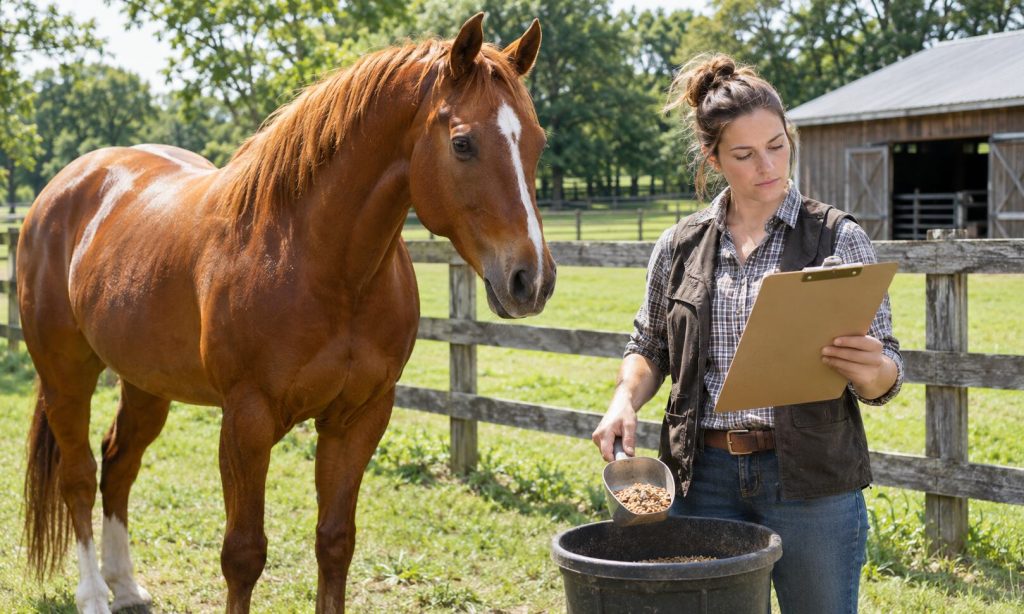
How to size a vitamin D supplement for horses is a veterinary nutrition question, not a matter of choosing the biggest scoop. Vitamin D helps regulate calcium and phosphorus metabolism. However, many healthy horses may not need additional vitamin D beyond the existing feeding program. The amount supplied by forage, fortified feed, and other products needs to be reviewed before any extra dose is considered.
This guide explains how to approach a veterinary-directed vitamin D plan, read feed labels, record total intake, and avoid accidental duplication. Searching for the best vitamin D supplement for horses does not answer whether supplementation is appropriate. Excess vitamin D can be harmful. Do not calculate a horse’s dose from weight alone or use a human supplement without veterinary approval. Start with the animal’s ration, health, and management conditions.
Understand Why Vitamin D Needs Are Individual
How to size a vitamin D supplement for horses depends on the entire nutritional picture. Vitamin D supports calcium and phosphorus regulation, both important to normal skeletal function. But horses differ from humans in vitamin D metabolism and the roles of dietary sources and sunlight. University and veterinary research continues to refine understanding of equine vitamin D forms. Avoid applying human supplement advice to a horse.
Governmental equine feeding guidance from Alberta cautions that additional vitamin D is not generally beneficial without a specific need. The veterinarian should consider age, existing feed, time outdoors, health status, and any relevant laboratory or clinical findings. A young growing animal, an adult at maintenance, and a horse under medical care should not be assigned the same plan automatically. Ask what deficiency or risk the proposed supplement is intended to address.
Sunlight and Diet Are Not Simple Substitutes
Do not assume that more sunlight or more concentrated feed automatically means better vitamin D status. The University of Edinburgh’s veterinary research has examined different circulating vitamin D forms in horses and suggests the biology is complex. A veterinarian can interpret what is known and what remains uncertain. Keep shade, heat protection, and normal welfare needs in mind; do not prolong sun exposure as a self-prescribed treatment.
Inventory Every Existing Vitamin D Source
Before anyone decides how to size a vitamin D supplement for horses, write down everything the horse currently receives. How to size a vitamin D supplement for horses depends on verified total intake from all sources. Include hay, pasture, concentrates, ration balancers, vitamin-mineral mixes, and any separate supplements. Record the amount actually fed each day, not merely the amount listed on the bag as a suggested serving. Multiple products may contribute the same vitamin.
Check labels for vitamin D content and the unit used, often international units. Do not confuse an ingredient percentage with the daily amount the horse consumes. A qualified equine nutrition professional can combine the contributions and compare them with appropriate requirements and precautions. Our horse vitamin comparison guide explains how a complete ration differs from one isolated nutrient.
Read Amounts and Units Carefully
Labels may state nutrient concentration per pound, per kilogram, per serving, or per full daily ration. Those are not interchangeable. If the feeding unit is unclear, ask the veterinarian or nutrition professional to verify the calculation. Never estimate a dose from the size of a generic plastic scoop. Use the exact product measuring method under the approved plan and keep a written record for all caregivers.
Watch for Overlapping Fortified Products
One product may already meet a nutritional need when fed as directed. Adding a second concentrated vitamin preparation can complicate total intake. This is especially important for fat-soluble vitamins, which require more caution than casual water-soluble supplement routines. The goal is not to make a longer list of ingredients. It is to identify the actual contribution of each feed component and avoid unnecessary excess.
Let the Veterinarian Establish a Safe Serving Plan
How to size a vitamin D supplement for horses should be completed only when a veterinarian identifies a reason to supplement. The professional may review diet records, examine the horse, assess related medical concerns, and determine whether any testing is appropriate. Do not begin treatment based on a single online chart or a friend’s feeding routine. Different medical circumstances can require different management.
The approved plan should specify the exact formulation, amount, frequency, administration method, start date, and follow-up. It should also explain which other fortified feeds remain appropriate. Ask the veterinarian what to do after a missed serving or a suspected error. Do not double a later serving or add extra calcium on your own. Improvised combinations can make an already difficult nutritional picture worse.
Avoid Copying Human or Other-Animal Doses
Human vitamin D preparations can contain amounts and inactive ingredients unsuitable for a horse. A dose recommended for a dog or a different livestock species cannot be scaled safely by body weight. Even horse-specific supplements vary in concentration. Use only the exact formulation included in the professional plan. For a broader introduction to feed changes, see our horse vitamin-mineral supplement introduction guide.
Understand the Risks of Excess Vitamin D
One reason how to size a vitamin D supplement for horses matters is that an excessive amount may be toxic. Veterinary literature describes disturbances in calcium balance and potential mineral deposition in soft tissues with vitamin D excess. Signs can include weakness, loss of condition, and other serious problems. These outcomes are not inevitable from every serving mistake, but they explain why unverified high-dose use is unsafe.
Seek prompt veterinary advice if you suspect an overdose, the horse has unusual weakness, stops eating normally, or develops concerning symptoms. Keep the original package and record what was given and when. Do not attempt home detoxification or manipulate the horse’s water or minerals without instructions. Clinical examination and relevant tests may be necessary. Acting early is safer than waiting for obvious signs.
Store Supplements to Prevent Accidental Access
Knowing how to size a vitamin D supplement for horses also means preventing dosing errors during storage. Keep containers closed and clearly labeled in a secure feed area beyond animal and child access. Use a dry clean scoop and follow the maker’s storage temperature and expiry directions. Do not transfer concentrated vitamin products into unmarked food tubs. Separate each horse’s prescribed feeding plan to avoid mix-ups. Store the original instructions with the record so all caregivers can check them.
Review the Plan as the Ration Changes
How to size a vitamin D supplement for horses is not necessarily a permanent one-time calculation. New hay, changed pasture access, a different fortified feed, growth, illness, or changes in work can alter the overall nutrition plan. Revisit total intake with the veterinarian when one of those factors changes. Keep notes on weight, condition, appetite, and any medically recommended follow-up tests.
Do not judge vitamin D status from coat shine or hoof appearance. Those signs have many possible causes and do not reveal the circulating vitamin concentration. Our general horse-vitamin information overview can help you recognize common nutrient categories, but it does not replace a case-specific nutritional assessment. If no supplement is indicated, that is a valid outcome of a careful review.
Keep a Simple Administration Log
Record each approved serving, exact amount, date, and caregiver. Note any missed doses and questions for the veterinarian. If the supplement is part of treatment, follow the prescribed monitoring schedule. Good records help prevent duplication when several people manage the barn. A clearly documented plan is more reliable than trying to remember which scoop was used last week.
Frequently Asked Questions
Vitamin D guidance for horses requires extra caution because more is not automatically better. These answers clarify common questions without providing a one-size-fits-all prescription.
For suspected deficiency, toxicity, illness, or accidental dosing, contact a veterinarian. The correct decision depends on the full ration and individual clinical circumstances.
Do all horses need a vitamin D supplement?
No. Many healthy horses may not need additional vitamin D. Review the existing diet and any specific medical needs first.
Can I size vitamin D from horse weight alone?
No. Total dietary supply, formulation, age, and health also matter. Have a veterinarian or qualified nutrition professional evaluate the plan.
Is more vitamin D better for bone strength?
No. Excess can cause serious harm. Normal bone health requires balanced nutrition and veterinary assessment when disease is suspected.
Can a human vitamin D supplement be used for horses?
Do not use one without veterinary authorization. Concentrations and ingredients may be inappropriate for the animal.
What if I accidentally gave an extra serving?
Call the veterinarian with the product, concentration, amount, and time. Do not double or skip later doses without advice.
Final Words
How to size a vitamin D supplement for horses begins with proving a need, checking all existing vitamin D sources, and following a veterinarian-approved plan. Avoid weight-only formulas, unverified online charts, and overlapping fortified products. Because vitamin D excess can be harmful, careful recordkeeping and follow-up are essential.
If you are searching for the best vitamin D supplement for horses, first ask whether any extra vitamin D belongs in the ration. How to size a vitamin D supplement for horses is best answered with a qualified professional reviewing the exact feed, product label, and horse’s condition. Sometimes the safest amount of additional supplement is none.
Reference
These government, university, and veterinary resources informed the discussion of vitamin D physiology, feeding balance, and the risks of supplementation. They are not individual dosing instructions.
A veterinarian should assess suspected deficiency or overdose and determine whether laboratory testing or treatment is indicated for a particular horse.









