Learning how to use and care for cat food for cystitis begins with a veterinary diagnosis, not a bag or can labeled urinary. Cystitis means bladder inflammation, but similar signs can arise from urinary stones, infection, or an obstructed urethra. A cat straining with little or no urine, especially a male cat, needs emergency veterinary attention. Diet alone cannot resolve a blockage. Once the cause is established, your veterinarian may recommend a specific food and a plan for hydration, environment, monitoring, and follow-up.
This guide explains how to use cat food for cystitis safely, transition without avoidable stress, handle wet or dry food hygienically, and recognize when to call the clinic. If your veterinarian has suggested dietary treatment, compare the best cat food for cystitis options for the diagnosed condition and the cat’s willingness to eat. The routine protects nutritional consistency and comfortable mealtimes.
Confirm the Urinary Diagnosis Before Changing Food
A cat visiting the litter box repeatedly, crying, passing blood-tinged urine, or urinating outside the box may have several different lower urinary tract problems. Feline idiopathic cystitis is a common inflammatory diagnosis, while stones, infection, and obstruction have different management needs. To use cat food for cystitis appropriately, ask what diagnosis the veterinarian reached and whether an imaging study, urine testing, or other assessment is recommended. Do not assume every urinary symptom calls for the same diet.
Clarify whether the food is meant to dissolve or reduce the risk of particular crystals or stones, support urinary dilution, or simply form part of a broader plan for idiopathic cystitis. Some diets are therapeutic and should not be mixed with ordinary food or treats without approval. Write down the prescribed amount, feeding duration, and recheck date. If your cat cannot pass urine, seek emergency care rather than experimenting with meals.
Understand the Role of Hydration
Supporting water intake is often part of using and caring for cat food for cystitis, but the overall plan depends on the diagnosis. Wet diets provide substantial dietary moisture and may be preferred when a veterinarian wants increased water consumption. Some cats will accept added water in food, while others resist changes in texture. Ask the clinician which approach suits your cat rather than assuming that every watery meal is therapeutic.
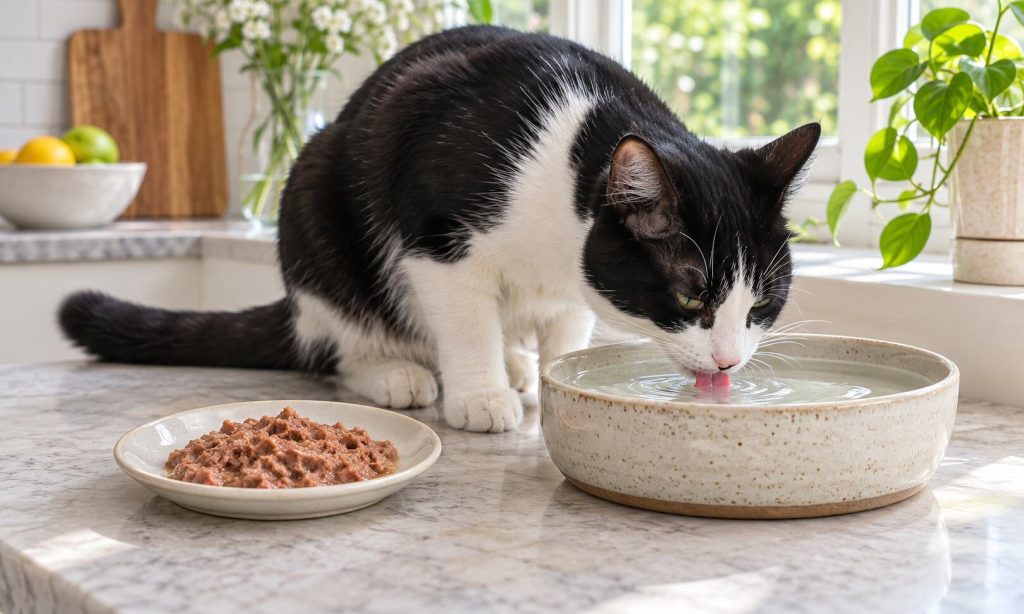
Provide fresh water in more than one quiet location, away from noisy appliances and crowded litter areas. Some cats prefer broad bowls that do not touch their whiskers; others drink more from a circulating fountain. Clean vessels routinely and observe actual drinking habits without forcing contact. See our urinary cat food portion guide to keep hydration and calories within a planned daily routine.
Transition Food Without Creating Food Aversion
To use cat food for cystitis consistently, begin a veterinarian-approved change at a calm time. If the animal is stable and eating, gradually mix increasing proportions of the new food over the interval your clinician recommends. Cats vary widely in acceptance. A slow transition may reduce digestive upset and make the new scent less startling, but some medical circumstances require another approach. Never withhold food to force acceptance of an unwanted prescription diet.
Offer the meal in the same comfortable location and avoid introducing multiple new flavors, bowls, and feeding schedules at once. Keep portions measured and note how much is actually consumed. If your cat refuses a therapeutic formula, contact the veterinarian promptly for an alternative; poor intake can quickly complicate care. Discuss whether a permitted wet and dry combination is appropriate instead of improvising substitutions.
Store Urinary Food and Feeding Tools Hygienically
Caring for cat food for cystitis includes protecting it from spoilage, moisture, and cross-contamination. Inspect unopened cans for bulges, leaks, or severe dents and check expiration dates. Refrigerate opened wet food promptly in a covered, clean container and follow its manufacturer’s time limit. Keep dry kibble in its original bag inside a sealed, food-safe bin so the lot code and formulation details remain available if questions arise.
Wash bowls with mild dish soap and rinse thoroughly; dry them before refilling with dry food. Keep scoops clean and dry and avoid pouring new kibble over stale crumbs. Do not wash the kibble itself. Our urinary food and tool cleaning guide covers a careful routine. Freshness and consistent formulation matter more than repackaging an entire bag in a decorative jar.
Measure the Daily Ration and Track Intake
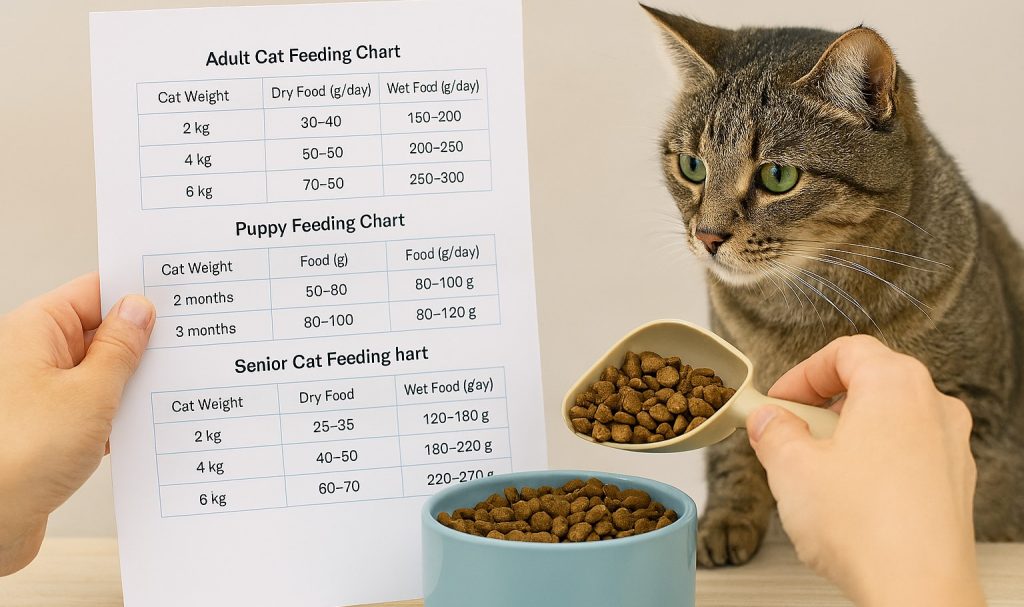
When learning how to use cat food for cystitis, use the specific daily amount calculated for your cat’s weight, body condition, and medical needs. Prescription diets can differ in energy density from ordinary maintenance foods. Weigh portions on a kitchen scale or use the method advised by your veterinary team; scoop volumes can vary. Record meals, leftovers, and permitted treats so a feeding problem is visible before the next appointment.
A food may be formulated for urinary care but still lead to unwanted weight gain if overfed. Cats with obesity can face additional health challenges, while underfeeding is also unsafe. If the diet is prescription-only, ask whether any treats or other foods are compatible. Our daily portion guide offers general measurement principles, not a replacement for an individualized clinical ration.
Make the Litter Box and Home Environment Supportive
Food is only one part of caring for a cat with cystitis. Stress can contribute to episodes of feline idiopathic cystitis, and a sudden change in routine may make a reluctant eater more anxious. Provide predictable meal times, hiding or resting places, play opportunities, and enough separated resources for a multi-cat household. Do not crowd the food and water beside a busy litter box. Calm surroundings can support intake and routine.
Scoop litter boxes often and offer enough quiet, accessible boxes for the household. Watch for repeated visits, discomfort, blood in urine, and altered volume. A cat trying to urinate without producing a normal stream can be obstructed and requires urgent assessment. Avoid punishing accidents, which can add stress. Environmental enrichment and veterinary follow-up remain essential even when the cat accepts the recommended food.
Avoid Mixing Diets Without Approval
Many urinary formulas are designed around a particular mineral balance or other nutritional feature. To use cat food for cystitis as intended, do not dilute the prescribed plan with unrestricted treats, table scraps, supplements, or another brand simply because the flavor is popular. Ask the veterinarian what can be combined and what must remain exclusive. A food appropriate for one type of urinary stone may be unsuitable for another condition.
The phrase urinary health on a retail package is not equivalent to a diagnosis-specific therapeutic recommendation. Read the nutritional adequacy statement, ingredient declaration, calorie information, and prescription instructions rather than the front-panel promise alone. Our cystitis cat food comparison discusses diet categories, but selection should follow clinical findings. If costs or supply make adherence difficult, ask the clinic about medically acceptable alternatives.
Recognize When the Plan Needs Reassessment
Caring for cat food for cystitis requires follow-up because symptoms can recur even during dietary management. Keep a short diary of appetite, water access, litter box visits, urine appearance, stressors, and any medication. Share changes with the veterinary team and attend planned urine tests or imaging if recommended. Do not judge success solely by how eagerly the cat eats; comfort and urinary function are the central outcomes.
Contact your veterinarian for persistent straining, crying, licking the genital area, new accidents, or blood. If urine output is absent or minimal and the cat is distressed, seek emergency help immediately. Do not stop medications or change therapeutic formulations independently. A recurrence may reflect a different problem or require a change in environmental support, pain management, or other care beyond the diet.
Common Errors During Daily Care
The most damaging error is delaying assessment while trying an over-the-counter urinary food. Another is switching several diets rapidly because signs have not resolved overnight. To use and care for cat food for cystitis well, follow the same measured schedule and discuss any intolerance promptly. Store food correctly, clean bowls, and keep an accurate record of what the cat actually eats. Avoid relying on advertisements that imply a guaranteed cure.
Do not confuse urinary discomfort with ordinary litter box fussiness, and never assume a male cat’s repeated unproductive straining is harmless constipation. Do not restrict water to reduce accidents. Instead, provide appropriate litter access and make drinking easy. Consistency, low-stress handling, and an agreed clinical plan are much more dependable than unverified additives or home remedies.
Frequently Asked Questions
A cat with urinary signs needs an individual veterinary plan; the answers below explain daily feeding routines after that assessment. They do not diagnose the cause of painful urination.
Contact your veterinary team when intake, urination, or behavior changes. A prescribed urinary formula and a general urinary-health diet are not interchangeable.
Can a urinary diet cure feline idiopathic cystitis?
No food guarantees a cure. Diet and hydration may be components of management, but pain control, stress reduction, environment, and follow-up are often important. Your veterinarian should explain the reason for the selected formula and what improvement to expect.
Is wet cat food always required?
Not always. Wet food can add moisture, but medical needs, acceptance, and the veterinarian’s recommendation determine the approach. A cat refusing the prescribed food needs prompt professional advice instead of prolonged fasting.
Can I offer ordinary treats with prescription urinary food?
Ask before offering them. Depending on the diet’s purpose, other foods may compromise the intended nutritional profile. Your veterinary clinic can suggest compatible rewards and amounts.
How long can an opened wet-food can be kept?
Refrigerate leftovers promptly in a clean covered container and use the manufacturer’s specific instructions. Discard food that smells abnormal, changes appearance, or has been left out too long. Wash serving utensils and dishes between uses.
When is straining an emergency?
Repeated attempts with little or no urine, particularly in male cats, can mean a life-threatening urinary obstruction. Seek emergency veterinary care immediately rather than waiting for a new food to help.
Final Words
Knowing how to use and care for cat food for cystitis means following the diagnosis-specific instructions, protecting food hygiene, encouraging appropriate water intake, and maintaining a calm routine. Our best cat food for cystitis guide can help you understand available diet categories, but the final choice belongs in a conversation with your veterinarian. A comfortable cat who eats reliably and urinates normally is the goal, not simply a label claim.
Keep records of portions and symptoms, attend rechecks, and respond quickly to new urinary difficulty. Diet can support broader care, but it cannot treat an obstruction or substitute for examination. The safest routine is steady, transparent, and adaptable when your cat’s clinical needs change.
Reference
These veterinary and international cat-care resources support the discussion of lower urinary tract signs, stress, hydration, and dietary management. They are intended for general education, not treatment prescriptions.
Use the diagnosis and follow-up schedule given by your own veterinarian. Seek emergency veterinary care if a cat cannot pass urine.