
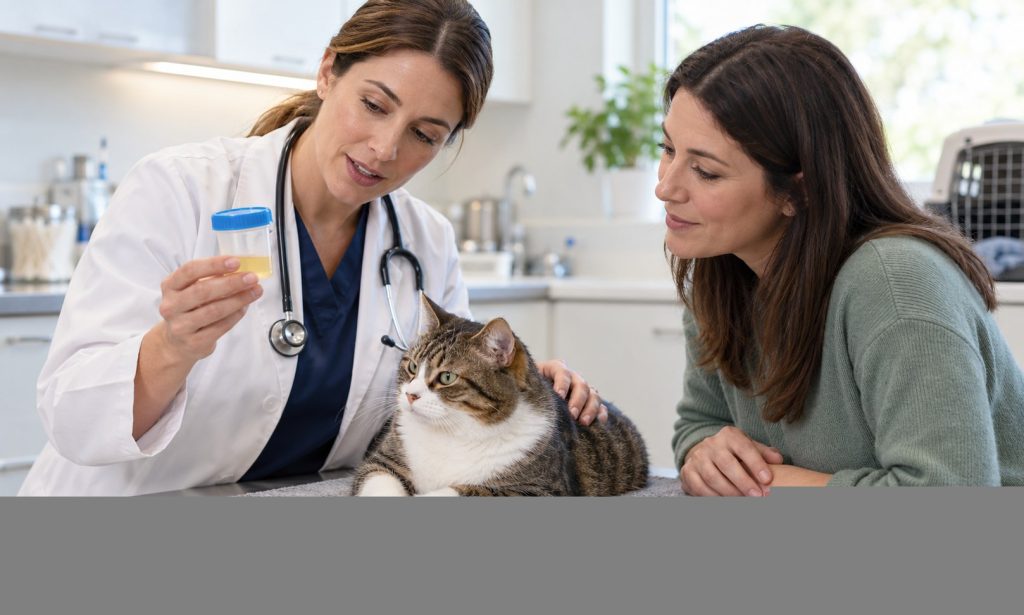
Cats with recurrent bladder discomfort need a veterinary diagnosis before changing their diet. The term cystitis can describe bladder inflammation, and feline idiopathic cystitis may be influenced by stress as well as the cat’s overall environment. Bladder stones, urinary infections, and obstruction require different care. The best cat food for cystitis is therefore a diet selected for the diagnosis, not a guaranteed cure from a product label. We compare seven Amazon-verified wet urinary food options, including prescription formulas and one non-prescription support recipe. These products are not interchangeable; a diet designed to dissolve certain urinary crystals may be inappropriate for another condition. Increasing moisture intake can be useful, but cats may also need environmental changes, pain management, or other treatment. If a cat repeatedly strains to urinate, passes little or no urine, or seems distressed, treat possible urinary blockage as an emergency and seek immediate veterinary care.
Quick Picks
| Product | Best For | Key Advantage | Buy | |
|---|---|---|---|---|
| Hill’s Prescription Diet c/d Multicare Wet | Veterinary urinary management | a chicken wet formula developed for prescription urinary care | View on Amazon | Jump to Review |
| Hill’s Prescription Diet c/d Multicare Stress | Urinary care with stress-oriented positioning | a tuna wet veterinary urinary diet with Multicare Stress positioning | View on Amazon | Jump to Review |
| Royal Canin Urinary SO Wet Morsels | Veterinary struvite-focused feeding | a prescription wet urinary diet formulated for certain crystal and stone concerns | View on Amazon | Jump to Review |
| Purina Pro Plan Veterinary UR Wet | Prescription UR urinary care | a veterinary UR St/Ox turkey wet formula | View on Amazon | Jump to Review |
| Blue Buffalo Veterinary W+U Wet | Weight and urinary care combination | a veterinary wet formula combining weight and urinary care | View on Amazon | Jump to Review |
| Royal Canin Urinary SO Moderate Calorie | Urinary diet with moderate energy | a prescription urinary formula in a moderate-calorie wet variation | View on Amazon | Jump to Review |
| Purina Pro Plan Urinary Tract Wet | Non-prescription urinary support | an ocean-whitefish wet urinary tract support pâté | View on Amazon | Jump to Review |
1. Hill’s Prescription Diet c/d Multicare Wet

- Prescription urinary diet
- Canned chicken recipe
- Wet food hydration
- Multicare positioning
- Its therapeutic use should follow veterinary diagnosis
Hill’s Prescription Diet c/d Multicare Wet is a veterinary urinary formula, with a chicken canned recipe identified in the current verified listing. It is relevant when a veterinarian has diagnosed a urinary condition for which this particular diet is indicated. The distinction matters because the word cystitis describes bladder inflammation, not its cause. A cat with idiopathic cystitis, a bacterial infection, crystals, or a urethral obstruction may need different interventions. The presence of urinary in a product name cannot tell an owner which condition is present.
The wet format contributes fluid with meals, which may be helpful within a veterinarian-directed urinary plan, but added moisture is only one aspect of care. The clinician should explain the intended urine-management goals, whether other food is allowed, and how to monitor the condition. Compare c/d Multicare with the Multicare Stress variant if the cat has stress-associated flare-ups, while remembering that environmental changes may also be needed. Prescription formulas are not interchangeable with ordinary urinary-support pâtés because their nutritional purposes can differ.
I would consider this product only after a veterinarian confirms the diagnosis and selects the correct therapeutic plan. Check the exact canned variant and serving calories, especially if the cat also needs weight control. Monitor appetite, urine output, litter-box behavior, and any new signs of pain. A cat repeatedly visiting the box with little urine may be obstructed and needs immediate emergency treatment. Do not wait for a food change to help. Regular follow-up matters more than trying different urinary products on your own.
My Recommendation
Hill’s Prescription Diet c/d Multicare Wet is an option to discuss when a veterinarian has diagnosed a urinary condition that the specific therapeutic diet is designed to manage. Its wet format can contribute to water intake, but that does not make it an instant treatment for painful urination. I would confirm the exact formula and feeding instructions before replacing an existing prescription diet. Cats with recurrent signs need follow-up testing and environmental management too. If your cat has no diagnosed urinary disease, ask whether a complete regular wet food is more appropriate.
2. Hill’s Prescription Diet c/d Multicare Stress

- Multicare Stress recipe
- Prescription wet formula
- Tuna flavor variation
- Urinary dietary focus
- Stress management requires more than a specialized food
Hill’s Prescription Diet c/d Multicare Stress adds stress-oriented positioning to a therapeutic urinary diet. The verified listing describes a tuna wet formula within the Multicare Stress line. This may be considered when the veterinary team is dealing with a cat prone to recurrent urinary signs and suspects that stress affects the episodes. The diet’s name does not mean it removes household stressors or cures feline idiopathic cystitis. Cats can continue to have flare-ups if pain, environmental pressures, and access to resources are not addressed.
The important comparison is between this stress-oriented prescription option and standard c/d Multicare, not merely which flavor the cat prefers. Ask whether the proposed diet fits the veterinarian’s actual diagnosis, urine findings, and any history of stones. Consistent feeding is part of an intended therapeutic regimen, so mixing different foods without advice may undermine the plan. At home, also evaluate litter-box placement, availability of water, safe hiding spaces, conflict with other cats, and predictable play. These changes complement care rather than replacing clinical treatment.
I would shortlist the Stress variation when the veterinarian specifically recommends this approach and the cat accepts the tuna wet texture. Keep a record of urinary episodes, environmental disruptions, appetite, and drinking so the care team can identify patterns. Do not assume an apparently calmer week proves the food caused improvement, since feline urinary symptoms can fluctuate. Monitor body condition and adjust portions only as advised. Any straining with little or no urine, especially in a male cat, is an emergency regardless of what urinary food is being offered.
My Recommendation
Hill’s c/d Multicare Stress stands out when veterinary urinary management is being considered alongside stress-related triggers. I would prioritize it only if your veterinarian believes this exact formulation suits the cat’s diagnosis and history. The tuna wet format may influence acceptance, but it cannot substitute for improving litter-box access, routine predictability, and household resources. Compare the standard c/d version if the additional stress-oriented nutritional formulation is not needed. Watch urination habits closely; repeated straining or little urine is urgent and deserves prompt veterinary attention rather than a routine dietary adjustment.
3. Royal Canin Urinary SO Wet Morsels

- Urinary SO formula
- Wet gravy morsels
- Veterinary diet category
- Struvite-focused listing
- It should not be used for a different urinary problem without approval
Royal Canin Urinary SO Wet Morsels is a veterinary canned diet presented in gravy-style pieces rather than a smooth pâté. The verified listing identifies the Urinary SO line as a therapeutic option for certain crystal and stone concerns. The texture may matter for a cat that refuses loaf-style foods, but the formula should not be chosen on texture alone. A veterinarian needs to identify the relevant urinary problem, because treatment that is appropriate for one type of stone or crystal can be unsuitable for another.
Ask the clinic which urine or imaging results support use of Urinary SO and whether it must be the cat’s exclusive food. Its nutritional goals may differ substantially from a non-prescription product labeled urinary tract support. Wet morsels can make hydration through meals more appealing to some cats, but a cat can still become dehydrated or obstructed. Compare the current calorie information with the cat’s body condition, since changing to a prescribed wet food should not accidentally cause weight loss or overfeeding. Avoid adding unsanctioned toppers.
I would view Royal Canin SO as a diagnosis-specific veterinary choice, not an over-the-counter solution for any cat that urinates outside the litter box. If the cat likes gravy, that may improve acceptance during an appropriate feeding plan. Verify the exact product variation, obtain the veterinarian’s approval, and arrange any recommended urine rechecks. Watch for crying in the litter box, repeated unsuccessful attempts to urinate, or sudden lethargy. Those signs need urgent clinical attention even when a therapeutic food has already been started.
My Recommendation
Royal Canin Urinary SO Wet Morsels is a targeted veterinary option, particularly when a clinician is managing certain urinary crystals or stones. I would select it based on the cat’s confirmed problem and the veterinarian’s choice of diet, not merely because the label says urinary. Its morsels-in-gravy texture offers a different eating experience from smooth pâté, which may matter for food acceptance. Do not mix it casually with another food if strict therapeutic feeding is needed. A cat that cannot pass urine requires immediate emergency care, regardless of which diet is being used.
4. Purina Pro Plan Veterinary UR Wet

- Veterinary UR formula
- St/Ox positioning
- Turkey wet recipe
- Large canned portions
- Veterinary monitoring is essential for diagnosed stones or crystals
Purina Pro Plan Veterinary UR Wet is described in the verified listing as a turkey canned formula with St/Ox urinary positioning. It belongs in the group of therapeutic diets a veterinarian might consider for certain crystal or stone-management goals. That does not make it a treatment for every form of cystitis. A cat experiencing stress-associated bladder inflammation may need a different emphasis than one with confirmed urinary calculi. Product names can make these problems look more similar than they actually are.
The turkey wet format is a practical distinction from fish or chicken urinary formulas and may influence acceptance, although flavor alone does not justify selecting a medical diet. Ask the veterinarian what urine environment or stone history the prescription is meant to address, and whether follow-up testing will be needed. Check serving calories and package size so the feeding routine is financially sustainable. Compared with Royal Canin SO, this option represents a different manufacturer’s veterinary urinary approach rather than a universally superior or inferior solution.
Purina UR is worth discussing when the clinician indicates that its specific therapeutic profile matches the cat’s findings. Follow the recommended exclusivity rules carefully if the diet is meant to control mineral intake or urine characteristics. Record litter-box visits, volume of urine if observable, appetite, and hydration changes. Keep water bowls and litter boxes accessible and clean. Do not use a urinary diet to delay an examination when symptoms change. A cat that cannot pass urine may deteriorate rapidly and needs emergency care.
My Recommendation
Purina Pro Plan Veterinary UR Wet would be on my comparison sheet when a veterinarian specifically recommends a urinary therapeutic diet and your cat prefers a turkey-based wet format. The St/Ox positioning is relevant to veterinary dietary management, but suitability depends on the crystals, stones, other conditions, and prescribed plan. I would check the exact product formulation and whether treats or another diet could undermine consistency. If the cat refuses this texture, ask the veterinarian about an approved alternative rather than switching independently to an over-the-counter urinary product.
5. Blue Buffalo Veterinary W+U Wet

- Veterinary diet formula
- Weight-management positioning
- Urinary-care focus
- Chicken wet recipe
- Calorie or weight strategy may not suit every cat
Blue Buffalo Veterinary W+U Wet combines two nutritional objectives: urinary care and weight management. The verified listing identifies a veterinary chicken wet formula with both purposes, making it a more specialized comparison than ordinary urinary-support cat food. Some cats with recurrent urinary problems are also overweight, and a veterinarian might want to consider both issues in the feeding plan. However, weight loss is not appropriate for every sick cat. An underweight animal or one with poor appetite could need a very different calorie strategy.
Ask the veterinarian which objective takes priority and whether this combined diet is appropriate for the cat’s diagnosis, body condition, and energy requirement. A product supporting weight control may have a feeding schedule that differs from a standard urinary formula. Reducing intake without supervision can be dangerous for cats, so do not aggressively cut portions simply because the package includes a weight-care claim. Compare this option with a moderate-calorie Urinary SO recipe only after checking the full nutritional differences and medical purpose.
I would consider W+U for a cat whose veterinarian has specifically recommended a combined urinary and weight-management strategy. Make sure the cat actually eats the prescribed daily amount rather than refusing a new texture and unintentionally underfeeding. Weigh the cat on a consistent schedule if the clinic requests it, and watch for both urinary discomfort and changes in activity. The product is not a shortcut around a properly planned weight program. Trouble passing urine remains an emergency even if the cat appears otherwise alert.
My Recommendation
Blue Buffalo Veterinary W+U Wet deserves consideration when weight management and diagnosed urinary issues genuinely overlap. The combination may simplify feeding for an overweight cat that needs both targets addressed by one veterinarian-approved plan. I would be cautious about choosing a calorie-controlled urinary diet for a cat that is underweight, losing weight, or recovering from illness. Match feeding amounts to both body-condition goals and urinary monitoring, and reassess at follow-up visits. When weight reduction is not clinically appropriate, compare a therapeutic urinary formula without that additional emphasis.
6. Royal Canin Urinary SO Moderate Calorie

- Urinary SO wet recipe
- Moderate calorie variant
- Veterinary urinary purpose
- Canned food format
- Lower energy may be unsuitable for cats that need more calories
Royal Canin Urinary SO Moderate Calorie is a distinct veterinary urinary formula for cats whose calorie needs warrant consideration alongside urinary management. The verified listing identifies a moderate-calorie wet variation in the SO line. It should not be confused with the regular version simply because both share the Urinary SO name. An overweight cat with a confirmed urinary condition may be a candidate, but an older cat losing weight or a sick animal with low appetite could be poorly served by unnecessary energy restriction.
The veterinarian should assess body condition, nutrient requirements, and any stone or crystal diagnosis before switching to this lower-energy variation. Calories per can and the expected number of daily servings need to be checked against the exact package. Do not choose moderate calorie solely because the word sounds healthy. A diet meant to alter urine characteristics should also be evaluated for how additional treats or ordinary foods might affect the plan. Compare it with Blue Buffalo W+U when the clinic is managing both weight and urinary health.
For a suitable cat, I would focus on complete intake and gradual, monitored body-condition changes rather than the promise of a lower-calorie label. Some cats prefer canned textures, while others may need careful transition to maintain enough food consumption. Follow the veterinarian’s recheck schedule for urinary health and weight. A cat that suddenly stops eating or begins straining should be examined promptly. An emergency obstruction is not addressed by choosing a different calorie variant and cannot safely wait for another meal.
My Recommendation
Royal Canin Urinary SO Moderate Calorie is a more specific choice than standard urinary wet food: it is designed for a veterinary urinary plan with attention to calorie intake. I would compare it when a cat needs therapeutic urinary nutrition but also requires careful weight control. A moderate-calorie label should not prompt automatic portion restriction, especially in a cat with other health problems. The veterinarian should establish appropriate daily calories and track both urinary signs and weight. If the cat needs more energy, ask about the standard version or another approved prescription option.
7. Purina Pro Plan Urinary Tract Wet

- Wet urinary support recipe
- Ocean whitefish flavor
- Pâté texture
- Non-prescription category
- It is not interchangeable with a prescription stone-management diet
Purina Pro Plan Urinary Tract Wet Ocean Whitefish stands apart from the preceding veterinary diets because the verified listing describes a non-prescription urinary-support pâté. It mentions reduced urinary pH, low dietary magnesium, and ordinary wet-food nutritional features. Those claims can be useful when comparing everyday foods for a cat whose veterinarian has approved this kind of maintenance diet. They do not mean the product has the same therapeutic purpose or controlled feeding requirements as prescription stone-management formulas. The category difference is the most important fact.
An owner might be tempted to switch to this more accessible can after noticing urinary discomfort, but symptoms do not identify whether infection, crystals, obstruction, or idiopathic cystitis is involved. A veterinarian must determine what treatment is needed before an over-the-counter diet is used as the main response. Compared with c/d, UR, and Urinary SO, the Purina Pro Plan wet option is an ordinary product with urinary-related positioning rather than a substitute for a prescribed regimen. Texture and taste may encourage meals, but neither confirms recovery.
I would compare this whitefish pâté only for a cat that has been medically evaluated and cleared for non-prescription urinary-support food. Check the complete adult adequacy statement, serving calories, and ingredient tolerance. Keep fresh water and suitable litter boxes available, and follow recommendations for reducing household stress. If a cat vocalizes, makes repeated fruitless trips to the litter box, or becomes lethargic, obtain emergency veterinary care. No retail urinary formula should be used to see whether an obstruction resolves on its own.
My Recommendation
Purina Pro Plan Urinary Tract Wet is the clearest non-prescription comparison in this roundup. I would consider it for an otherwise healthy adult cat only when a veterinarian agrees that everyday urinary-focused nutrition is suitable. It must not be presented as interchangeable with therapeutic diets prescribed for crystal or stone management. Its whitefish pâté format may appeal to cats that reject gravy, but palatability alone is not a treatment decision. For recurring cystitis episodes, seek a diagnosis and a hydration and stress-management plan before relying on food selection.
How to choose best cat food for cystitis
Managing cystitis starts with finding out why a cat is uncomfortable. A veterinarian may recommend a therapeutic urinary diet for one condition and a different approach for another. Use these checks to compare clinical indications, moisture intake, stress factors, and feeding consistency.
Find the exact cause of urinary signs
Frequent litter-box visits, blood in the urine, straining, or urinating in unusual places can have several causes. A veterinarian may recommend a urine test, imaging, or other evaluation. Feline idiopathic cystitis is not the same as a bacterial urinary infection or a urethral obstruction. Food can be one element of management, but the chosen recipe depends on what the veterinarian finds. Do not assume every urinary product treats a cat’s condition. A blocked cat, particularly one producing little or no urine despite straining, needs emergency veterinary care immediately.
Understand prescription versus daily urinary support
Prescription urinary diets are formulated for specific clinical goals, such as managing certain crystals or reducing recurrence risk in suitable patients. Not every wet food labeled urinary support has equivalent therapeutic uses. Compare directions, mineral strategy, targeted condition, and whether professional authorization is required. A veterinarian may ask you to feed a therapeutic diet exclusively, so mixing in other food can interfere with that plan. Review body weight and calories as well, especially when the cat needs weight management. Do not change a prescribed urinary diet based on online comparisons alone.
Increase moisture and reduce stress
Wet food may contribute to daily fluid intake, and many cats benefit from multiple fresh water sources. Provide clean litter boxes in quiet, accessible locations and reduce conflict between pets. Predictable routines and enrichment can be important for cats with idiopathic cystitis. Monitor how often the cat urinates and whether signs improve as the veterinarian expects. Dietary management does not replace pain control, obstruction treatment, or other prescribed care. If symptoms suddenly worsen or the cat cannot pass urine, seek immediate veterinary help rather than waiting for the food to work.
Consider the cat’s overall health and any additional conditions before committing to a urinary recipe. A product advertised as low or moderate calorie may be preferable for certain cats but could be inappropriate for an underweight animal. Discuss whether your veterinarian wants an exclusive therapeutic ration or a wider multimodal approach. Keep written notes about symptom episodes, food adherence, hydration, and litter-box changes so clinical follow-up is informed. Keep a record of prescriptions and feeding changes so later clinical decisions can be based on consistent information. Never postpone urgent evaluation while waiting for a new food to arrive.
Related PetAdvisorPro Guides
For more context, compare dry urinary-health cat foods; and veterinary urinary diet monitoring; and cat drinking-water fountain options; and possible reasons for inappropriate urination. These guides can support a veterinarian-led care plan.
Frequently Asked Questions
Can cat food cure feline idiopathic cystitis?
No single food cures all cases. A veterinarian may recommend therapeutic nutrition, hydration, and environmental stress management.
Are prescription urinary foods better than ordinary urinary wet food?
They serve different purposes. Prescription diets may be needed for a diagnosed condition, while ordinary urinary support foods are not interchangeable.
Can I mix a prescribed urinary diet with other food?
Ask the treating veterinarian first. Some treatment goals require exclusive feeding of the therapeutic diet.
Does more water help cats with cystitis?
Better hydration may be part of care, but the veterinarian must rule out stones, infection, and obstruction.
When is urinary straining an emergency?
A cat straining and producing little or no urine needs immediate veterinary care. Urinary blockage can be life-threatening.
Final Verdict
Hill’s c/d Multicare, Royal Canin Urinary SO, and Purina Veterinary UR are examples of therapeutic urinary diets to discuss with your veterinarian. Hill’s c/d Stress has a different positioning that may matter for selected cats. The non-prescription Purina Pro Plan urinary formula is not interchangeable with an indicated therapeutic diet. The right answer follows the confirmed diagnosis and includes hydration, litter-box care, and monitoring. Urinary obstruction is always an emergency.
Affiliate disclosure: This article contains Amazon affiliate links. If you purchase through them, PetAdvisorPro may earn a commission. As an Amazon Associate I earn from qualifying purchases.









