
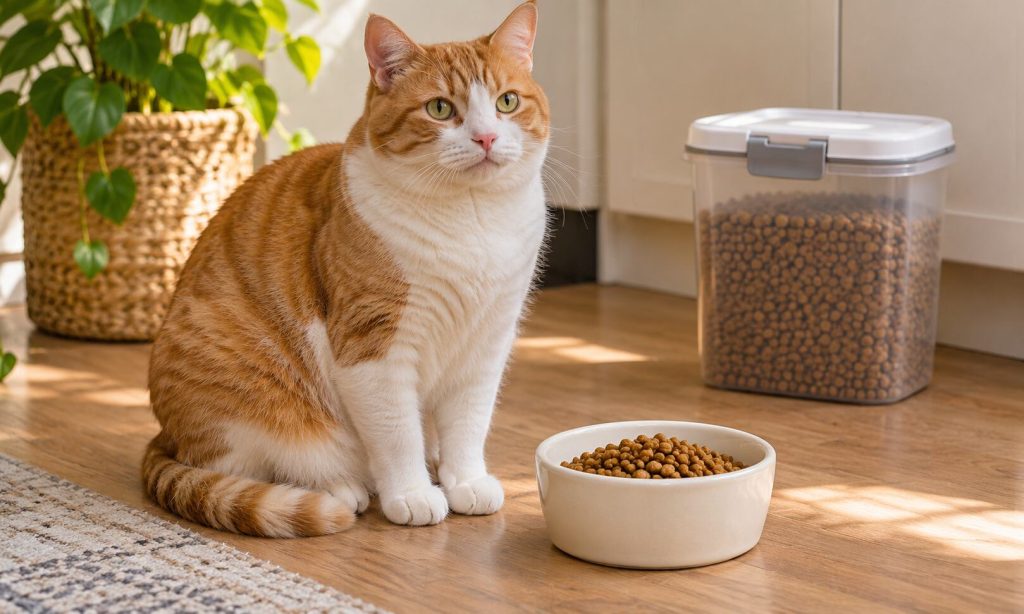
When should you replace cat food for overweight cats? The answer is not simply when the bag runs out or the scale stalls for a week. A weight-management food may need replacing because the formula no longer matches your veterinarian’s plan, your cat cannot tolerate it, the package is damaged, or the food is past its safe storage life. Changing too quickly can be risky: sudden severe calorie restriction can harm cats, and unexpected weight changes deserve clinical attention.
This guide separates food replacement for freshness from switching to a different formula. If you are researching the best cat food for fat cats, start with body condition, measured calories, and a realistic veterinary target rather than a diet label alone. Our wet-food weight-loss comparison and wet-food selection guide provide related context. Here you will learn when to continue, adjust, replace, or seek professional advice.
Distinguish Replacing Food From Changing a Diet
Replacing cat food for overweight cats can mean discarding spoiled food, opening a fresh package of the same recipe, or switching the entire feeding plan. These decisions have different triggers. An unopened, intact bag within its date may remain usable even if the cat’s weight has changed. Conversely, a dented leaking can should be discarded regardless of its calorie profile. First identify whether your concern is safety, acceptance, nutritional suitability, or progress.
A formula change should follow an assessment of portion accuracy, treats, activity, body condition, and any medical condition. If weight has plateaued, the solution may be better measurement rather than a different product. If your cat refuses the food or develops vomiting or diarrhea, contact the veterinarian. Do not keep feeding a suspect spoiled product while waiting for a diet review.
Check Packaging, Date, and Food Condition
Replace cat food for overweight cats immediately when you notice mold, pests, moisture contamination, rancid or unusual odors, or packaging that has lost its seal. Look for bulging or leaking cans, and discard any food from unsafe containers. Printed best-before dates describe quality under stated storage conditions; opened food has a shorter life. A food that appears fresh can still be unsuitable if it has been exposed to heat or humidity for too long.
Write the opening date on dry food, keep its original bag with the lot code, and store it inside a clean sealed bin in a cool dry place. Refrigerate wet-food leftovers promptly and follow manufacturer directions about how long they may be held. Wash bowls before each meal, especially when serving moist food. Never mix new kibble into a bin full of old crumbs that may harbor spoiled fats or insects.
Use Weight and Body-Condition Trends
The decision about when to replace cat food for overweight cats should rely on a series of measurements. Weigh your cat with a consistent method and ask the veterinarian to assign body and muscle condition scores. A single reading varies with meal timing and other factors; a trend is more informative. If your cat loses weight faster or slower than the agreed plan, report the data before adjusting calories independently.
Progress may slow as body mass changes. That does not automatically mean the product has failed. Your veterinarian may recalculate the ration, assess muscle preservation, or investigate another problem. Sudden weight loss, poor appetite, lethargy, or weakness require prompt care. A cat should never be starved into weight loss, and reducing food without preserving essential nutrients can create serious health risks.
Verify Daily Calories Before Switching Brands
Before replacing cat food for overweight cats, check the actual calories offered. Compare kilocalories per cup, can, or gram, not just serving volume or a label saying light. Food manufacturers use different energy densities, so two similarly sized scoops may contain very different amounts. Include every topper, treat, and food used to hide medication. Our daily cat-food portion guide shows how to turn a calorie goal into measured meals.
For multi-cat households, confirm who eats which portion. An overweight cat may steal from another bowl while a timid cat receives too little. Use separate rooms, scheduled meals, or supervised feeding rather than blaming the food. If your measurements are inconsistent, correct that first and monitor the result. A fresh brand cannot compensate for uncounted calories and access to extra food.
Watch for Digestive or Appetite Problems
A food that causes repeated vomiting, diarrhea, excessive gas, or refusal may need reassessment. Do not assume that every symptom is caused by the new formula, because illness and stress can occur independently. When deciding when to replace cat food for overweight cats, keep a log of symptoms, ingredients, feeding amounts, and timing. Call your veterinarian if your cat stops eating, seems painful, or has ongoing gastrointestinal signs.
Avoid repeatedly cycling through foods without a plan. Frequent abrupt changes can upset digestion and create selective eating. If a formula is nutritionally appropriate but the cat dislikes the texture, a veterinarian may suggest another compatible form or a slower transition. Never withhold meals for prolonged periods to force acceptance of a diet product. Adequate intake remains a priority even during weight management.
Consider Life Stage and Medical Changes
Replace cat food for overweight cats when a veterinarian determines that the current formula no longer meets the cat’s life stage or health needs. A senior with reduced muscle mass, a cat with diabetes, or a patient with kidney disease may require a different nutritional strategy. Weight loss must not come at the cost of necessary medical nutrition. Do not use an ordinary reduced-calorie diet as a substitute for a prescribed therapeutic one.
A new diagnosis can change the urgency and method of transition. Bring the previous diet label and feeding record to the appointment, and ask whether prescribed food must be exclusive. The veterinarian may recommend continued portions, a targeted transition, or a completely different plan. The word fat is not a clinical assessment: body condition, muscle condition, and medical history define the actual problem.
Know When a Formula Change Is Justified
A thoughtful reason to replace cat food for overweight cats is a documented mismatch between the formula and the planned nutrient intake. For example, severe calorie restriction of an ordinary maintenance diet may reduce essential nutrients alongside energy; a formulated weight-management diet may be more appropriate. The choice should follow the clinician’s target, not social-media claims about a magical ingredient.
Another valid reason is persistent lack of acceptance despite a careful introduction. Availability and affordability matter too, because a diet that is consistently unavailable may undermine routine. Ask the veterinary team to compare nutritional adequacy, energy density, feeding amount, and health restrictions across alternatives. Use our cat food label reading guide to interpret the statements accurately.
Make a Safe Change and Monitor It
If a switch is recommended, replace cat food for overweight cats gradually over the veterinarian’s advised interval. Introduce a small portion of the new diet and increase it while decreasing the old food, as tolerated. Some cats require a more individualized plan, particularly with medical conditions or significant food aversion. Measure both foods because their calories may differ and the combined ration must still match the target.
Keep meal times predictable and place food in a quiet, low-pressure location. Track appetite, stool consistency, energy, and weight on the review schedule. Do not make several changes simultaneously, or you may not know what helped. When the cat achieves a healthy condition, ask about a maintenance-phase plan instead of continuing weight-loss portions indefinitely. Long-term success relies on controlled intake and activity.
Common Replacement Mistakes
The most common error is replacing cat food for overweight cats whenever the scale changes a little, without checking the ration. Other errors include ignoring treats, trusting cup measurements, discarding a veterinarian-prescribed food for a retail slogan, and confusing food freshness with formula suitability. Avoid unplanned fasting and unverified supplements. A smaller serving of an ordinary food is not automatically a nutritionally complete weight-loss strategy.
Do not keep an opened wet-food can on the counter throughout the day or store dry kibble in a humid shed. Do not assume an unchanged body shape means no progress; ask for professional body-condition scoring. Most importantly, never impose rapid weight reduction. A sustainable plan is measured and reviewed, with the cat’s overall health and comfort taking priority.
Frequently Asked Questions
Food freshness and medical suitability are separate questions. These quick answers help determine which concern needs immediate action and which belongs in a scheduled veterinary review.
For personalized calories and target rates, rely on the clinician familiar with your cat. Bring package labels and a feeding log to make decisions more precise.
Should I switch foods if my cat stops losing weight?
Not immediately. Confirm portion accuracy, treats, access to other animals’ food, and the weight trend. Your veterinarian may adjust the current ration or recommend a different formula after reassessing body condition.
Can I reduce my cat’s regular food by half?
Do not make large unsupervised calorie cuts. Cats can become ill when deprived of food, and severe restriction of an ordinary diet can reduce essential nutrients. Ask your veterinarian for a safe individualized plan.
When do I discard opened wet food?
Cover and refrigerate leftovers promptly, observe manufacturer storage directions, and discard food left at room temperature too long or showing abnormal odor or appearance. Keep bowls and utensils clean.
Does a light or weight-control label guarantee results?
No. The formula still needs nutritional adequacy, a measured calorie plan, and your cat’s acceptance. Compare energy information in consistent units and follow up with weight and body-condition checks.
What if my cat refuses the new food?
Contact the veterinarian rather than forcing a prolonged fast. Discuss a slower transition, a different appropriate texture, or another balanced option that fits the medical plan.
Final Words
When should you replace cat food for overweight cats? Replace unsafe or spoiled food at once, but reconsider the formula based on clinical fit, measured intake, progress, and tolerance. The search for the best cat food for fat cats is useful only when it supports an individualized, nutritionally complete weight-management plan. Our wet-food options for weight control can help frame the conversation with your veterinarian.
Record what your cat actually eats, store packages properly, and resist sudden calorie cuts or repeated brand changes. Successful weight management protects muscle and overall well-being while making gradual progress. If appetite, behavior, or weight changes unexpectedly, seek veterinary guidance before making another replacement.
Reference
The following veterinary resources explain why cats need measured, gradual weight management and complete nutrition. They support the safety guidance in this article rather than endorsing a particular product.
A veterinary examination and individualized calorie plan remain necessary for cats with obesity or concurrent medical conditions. Never use a prolonged fast for weight reduction.









