
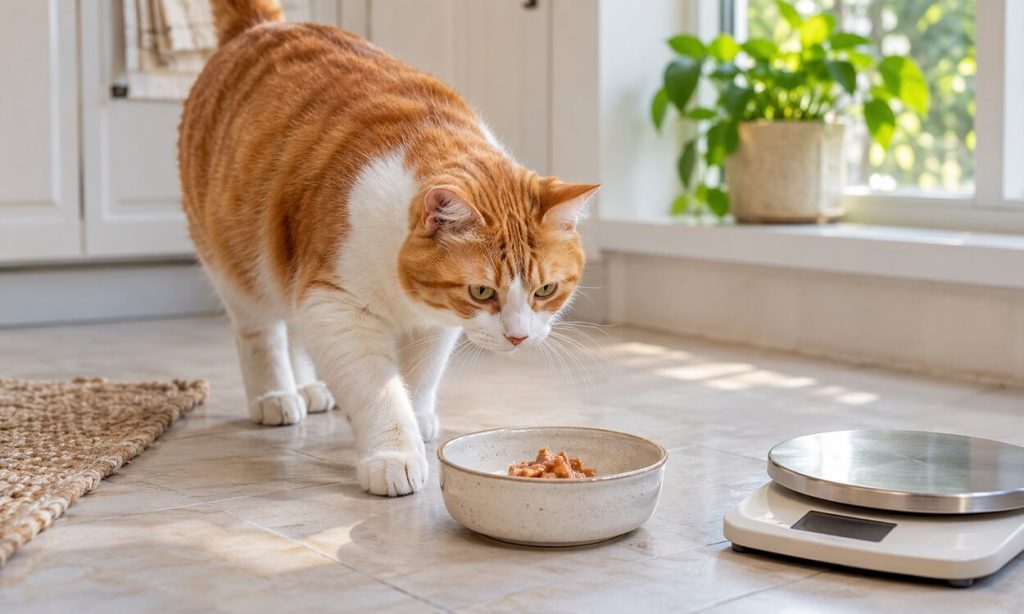
Choosing wet food for a cat that needs to lose weight sounds simple until you compare calories, serving sizes, and the cat’s individual needs. Wet food contains substantial water, but ‘wet’ does not automatically mean ‘low-calorie.’ Different recipes can vary greatly in energy density, fat, protein, and portion guidance. The safest approach begins with veterinary confirmation that weight loss is appropriate, followed by a realistic calorie and feeding plan. Sudden restriction can be dangerous for cats.
This guide explains how to choose the right wet food for cats to lose weight without treating a food label as a medical prescription. It covers body condition, complete nutrition, portion calculations, feeding routines, and monitoring. If your cat has another illness, the nutrition plan may need special adjustments. Our guide to estimating cat-food portions provides additional measurement context.
Confirm the Need for Weight Loss and Set a Target
A cat’s ideal weight is not determined by breed alone. Veterinarians assess body condition by feeling the ribs, looking for a waist, considering muscle condition, and reviewing weight trends. The World Small Animal Veterinary Association offers body-condition scoring tools that help make discussions more objective. An older cat with muscle loss and a rounded abdomen may need a different plan from a healthy adult carrying extra fat. If you are unsure, request a veterinary examination before changing calories.
Your veterinarian can select a safe target weight and rate of loss, accounting for age, current diet, activity, and medical history. Cornell’s feline health guidance warns that sudden starvation can lead to hepatic lipidosis, a potentially life-threatening liver condition. Never replace regular meals with prolonged fasting. In households with several cats, identify the individual who needs weight management rather than reducing everyone’s food. Record the cat’s starting weight and a follow-up schedule.
Read Calories per Can, Not Marketing Phrases
Look for the calorie statement, often expressed as kilocalories per can, pouch, or kilogram. Compare total daily energy, not merely food volume or the percentage moisture printed on the label. A larger can may have more calories even when the food looks light. Verify the amount of each package you will serve and how many meals the cat actually receives. If a label supplies energy per kilogram, a veterinarian can help convert that to portions accurately.
Words such as ‘indoor,’ ‘light,’ or ‘weight care’ should prompt a closer look rather than settle the decision. Check that the food is complete and balanced for the cat’s life stage and ask whether the diet offers adequate protein and nutrients during calorie restriction. A weight-loss plan should protect lean body mass, not simply make the number on the scale fall. FYI, a fancy label cannot substitute for a readable calorie statement.
Choose a Nutritionally Appropriate Wet Food
Cat diets need essential amino acids, fatty acids, vitamins, and minerals in appropriate amounts. Food designed specifically for weight management may differ from a routine maintenance formula in calorie density and nutrient balance. Ask your veterinarian whether an ordinary complete wet diet, a therapeutic weight-management diet, or another formulation suits your cat. The choice may depend on diabetes, kidney disease, urinary issues, or other diagnoses. Do not copy another cat’s food plan based only on similar weight.
Texture and acceptability matter because a cat that consistently refuses food cannot follow the intended program safely. Try veterinary-approved textures or flavors within the agreed nutritional plan, then monitor actual intake. Changing food every day can make tracking calories difficult and can upset digestion. Check whether treats, toppers, or other household members are adding unrecorded calories. A good diet is one the cat can eat consistently in portions that match the clinical plan.
Measure Portions and Account for Every Extra
Use the veterinarian’s prescribed daily calorie allowance to work out how much of the selected food to serve. Convert calories into a practical number of cans or measured portions and divide that amount into predictable meals. A small kitchen scale may help when feeding part of a can. Record the weight or fraction provided rather than estimating by how full the bowl looks. If food is left over, note the amount; offered calories and consumed calories are not the same.
Treats, table scraps, lickable snacks, and food stolen from another pet all count toward intake. Keep treats within the limits agreed with the veterinarian and consider using part of the regular meal allowance as a reward. In a multi-cat home, separate feeding stations or supervised meals can reduce food sharing. Our guide to feeding arrangements for multiple cats explains why access control matters.
Transition Gradually and Protect Appetite
If the veterinarian approves a new diet, introduce it over a suitable transition period while observing appetite, stool quality, and behavior. The exact pace depends on the cat’s health and tolerance. Mix measured portions of old and new food only as instructed, and avoid unintentionally feeding twice the intended calories during transition. Cats that strongly resist a new food may need a different strategy, not a forced fast. Keep clean drinking water available throughout.
A cat that eats little or nothing requires prompt attention, particularly if overweight or unwell. Repeated vomiting, marked lethargy, jaundice, or refusal of several meals should trigger veterinary contact. These signs should not be dismissed as ordinary dieting behavior. Do not allow an overweight cat to go hungry in the hope that it will eventually accept a particular formula. Safety comes before reaching the target by a particular date.
Pair the Food Plan With Practical Activity
Calorie control works best alongside manageable enrichment and movement. Short play sessions using a wand toy, a food puzzle with counted calories, or opportunities to climb can help increase daily activity. Match the effort to the cat’s age, mobility, and comfort. An arthritic cat may need low-impact play and pain assessment rather than high jumps. A veterinarian can advise on safe exercise for a cat with heart, breathing, or orthopedic problems.
Reduce environmental stress around feeding. Predictable meals, separate safe spaces, and measured puzzle rewards can help cats adjust without constantly begging near the kitchen. IMO, a patient routine usually works better than dramatic changes that nobody in the household can maintain. Never punish a cat for seeking food, and avoid exercise methods that frighten or exhaust the animal. The goal is sustainable health and a better quality of life.
Track Progress and Revise the Plan With Your Veterinarian
Weigh the cat at consistent intervals using the same reliable scale when possible, and record results alongside food intake and activity changes. Look for gradual trends rather than reacting to single-day fluctuations. Your veterinarian can determine whether the rate is safe and whether calorie intake should be adjusted. Also monitor muscle condition, coat, behavior, and appetite. Weight alone does not capture every important change during a diet.
If progress stalls, review portion measurements, treats, shared feeding, and the calorie information before changing anything. If loss becomes too rapid or the cat seems ill, contact the veterinarian promptly. Continue the plan after reaching the target, but switch to an individualized maintenance allowance instead of assuming the old portions remain suitable. A successful program aims to prevent repeated weight gain without sacrificing essential nutrition.
Frequently Asked Questions
These questions summarize common mistakes in choosing and serving wet food for weight loss. They are not substitutes for an individual veterinary calorie prescription.
Use the cat’s actual weight trend, body condition, and intake record to guide conversations with the care team. Avoid judging a formula by its packaging alone.
Is any wet cat food suitable for weight loss?
No. Compare calories and nutritional completeness, then choose a formulation consistent with a veterinarian’s plan. Some wet foods are energy dense despite high moisture.
Can I simply feed half the usual amount?
Do not cut food drastically without veterinary guidance. Severe restriction can cause serious illness, including hepatic lipidosis. The correct allowance depends on the cat and diet.
How often should I weigh my cat?
Follow a schedule agreed with your veterinarian and use a consistent scale. Regular trend checks are more informative than reacting to daily shifts.
Do treats need to be counted?
Yes. Treats and unplanned extras add calories. Include them in the daily allowance, and make sure everyone in the home follows the same plan.
What if my cat refuses the weight-management food?
Do not let the cat fast while waiting for acceptance. Contact the veterinarian to discuss a safe transition, alternative texture, or a suitable different formulation.
Final Words
To choose the right wet food for cats to lose weight, begin with a veterinary assessment, then compare complete nutrition and calories per serving. Measure portions, include treats in the total, and protect a consistent feeding schedule. A wet texture can be convenient, but weight loss depends on an appropriate energy plan, not water content alone.
Expect gradual progress and regular reassessment. Never impose fasting or severe calorie restriction, and seek help when appetite drops. For owners already managing multiple diets, our guide to feeding finicky cats wet food offers complementary practical ideas.
Reference
Veterinary nutrition resources informed the guidance on body condition, calorie control, and the risk of unsafe restriction in cats.
Your veterinarian should determine the weight target and feeding adjustments for your individual cat, particularly when medical conditions complicate weight management.
- Cornell University College of Veterinary Medicine, “Obesity” (Cornell Feline Health Center).
- Cornell University College of Veterinary Medicine, “Hepatic Lipidosis.”
- World Small Animal Veterinary Association, feline body condition score resources.
- Cornell University College of Veterinary Medicine, “Feeding Your Cat.”









