
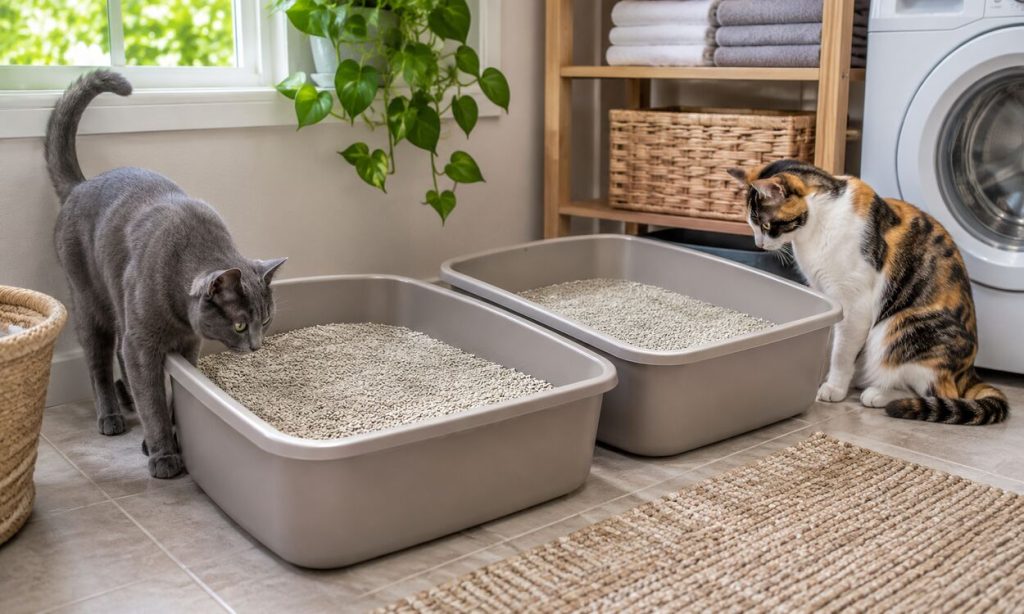
In a home with several cats, ‘how much litter do I need?’ is really two questions. Owners must provide enough comfortable litter boxes, then add the appropriate depth of litter to each one. A huge bag of litter cannot fix a home with too few boxes, poor placement, or an anxious cat guarding the entrance. The practical starting point is the number of cats, the size of the boxes, and how readily each animal can use them.
This guide explains how to size a cat litter setup for multiple cats, estimate the amount of litter, and maintain a cleaner shared environment. It also covers litter texture, box placement, scooping, and gradual changes. Our guide to clumping litter for multiple cats explores how material properties can affect everyday maintenance.
Count Litter Boxes Before Counting Pounds of Litter
Feline behavioral guidance commonly recommends one litter box for each cat, plus one extra. That gives a two-cat household a starting point of three boxes and a three-cat home four. This is a guideline rather than a guarantee that every cat will accept the arrangement. Some animals avoid a box another cat recently used, while others need escape routes and more than one quiet location. Adding more litter to one crowded box does not create an alternative access point.
Spread boxes across separate usable locations, ideally with a choice on each floor of a multilevel home. Avoid lining every box side by side, where cats may perceive them as one shared resource. Keep boxes away from food, loud appliances, and areas where one cat can block the only exit. Our guide to introducing a litter box for two cats explains why separate resources matter.
Choose a Box Large Enough for the Individual Cat
A cat should be able to turn around, dig, and adopt a comfortable posture without touching all four walls. A useful starting guideline for many adult cats is an open box approximately one and a half times the cat’s nose-to-base-of-tail length. Large cats may need a roomy low-sided storage-style box rather than a small enclosed tray. Senior cats and cats with arthritis may need lower entrances. Actual comfort matters more than a label that says ‘large.’
Measure the available floor space before purchasing or placing boxes. A cramped passageway can make a generous box function poorly. Some cats dislike lids, swinging doors, liners, or narrow entrances; different box designs can be tested without forcing every pet into one arrangement. The number and size of litter boxes are separate parts of the sizing question, and both affect whether cats use the area consistently.
Estimate Litter Depth and Bag Consumption
Most litters provide a recommended fill depth on their packaging. Follow that starting point while observing whether the cat can dig and cover waste comfortably. Deeper is not always better: excess litter may spill onto the floor or make an unstable surface, while a very shallow layer may expose the base and trap waste. Clumping, nonclumping, paper, and pellet litters behave differently and cannot be measured by one universal scoop count.
To estimate monthly supplies, first record how many boxes you maintain, their floor areas, and the manufacturer’s preferred fill depth. Note how much litter each box takes at a full change. Then track what is added after scooping for two to four weeks. This real household record is more reliable than a generic ‘one bag per cat’ claim. Consider the litter’s density: a ten-pound bag of a heavy mineral product may occupy less space than a lightweight alternative.
Select Texture, Dust Level, and Scent With Cats in Mind
Many cats prefer predictable texture and a familiar odor environment. Strong perfume can overwhelm sensitive animals even when people associate it with cleanliness. Dust may bother cats or household members, and very coarse pellets may feel uncomfortable under paws. Choose a suitable litter based on the cats’ observed acceptance and any veterinary concerns. Do not assume a product labeled for multiple cats will resolve competition for a litter box or a medical cause of house soiling.
Introduce a changed litter gradually when possible, keeping at least one familiar box available during the trial. Scoop and inspect daily so you can notice changes in urine clumps or stool. If one cat begins avoiding the box, investigate location, social stress, cleanliness, and health rather than merely buying stronger deodorizer. IMO, the best amount of litter is the amount your cats happily use and you can keep genuinely clean—not the amount an advertisement promises.
Maintain the Boxes and Adjust as the Household Changes
Scoop waste at least daily, and more often in a busy household. Replenish litter to the recommended depth after removing clumps. Wash the box at the interval appropriate for the litter type and manufacturer directions, using pet-safe methods and thoroughly rinsing. Avoid intense fragrances or harsh chemicals that leave residues. Replace deeply scratched trays that cannot be cleaned well. Include a separate scoop or safe cleaning routine that reduces contamination between boxes when a cat is ill.
Reassess the setup when adopting another cat, moving home, changing a cat’s mobility, or noticing guarding near a box. Add resources before problems become established, and watch how each cat travels between rooms. More frequent scooping may be necessary, but it should not replace extra access points. If a cat suddenly strains to urinate, cries in the box, or produces little urine, seek veterinary assistance immediately; urinary obstruction can be an emergency.
Troubleshoot Avoidance Before Changing Litter Amounts
Elimination outside the box may result from medical illness, stress, poor box access, an unpleasant surface, or conflict between cats. Check for urgent symptoms first. A veterinarian can evaluate urinary and digestive concerns before a behavior plan is made. Clean accident areas with an appropriate pet-safe method and avoid punishment. Scolding can worsen anxiety without addressing the reason the cat avoided the box.
Keep a simple map of box locations and a daily log of which cats use them. Watch whether one animal waits outside a box or interrupts another. Moving a box to a quieter location may help more than adding an extra inch of litter. In a multi-cat household, successful ‘sizing’ includes physical dimensions, the number of resources, and emotional access. Revisit all three whenever the household changes.
Frequently Asked Questions
Questions about quantity are easier to answer when box number and fill depth are considered separately. Use the litter label as a starting point for depth and monitor how cats respond.
Observe individual behavior. A system that works for one pair of cats may need adjustment in a larger household with different ages, sizes, or social relationships.
How many litter boxes do I need for three cats?
A common starting point is four boxes: one per cat plus one extra. Place them in separate accessible areas and adjust for household dynamics.
How deep should cat litter be in each box?
Follow the specific litter’s fill-depth guidance and observe the cats’ comfort. Different litter materials and box designs require different amounts.
Can one extra-large box replace several boxes?
Not always. A single box does not provide independent access when cats compete or one blocks another. Separate boxes in different locations are usually more practical.
Do multi-cat litters need less frequent scooping?
No. Product labels do not eliminate the need for daily waste removal, sufficient box access, and regular cleaning.
What if one cat suddenly stops using the box?
Check for urgent urinary or digestive symptoms and contact a veterinarian. Also investigate cleanliness, location, texture, and conflict with other cats.
Final Words
To size cat litter for multiple cats, begin with enough boxes, generous turning space, and several accessible locations. Then add the appropriate litter depth and track how quickly your household uses it. The number of boxes matters at least as much as the number of pounds purchased.
Maintain daily scooping, watch for avoidance, and provide individual choices. If problems persist, assess medical and behavioral causes rather than simply changing litter brands. Our guide to common clumping and odor-control litter mistakes offers related points to consider.









