
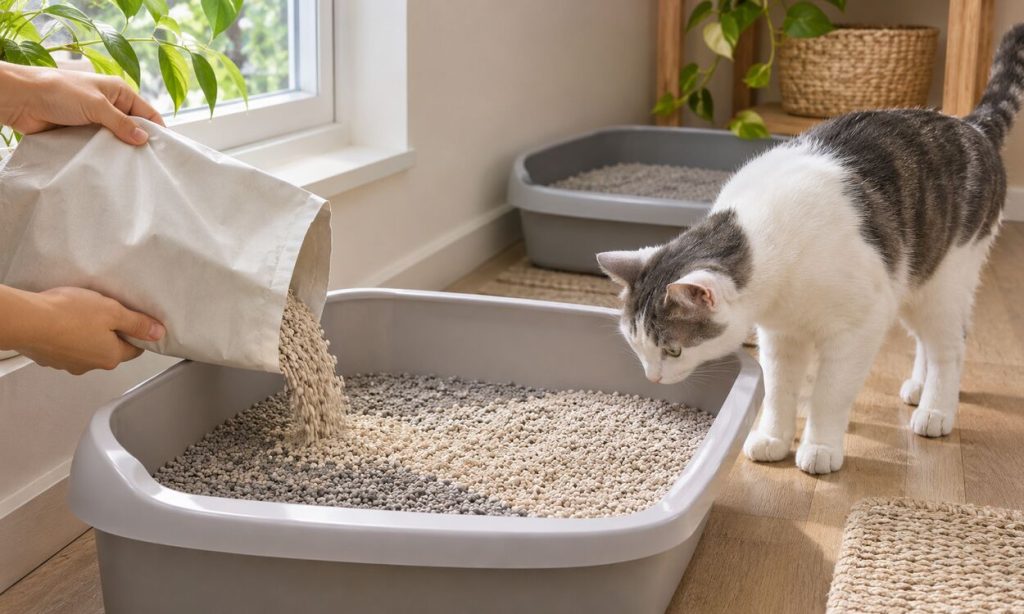
Changing a cat’s litter to reduce household odor can be helpful, but the transition itself can cause problems if it feels unfamiliar under the cat’s paws. Cats use scent, texture, and location cues when choosing a toilet. A sudden switch to heavily scented litter may result in hesitation or avoidance, even when people like the new smell. A gradual change protects your cat’s routine while allowing you to test whether the new material actually improves cleanliness.
This guide explains how to introduce odor-control cat litter to your pet safely, what to watch during the transition, and how to separate litter performance from basic cleaning. It also covers litter-box access, dust, fragrance, and common troubleshooting. Our guide to clumping litter and odor-control mistakes provides related background.
Check the Reason for Odor Before Switching
Notice whether the smell comes from urine, uncovered stool, litter tracked outside the box, or a tray that needs cleaning. Daily scooping, adequate box numbers, and routine washing often matter more than a product’s odor-control claim. A litter cannot correct an infrequently cleaned box. Check that urine is forming removable clumps if the material is intended to clump, and that the tray surface is not deeply scratched or holding persistent residue.
Strong or unusual urine odor can sometimes accompany a health problem, and a cat urinating frequently, straining, crying, or producing little urine needs veterinary assessment. Do not hide an ongoing problem behind extra perfume. If the box is clean but a cat refuses to use it, review noise, location, and conflict with other pets. Address the underlying issue before adding another variable through a full litter change.
Choose a Suitable Texture and Fragrance Level
Compare the new material’s grain size, weight, dust production, clumping behavior, and fragrance with the familiar litter. Many cats prefer an unscented and reasonably fine-grained surface, but individual preferences differ. Strong fragrance may be pleasant to the owner yet irritating or aversive to the animal. Avoid assuming that more scent means better sanitation. An odor-control additive also does not remove the need to scoop waste each day.
If a cat has respiratory sensitivity, prior litter avoidance, or a veterinary skin concern, ask for individualized advice about dust and material choice. Look for clear package directions and safe disposal instructions. Cats sometimes investigate a novel material by sniffing, pawing, and leaving; this is normal exploration. FYI, a litter box is the cat’s bathroom, not a room fragrance dispenser.
Set Up a Gradual Litter Introduction
Keep at least one familiar, fully usable box available while introducing the new litter. If space allows, place a separate tray with the new material near a safe familiar location rather than replacing every box at once. Let the cat investigate without being carried into the tray or restrained. Some cats will use it immediately, while others need more time. Continue cleaning both boxes to the usual standard throughout the trial.
Another option is gradually mixing small amounts of the new litter into the old, provided the products are compatible and mixing will not compromise clumping or safe use. Follow the specific material instructions. Make changes over several days or longer based on the cat’s response. If the cat avoids the box, return to the familiar arrangement and reassess. Do not force a timetable just because a bag promises instant odor control.
Protect Litter-Box Access in Multi-Cat Homes
In a household with more than one cat, avoid switching every tray simultaneously. Cats may have different preferences and may compete for access. Feline veterinary guidelines commonly suggest one box per cat plus one additional box, distributed across separate locations. A cat that is blocked from the only acceptable tray may eliminate elsewhere. Observe where each cat waits or approaches and whether there is room to turn and dig comfortably.
Keep boxes away from loud laundry appliances, busy doorways, and food stations. A covered box may trap odors or make a timid cat feel cornered; consider an open alternative if avoidance occurs. Our multi-cat clumping litter guide discusses household maintenance needs. The best-performing litter is of little value if one cat refuses to enter its box.
Monitor Acceptance and Odor Over Time
Keep a short log of which tray the cat uses, whether urine clumps are removable, and how often odor returns after cleaning. Note unusual tracking, dust clouds during pouring, or irritation around a cat’s paws. These observations help distinguish a useful change from a marketing claim. Compare conditions at the same point in the scooping schedule, rather than judging a fresh tray against an old one that has not been cleaned.
Watch for signs of avoidance such as hovering at the edge, stepping in and out repeatedly, or eliminating nearby. Do not punish accidents. Return to a comfortable box and ask a veterinarian about persistent issues, especially when urination or bowel habits have changed. IMO, a modest improvement in household smell is not worth making the cat anxious about using the toilet.
Maintain Odor Control Without Masking Hygiene Problems
Remove solid waste and clumps at least daily, replenishing litter according to the label and how much has been removed. Clean the tray regularly and avoid chemicals with strong residual smells. Wash hands after handling litter and keep pregnant or immunocompromised people aware of appropriate hygiene precautions. Never mix cleaning chemicals, and rinse surfaces thoroughly before refilling. A fresh litter bed can develop odors quickly if the box is too crowded or not maintained.
Reduce odor at its source: separate boxes, adequate ventilation, clean floors, and timely waste disposal. Seal used litter in an appropriate waste container and follow local disposal requirements rather than flushing materials that may clog plumbing. When a new litter works well, maintain the routine instead of adding perfume or other household chemicals. Simple consistent habits help more than endlessly layering deodorizing powders.
When to Stop the Transition
Stop or reverse the change if the cat repeatedly refuses the box, develops obvious irritation, or seems distressed by dust or scent. Restore access to a familiar clean tray immediately, then investigate what differed. The transition may be too fast, the texture unsuitable, or the box poorly located. Some cats need a different litter entirely. A gradual introduction is useful only if the animal remains comfortable and willing to eliminate normally.
Urgent veterinary attention is required when a cat strains to urinate with little or no urine, especially in male cats. This can be a life-threatening obstruction and cannot be treated by changing litter. For other sudden accidents, pain, blood, or persistent constipation, seek veterinary advice instead of assuming the new material caused every change. Maintain a simple baseline of familiar litter until health questions are resolved.
Frequently Asked Questions
Odor-control litter changes raise practical questions about mixing materials and cat preferences. The safest answer depends on the specific litter and the animal’s behavior.
Keep daily cleaning unchanged during the trial so you can tell whether the new product adds genuine value. Do not interpret the cat’s silence as automatic acceptance.
Should I change all the litter boxes at once?
Usually no. Keep a familiar clean box available and introduce the new material in one location, monitoring each cat’s response.
Is scented litter better for odor control?
Not necessarily. Strong fragrance can deter some cats and does not replace cleaning. Consider unscented materials and consistent maintenance.
Can I mix old and new cat litters?
Sometimes, if the manufacturers’ instructions allow it and the materials remain compatible. Mixing can change clumping and disposal properties, so check first.
How long should a litter transition take?
There is no universal schedule. Move gradually over several days or longer, slowing down or reversing the change if the cat hesitates or avoids the box.
What if the cat urinates outside the box after switching?
Restore a familiar clean box and seek veterinary advice for sudden changes. Straining or passing little urine is urgent; do not wait for the cat to adjust.
Final Words
To introduce cat litter for smell control, protect the familiar routine, change one box at a time, and allow the cat to choose comfortably. Observe texture and scent preference as carefully as household odor. Gradual mixing may help when compatible, but never sacrifice access to a familiar clean tray.
Daily scooping, sufficient box numbers, and prompt veterinary attention for abnormal elimination remain essential. When your cat accepts the new material, keep using it consistently rather than making frequent unnecessary switches. Our two-cat litter-box introduction guide offers related advice for shared homes.









