
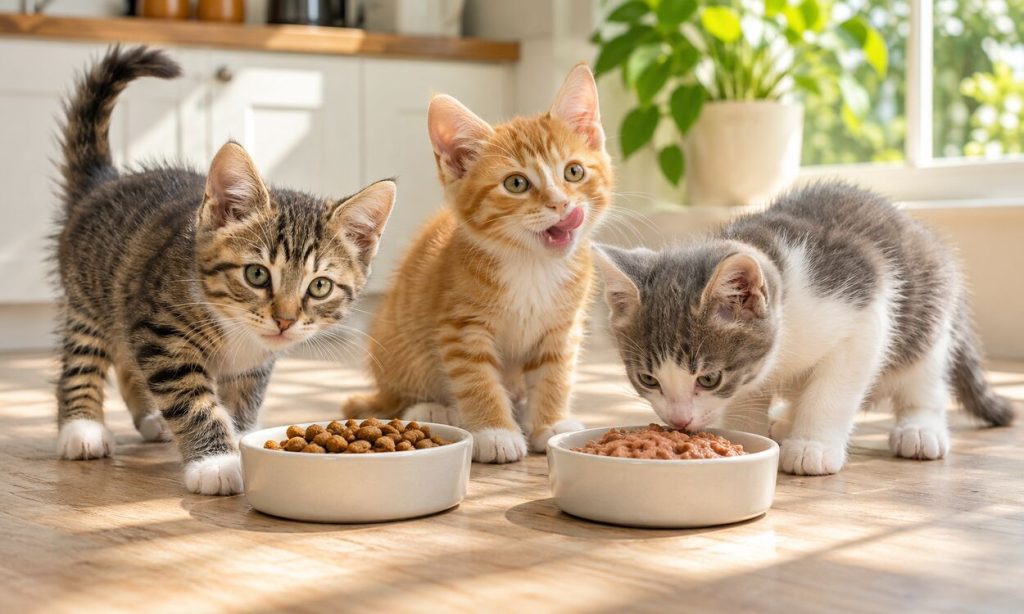
Kitten-food shopping often begins with a cute label, a tempting flavor, or an enthusiastic online recommendation. None of those reliably tells you whether the food meets a growing cat’s needs. Kittens require a nutritionally appropriate diet, reliable calorie intake, and feeding routines that change as they develop. Mistakes made early can cause unnecessary digestive upset or leave important nutrients out of the daily menu. The best decisions begin with the nutritional adequacy statement and the individual kitten, not a popularity contest.
This guide covers common mistakes when choosing cat food for kittens and explains how to avoid them. It addresses life-stage labels, portions, wet versus dry food, food changes, and veterinary warning signs. For more context on moisture and texture, see our guide to wet cat food for kittens while keeping this article focused on feeding principles.
Mistake 1: Feeding Adult-Maintenance Food as the Main Diet
Growth requires a nutritional profile suited to young cats. The FDA explains that pet foods marked complete and balanced carry a nutritional adequacy statement indicating the intended life stage. Food intended only for adult maintenance is not automatically adequate for a growing kitten. Check the label for growth or an appropriate all-life-stages claim, and make sure the food is suitable for the kitten’s species and age. The words ‘premium’ or ‘natural’ cannot replace this statement.
Occasional small amounts of another food are different from using it as the nutritional foundation. A kitten’s main calories should come from a complete, appropriate diet unless the veterinarian prescribes otherwise. Ask the veterinarian about special circumstances such as orphaned kittens, illnesses, or a kitten struggling to gain weight. Do not assume that a food is suitable merely because the kitten eagerly eats it or because an adult cat in the household thrives on it.
Mistake 2: Ignoring Calories and Feeding Frequency
Kittens grow rapidly and generally need more energy relative to body weight than adult cats. They may benefit from more frequent small meals, with the schedule changing as they mature. Check calories per can, cup, or pouch and use the feeding directions as a starting point. Then ask your veterinarian how to adjust for weight, body condition, and growth. A single daily meal may not suit a very young kitten, while unlimited feeding can lead to excess intake in some individuals.
Record the kitten’s weight regularly and watch for steady growth rather than dramatic changes. Different formulas have different energy densities; equal-looking bowl portions may deliver different calories. Treats and snacks also contribute energy but generally do not offer the complete nutrient balance of the main food. FYI, a kitten asking for a second breakfast is charming, yet it still does not calculate the correct daily ration.
Mistake 3: Letting Ingredient Buzzwords Decide
Words such as ‘grain-free,’ ‘gourmet,’ or ‘holistic’ do not independently verify whether a kitten diet is complete and balanced. Read the nutrition adequacy claim, calorie statement, ingredient information, and feeding directions together. A long ingredient list is not always better than a shorter one, and a flashy image of raw meat does not explain the product’s nutrient profile. Ask questions about formulation and quality controls when information is missing.
Homemade or raw diets can introduce additional nutritional-balance and food-safety risks, especially for growing animals. If you want to prepare a homemade diet, work with a qualified veterinary nutrition specialist rather than improvising a recipe from social media. Do not substitute cow’s milk for appropriate kitten nutrition. Milk often upsets the digestive tract after weaning, and very young unweaned kittens need specialized care and appropriate milk replacement under veterinary guidance.
Mistake 4: Switching Foods Too Quickly
An abrupt change can cause loose stool, vomiting, or food refusal in some kittens. When a switch is needed and the kitten is well, transition over an appropriate period by gradually adjusting the proportions of old and new foods. Keep a record of the amounts so the kitten still receives adequate daily intake. Avoid changing several variables at once, such as diet, treats, litter, and feeding location, because then it becomes hard to identify the cause of any problem.
If the kitten is ill, has persistent diarrhea, loses weight, or refuses multiple meals, seek veterinary attention rather than continuing an ordinary transition. Do not keep changing formulas to chase a perfect stool without investigating parasites, infections, or other common causes. Our guide to digestive upset in cats explains warning signs worth discussing with a veterinarian.
Mistake 5: Treating Wet and Dry Food as Opponents
Both wet and dry foods can meet kitten nutritional needs when formulated appropriately and fed in adequate amounts. Wet food provides moisture and different textures; dry food may be convenient to measure or use in feeding puzzles. The most important factors are completeness, safety, acceptance, and the kitten’s individual needs. Do not assume one format alone guarantees healthy teeth, perfect hydration, or better growth. Maintain clean drinking water regardless of food format.
Some kittens may accept multiple textures more readily when exposed gently early in life, but forcing a new texture is not necessary. Choose portions by calories, not just volume, especially when mixing wet and dry meals. Check that all components are complete diets rather than complementary toppers being used as the main ration. Keep open wet food refrigerated according to the label and discard unsafe leftovers.
Mistake 6: Overlooking Individual Health and Household Needs
A kitten with poor growth, dental problems, vomiting, or a medical diagnosis may need a different feeding plan. Breed expectations alone are not a substitute for the individual kitten’s weight and body condition. Veterinary visits can identify parasites, illness, or developmental issues that a change in food cannot solve. Spaying or neutering may also affect energy needs over time, making later portion adjustment important.
In homes with adult cats, feed kittens where they can finish their meals without competition. Adults may steal calorie-dense kitten food, while kittens may reach unsuitable adult food. Separate meal stations or supervised feeding simplify tracking. IMO, the most useful feeding plan is the one that reliably delivers appropriate nutrition to the right animal, even if that means fewer decorative feeding accessories.
Mistake 7: Keeping Poor Records and Missing Warning Signs
Note the exact diet, amount offered, leftovers, growth trend, and any unusual stool or vomiting. This record is especially valuable when different people feed the kitten. Keep food in its original labeled packaging when practical, and follow manufacturer storage instructions. If the kitten receives prescribed food or medication, make sure every caregiver knows the routine. A few notes can reveal a pattern earlier than vague recollection.
Contact a veterinarian when a kitten has prolonged poor appetite, persistent diarrhea or vomiting, weakness, dehydration, or inadequate weight gain. Young kittens can become unwell quickly. Do not wait for an online food-ranking list to solve a medical concern. Once the kitten matures, review when and how to transition to an adult diet based on the veterinarian’s advice.
Frequently Asked Questions
Choosing a kitten diet is mostly about life-stage suitability, consistent intake, and observing growth. These answers address common uncertainties rather than recommending a particular product.
When two labels seem equally appealing, prioritize verifiable nutrition information and professional guidance. The kitten’s response matters, but appetite alone does not prove nutritional completeness.
How do I know a food is meant for kittens?
Check the nutritional adequacy statement for growth or an appropriate all-life-stages claim. Ask your veterinarian if the label is unclear.
Can kittens eat adult cat food?
A little accidental exposure is different from using adult-maintenance food as the main diet. Growing kittens need complete nutrition appropriate to growth.
Should I feed only wet food?
Not necessarily. Wet and dry diets can both be suitable when nutritionally complete. Choose based on the kitten’s health, acceptance, and planned calorie intake.
How do I change a kitten’s food?
When the kitten is healthy, transition gradually and monitor appetite and stool. Obtain veterinary guidance for illness or persistent digestive symptoms.
When should a kitten move to adult food?
Timing depends on growth, body condition, breed, and health. Ask the veterinarian to help plan the transition instead of changing solely by calendar date.
Final Words
Common mistakes when choosing cat food for kittens include relying on advertising phrases, feeding adult-only diets, switching abruptly, and ignoring portions. Start with a complete growth-appropriate food, understand calories, and track the kitten’s weight and appetite. Both wet and dry formats can be useful when selected and served appropriately.
Keep feeding changes measured and involve a veterinarian whenever growth or health is uncertain. Practical records and a calm routine often matter more than constant experimentation. The goal is to support healthy development, not to win a debate about a fashionable ingredient.









