
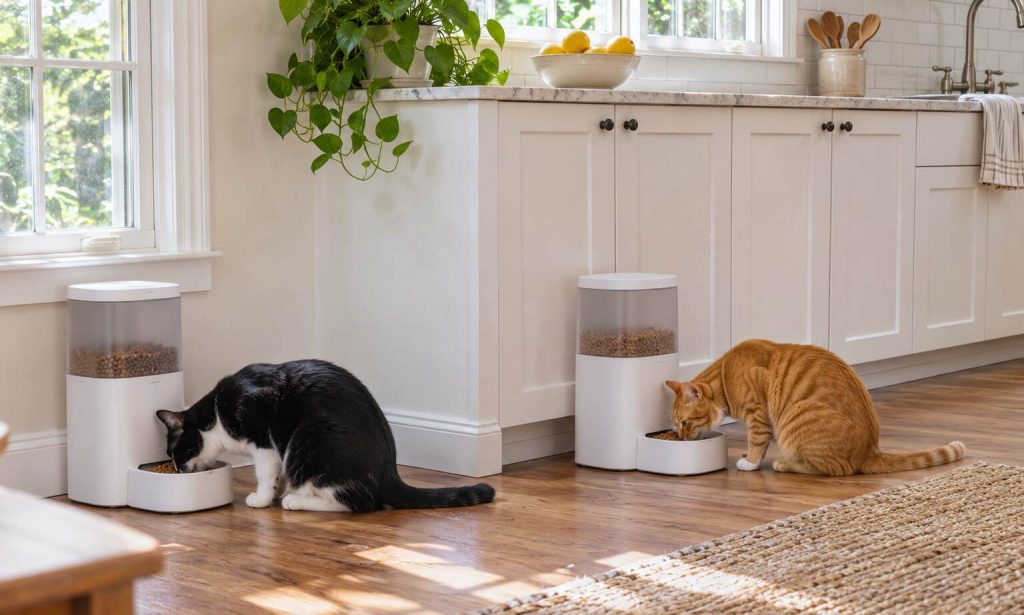
An automatic feeder can simplify mealtimes, but a shared machine does not guarantee each cat gets the correct portion. In homes with two or more cats, fast eaters, food guarding, and special diets complicate the choice. Comparing automatic cat feeders for multiple cats requires looking at access, identification features, food type, portion accuracy, and cleaning. The number of bowls alone tells only part of the story.
This guide explains how to compare feeder arrangements by real household use. It covers separate stations, monitored schedules, power reliability, and when a device is a poor fit. It also explains how to introduce changes without creating more competition. The priority is feeding each cat appropriately, not turning a family of cats into a queue at a vending machine.
Count Eating Opportunities, Not Just Bowls
A two-bowl automatic dispenser may release food into both dishes at once, yet one assertive cat can still eat from both. Observe the cats during normal meals. Can each animal approach, eat, and leave without another pet blocking the route? Does a timid cat wait until food is gone? These behaviors reveal whether the layout supports independent access.
For two cats, compare the practical differences discussed in the automatic feeder guide for two cats. For larger groups, the same principle becomes even more important: provide enough separate feeding locations rather than assuming one machine scales endlessly. Automated feeding should preserve normal access to food and should not replace observing each cat’s appetite.
Match Identification Features to the Household
Some feeders dispense portions on a schedule, while others restrict access using a compatible tag or microchip system. A schedule-only feeder cannot necessarily identify which cat ate the food. For animals on different diets, accurate identification and controlled access may matter more than app connectivity. Check how a device handles a cat approaching from the side or an unauthorized animal following closely.
Test whether every cat tolerates the opening, sound, and height. An identification system that frightens a shy cat can create feeding avoidance. Discuss prescription diets or medical restrictions with a veterinarian before relying on a machine. Even with selective access, arrange periodic supervised meals to confirm the intended cat consumes the food.
Consider Food Type, Capacity, and Portion Control
Dry kibble hoppers and wet-food compartments have different requirements. Wet food spoils if left at unsuitable temperatures, and any cooling system must be used exactly as directed. Confirm that the food type and kibble size work with the dispenser. A large hopper is not helpful if the mechanism jams or portions vary with pellet shape.
Read how the machine defines a portion. A ‘step’ may not equal a consistent weight across different foods. Use a kitchen scale to test delivered amounts and compare with the veterinarian’s daily calorie plan. Keep records for each cat rather than assuming a shared total will divide evenly. The guide to choosing slow feeder bowls for cats covers a separate approach for fast eating.
Choose a Layout That Reduces Competition
Place feeding devices away from litter boxes and heavy household traffic. Several stations in separate locations can limit guarding and allow cats to retreat. The American Association of Feline Practitioners’ environmental guidance emphasizes multiple, separated resources to reduce competition. A feeder arrangement should support that principle, not funnel every cat through one narrow passage.
Observe whether a cat eats with its body tense, repeatedly looks over its shoulder, or leaves when another approaches. Those signs may justify moving stations farther apart. Our calmer feeding routine for cats offers non-technical changes that can help, whether meals come from a person or a timer. Keep water accessible at independent locations as well.
Check Cleaning, Power, and Failure Modes
Every food-contact part needs a cleaning plan. Look for removable bowls, accessible chutes, and simple instructions for clearing jams. Food residue can build up around moving parts. A machine that is difficult to clean may be less useful than a straightforward arrangement. Check whether the feeder has a backup battery and how it behaves after a power outage.
Test the clock and programmed schedule after unplugging the unit under controlled conditions. See whether the machine repeats a missed meal or skips it. Maintain a manual feeding plan when traveling or when service is interrupted. Do not assume Wi-Fi access or an app notification proves the cat received and ate food. Inspect the actual bowls regularly.
Introduce the Feeder Gradually
Begin with the feeder inactive and allow each cat to investigate without pressure. Place a familiar bowl nearby, then introduce the sounds and scheduled activity gradually. Follow the manufacturer’s safety directions. Avoid forcing a fearful cat into an enclosed feeder. Some cats need more time or a different location before they will eat comfortably.
During the transition, supervise enough meals to verify each animal’s portion and stress level. If a cat stops eating, consult a veterinarian promptly; do not treat prolonged food refusal as a minor training issue. Keep the old feeding method available while assessing the new arrangement. The interactive feeder and begging behavior guide explains why feeding schedules and enrichment may serve different goals.
Know When Automation Is the Wrong Tool
Automation cannot observe vomiting, sudden weight loss, food theft, or a cat that approaches but does not eat. A cat on a complex medical diet may need closer supervision. If one animal persistently controls access, consider physically separated mealtimes or other professional guidance before adding more features. Technology should support the routine, not override the cats’ behavior.
Review body weight, appetite, stool changes, and interactions at regular intervals. Record whether scheduled amounts actually reach the intended animals. A simple written feeding chart can prevent one cat getting an extra dinner from another family member. IMO, reliable access beats an impressive screen every time. When habits change, reassess the entire arrangement.
Frequently Asked Questions
Multiple-cat feeding is a resource-management problem as well as a device question. These answers focus on choosing a suitable arrangement and monitoring actual intake.
For cats on prescribed diets, with obesity, diabetes, or other medical conditions, obtain an individual feeding plan from the veterinarian.
Will one feeder prevent food theft?
Not necessarily. Shared bowls do not guarantee individual intake. Observe meals or use verified access controls when needed.
Can an automatic feeder dispense wet food?
Only if designed for it and if safe storage temperatures and cleaning directions can be followed.
What happens when the power goes out?
This varies by model. Test backup functions and keep a manual feeding plan.
Should cats share a feeding station?
Separate resources often reduce competition, particularly when cats have different diets or temperaments.
How can I check portion accuracy?
Weigh actual dispensed food across several trials using the intended kibble, then compare with the veterinary feeding plan.
Final Words
Comparing automatic cat feeder options by fit and use means assessing each cat, not just counting hopper compartments. Check portion delivery, independent access, food compatibility, cleaning, power backup, and a practical failure plan. Test the setup under supervision before relying on it unattended.
An automatic feeder for two cats can illustrate a smaller household setup, but an automatic cat feeder for multiple cats must work for your full group. Keep the separate feeding-station routine in mind when deciding whether the machine genuinely reduces stress.









