
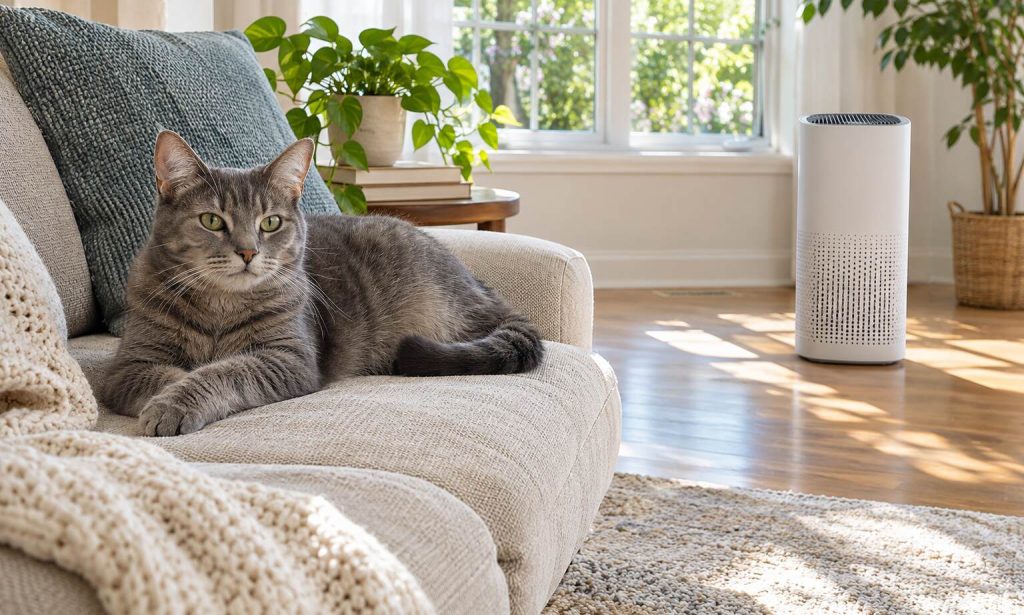
Living with a beloved cat while managing allergies calls for realistic expectations. Air purifiers can capture some airborne particles, but they cannot remove every cat allergen from a home. The features that matter most in air purifiers for cat allergies are appropriate particle filtration, airflow for the room, a safe design, and a maintenance routine you can sustain. Flashing lights and big claims come later.
Cat allergens can accumulate on bedding, furniture, clothes, and other surfaces before becoming airborne again. An air cleaner is one part of a wider plan that may include cleaning, ventilation, and advice from an allergy specialist. This guide explains filter terms, room sizing, noise, replacement costs, placement, and ozone-related warnings. It avoids promising an allergy cure.
Start With Particle Filtration
For airborne cat-associated particles, filtration matters more than decorative design. A high-efficiency particulate air, or HEPA, filter is designed to capture fine particles passing through it. Look for clear descriptions of the actual filter system. Avoid confusing a basic mesh prefilter, which catches large lint, with the main fine-particle filter. A product may use several layers, each with a distinct purpose.
Cat allergen does not exist only as visible fur. Proteins associated with dander, saliva, and skin particles can move through indoor air and settle onto surfaces. Because of this, a machine advertised only for pet hair may be inadequate for the intended concern. Our cat allergy air purifier overview can help define related terminology, but equipment alone cannot diagnose or treat an allergy.
Match CADR and Airflow to the Room
Clean air delivery rate, or CADR, describes how much filtered air a portable device can deliver under specified test conditions. Check the room’s floor area and ceiling height, and compare them with the purifier’s tested capacity. A unit placed in a large open-plan room may underperform if it was sized for a small bedroom. Read assumptions behind any advertised square footage.
The US Environmental Protection Agency advises choosing room-sized air cleaners with appropriate filtration and recognizes that no air cleaner eliminates all pollutants. A unit must move enough room air through its filter to make a useful difference. Ignore unverifiable claims that one small device will purify an entire multistory home. Consider separate units for separate living zones when warranted.
Avoid Ozone and Unclear Add-On Technologies
Some machines use ionization, plasma, or other electronic features in addition to mechanical filtration. Review the exact technology and whether it may produce ozone. Ozone can irritate the respiratory system and is not a desirable indoor-air-cleaning strategy. A feature that sounds futuristic is not automatically helpful. Favor understandable methods with independently supported performance and safety information.
If a purifier offers optional electronic modes, check the instructions and emissions information. Do not assume a low-odor room is free from allergens or pollutants. Air fresheners, fragrance cartridges, and scent diffusers may create their own sensitivities. For cat households, a simple filtration plan that runs reliably is often more practical than a complicated menu of effects.
Check Noise and Continuous Use Practicality
A purifier works only when it is operating. Look at noise ratings at the fan speeds that provide meaningful air cleaning, not just a near-silent minimum setting. A high-speed machine that makes sleep impossible may be left off most nights. Test the likely placement in the bedroom or living space and think about how household members and the cat respond to sound.
Automatic sensors can be convenient, but they may not directly measure cat-allergen levels. Dust or particle indicators are not allergy diagnoses. A quiet overnight setting should still move enough air to be useful. If a cat is frightened by the machine, introduce it gradually without blocking access to litter, food, or resting areas. Daily usability matters.
Plan for Filter Replacement and Cleaning
Look beyond the purchase price to replacement-filter availability and the recommended interval. A clogged filter can reduce airflow. Some prefilters can be cleaned, while other filter elements must be replaced rather than washed. Follow the maker’s directions exactly. Washing a non-washable filter may damage its performance and introduce moisture that should not be present.
Keep the intake and exhaust clear of curtains, bedding, and shedding hair. Place the unit where it cannot tip or expose a cat to moving parts or electrical cords. A regular maintenance reminder prevents a well-intended appliance from becoming a dusty fixture. Read common air purifier mistakes in homes with cats for placement and care issues relevant to pet households.
Understand What Purifiers Cannot Solve
Air filtration does not remove settled allergens from carpets, pillows, upholstery, or blankets. Cleaning routines and household practices still matter. Vacuum with suitable filtration, launder removable fabrics, and avoid actions that unnecessarily stir up dust. Decide with your clinician whether bedroom access and other exposure controls are appropriate for your allergy severity.
Air cleaners are not a treatment for an asthma attack or severe allergic reaction. People with wheezing, persistent symptoms, or suspected asthma should seek medical evaluation. The aim is reducing exposure, not promising that a pet-allergic person can safely ignore symptoms. A pet owner can love a cat deeply and still need expert allergy guidance.
Choose Safe Placement and Check Actual Results
Position the device in the room where exposure is important, leaving clearance recommended by the maker. Keep electrical cords protected from chewing and do not block cat walkways. Avoid placing it so close to a sleeping cat that the airflow disturbs resting behavior. If the cat uses a room with litter dust, consider how cleaning and ventilation affect particles.
Assess results over weeks with practical observations rather than one sniff test. Track machine operating time, filter changes, dust accumulation, and allergy symptoms in consultation with a clinician. Results may vary as seasons, cleaning habits, and ventilation change. Our air purifier guidance for cat litter odors addresses a different concern: odor control is not the same as reducing allergens.
Frequently Asked Questions
Cat-allergy air cleaners are best judged by tested filtration and the room in which they operate. These questions address common claims that can distract from those basics.
A purifier may reduce airborne exposures, but it cannot confirm a diagnosis or replace a clinician’s management plan.
Do HEPA air purifiers remove all cat allergens?
No. They can capture many airborne particles passing through the filter but cannot eliminate allergens from all surfaces.
What does CADR mean?
Clean air delivery rate is a measure of filtered airflow under defined conditions. It helps compare suitability for a room.
Do air purifiers help with cat odor and allergies equally?
No. Odor involves gases and other sources, while allergen reduction focuses on particles; filtration features differ.
Are ionizers necessary for cat allergies?
No. Mechanical filtration is a core consideration, and any ozone-producing feature warrants caution.
Can a purifier replace allergy medication?
No. Follow a clinician’s advice about diagnosis and treatment, especially with asthma or severe reactions.
Final Words
The features that matter most in air purifiers for cat allergies are fine-particle filtration, sufficient CADR, ozone-conscious safety, acceptable noise, and practical filter upkeep. Choose a device that can run where it is needed and check its real specifications. Treat it as one component of indoor allergen management.
If you’re researching air purifiers for cat allergies, focus on fit for the room rather than the longest feature list. Keep cleaning habits and medical advice in the picture. Even an excellent filter cannot make a home completely allergen-free.
Reference
The following environmental and public-health materials explain how room air cleaners work and why reducing indoor airborne particles has limits. They support the article’s safety-focused discussion.
Allergy diagnosis and individual medical treatment require professional care. The sources below do not certify a specific model or guarantee symptom relief.









