
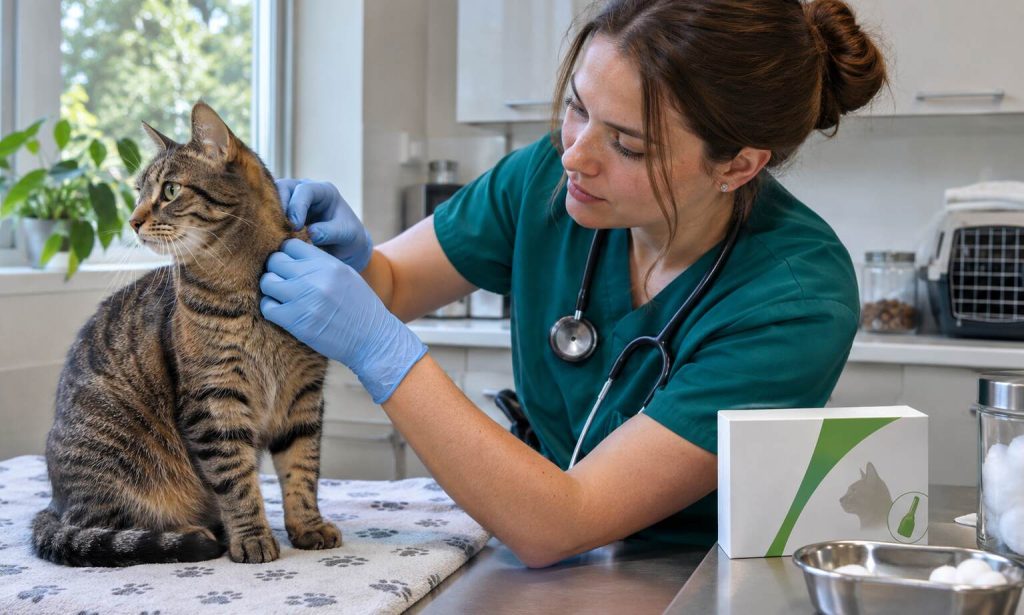
Finding appropriate flea medication for a cat is a safety decision, not a search for the strongest label. Some products are approved only for dogs, others have age or weight limits, and certain illnesses change what is suitable. Knowing what to look for in flea medication for cats starts with the species, active ingredients, directions, and a veterinarian’s assessment. An attractive package cannot replace those checks.
Fleas can cause itching and may spread disease. Treating the pet and managing the home may both be necessary during an infestation. This guide explains how to read veterinary flea-treatment labels, check administration methods, watch for adverse effects, and avoid common dosing mistakes. It provides education, not an individual treatment choice or a list of products to buy.
Confirm Cat-Specific Approval and Eligibility
First verify that the package is labeled for cats, not merely ‘pets.’ Some canine flea products contain substances that are dangerous to cats. Follow the stated minimum age, weight range, species, treatment interval, and contraindications. A product that helped a neighbor’s dog is not a safe substitution. Do not split, combine, or repurpose formulations without explicit veterinary directions.
Tell the veterinarian if your cat is pregnant, nursing, elderly, very young, underweight, or living with chronic disease. Mention existing medications and previous reactions. In multi-pet households, ask about preventing contact between recently treated animals. The oral flea treatment handling guide explains some administration and storage considerations for that particular format.
Understand Which Parasites the Label Covers
Some veterinary preventives address fleas alone, while others may be labeled for specific ticks or additional parasites. Check exactly which pests and life stages are covered. A broad phrase such as ‘complete protection’ does not tell you whether an adult-flea treatment also affects eggs, larvae, or environmental populations. Match the label to local parasite risk after discussing it with your veterinarian.
Do not assume that a topical spray, collar, oral tablet, or environmental treatment is interchangeable. Routes of exposure and safety precautions differ. Some products fall under FDA oversight and others under EPA oversight. Check the appropriate label and current directions for the specific formulation. If you are evaluating flea medication for cats, remember that a guide to oral options does not establish eligibility for every cat.
Compare Administration Requirements, Not Claims
Consider whether the cat can safely receive a pill, tolerate a topical application, or wear a collar as directed. Administration difficulty affects whether the prescribed schedule can be followed accurately. Some cats resist handling or vomit after oral medication. Do not repeat a dose because it seems lost until a veterinarian confirms what to do. Keep medicines away from food and children.
For spot-on treatments, follow the exact application site, drying, and separation instructions. Prevent grooming or licking if the label says so. For collars, verify fit and the maker’s safety guidance, then monitor the skin beneath the collar. Never apply several flea products simultaneously unless specifically directed. More active ingredients do not necessarily mean safer or better control.
Look for Clear Safety Information and Tracking
A useful label identifies active ingredients, indications, dosage, treatment intervals, lot number, expiration, storage conditions, and what to do after an adverse event. Keep the original packaging until the course is complete. Write down the date, dose, and product name for each pet. A shared calendar prevents accidental early re-dosing, especially when several family members provide care.
Ask your veterinarian how missed doses should be handled. Do not estimate a cat’s weight from appearance if the label has strict ranges. Weigh the animal or use a clinic measurement. Store the package in a secure location away from cats, dogs, children, and feed. The flea treatment safety article for cats and homes highlights different precautions for spray exposure.
Plan for the Home and Other Pets
Adult fleas on a cat may represent only part of an ongoing infestation. Flea eggs and immature stages can persist in the environment. Wash pet bedding as appropriate, vacuum areas used by pets, and follow professional advice about treating all eligible household animals. Do not use an indoor pesticide as a topical product, or spray a cat with a chemical intended for carpets.
The CDC recommends working with a veterinarian to choose flea control appropriate to each pet. Continue prevention according to the veterinary plan and local risk rather than stopping after the first itch-free day. If indoor infestation is severe, seek reputable pest-management guidance that considers pets, children, and the home. Never mix household cleaners with pesticides.
Recognize Side Effects and Emergency Signs
After any new flea treatment, observe the cat for excessive drooling, vomiting, skin irritation, tremors, difficulty walking, unusual weakness, or changes in behavior. Not every sign is caused by the treatment, but timing matters. Read the adverse-reaction instructions and call the veterinarian promptly if symptoms arise. Severe neurologic signs, breathing difficulty, or collapse require urgent veterinary care.
The EPA directs owners to consult a veterinarian immediately about suspected reactions to flea and tick products. Keep the packaging so the clinician can identify the substance. Do not attempt home antidotes or induce vomiting unless instructed by a qualified professional. Record when the dose was given, the amount, and other medications used.
Avoid Mistakes That Delay Effective Control
A frequent error is switching products repeatedly before understanding the flea life cycle or the prescribed schedule. Another is treating only one pet while others remain infested. Incorrect dosing, poor application, and exposure from dog-specific products can create serious risks. Reassess the complete plan with a veterinarian rather than layering multiple treatments in frustration.
Persistent itching may have another cause even after fleas are controlled. Allergic skin disease, infections, and other parasites can look similar. Ask for an examination if scratching, hair loss, or skin wounds continue. The cat flea treatment considerations for outdoor life may help frame environmental exposure questions, but it is not a substitute for a medical consultation.
Frequently Asked Questions
Owners understandably want fast relief for a cat that is scratching. A safe plan depends on species, weight, health status, and the specific medicine’s approved instructions.
These short answers clarify common risks. They cannot replace the label or your veterinarian’s patient-specific instructions.
Can I use a small dose of dog flea medicine on a cat?
No. Some canine ingredients are toxic to cats, and simply reducing the quantity does not make the formulation appropriate.
Should I use two flea treatments at once?
Only if your veterinarian explicitly directs the combination. Unplanned overlap can increase risk.
Is a flea collar always safer than an oral treatment?
No. Routes have different risks, and suitability depends on the individual animal and the exact label.
How do I handle a missed flea dose?
Check the package and ask your veterinarian. Do not double the next dose without professional advice.
What should I do after a suspected reaction?
Contact a veterinarian immediately; seek urgent care for tremors, seizures, breathing problems, or collapse. Keep the package available.
Final Words
What to look for in flea medication for cats begins with correct species labeling and a realistic veterinary plan. Verify age, weight, ingredients, parasite coverage, route, and follow-up. Track every administration, monitor reactions, and address environmental flea stages. Never adapt a dog product for a cat or combine treatments casually.
For additional context on flea medication for cats, consider how different formulations change handling requirements, then ask your veterinarian which approach suits your animal. The right treatment is the one supported by a careful assessment and correct use.
Reference
The following US public-health and regulatory resources support the safety recommendations about flea prevention, medicine use, and adverse reactions. They are useful starting points for understanding labels and when to seek help.
These sources are general resources. The approved directions for a specific medicine and the treating veterinarian’s guidance remain essential.









