
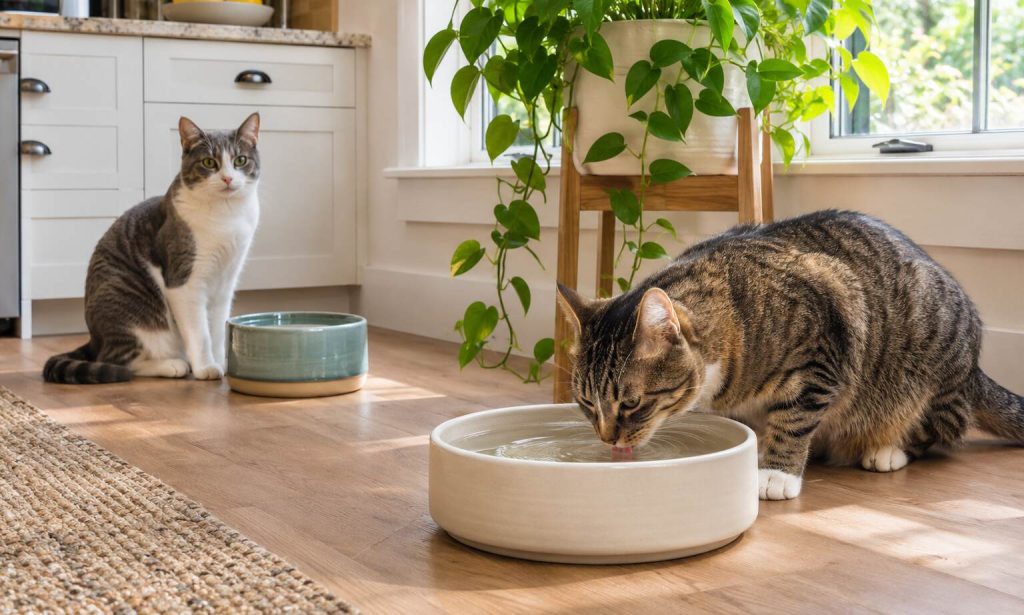
A water dish seems like the simplest item in a cat’s routine. Yet the wrong placement, material, or cleaning habit can quietly discourage drinking. Common mistakes when choosing a water dish for cats often involve treating the bowl as decoration instead of an everyday resource. Cats may have strong individual preferences, and shared homes add extra challenges.
Fresh, accessible water supports normal feline hydration. A cat eating mostly wet food may drink less from a dish than a cat eating dry food, so bowl visits alone do not measure total intake. This guide covers the errors that matter most: difficult access, narrow shapes, unstable bowls, poor hygiene, and competition among pets. It also explains when changes in drinking warrant veterinary advice.
Mistake 1: Choosing Appearance Over Practical Shape
A stylish dish can still be hard to use if the rim is awkward, the opening is too small, or the base tips easily. Watch how the cat approaches, lowers its head, and leaves the bowl. Some cats prefer a broad, shallow surface, while others tolerate a deeper dish. There is no proven universal size that suits every cat. Let comfortable use guide the choice.
Check whether the bowl sits at a height the cat can reach without awkward stretching. Kittens, senior cats, and animals with mobility limitations may need different setups. A very light bowl can slide across tile and startle a timid animal. Our water dish for cats comparison guide covers common bowl shapes and construction details, without replacing observations of your own cat.
Mistake 2: Putting the Bowl in a Noisy or Crowded Spot
Placing water beside a busy doorway, vibrating appliance, or another pet’s favorite resting spot may reduce access. Cats benefit from resources they can approach without feeling trapped. A dish beside a litter box can also be unappealing and harder to keep clean. Think about whether the cat has a clear route in and out of the area.
Offer water in more than one quiet location when practical, especially in a larger home. Check that access is not blocked by doors or furniture. If an anxious cat drinks only when everyone leaves, reconsider the location rather than assuming it dislikes the bowl. Try gradual adjustments and observe. The goal is predictable access, not a single aesthetically perfect corner.
Mistake 3: Using One Bowl for Several Cats
In multi-cat homes, one central dish can create competition even without obvious fighting. A dominant pet may sit near the route, causing another cat to avoid the area. Dogs can also block access by drinking from or guarding the dish. Cornell’s feline hydration guidance recommends making fresh water available in accessible places and avoiding social conflict over water.
Provide several separate stations where cats can drink without passing another pet. Count actual opportunities to access clean water, not just total bowl capacity. When several cats share space, our guide to calmer multi-cat feeding routines offers ideas about resource placement. Notice whether each cat can approach independently, including older or less confident animals.
Mistake 4: Overlooking Material and Cleanability
Porous or damaged surfaces can be harder to clean thoroughly. Scratches, chips, and rough seams may collect residue. Smooth, food-safe materials and a sturdy base are practical considerations. Check the manufacturer’s cleaning instructions and whether individual parts can be scrubbed without leaving inaccessible grooves. A bowl that looks clean from above may still have film at the waterline.
Do not use damaged ceramic with sharp chips or cracked plastic. Replace a dish when cleaning cannot remove persistent buildup or when the surface becomes unsafe. Use a dedicated cleaning brush and rinse thoroughly so no detergent remains. If a cat avoids the dish immediately after washing, check for odor and residue. Cleanliness is a daily responsibility, not a one-time purchasing feature.
Mistake 5: Ignoring Water Freshness
A large bowl is not useful if its contents become dusty, warm, or contaminated with food. Refresh the water regularly and wash the dish according to actual conditions. Fur, kibble crumbs, and drool can build up quickly in shared areas. Outdoor bowls may collect insects, leaves, or other debris, and should receive even closer attention.
Keep water at a comfortable temperature and position the dish away from direct sun when possible. If you use a fountain, follow the cleaning schedule for its pump and tubing. A fountain does not eliminate maintenance. Our guide to water fountains for cats that drink little explains other access considerations. FYI, a fancy water feature with a dirty reservoir is still dirty water.
Mistake 6: Forgetting the Individual Cat
Some cats drink readily from a wide dish; others may prefer moving water or multiple locations. An elderly cat with arthritis may struggle to reach a station on a high counter or in a narrow corner. A kitten may push a tall vessel over. Observe the animal instead of assuming a universally ‘cat-friendly’ design will work in every home.
Make one change at a time and monitor use across several days. Keep a familiar option available during the transition so the cat is never left without accessible water. If the cat has a prescribed medical plan, follow veterinary directions rather than experimenting. A simple dish that a cat uses comfortably beats an elaborate model that gathers dust.
Mistake 7: Missing Health Warning Signs
The container is only part of hydration. Sudden increased thirst, a marked decrease in drinking, difficulty swallowing, lethargy, or changes in urination may signal illness. Cats with kidney disease, diabetes, urinary problems, or vomiting may need individualized care. Do not interpret unusual water behavior as a bowl preference without considering a medical problem.
Record changes in food type, water consumption, urine clumps, and appetite when you contact the veterinarian. Wet food contributes water, so the amount seen in a dish can vary with diet. A dry nose alone is not a reliable measure of hydration. Seek prompt help for a cat that cannot urinate or appears severely ill; changing bowls will not solve an emergency.
Frequently Asked Questions
Choosing a dish is less about trends and more about the cat’s actual behavior. These common questions clarify how to observe access and maintain hygiene.
If a cat refuses water or shows concerning symptoms, get veterinary advice. Do not use equipment changes to delay evaluation.
Are wide water bowls better for every cat?
No single shape suits all cats. Offer comfortable access and watch the individual animal’s drinking behavior.
How many water bowls are needed for two cats?
Several separate stations are often useful to reduce competition. Choose locations so each cat can drink independently.
Should water be placed beside the litter box?
A separate clean area is generally preferable for hygiene and to give the cat a choice of resources.
Can a fountain replace a regular dish?
It can be one water source, but it requires cleaning and may not suit every cat. Maintain an accessible backup.
When is a drinking change a concern?
Sudden thirst changes or signs of illness warrant veterinary assessment, particularly with altered urination or appetite.
Final Words
Common mistakes when choosing a water dish for cats are easy to correct with observation: choose a stable, cleanable shape; place it in a calm area; offer enough stations; and refresh water regularly. Inspect how each pet uses the dish rather than trusting a label or trend. Different cats may prefer different setups.
If you’re reassessing a water dish for cats, use these checks before changing the entire routine. Cats need safe access to water every day. A bowl that works reliably is a quiet success—even if it is not photogenic.









