
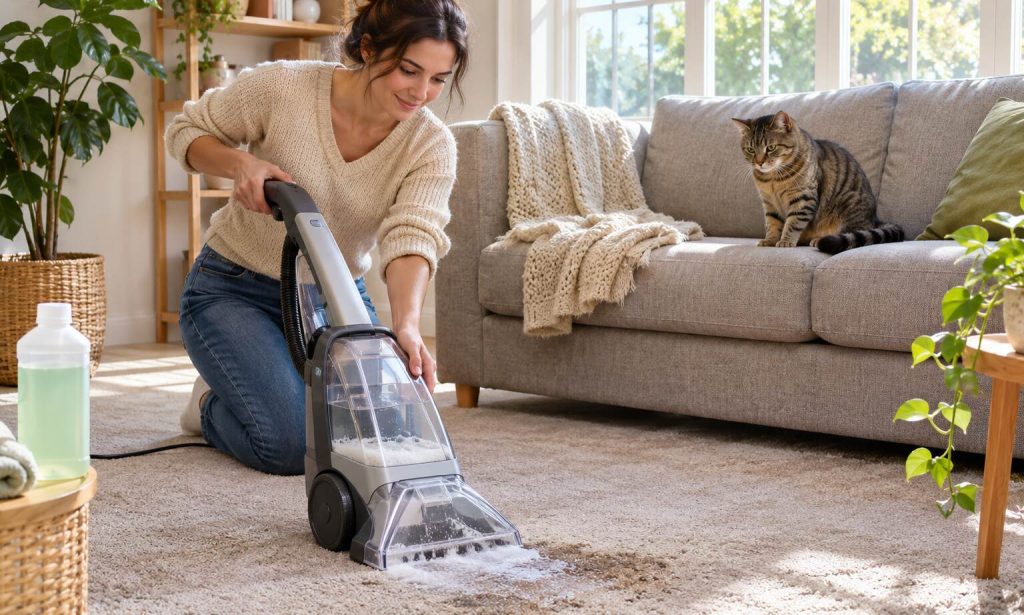
Cat urine can soak below a carpet’s visible surface and leave an odor that returns after the area looks clean. Using a carpet cleaner for cat pee requires more than running a machine over the spot. You need to protect the carpet backing, use a compatible solution, remove moisture thoroughly, and clean the machine after the job. The cat’s health and litter-box routine deserve attention too, especially when accidents begin suddenly or recur.
This guide covers a practical start-to-finish routine for home carpet-cleaning equipment and pet-safe cleaning solutions. It explains why identifying the stain’s depth matters, how to avoid oversaturating padding, and when professional help may be needed. It also outlines steps that reduce repeat accidents without making unsupported promises of permanent odor removal.
First Check the Cat, Not Just the Carpet
An accident can be a one-off event, but repeated urination outside the litter box may signal stress, resource conflict, pain, or urinary disease. Cornell’s feline health guidance notes that abnormal urination can be associated with urinary tract problems. If a cat is straining, passing little or no urine, crying, or repeatedly visiting the box, seek urgent veterinary care. An obstruction can be life-threatening.
Record where and when incidents occur. Avoid punishing the cat; it can increase fear and does not resolve the underlying cause. While cleaning, restrict access to wet products and equipment. Our guide to cats returning to urine-marked carpet explains why odor and household context both matter. Good cleaning and veterinary assessment may need to happen together.
Identify Carpet Material and Cleaning Limits
Read the carpet care label and equipment manual before adding liquid. Some fibers, backings, dyes, and adhesives tolerate only particular cleaning methods. Test a small hidden area for color transfer or texture change. Check whether the urine reached an underlay or subfloor, since surface cleaning cannot reliably reach every absorbed residue. Old stains may be difficult to locate without a careful inspection.
Avoid combining products simply because both are labeled for pet odors. Mixing bleach with ammonia or other cleaners can create dangerous fumes. Follow dilution, ventilation, and protective-equipment instructions for each product. Use only solutions compatible with your machine and carpet warranty. The pet-safe carpet cleaning routine offers useful steps for checking cleaning precautions.
Blot Fresh Urine Before Machine Cleaning
For a fresh accident, wear suitable gloves and absorb as much liquid as possible with clean towels. Press rather than rub aggressively, which can spread the affected area. Work from the edges inward when blotting. Remove the soiled towels promptly and keep cats away from the area. Do not flood the carpet with water before assessing the depth of the stain.
Clean the visible surface gently as permitted by the carpet maker. An appropriate enzymatic cleaner may be useful when the directions match the surface and stain; enzyme solutions require the right contact conditions. Do not assume a household fragrance removes the cause of an odor. Our guide to choosing a cleaner for cat pee explains considerations beyond the scent left behind.
Use the Carpet Cleaner With Controlled Moisture
Prepare the machine according to its manual. Fill the clean-water tank only with approved amounts and compatible products. Use smooth overlapping passes and avoid soaking one small area repeatedly. If the machine has an extraction-only pass, use it to remove as much liquid as practical. Do not push or pull aggressively over loose edges or frayed carpet.
Keep power cords away from puddles and use outlets safely. Never operate a damaged plug or hose. Follow machine instructions about hot water or heated cleaning; heat can affect materials and may set some stains. For serious contamination below the backing, discuss extraction or replacement options with a qualified professional. The overview of carpet urine cleaning methods adds material-care context.
Dry Thoroughly and Recheck the Area
After cleaning, improve ventilation as appropriate and use fans without letting pets reach cords or blades. Avoid walking on damp fibers or allowing the cat to lie on the area before it is fully dry. Moisture trapped in padding can encourage odors or microbial growth. A carpet that feels dry on top may still be damp deeper down.
Recheck the odor once everything is dry, ideally in the same room conditions in which the problem appeared. If a smell returns, reassess hidden layers rather than repeatedly adding cleaning chemicals. A professional cleaner may be able to evaluate backing and padding, though severely contaminated material may need replacement. FYI, masking a smell is not the same as removing the residue.
Clean and Store the Machine After Each Use
Empty the dirty-water tank promptly. Wash removable tanks, filters, nozzles, and brushes as the machine maker directs, then let all approved parts dry completely before reassembly. Check hoses for hair or debris and inspect seals for leaks. Leaving dirty liquid in a tank can create odors and shorten useful equipment life. Do not store the device with standing water.
Wrap the cord without tight kinks, keep the machine upright in a dry secure area, and store chemicals in their original labeled containers. Keep supplies away from cats, children, feed, and food-preparation areas. Inspect seals and brushes before the next job. How to use and care for a carpet cleaner for cat pee includes taking care of the tools, not just the flooring.
Prevent Repeat Problems Humanely
Keep litter boxes clean, accessible, and sufficient for the household. In multi-cat homes, separate resources and look for conflicts over routes to boxes. A sudden change in the cat’s habits warrants veterinary attention even if cleaning removes the odor. Our guide to litter box avoidance in multiple cats discusses social and environmental factors that may contribute.
Do not use punishment or strong scents to frighten a cat away from the location. Instead, address medical causes, box placement, cleanliness, and stress triggers. Revisit the cleaning result after a few days and watch for new incidents. If the carpet becomes a recurring target, work with your veterinarian on a behavior and health plan instead of only deep-cleaning more often.
Frequently Asked Questions
Carpet cleaning involves a surface, a machine, a formula, and the animal’s behavior. These questions focus on safe use and practical limits.
For serious urinary symptoms, veterinary care takes priority over stain removal. For damaged carpets or persistent underlay odor, specialist cleaning advice may be needed.
Can I use any detergent in a carpet cleaning machine?
No. Use only formulas permitted by the machine and carpet instructions. Never mix incompatible cleaning chemicals.
Should I steam-clean a fresh cat urine stain?
Check the carpet care requirements. High heat can be unsuitable for some stains and materials; blot and assess first.
Why does the odor return after cleaning?
Urine may remain in padding or backing, or moisture may persist. Reassess the depth rather than repeatedly perfuming the surface.
How soon can my cat return to the cleaned area?
Only after the area is fully dry and any cleaning product’s pet-access instructions have been satisfied.
Does cleaning solve litter-box avoidance?
Not by itself. Medical, environmental, and social factors may still need veterinary or behavior assessment.
Final Words
How to use and care for a carpet cleaner for cat pee begins with identifying the stain, respecting carpet and machine instructions, using compatible cleaning agents, and extracting moisture. Clean the machine thoroughly and dry it before storage. Do not rely on perfume or repeated soaking to solve a deep odor problem.
If you still need to choose a carpet cleaner for cat pee, check material compatibility and maintenance demands before deciding what is practical. Equally important, respond to repeat accidents with veterinary and litter-box care. Clean carpet matters, but a comfortable cat matters more.









