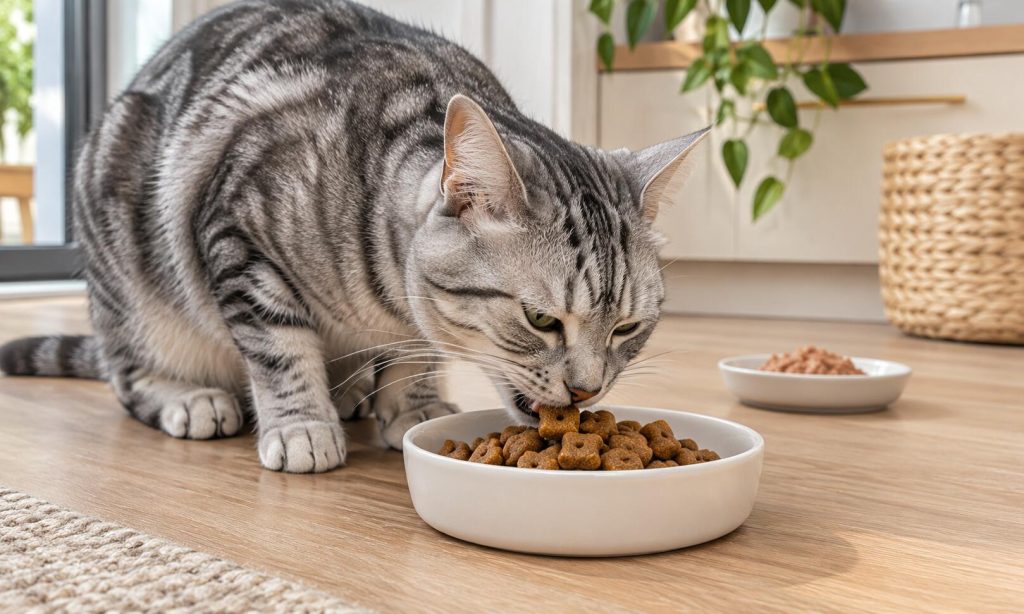
Dental problems in cats are not all the same. Some cats need plaque reduction for prevention. Others have painful teeth and cannot chew ordinary kibble comfortably. The best cat food for dental problems depends on which situation you are facing. Diet can support oral hygiene, but it cannot cure an infected tooth, advanced gum disease, or a painful mouth.
This comparison includes consumer dental diets, veterinary-only formulas, an emerging dental-focused recipe, and a soft wet-food alternative. I checked the current product listings and the Veterinary Oral Health Council’s accepted-product information, where applicable. If your cat drools, drops food, avoids chewing, has bleeding gums, or shows obvious mouth pain, arrange veterinary care promptly. Do not force hard dental kibble on a hurting cat. Start prescription food only with veterinary guidance.
Quick Picks for Cats with Dental Concerns
Choose the category before choosing the bag. VOHC-accepted dental kibble supports plaque or tartar control in suitable chewers. Veterinary diets require a clinician’s direction. Soft food may ease eating while dental pain is assessed but does not brush teeth.
| Product | Best For | Key Advantage | Buy | |
|---|---|---|---|---|
| Hill’s Science Diet Oral Care | Daily dental prevention | VOHC-accepted consumer formula | View on Amazon | Jump to Review |
| Royal Canin Dental Care | Another consumer dental diet | Specialized adult dental kibble | View on Amazon | Jump to Review |
| Hill’s Prescription Diet t/d | Vet-directed dental management | VOHC plaque and tartar claims | View on Amazon | Jump to Review |
| Purina Pro Plan Veterinary DH | Vet-only dental alternative | VOHC-accepted crunchy texture | View on Amazon | Jump to Review |
| Royal Canin Veterinary Dental | Vet-guided plaque control | Dental texture plus fiber blend | View on Amazon | Jump to Review |
| Tiki Cat Solutions Dental | Nonprescription dental-style option | Shaped kibble and 40% protein claim | View on Amazon | Jump to Review |
| Purina Pro Plan Complete Essentials Pâté | Temporary softer feeding | Complete balanced soft texture | View on Amazon | Jump to Review |
1. Hill’s Science Diet Adult Oral Care — Best Everyday Dental Diet

What We Like
- VOHC-accepted plaque and tartar claims
- Special fiber kibble texture
- Complete adult feeding formula
- Consumer availability
- Clear dental purpose
What We Don’t Like
- Requires comfortable chewing
- Chicken recipe will not suit all diets
Hill’s Science Diet Adult Oral Care is a consumer option for dental maintenance. It suits a cat that chews comfortably. The dry chicken formula uses a special fiber texture intended to clean the tooth surface as the cat bites through a piece. That is different from assuming all crunchy food scrapes teeth effectively. The Veterinary Oral Health Council accepted-products list identifies this formula with plaque and tartar claims. A VOHC seal supports a specific demonstrated benefit, but it does not mean the food prevents every form of periodontal disease.
The bag is intended as complete nutrition for appropriate adult cats, so consider it as a diet choice rather than a small dental treat. Check life stage, calorie needs, allergies, and any other prescribed nutrition before changing meals. Dental kibble works by the way the cat chews it. Some cats swallow pieces whole or have missing and painful teeth, and those animals may not receive the expected mechanical benefit. If you notice one-sided chewing, food dropping, or a sudden refusal of hard pieces, stop treating it as a preference issue and contact a veterinarian.
A dental diet is best paired with an oral-care plan. Tooth brushing, when tolerated and recommended by your veterinarian, addresses surfaces food cannot reliably clean. Professional dental examinations and treatment remain important. Introduce the food gradually, measure portions, and monitor stool, appetite, and body weight. Mixing large amounts of ordinary kibble into a dedicated dental diet may reduce its intended effect. The main attraction of Hill’s Oral Care is its clear, recognized dental purpose with regular retail access. It suits comfortable chewers. It is not for cats with active oral pain.
My Recommendation
Hill’s Science Diet Oral Care is my first consumer dental-food comparison for a healthy adult cat that still chews normally. The VOHC acceptance makes its dental claim more meaningful than generic crunchy kibble. It is not a treatment for sore teeth. Have painful mouths examined before considering this type of food.
2. Royal Canin Dental Care Adult — Best Alternative Retail Dental Kibble

What We Like
- Adult dental formula
- Specially designed kibble texture
- Plaque-control purpose
- VOHC-accepted Royal Canin dental diet
- Retail rather than veterinary-only line
What We Don’t Like
- Dry pieces require chewing
- Ingredient and calorie fit vary by cat
Royal Canin Dental Care Adult is aimed at cats one year and older. Its listing emphasizes a specialized crunchy kibble texture and nutrients intended to support teeth. The brand reports a reduction in plaque formation under controlled feeding conditions. Treat that number as a study-dependent manufacturer claim, not a promise for an individual cat. The VOHC list includes Royal Canin’s feline dental diet with a plaque claim. Use the corresponding formula correctly. The cat must also actually chew it for the expected mechanical effect.
The appeal is simplicity for an owner who wants an everyday diet rather than adding another product at every meal. However, a complete food is a major nutrition decision. Compare your cat’s current medical needs, life stage, and calorie intake before transitioning. If a veterinarian already prescribed a different diet, do not replace it without advice. Cats with sensitive teeth may avoid firm pieces, and dental kibble should never be used to test whether a painful tooth can withstand pressure. Signs of mouth pain deserve examination even when the cat continues eating some food.
Royal Canin works as an alternative to Hill’s retail Oral Care if the formula suits the cat’s appetite and nutritional profile. Introduce it slowly, monitor weight, and keep fresh water available. Dry food does not replace brushing or professional dental work. A newly diagnosed cat may need treatment before plaque reduction becomes the goal. Ask whether a softer texture should come first. The product’s strength is its focused kibble design; its limitation is that mechanical dental action depends on comfortable, consistent chewing.
My Recommendation
Royal Canin Dental Care is worth comparing with Hill’s for an adult cat that enjoys dry food and needs preventive plaque management. Its specialized kibble is a tangible difference from ordinary dry food. Check the exact formula and VOHC claim before buying. If the cat is showing discomfort, prioritize veterinary assessment over tougher pieces.
3. Hill’s Prescription Diet t/d — Best Veterinary Dental Option

What We Like
- VOHC-accepted dental claims
- Veterinary-formulated recipe
- Special fiber matrix
- Plaque and tartar focus
- Dedicated dental feeding approach
What We Don’t Like
- Veterinary authorization required
- Not for a cat unable to chew comfortably
Hill’s Prescription Diet t/d is a veterinary dental food rather than an ordinary retail upgrade. Its chicken-flavored kibble uses a proprietary size, structure, and fiber matrix designed to work as a tooth presses through it. The product listing describes plaque and tartar reduction. The VOHC directory lists feline t/d with both claims. That gives more specific evidence than the word dental on generic packaging. It still does not remove established hard deposits from every tooth or substitute for examination and professional cleaning when those are indicated.
Because this is a prescription veterinary diet, the decision belongs with the cat’s veterinarian. A clinician may need to weigh oral disease against kidney, urinary, digestive, or other nutrition needs. Do not buy and feed it solely because a marketplace listing is accessible. Ask whether your cat is a suitable candidate and how much of the diet must be fed for the intended effect. Cats that have loose teeth, active infection, or chewing pain may need treatment and a different temporary feeding plan. The goal is effective preventive maintenance after appropriate care, not forcing the jaw to work harder.
If the veterinarian recommends t/d, follow the transition and feeding directions exactly. Monitor how the cat handles the kibble and report difficulty. A dental checkup remains necessary even if breath improves, because serious problems can be hidden below the gum line. The specialized structure makes t/d stand apart from regular crunchy cat foods. Its availability and suitability are deliberately more controlled. For a cat with significant dental history, that supervised approach can be a strength rather than an inconvenience.
My Recommendation
I would consider Hill’s t/d only after a veterinarian recommends it for this cat’s dental and overall health. The VOHC plaque and tartar claims and engineered kibble make it a focused option. It is not appropriate to self-prescribe for a painful mouth. Ask the vet about treatment needs first.
4. Purina Pro Plan Veterinary Diets DH — Best Prescription Alternative

What We Like
- VOHC plaque and tartar claims
- Special dental kibble texture
- Veterinary supervision
- Complete diet formulation
- Explicit tartar-control purpose
What We Don’t Like
- Prescription access and vet oversight
- Not suited to all health conditions
Purina Pro Plan Veterinary Diets DH is a dental therapeutic food with its own kibble structure. Purina describes a crunchy texture designed to reduce plaque and tartar. The VOHC lists DH among accepted feline dental diets. That recognition is more relevant than a claim that chewing dry food always cleans teeth. The food is marketed as a veterinary prescription product, so choose it in consultation with the clinician who has examined your cat. It is a maintenance tool for suitable patients, not a stand-alone solution for bleeding gums or an infected tooth.
The veterinary-only status matters because dental disease can coexist with other conditions. A cat receiving a renal, urinary, weight-control, or gastrointestinal diet may have competing priorities that require a professional decision. Ask the veterinarian about calorie needs, meal amounts, and whether the full dental feeding regimen is appropriate. It is particularly important to report changes in chewing behavior. A cat that swallows pieces whole, turns its head away from the bowl, or drops kibble may not be comfortable enough for this mechanical method. Dental pain can worsen quickly when ignored.
For a cat already cleared to eat dental kibble, DH provides another established recipe to compare against t/d. Individual flavor acceptance, the plan from the vet, and the cat’s chewing pattern can guide the choice. Make transitions gradually and keep appointments for oral checks. Do not assume less odor means the mouth is healthy, since problems beneath the gums can persist. The product’s strength is a recognized dental function within veterinary care. Its limitation is that it needs patient-specific guidance and a cat willing and able to crunch the intended pieces.
My Recommendation
Purina DH is a reasonable veterinary alternative when a clinician wants a VOHC-accepted dental diet and finds its nutrition suitable. I would not choose between prescription foods by online ratings. Ask how the diet fits your cat’s conditions and check chewing comfort. Dental exams and treatment still determine the care plan.
5. Royal Canin Veterinary Dental — Best Dental and Hairball Consideration

What We Like
- Veterinary dental formulation
- VOHC recognition listed
- Specialized chewing texture
- Additional hairball-focused fiber
- Adult dry food format
What We Don’t Like
- Veterinary-exclusive formula
- Kibble texture unsuitable for tooth pain
Royal Canin Veterinary Dental Adult combines a dental kibble design with a dietary fiber blend that the listing says helps manage hairballs. The dental part is its defining purpose: specially shaped pieces are meant to encourage a chewing action that reduces plaque and tartar. The product listing describes VOHC recognition; check the exact formula against the current accepted-products directory when making a medical feeding choice. Extra fiber may be relevant in some households, but it should not be treated as a universal solution for hairballs or digestive symptoms. Persistent vomiting still deserves its own veterinary evaluation.
This is a veterinary-exclusive diet, so the nutrition and oral-health goals should be reviewed together. It may not be suitable for a cat with another disease requiring a different therapeutic food. Ask your veterinarian whether the formula’s nutrients, calories, and intended chewing mechanism fit the patient’s condition. Cats with missing teeth are not automatically unable to eat every dry diet, but pain and functional chewing matter more than the number of teeth alone. Never insist on crunchy food when an animal is dropping pieces or avoiding meals. The vet may suggest softer feeding during treatment.
If the clinician recommends Royal Canin Veterinary Dental, follow the intended amount and transition schedule. Monitor chewing, weight, stool, and appetite. Continue routine tooth care and dental examinations, since a kibble benefit does not guarantee clean gums everywhere. Its added hairball-oriented fiber offers a secondary consideration, not a reason to skip a health assessment. Among veterinary diets, the best fit depends on medical history and acceptance, not the strongest advertising wording. Use this food as one part of a documented dental plan.
My Recommendation
Royal Canin Veterinary Dental is worth discussing with your veterinarian if dental maintenance and hairball management are both relevant. I like that it has a clear dental mechanism. The clinician must decide whether it suits existing conditions. If chewing hurts, address the cause and discuss an appropriate temporary texture before a dental diet.
6. Tiki Cat Solutions Dental — Best Newer Retail Alternative

What We Like
- Complete and balanced nutrition claim
- Chicken dental-focused recipe
- Distinctive kibble shape
- 40% guaranteed protein on listing
- Retail access
What We Don’t Like
- Do not assume a VOHC seal
- Not a solution for painful teeth
Tiki Cat Solutions Dental provides a nonprescription alternative beyond established brands. The listing describes a chicken formula, a distinctive kibble shape, and a guaranteed protein level of 40 percent. The manufacturer also mentions parsley and spearmint in connection with breath. Those are product features, but breath freshness alone is not a reliable sign of oral health. This recipe should not be assumed to have a VOHC plaque claim. Verify a current seal for the exact formula first.
A shaped piece of kibble may encourage chewing, but the result depends on texture, size, the cat’s bite, and product-specific evidence. Do not generalize the science behind one dental diet to every new dental-branded food. Tiki Cat says this is a complete and balanced recipe, so it can be considered as a main food if the nutrition fits the cat’s life stage and health. Compare calories, ingredient tolerances, and feeding directions. If the cat has diagnosed periodontal disease, use the veterinarian’s care plan instead of trying to solve the condition with a new bag.
The main advantage is choice for a healthy adult cat that already eats dry food comfortably and whose owner wants to compare ingredients and flavor profiles. The biggest caveat is the level of independently recognized dental evidence. Ask about VOHC acceptance and do not count a marketing claim as proof. Introduce the food slowly and watch whether the cat actually chews it. If the mouth smells unusually foul, the cat paws at its face, or appetite changes, schedule an examination. Diet is an adjunct to oral care, not a test of whether pain will disappear.
My Recommendation
Tiki Cat Solutions Dental is an option to compare for normal, comfortable chewers who want another retail formula. Its dental shape is interesting, but I would prioritize an exact VOHC-accepted product when plaque reduction is the principal goal. Do not interpret breath-freshening ingredients as treatment. Veterinary examination comes first for symptoms.
7. Purina Pro Plan Complete Essentials Pâté — Best Soft-Food Contrast

What We Like
- Soft pâté texture
- Complete adult nutrition claim
- Multiple flavors in pack
- Moist food can be easier to take
- No false dental-kibble implication
What We Don’t Like
- Does not remove plaque mechanically
- Variety flavors complicate elimination diets
A soft food earns a place here for another reason. Cats with a painful mouth may need manageable texture during diagnosis and treatment. Purina Pro Plan Complete Essentials Pâté is a wet, loaf-style adult food. The listing describes complete and balanced nutrition and a variety of turkey, chicken, and beef recipes. Unlike the dental dry foods here, pâté has no special tooth-scrubbing action. That is not a defect when the immediate concern is comfortable, adequate food intake rather than mechanical plaque reduction.
This is not a dental treatment. A cat that suddenly switches from crunching to licking only gravy or soft food may have a fractured tooth, gum inflammation, or another condition that needs prompt care. Our guide to signs of dental pain in cats with missing teeth describes warning behaviors, and veterinarians can assess problems that are invisible at home. Ask which food texture is appropriate after dental surgery or during recovery. Some cats need a specific therapeutic diet, and a regular multipack would not be suitable then.
Purina’s mixed flavors can help with palatability, but they are not ideal if your cat is on a strict elimination diet or has known protein reactions. Check the individual cans, calories, and feeding guide before choosing a daily amount. Store opened food as directed and discard leftovers promptly. Wet food can be useful when chewing is uncomfortable, but softer texture should never hide continuing pain. The purpose of this pick is to prevent a false choice between forcing dental kibble and abandoning complete nutrition. Your veterinarian should guide changes when dental disease is active.
My Recommendation
I include Purina pâté only as a softer-feeding contrast, not as plaque-control food. It may help a cat eat more comfortably while a painful mouth receives veterinary attention, if the clinician agrees. The food is nutritionally complete for intended adult use. It cannot replace treatment, brushing, or a preventive dental diet’s recognized effect.
How to choose best cat food for dental problems
First decide whether the issue is preventive plaque control or an actively painful mouth. Those goals lead to different textures and veterinary decisions. Food can be one useful tool, but it is never a complete dental-care plan.
Recognize Pain Before Choosing Crunchy Food
Bad breath, drooling, red gums, pawing at the mouth, chewing on one side, dropping pieces, weight loss, and reduced appetite can signal dental disease. Some cats keep eating despite significant pain, so an apparently normal bowl is not reassuring. Arrange a veterinary examination when signs appear. A clinician may recommend dental X-rays, cleaning, extractions, or other treatment based on the diagnosis. See how veterinarians diagnose a tooth abscess in cats for an example of why home inspection is limited. If a cat stops eating or seems severely unwell, seek prompt veterinary advice rather than experimenting with multiple foods.
Hard dental kibble is not a way to strengthen a painful tooth. Use the veterinarian’s advice on temporary softness and nutritional completeness. Food that a cat can swallow comfortably may be important during recovery, but it will not resolve infection or damaged teeth.
Look for the Exact VOHC Acceptance Claim
The Veterinary Oral Health Council evaluates evidence for specific plaque or tartar reduction claims. Its directory names accepted products and the claims for which each is recognized. An exact VOHC-accepted dental diet offers a clearer basis for comparison than a general claim that dry food is crunchy. Check the formula and packaging, as a brand may sell several diets with different purposes. Some accepted foods are consumer products; others are veterinary prescription diets. Never switch from an essential medical diet on your own simply to add a dental benefit.
Dental diets work partly through size, texture, and the way teeth move through the kibble. They may be less useful when a cat swallows pieces whole, chews poorly, or cannot tolerate hard food. Feeding substantial amounts of a different food may also reduce the intended dental effect. Discuss the right balance with the veterinarian rather than improvising a mix.
Keep a Complete Nutrition and Oral-Care Plan
Choose food appropriate to your cat’s age, calories, health conditions, and existing medications. Change diets gradually unless a veterinarian gives different instructions. Weigh portions and monitor body condition, appetite, and chewing comfort. A calmer feeding routine for cats may help you observe changes without adding mealtime stress. Wet food can improve willingness to eat for some sore-mouthed cats, but it does not provide the mechanical action of an accepted dental kibble. Neither texture eliminates the need to examine painful teeth.
Daily tooth brushing with suitable pet dental products, where the cat accepts it and a veterinarian advises it, is a valuable oral-care approach. Regular veterinary dental assessments identify problems diet cannot prevent. After a procedure, follow the discharge instructions for food texture and timing. Do not give human painkillers or attempt to scrape tartar at home. The best choice balances nutrition, current comfort, and a real treatment plan.
Frequently Asked Questions
The answers change depending on whether the cat has healthy teeth needing prevention or diagnosed oral pain.
Can cat food cure gingivitis or tooth infection?
No. Diet can support prevention or maintenance, but a sore or infected mouth needs veterinary assessment and treatment. Do not use special kibble to postpone an exam.
Is crunchy dry food automatically better for teeth?
No. Ordinary kibble does not necessarily clean teeth. Look for a product with an exact VOHC-accepted plaque or tartar claim and confirm your cat chews comfortably.
Should a cat with bad teeth eat wet food?
A soft, nutritionally appropriate food may be easier during pain or recovery, but follow your veterinarian’s guidance. Some cats with dental disease continue eating kibble despite discomfort, so eating alone does not rule out a problem.
Do prescription dental diets require a veterinarian?
Yes. Veterinary formulas such as Hill’s t/d and Purina DH should be used with a clinician’s recommendation, especially if the cat has another medical diet or condition.
Does a VOHC seal replace brushing and professional cleaning?
No. It supports a specific reduction claim for a product, not complete dental protection. Tooth brushing when appropriate, regular examinations, and treatment of existing disease remain important.
Final Verdict
For a comfortable-chewing adult cat needing preventive dental support, Hill’s Science Diet Oral Care and Royal Canin Dental Care are sensible consumer options to compare with current VOHC listings. Prescription t/d, Purina DH, and Royal Canin Veterinary Dental belong in a veterinarian-directed plan. Tiki Cat offers a retail dental-labeled alternative without assuming the same recognized evidence. If chewing already hurts, prioritize veterinary care and discuss a complete soft food such as Purina pâté. The diagnosis should drive the bowl, not the other way around.
Affiliate disclosure: This article contains Amazon affiliate links. If you purchase through them, PetAdvisorPro may earn a commission. As an Amazon Associate I earn from qualifying purchases.