
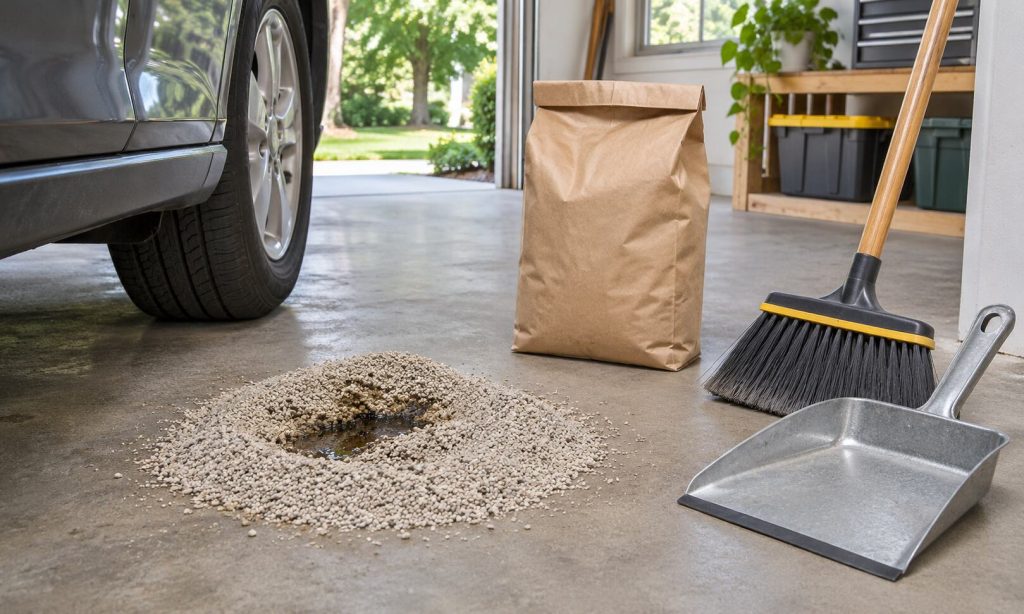
Knowing how to store cat litter for oil-spill cleanup safely matters before and after a small garage drip. Plain, non-clumping clay litter can act as a granular absorbent for some minor oil spills, but clean unused litter and oil-contaminated material must be handled as very different supplies. A split bag can create dust and a slippery floor; a bucket of soaked granules can expose pets, children, or drains to petroleum residues. Proper storage starts with identifying which material you have.
This guide covers cool dry storage for clean absorbent, safe segregation of contaminated litter, labeling, handling and disposal questions. If you are comparing the best cat litter for oil spill cleanup, see our clay litter absorbent comparison for material considerations, then check the oil product’s safety information. The guidance focuses on small, contained drips and never replaces emergency response, workplace procedures, or local hazardous-waste rules.
Separate Clean Litter From Contaminated Absorbent
The central rule for storing cat litter for oil-spill work is to keep unused stock apart from material that has touched motor oil or another chemical. Clean litter belongs in a dry labeled bag or lidded container. Once it absorbs oil, it should never return to a pet’s litter box or be mixed back into the clean supply. Even a small amount of contaminated granules can transfer residue to shoes, paws, tools, and floors.
Label cleanup supplies clearly so everyone in the household can distinguish absorbent from ordinary pet litter. Put a scoop or small shovel beside the dry bag, but wash or segregate tools after contact with a spill. Store clean items above floor level if minor leaks or flooding are plausible. Keep the cleanup area closed to pets and children until all residue has been managed.
Choose the Right Storage Container
For unused clay litter, a durable moisture-resistant container with a fitted lid helps keep humidity and pests out. If you decant the material, retain the original packaging or photograph its product name and instructions. Avoid flimsy open boxes in a working garage, where moving a bicycle or tool can tip them over. A small, stable pail is often more manageable than an oversized sack that tears when lifted.
For material that has absorbed oil, choose a compatible closed container that can be labeled and handled without leaking. Do not use a food container or anything that could be confused with household supplies. Container selection depends on the substance and local waste guidance, particularly for solvents, fuels, or other hazardous chemicals. If the oil or liquid is unidentified, stop and seek qualified advice rather than improvising a storage method.
Keep the Dry Supply Cool and Accessible
Store cat litter for oil spills in a cool, dry, secure place out of direct rain, condensation, and routine traffic. Clay granules can become difficult to spread when damp, while a torn bag can spill onto concrete and create a slipping hazard. A garage shelf or stable cabinet can work if the load is supported and the material cannot fall onto someone. Keep it away from food, medicines, and animal feed.
Accessibility matters during a small leak, so put the clean absorbent near other garage supplies but not directly underneath stored motor oil that could spill on it. Keep a dustpan, broom, protective gloves, and compatible waste container within reach. Check the bag for moisture, clumping, and damage during seasonal cleaning. Replace a compromised package before you need it, rather than relying on soaked or scattered granules in an emergency.
Know What Type of Liquid Was Spilled
Oil is not one substance. Used motor oil, fresh engine oil, hydraulic fluid, gasoline, and chemical solvents can require different safety and disposal measures. How to store cat litter for oil-spill cleanup depends on identifying the liquid, estimating the quantity, and consulting its safety data or product label. Do not treat litter as a universal solution for highly flammable, reactive, toxic, or unknown spills.
For a larger spill, strong fumes, entry into a drain, or a fire risk, stop work, keep people and pets away, and contact the appropriate emergency or environmental authority. Avoid switching on equipment that could ignite fumes. The EPA’s used-oil quick-start guidance discusses using absorbents for used-oil spills, but local procedures determine the correct handling for your situation.
Handle Small Spills Without Spreading Contamination
When trained or comfortable to handle a minor contained oil drip, first address the source safely and prevent oil from reaching soil or drains. Follow the oil product’s safety directions and use appropriate protective equipment. Granular absorbent can be placed around and then over the affected area. Allow it to absorb according to material instructions, collect it with designated tools, and avoid raising unnecessary dust.
Never use a household vacuum for oil-soaked granules. Do not hose oil down a driveway or into a storm drain. Water merely moves contamination to another place. If the surface remains slippery, use a suitable cleanup method for the specific liquid after the bulk absorbent is removed. Keep pets away from the area; licking paws contaminated with petroleum can be dangerous. A useful storage system prevents secondary spills while you finish cleanup.
Store Oily Litter Only as Long as Necessary
After cleanup, store oil-soaked litter temporarily in a labeled, securely closed compatible container while you determine the lawful disposal route. Do not leave a loose heap in a corner or reuse the material for another spill. Keep it away from heat, flames, children, pets, and ordinary household waste until its status is clear. If liquid pools at the bottom, the material may not have fully absorbed the oil and requires appropriate handling.
Do not make a universal claim that used litter belongs in household trash. Oil-contaminated litter is a different waste stream from ordinary pet litter. The right disposal method depends on the contaminant, how much was spilled, and local rules; businesses can face additional obligations. Ask your municipal waste agency, hazardous-waste program, or facility safety officer. The EPA’s used-oil management questions explain why free-flowing oil and contaminated absorbents need thoughtful handling.
Protect Pets From Oil and Dust
Cat litter sold for pets may be used as absorbent, but once it touches garage oil it is not a pet product. When storing cat litter for oil spills, place all stock and waste beyond the reach of curious cats and dogs. An open pail can resemble a litter tray, while spilled granules may be tracked through living areas. Labeling and physical separation are more reliable than expecting an animal to avoid a new smell.
Plain clay may create dust when poured. Handle it gently and follow packaging cautions, especially in poorly ventilated areas. If an animal walks through oil or appears to have swallowed contaminated material, contact a veterinarian or animal poison advice service promptly; avoid inducing vomiting without professional direction. Clean an affected paw or coat only as directed for the substance involved. Prevention is much easier than decontamination.
Build a Simple Garage Inventory
An effective system for storing cat litter for oil-spill response includes a clearly marked clean absorbent container, a compatible collection vessel, gloves, collection tools, and a note with local waste contacts. Write the purchase or opening date on the clean litter and inspect it periodically for moisture. Keep other vehicle fluids upright and in their original labeled containers so the emergency supply is less likely to be needed.
The choice of absorbent should fit the likely small drips. Some natural or lightweight litters do not perform like plain clay, and clumping formulations may be awkward to collect from rough concrete. For material comparison, see the best cat litter for oil spill guide. Regardless of product, safe chemical storage and leak prevention matter more than having a large bag of litter beside the car.
Avoid Common Storage Mistakes
Frequent mistakes include leaving a clean bag open on a damp floor, using the same pail for clean and oily litter, storing contaminated granules near food, and assuming every cleanup waste can go in the trash. When you store cat litter for oil-spill work, keep the original material directions and the identity of the spilled substance available. Unlabeled containers make later disposal decisions harder and increase the chance of accidental misuse.
Do not pour oil into litter and leave it indefinitely as a substitute for proper used-oil collection. Recover and recycle free-flowing used motor oil where accepted, then manage absorbent according to local advice. The EPA’s used-oil recycling overview describes why oil should be kept out of the environment. An organized storage area reduces accidents without creating a hidden waste problem.
Frequently Asked Questions
These answers cover small domestic garage spills involving identified oils. Unknown chemicals, fumes, significant quantities, or threatened drains require specialist or emergency guidance.
Local disposal requirements vary. Confirm with the relevant waste program before discarding any oil-soaked absorbent.
Can I keep clean litter in a plastic bucket?
Yes, if it is sturdy, clean, dry, appropriately labeled, and has a fitted lid. Preserve the original product instructions and keep the container away from pets and traffic.
Can oil-soaked litter go in regular trash?
Do not assume so. Rules depend on the substance, quantity, and jurisdiction. Ask the local waste authority or hazardous-waste program and keep the collected material securely contained meanwhile.
Should I use litter on gasoline or a mystery liquid?
Not as a routine household fix. Flammable vapors and unknown chemicals can pose serious risks. Move people and animals away and contact the proper authority or trained responder.
Does cat litter remove every trace of oil?
No. Absorbents pick up some liquid but may leave residue, especially on porous concrete. Use a suitable follow-up cleanup method for the identified contaminant and do not wash it into drains.
Can contaminated litter be used in a cat box later?
Never. Once exposed to oil or garage chemicals it must be treated as contaminated material. Keep it securely away from all animals and arrange appropriate disposal.
Final Words
To store cat litter for oil spills safely, distinguish unopened absorbent from contaminated waste, use secure labeled containers, keep both inaccessible to pets, and protect the dry supply from moisture. If you are choosing the best cat litter for oil spill cleanup, material performance is only part of the decision; understanding the liquid and your local disposal route is just as important. Review our clay absorbent comparison before stocking supplies.
For a small identified drip, a tidy kit may help prevent contamination from spreading. Do not attempt unknown, large, or fume-producing spills yourself. Keep used oil out of drains, recover recyclable oil when possible, and confirm how to dispose of any contaminated litter. Safe storage means planning for the material’s entire life, not just keeping the bag upright.









