
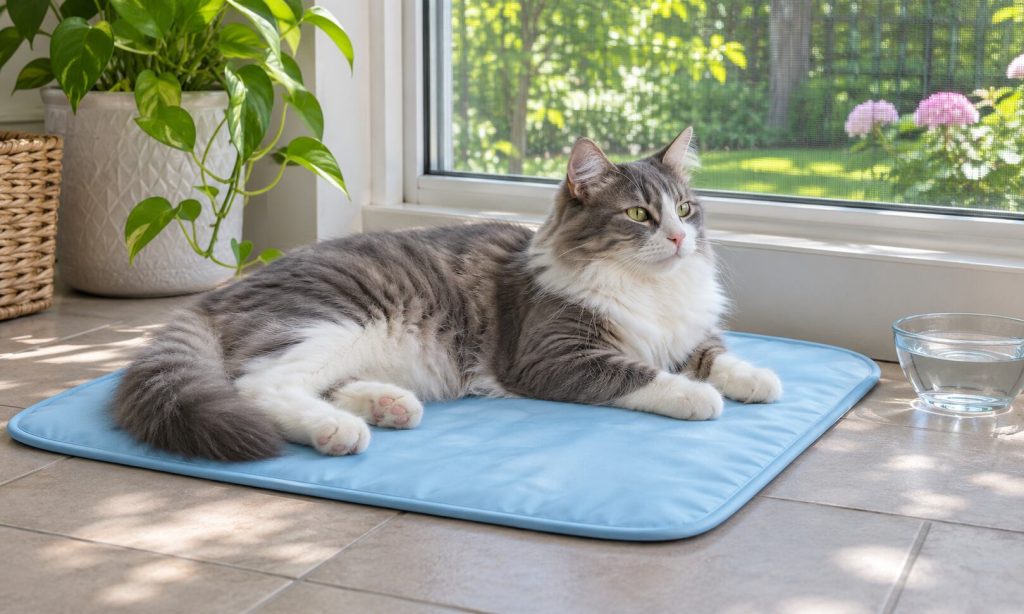
Choosing the right cool mat for cats means thinking about temperature, size, fabric, safety, and the places your cat already likes to rest. A mat can offer a comfortably cooler surface during warm weather, but it cannot make an overheated room safe or treat heatstroke. Cats often move between warmer and cooler resting spots throughout the day, so the best design is one they can approach and leave freely. Start by observing your cat’s habits before buying a specialized cooling surface.
This guide explains how to choose a cool mat for cats without relying on exaggerated cooling claims. We will compare passive fabrics, gel-filled pads, washable covers, non-slip bases, and fit for kittens or seniors. Our best cool mat for cats companion article shows several cooling-bed styles, while this guide focuses on measuring, evaluating materials, introducing the mat, and maintaining it in everyday use.
Start With Room Temperature and Shade
Before choosing a cool mat for cats, assess the room itself. The mat should be an optional comfort surface in a shaded, ventilated area with fresh drinking water nearby. Our cat water fountain guide covers another approach to keeping water inviting. Direct sun can warm the pad and defeat its purpose, especially beside large glass doors. A cooling mat is not a replacement for ventilation, fans used safely, or air conditioning when indoor heat becomes dangerous. Avoid relying on a product label to judge the room’s safety.
Watch where your cat chooses to sleep on a typical warm afternoon: tile, a wooden floor, a sofa, or a quiet corner. Place the candidate mat near that resting zone without blocking the normal escape route. Cats may prefer a cool floor and ignore an expensive pad, which is useful feedback rather than failure. Our indoor cat bed guide covers alternative restful surfaces. Keep another comfortable bed available so the animal controls its own temperature and texture preferences.
Measure Your Cat’s Resting Shape
To choose the right cool mat for cats, measure the space your cat uses when stretched out, not just the body length in a sitting pose. Include enough width for turning and lying on a side. A small mat may force a long cat to curl tightly, while a very large pad can be awkward to position and clean. Check the published product dimensions against the actual floor space and any furniture that frames the resting spot.
A senior or arthritic cat may need a low-profile edge and a surface that does not bunch beneath paws. Kittens need close supervision because they may chew or claw unfamiliar materials. Multi-cat homes usually benefit from several separate resting options; do not assume two cats will share one mat peacefully. The right fit allows a relaxed posture without crowding access to food, water, and litter.
Understand Passive Fabric and Gel Styles
When choosing a cool mat for cats, distinguish breathable fabrics from pressure-activated gel pads and products requiring refrigeration or added water. A thin cotton or mesh surface may feel pleasant because it releases heat and allows airflow. Gel pads may feel cooler initially, but performance depends on the design and surrounding temperature. There is no universal cooling duration, and a mat does not necessarily lower the ambient air temperature.
Read the manufacturer instructions for activation and recharging instead of assuming a product stays cold continuously. Avoid extreme cold or frozen surfaces directly against skin, especially for frail pets or those with mobility problems. If the pad contains internal liquid or gel, the outer shell must stay intact. A simple washable textile mat can be a better match for a cat that scratches bedding habitually.
Prioritize Materials and Bite Resistance
The safest way to choose a cool mat for cats is to examine seams, closures, coatings, and the manufacturer’s pet-use guidance. A curious cat may knead, bite, scratch, or drag bedding. Inspect a gel-filled pad for leaks, exposed fill, or damaged corners before each use. If your cat punctures or chews it, remove the mat and prevent access to the contents; contact a veterinarian if ingestion is suspected.
Look for a non-slip backing that remains stable on tile or laminate. A slick mat that slides under a jumping cat can create a fall risk, especially for older animals. Fabric should be smooth enough not to snag claws, and seams should not contain loose threads. Avoid strongly scented treatments and decorations that can detach. Simple construction often makes cleaning and inspection easier than elaborate designs.
Consider Comfort for Seniors and Flat-Faced Cats
A thin cool mat for cats may be suitable for healthy agile adults but less comfortable for a senior with stiff joints. Some older cats need cushioning beneath a cooling top layer, or they may prefer to stay on a supportive bed. Flat-faced breeds can be more vulnerable to overheating, so environmental cooling and observation remain more important than mat selection. Ask your veterinarian about individual health considerations.
Do not force a weak, ill, or reluctant animal to lie on a cold surface. Always leave a warm enough alternative, and avoid placing pads where the cat cannot get up or move away easily. For a cat recovering from surgery, follow veterinary bedding instructions because dampness, pressure, and incision care may matter. A mat should promote comfortable choice, not impose a temperature intervention.
Check Ease of Cleaning and Drying
A practical cool mat for cats should tolerate the cleaning methods required in your home. Choose removable washable covers when possible, and verify whether the entire mat or only its shell can be washed. A punctured gel pad generally should not be machine-washed. Follow temperature and detergent instructions, rinse residues, and let materials dry completely before returning them to a sleeping area.
Cat hair, skin oils, dust, and occasional accidents accumulate on bedding. Wipe debris promptly, avoid harsh chemical sprays unless specifically approved for the material, and inspect seams each time. For multiple pets, a washable cover can extend the usable life of the mat. If moisture becomes trapped inside a pad or an odor persists after cleaning, consider replacement instead of placing a questionable surface against the animal.
Introduce the Mat Without Pressure
After choosing a cool mat for cats, lay it flat in the familiar resting area and let the cat investigate independently. Start without treats or toys that encourage chewing at the edge. You can reward calm sniffing or stepping onto the surface, but allow the cat to leave whenever it wants. Some cats accept an unfamiliar texture immediately; others take days to explore it when no one is watching.
If the cat avoids it, try a different safe location or a soft removable cover rather than lifting the animal onto the pad repeatedly. A strong smell, sliding base, crinkly noise, or overly cold surface may explain reluctance. Do not interpret refusal as a training problem. The most useful cooling accessory is one the cat chooses spontaneously while the household also maintains a safe ambient temperature.
Maintain the Mat Through Summer
Choosing a cool mat for cats is only the first step; routine inspections keep it useful. Check for flattened gel pockets, punctures, curling corners, peeling backings, and worn seams. Clean according to instructions and let it dry thoroughly. Store it flat or rolled only if permitted by the maker, away from sharp objects and heat. A damaged pad should be removed before a cat reaches any filling.
When temperatures rise, prioritize shade, ventilation, accessible water, and the ability to move between rest spots. Monitor breathing, behavior, and energy. Heavy panting, drooling, weakness, confusion, or collapse can indicate a medical emergency; begin appropriate first aid and seek urgent veterinary care. The ASPCA hot-weather guidance offers additional precautions beyond bedding accessories.
Common Shopping Mistakes
A frequent error when choosing a cool mat for cats is buying by color or advertising language without measuring the animal or checking materials. Another is assuming that thicker always means cooler, or that a cold touch in an air-conditioned shop predicts performance in a hot bedroom. Compare cleaning instructions, leak risk, available floor space, and the cat’s actual resting preferences before spending more on a complex design.
Avoid models with exposed cords in a chewing household, unnecessary fragrances, or components that are difficult to inspect. Do not place a mat in direct sun or a locked enclosure where the cat cannot leave it. A simple non-slip pad in the right quiet place often offers better everyday fit than a larger novelty accessory. Review our cooling cat bed comparison for alternative mat constructions.
Frequently Asked Questions
A cooling mat is an optional comfort accessory, not a treatment for dangerous heat. Use these answers to decide whether a particular design suits your cat and home.
If a cat shows signs of overheating, act on the medical emergency rather than waiting for the mat to work. Ask a veterinarian about frail or medically vulnerable animals.
What size cool mat does my cat need?
Measure the cat while comfortably stretched out and add room to turn. Compare both dimensions with the product’s actual sleeping surface, not just the package description.
Are gel cooling mats safe for cats?
Only when intact and used according to the manufacturer’s pet-safety instructions. Supervise cats that chew bedding, inspect for leaks, and remove damaged pads immediately.
Should I refrigerate the cooling mat?
Only if its instructions expressly allow it. Extreme cold can be uncomfortable or harmful, and frozen gel may damage some products. The cat must be able to leave the surface freely.
What if my cat ignores the mat?
Try it in a familiar shaded resting spot and allow unforced exploration. The cat may prefer cool tile or a different texture. Avoid repeatedly placing the animal on the pad.
Can a cool mat prevent heatstroke?
No. Maintain a safe environment and monitor the cat. Heavy panting, drooling, weakness, or collapse require immediate veterinary attention and appropriate cooling first aid.
Final Words
To choose a cool mat for cats, start with the animal’s resting posture, chewing habits, age, and preferred room temperature. Compare passive fabric and gel designs by safety, ease of cleaning, stability, and actual usable size. Our best cool mat for cats overview offers product-type context, but the right choice is one your cat can use voluntarily without risk of leaks, slipping, or excessive cold.
Keep the room shaded and comfortable, provide water, inspect the pad, and respect a cat that prefers another spot. A mat can add a pleasant resting option during warm weather; it cannot compensate for unsafe heat. If you notice signs of heat stress, contact a veterinarian promptly.









