What should you look for in a GPS collar for cats? Start with the safety of the collar itself, then check the tracking technology, size, battery, subscription cost, coverage, and reliability. A tracker can help you learn where a roaming cat may have traveled, but it is not a substitute for a secure home environment or a registered microchip. A heavy device on a rigid collar can create more risk than a small, well-fitted accessory offers in reassurance.
This guide explains what to look for in a GPS collar for cats and how to separate true satellite-based location tracking from nearby-item finders. We will cover quick-release safety, comfort, cellular coverage, location delays, waterproofing, and emergency planning. If you are searching for the best GPS collar for cats, review our cat GPS tracker comparison alongside these fit and safety checks before deciding whether a collar device makes sense for your cat.
Put Breakaway Collar Safety First
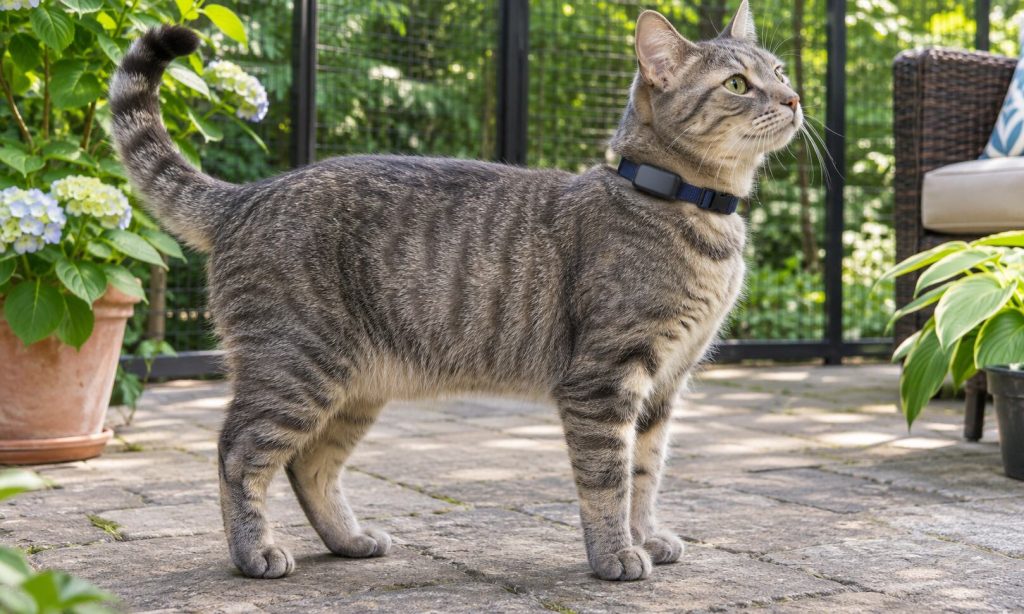
The first feature to look for in a GPS collar for cats is an effective quick-release or breakaway mechanism. Cats climb, squeeze through gaps, and explore vegetation, where a rigid collar can snag. A collar designed to open under appropriate tension can reduce entanglement risk, but the fitted GPS attachment must not defeat that function. Test the attachment configuration according to the manufacturer’s directions, and never tie the tracker permanently to the collar.
Cats Protection recommends a quick-release collar and a fit that allows two fingers snugly underneath. Recheck often because weight, fur, and growth change the fit. A collar that is too loose can catch a leg or slip off; one too tight can rub the neck. The Cats Protection collar guidance is a useful safety reference. Accept that a genuinely breakaway design may result in losing the tracker.
Check Weight and Physical Dimensions
What to look for in a GPS collar for cats includes the weight of both the tracker and its mount, not just the flexible strap. A small adult cat may find a chunky battery pack uncomfortable, especially if it hangs under the chin. Compare published device dimensions with the cat’s neck circumference and examine whether the unit can rotate, bounce, or snag. The collar should permit normal grooming, eating, play, and rest.
For kittens or very small cats, many devices may be too heavy or beyond the manufacturer’s minimum animal weight. Do not assume a device marked pet GPS is suitable for all cats. Begin with a brief supervised indoor fitting, observe scratching and posture, and remove the equipment if it causes irritation or altered movement. A veterinarian can help assess whether a specific mount is appropriate for a medically fragile cat.
Know the Difference Between GPS and Bluetooth
A critical thing to look for in a GPS collar for cats is the actual location method. True GPS-capable trackers determine position using satellite signals and may relay it through a cellular network or another service. A Bluetooth item finder typically depends on nearby phones or devices and may not independently report a remote cat’s position. Product pages sometimes use tracking language loosely, so examine the technical description rather than relying on the title.
Ask whether the service needs a subscription, local mobile coverage, a compatible smartphone, and a charged device. Consider how it behaves inside buildings, dense foliage, or an area without reception. Satellite fixes can be delayed or less accurate in difficult environments, and a cellular-dependent tracker may not update if it cannot connect. Our pet tracker technology overview explains several locator categories.
Evaluate Realistic Coverage and Update Frequency
When assessing what to look for in a GPS collar for cats, study the service map for places your cat may actually roam. Broad country coverage claims do not guarantee a signal in a basement, dense woods, or a rural pocket with weak cellular service. Check roaming support and whether cross-border travel is relevant. If possible, test the unit on a short supervised walk through your property before relying on its map.
Location refresh frequency matters, but more frequent updates can consume battery faster. A tracker that reports every few seconds may be helpful in a search mode but unnecessary for routine activity. Compare normal and live-tracking modes, notification delays, and any geofence alerts. Treat every displayed location as an estimate with a timestamp, not a promise that the cat is still standing on that exact spot.
Match Battery Life to Your Routine
Battery performance is another thing to look for in a GPS collar for cats. Manufacturer runtime depends on update settings, signal conditions, temperature, and battery age. A longer-lived unit may be physically larger, so assess the tradeoff against comfort. Think about how often you can reliably remove, charge, and refit the tracker. For a cat that roams daily, an unreliable charging routine can leave the device dead when needed most.
Check the charging connector, app battery indicator, low-charge alerts, and whether the battery is replaceable. Keep charging accessories out of chewing reach and do not expose damaged batteries to pets. Remove the tracker before charging; never let a cat wear a unit connected to a wall charger. Keep a simple calendar reminder and a backup identification plan for times when the tracker is unavailable.
Inspect Waterproofing and Attachment Security
A good GPS collar for cats should tolerate normal outdoor conditions described by its manufacturer, including rain or splashes where rated. Water-resistant is not the same as waterproof, and an ingress-protection code has a defined test meaning. Check whether the device can withstand temporary submersion, wet grass, and ordinary cleaning. Avoid assuming a rubber cover makes an electronics module weatherproof.
Mounting brackets should hold the tracker during movement without sharp edges, bulky protrusions, or loose parts that can be swallowed. Inspect straps and clips for cracking after rough use. The tracker must not make the quick-release buckle ineffective. If the device detaches, recovery may be difficult, but choosing a dangerous non-release collar is not a safe solution. Prioritize the cat’s welfare over the cost of a replacement unit.
Consider App Usability and Data Privacy
What to look for in a GPS collar for cats also includes software that you can use under pressure. Open the app before buying if a demonstration is available, and assess map readability, location history, shared access, and alert settings. Check whether family members can view the cat’s location if you are unavailable. A map crowded with old pins or unclear time stamps can slow a search.
Read the provider’s privacy policy: location histories reveal where your animal—and potentially your household—spends time. Understand account security, data retention, and whether a subscription is required for core tracking. If the company discontinues service, a perfectly good hardware device may lose function. The total long-term cost includes software, not just the collar. Review current terms directly because plans and features can change.
Keep Permanent Identification Separate
Even a well-chosen GPS collar for cats can be lost when a breakaway strap releases or a battery runs flat. A registered microchip provides permanent identification when a shelter or veterinarian scans the cat, though it does not display a live map. Keep the registry contact information current and consider an appropriate visible ID tag if it can be attached safely. Tracking and identification solve different parts of a lost-cat problem.
The AVMA microchipping FAQ explains this distinction. A tracker may help locate a cat outdoors, but it cannot guarantee recovery or eliminate the risks of traffic, wildlife, or getting trapped. Supervised outdoor time, a secure enclosure, and keeping cats indoors can reduce exposure. Discuss the right approach for your household and local environment rather than depending exclusively on electronics.
Test and Maintain the System
Before trusting a GPS collar for cats, run a short indoor and supervised outdoor trial. Confirm the breakaway fit, check whether the app updates as expected, test notifications, and verify that the device charges fully. Monitor the neck for rubbing or hair loss during the first days. Remove the collar if you see discomfort. A system that works in an advertisement may behave differently in your house and neighborhood.
Wipe the module and strap only as the manufacturer recommends; avoid soaking electronics or using harsh solvents. Inspect attachment points and replace frayed straps. Our cat tracker cleaning guide covers routine maintenance. Refresh app permissions and emergency contacts periodically. If a tracking failure occurs, use a broader lost-pet search plan instead of waiting for the next ping.
Frequently Asked Questions
A cat tracking collar combines animal-welfare questions with technology claims. These quick answers help distinguish useful features from limitations.
Always prioritize a properly fitted quick-release collar and a registered microchip. Neither electronics nor identification replaces supervision and environmental safety.
Can I use a normal dog GPS collar on a cat?
Usually not without specific manufacturer approval. Dog devices may be too heavy and dog collars may not release safely. Look for a cat-suitable weight, size, and breakaway attachment.
Does GPS work without a cellular subscription?
Satellite positioning and transmitting that position are separate tasks. Some devices need cellular service and fees to show a remote location in the app. Check the exact communication method and plan.
Will a tracker locate my cat inside a building?
Not reliably in every case. Walls and roofs can interfere with satellite and radio signals. Use last-known location, time stamps, and an ordinary physical search when the signal disappears.
What if the collar falls off?
That can be a feature of a safer breakaway design. The tracker may be lost, so maintain microchip registration and contact details. Do not replace a breakaway buckle with a rigid one to protect the device.
How tight should the collar be?
It should allow two fingers to fit snugly underneath, following the collar maker’s guidance. Recheck as the cat grows or changes weight, and remove any collar that rubs or restricts movement.
Final Words
What to look for in a GPS collar for cats starts with quick-release safety and comfortable weight, then moves to location technology, service coverage, battery, weather protection, and ongoing cost. A search for the best GPS collar for cats should include those practical tradeoffs, not only a claim of real-time tracking. Compare the GPS cat tracker options with care and test a candidate in your actual environment.
Keep the microchip registration updated, accept that a safe collar may detach, and maintain a backup lost-cat plan. Technology can offer useful clues, but tracking updates are never perfect and cannot guarantee an animal’s safety. Choose the lightest practical system that respects your cat’s comfort and movement.