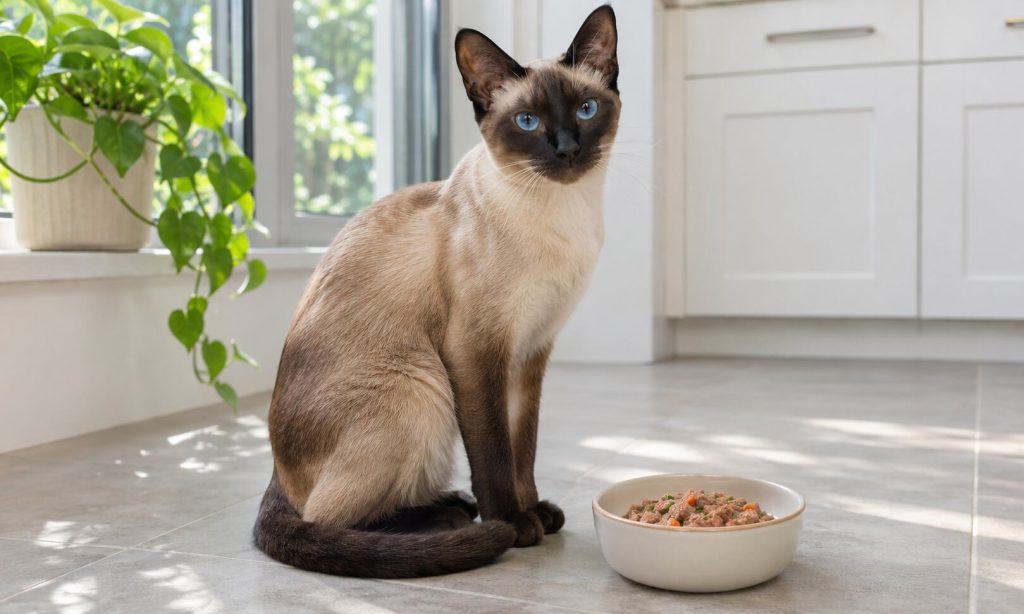
Common mistakes when choosing food for Siamese cats usually come from treating breed identity as a complete nutrition plan. Siamese cats are often active and lean, but individual calorie needs vary with age, neuter status, health, activity, and body condition. A package labeled for a specific breed is not automatically more appropriate than a well-formulated complete diet. The essentials are nutritional adequacy, a realistic portion, hydration, the cat’s acceptance, and attention to any medical restrictions.
This guide identifies common mistakes when choosing food for Siamese cats, from chasing ingredient trends to changing recipes too abruptly. If you are comparing the best food for Siamese cats, use these checks alongside our cat food label guide. A sensible decision starts with the cat in front of you, not the shape, coat color, or marketing photo on the bag.
Mistake One: Choosing by Breed Label Alone
One of the common mistakes when choosing food for Siamese cats is assuming that all members of the breed need a distinct formula. Breed-specific foods may offer convenient kibble shape or advertised nutrient combinations, but a complete and balanced diet appropriate for the cat’s life stage is the foundation. Look for the nutritional adequacy statement instead of deciding from the breed name on the package.
Ask whether your cat has an actual feeding challenge: a small mouth, preference for pâté, high activity, or a diagnosed medical condition. Those facts are more useful than generalized breed stereotypes. If your healthy adult cat maintains appropriate weight, coat, stool, and appetite on a suitable diet, there may be no reason to replace it simply because another package has a Siamese silhouette.
Mistake Two: Ignoring Life Stage and Sterilization
Kittens need growth-appropriate nutrition, adults need maintenance suitable for their condition, and some seniors require closer monitoring of muscle and health. Among common mistakes when choosing food for Siamese cats, feeding an adult maintenance formula to a growing kitten is particularly important to avoid. Conversely, a high-energy growth product may not suit an inactive adult without adjustments. Read the exact life-stage statement rather than relying on broad all-natural claims.
Neutering, indoor living, and changes in activity can affect calorie needs. A lean-looking Siamese cat may still be gaining excess fat around the abdomen, while a senior can lose muscle despite a stable body weight. Ask your veterinarian to score body and muscle condition. Use that assessment to determine portions and rechecks instead of assuming all slender-bodied cats need extra calories.
Mistake Three: Comparing Protein Percentages Blindly
A protein percentage on a wet-food label cannot be compared directly with the same number on dry kibble because moisture differs. Common mistakes when choosing food for Siamese cats include ranking recipes by a large front-label protein number without examining nutritional adequacy or calories. Cats require adequate animal-appropriate nutrition, but a single guaranteed analysis value does not tell you how well the total diet is formulated.
Manufacturers may provide dry-matter nutrient information or nutrient amounts per calorie. These comparisons can be more useful than percentages read in isolation. Look for transparency about formulation expertise, feeding trials or nutrient profiles, and quality control. The WSAVA pet-food selection questions help owners ask what backs a food’s nutritional claims.
Mistake Four: Misjudging Calories and Portions
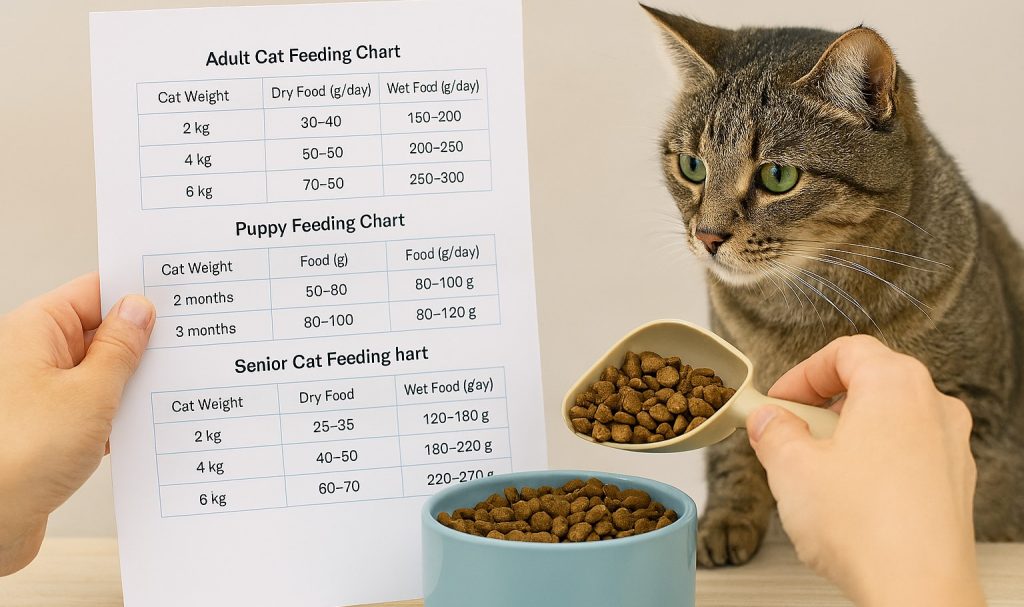
Siamese cats can be playful, but not every cat burns the same number of calories. A common mistake when choosing food for Siamese cats is using the feeding chart as an exact prescription. Charts are starting points that must be adjusted based on weight trend, body condition, treats, and activity. Compare kilocalories per can, cup, or gram between formulas before switching; a familiar bowlful of a new food may carry more energy.
Measure dry food with a scale when possible and keep a record of wet portions. Count training treats and any food offered by other household members. In a multi-cat home, feed separately if one pet steals meals. Our daily portion guide explains the arithmetic, but a veterinarian should set targets for cats with illness or major weight changes.
Mistake Five: Assuming Dry or Wet Is Always Superior
Another common mistake when choosing food for Siamese cats is declaring that all kibble is bad or that every wet food is automatically complete. Both formats can be nutritionally adequate when formulated appropriately, but moisture, texture, calories, dental issues, and owner routine affect fit. Wet food can support dietary water intake. Dry food may be convenient for measured feeding but should not replace free access to fresh water.
Consider the cat’s willingness to eat and the practical ability to store and serve meals hygienically. A cat that chews reluctantly may need an oral examination rather than a different kibble shape. Some wet products are intended only as toppers, so check the adequacy statement. Follow medical advice if your cat needs a prescribed formula; the wet-versus-dry debate does not override a diagnosis.
Mistake Six: Reacting to Every Ingredient Trend
Grain-free, boutique, exotic protein, or a long ingredient list are not guarantees of suitability. Common mistakes when choosing food for Siamese cats include assuming that an ingredient’s position alone reveals digestibility or nutrition quality. Cats need a balanced set of nutrients in appropriate amounts, not a shopping list that sounds appealing to humans. An ingredient can be safe and useful even when it is not trendy.
If you suspect a food allergy, consult a veterinarian for an evidence-based diagnostic plan rather than removing multiple ingredients at random. Food intolerance, parasites, skin disease, and other conditions can share symptoms. Unsupervised homemade or raw diets can introduce nutritional and microbial risks. Ask for a complete, reliable formulation and use a controlled feeding history to separate real problems from advertising narratives.
Mistake Seven: Switching Too Quickly
Sudden food changes can lead to digestive upset or refusal, especially in a cat attached to familiar smells and textures. To avoid common mistakes when choosing food for Siamese cats, transition gradually when the cat is stable and your veterinarian approves. Offer a small amount of the new food alongside the old diet, then increase in steps while monitoring appetite and stool quality. A medically ill cat may need a different supervised approach.
Do not let a cat fast for days because it rejects a new premium recipe. If food refusal persists, contact the clinic promptly. Keep meal times and location predictable, and avoid adding several new treats or supplements during the transition. The aim is to test the new formula fairly without creating stress or leaving the cat short of essential calories.
Mistake Eight: Overlooking Packaging and Storage
Buying a huge discounted bag may seem economical but can be wasteful if it becomes stale before your cat finishes it. Among common mistakes when choosing food for Siamese cats, overlooking packaging integrity and storage is easily prevented. Check dates and lot information, keep dry kibble in its original bag inside a sealed container, and protect it from heat and dampness. Refrigerate opened wet food promptly according to its instructions.
Wash bowls and serving utensils regularly; do not pour new kibble onto old crumbs. Inspect cans for bulges, leaks, or damage before opening. For cats with a medical diet, retain the exact product label in case your veterinary team asks about nutrients or ingredient changes. Practical storage helps preserve the diet you chose and reduces accidental contamination or changes in acceptance.
Mistake Nine: Missing Health and Behavior Clues
A sudden appetite change, weight loss, vomiting, diarrhea, increased thirst, or difficulty chewing is not evidence that Siamese cats simply need a more expensive food. One of the most serious common mistakes when choosing food for Siamese cats is repeatedly switching diets instead of investigating symptoms. Dental disease, endocrine disorders, gastrointestinal problems, and stress can all alter eating behavior. Arrange a veterinary assessment for persistent or concerning signs.
Keep a record of what the cat eats, not just what you put in the dish. Note body condition, litter box changes, activity, and environmental stressors. Older cats may have declining muscle mass that is not obvious at first glance. These observations help the clinician decide whether food selection, meal timing, an examination, or further testing is the next useful step.
Frequently Asked Questions
Siamese cats still need the same core nutritional safeguards as other cats. The answers below focus on label reading and individual fit rather than breed marketing.
Consult your veterinary team if your cat has symptoms, chronic illness, poor appetite, or unexpected weight changes. Specialized feeding may be appropriate for a diagnosed condition.
Do Siamese cats require breed-specific food?
Not inherently. Many healthy Siamese cats can thrive on a complete and balanced diet for their life stage. Choose based on body condition, acceptance, health, and nutrient adequacy rather than a breed illustration.
Should a thin-looking Siamese cat eat more?
Not without assessing weight and muscle condition. The breed often has a lean appearance, but unexplained loss can signal illness. Ask a veterinarian to distinguish normal conformation from underweight or muscle wasting.
Is wet food better than dry for this breed?
Neither format wins universally. Wet food contributes water; dry food can be convenient for measured meals. Complete nutrition, medical fit, hydration, calories, and acceptance guide the choice.
How do I compare foods with different moisture levels?
Use nutrient information on a dry-matter or energy basis when available, and compare calories per serving. The feeding statement and adequacy claim are more reliable than a front-label protein slogan.
What if my Siamese cat is picky?
Try predictable mealtimes and a gradual, calm transition, but do not prolong food refusal. Dental or medical causes may affect appetite; seek veterinary advice when a cat repeatedly rejects meals.
Final Words
Avoiding common mistakes when choosing food for Siamese cats means reading complete-nutrition statements, measuring calories, honoring life stage, and observing the actual animal. Our best food for Siamese cats comparison offers a range of balanced categories, but no breed-branded claim can replace a consistent feeding plan and routine body-condition checks. The simplest appropriate food is often better than a complicated, poorly understood one.
Introduce changes gradually, store meals well, and contact your veterinarian when appetite or weight changes unexpectedly. A thoughtful choice supports muscle, healthy body condition, hydration, and pleasant mealtimes. Your cat’s needs—not marketing trends—should determine the next bag or can.