

A healthy dog gut is supported by complete nutrition, a steady feeding routine, and ingredients the individual dog tolerates. The best dog food for gut health is not simply the bag with the longest probiotic claim. Prebiotic fiber, digestible protein, appropriate calories, and careful transitions can all matter. Repeated diarrhea, vomiting, weight loss, blood in stool, or a painful abdomen calls for veterinary assessment, not repeated experiments with different foods.
I compared seven complete adult foods that emphasize different aspects of digestive support: live probiotics, prebiotic blends, a carefully designed kibble, and one wet recipe. Their features come from current authorized product listings, not personal feeding trials or promises of a cure. A new food may help a healthy dog with ordinary sensitivity, but it cannot diagnose parasites, pancreatitis, infection, allergies, or chronic intestinal disease. Work with your veterinarian when symptoms persist or the dog is medically vulnerable.
Quick Picks for Adult Dogs Needing Digestive Support
These are adult maintenance products, not substitutes for prescription gastrointestinal therapy. Match size, ingredients, and texture first. Evaluate the type of fiber or probiotics, then introduce one change gradually and monitor the dog’s response.
| Product | Best For | Key Advantage | Buy | |
|---|---|---|---|---|
| Purina Pro Plan Sensitive Salmon | Digestive and skin sensitivity | Salmon, oatmeal, live probiotics | View on Amazon | Jump to Review |
| Hill’s Sensitive Stomach & Skin | Digestibility-focused feeding | Prebiotic fiber and antioxidants | View on Amazon | Jump to Review |
| Royal Canin Medium Digestive Care | Medium-breed adults | Digestible protein and fiber blend | View on Amazon | Jump to Review |
| Wellness CORE Digestive Health | Probiotic-coated dry kibble | Prebiotics plus enzymes and probiotics | View on Amazon | Jump to Review |
| Blue Buffalo True Solutions Wet | Moist sensitive-stomach meals | Chicken wet food with prebiotic fiber | View on Amazon | Jump to Review |
| IAMS Healthy Digestion | Everyday fiber support | Chicken with beet-pulp fiber | View on Amazon | Jump to Review |
| Purina ONE Plus Digestive Health | Large-bag digestive maintenance | Chicken with probiotics | View on Amazon | Jump to Review |
1. Purina Pro Plan Sensitive Skin & Stomach — Best Balanced Sensitive Formula

What We Like
- Salmon first ingredient
- Oatmeal in the recipe
- Guaranteed live probiotics
- Sensitive-stomach positioning
- Omega fatty acids for skin
What We Don’t Like
- Fish protein may not suit every dog
- Not a veterinary elimination diet
Purina Pro Plan Sensitive Skin & Stomach Salmon & Rice is a recognizable adult formula for owners who want a digestive-conscious main meal. The current listing identifies salmon as the first ingredient, includes oatmeal, and describes guaranteed live probiotics. These are concrete formulation choices, not proof that every dog will have firmer stools. Some dogs respond well to a different protein or fiber blend; others need a medical diagnosis. Consider this option when the dog eats complete adult food but appears to do better on a consistent, thoughtfully formulated recipe. Do not assume fish is automatically hypoallergenic.
The omega-fatty-acid positioning can also appeal when skin and coat maintenance matter alongside digestion. However, itching and gastrointestinal signs together may warrant a veterinary allergy evaluation. A retail sensitive-stomach recipe is not equivalent to a properly supervised elimination diet. Change from the previous food gradually, use measured portions, and avoid introducing several treats or supplements at the same time. Otherwise, it becomes difficult to tell what caused a change. Observe stool consistency, appetite, and body condition over time rather than expecting a reliable result after a single bowl.
The sixteen-pound bag is convenient for many adult households if it can be stored sealed in a dry, cool place. Check the feeding guide against the dog’s weight and activity, then adjust with veterinary advice. Live probiotics are sensitive to product handling and storage, so follow the label. If the dog has recurrent diarrhea, straining, vomiting, or weight loss, stop shopping for a cure and book an examination. Purina’s strongest points are a defined adult maintenance formula and explicit probiotic features. Its limitation is that suitability remains dog-specific.
My Recommendation
Purina Pro Plan Sensitive Salmon is my broad first comparison for an otherwise healthy adult dog needing an everyday digestive-conscious food. Salmon, oatmeal, and live probiotics are useful listed features. I would transition slowly and track stool changes. If symptoms persist, the next step is veterinary evaluation rather than another bag.
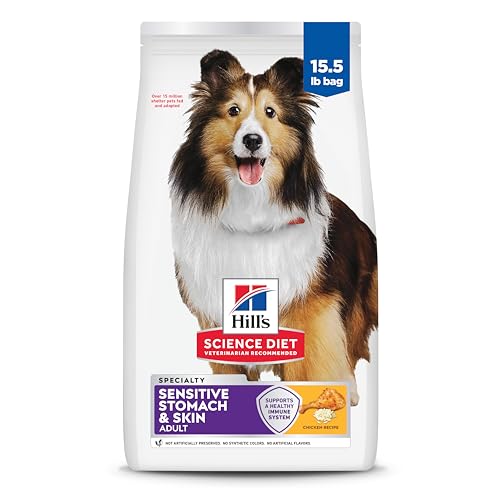
2. Hill’s Science Diet Sensitive Stomach & Skin — Best Digestibility Focus
What We Like
- Highly digestible adult recipe
- Stomach, skin and immune focus
- Vitamin E and omega fatty acids
- Antioxidant nutrients
- Well-defined maintenance use
What We Don’t Like
- Chicken protein unsuitable for some restrictions
- Still not a treatment for chronic disease
Hill’s Science Diet Sensitive Stomach & Skin uses a chicken-based adult formulation intended to be digestible and gentle on the stomach. The listing describes prebiotic fiber, vitamin E, omega-3 and omega-6 fatty acids, and antioxidant nutrients. These are relevant features for everyday maintenance, especially when an owner is comparing foods by more than protein percentage. Prebiotic fiber feeds intestinal microorganisms, but the result depends on the individual dog’s overall diet and health. A food cannot rebuild a healthy gut overnight. A sudden change may temporarily worsen stool even when the new recipe is otherwise suitable.
The benefit of an established sensitive-stomach formula is a clearer purpose than an ordinary high-protein food with vague wellness language. Still, the chicken recipe is not ideal for a dog on a veterinarian-directed chicken exclusion. Do not confuse a skin-and-stomach product with a diagnostic allergy diet. If symptoms include persistent itching, recurrent ear infections, or severe diarrhea, ask about proper assessment. When switching, keep the old and new food proportions consistent across meals. Track amounts and stools for enough time to see a pattern without ignoring signs that need immediate treatment.
The fifteen-and-a-half-pound bag can work for medium-sized dogs, while larger households may evaluate the cost per feeding day. Compare calories per cup before copying the old serving size. Clean food bowls, store kibble carefully, and maintain access to fresh water. The recipe’s skin-coat nutrients are useful features, not a guarantee that coat problems will improve. I like Hill’s as a measured maintenance comparison when chicken is tolerated and the dog needs a predictable daily diet. Serious or recurrent intestinal signs still require a clinician, not endless formula changes.
My Recommendation
Hill’s Sensitive Stomach & Skin is a good chicken-based comparison for adult dogs where digestibility is the main goal. Its prebiotic fiber and clear nutrient approach stand out. It will not suit every food restriction. I would avoid treating it as a substitute for diagnosing persistent diarrhea, weight loss, or possible food allergy.
3. Royal Canin Medium Digestive Care — Best Size-Specific Kibble

What We Like
- Targets 23-to-55-pound adults
- Digestible protein formula
- Prebiotics and dietary fibers
- Stool-quality positioning
- Medium-size kibble format
What We Don’t Like
- Not designed for tiny or giant breeds
- No promise of relief for disease
Royal Canin Medium Digestive Care is more narrowly defined than a general adult dog food. Its listing targets dogs 12 months and older weighing approximately 23 to 55 pounds. The formula emphasizes highly digestible proteins, prebiotics, and dietary fiber to support digestive comfort and stool quality. That size range is useful because body size affects meal portions and kibble handling. It does not mean every medium dog with loose stool should receive the same formula. Medical causes still need to be excluded, especially if signs are frequent or accompanied by pain, lethargy, or blood.
The product’s focus on stool quality makes it a practical option to compare when a veterinarian has ruled out serious illness and a household wants consistent adult feeding. Use the label’s guidance as a starting point, adjusted for the dog’s actual body condition. Do not abruptly change food while also adding probiotics, table scraps, and new treats. Multiple simultaneous changes can confuse the picture. If the dog has a history of pancreatitis or needs a low-fat prescription diet, a general digestive-care label may not meet the medical need. Ask the veterinarian before switching.
This seventeen-pound bag is best understood as one size-specific option within the broader Royal Canin range. Small and large breed versions are separate products, with different intended uses. Check the correct variant before ordering. Observe the dog’s stool, appetite, energy, and weight during a gradual transition. Hydration and a steady mealtime schedule matter as much as the package design. The main strength here is its defined adult weight range and digestible-fiber approach. The limitation is that medium-breed targeting cannot substitute for individual diagnosis when symptoms persist.
My Recommendation
Choose Royal Canin Medium Digestive Care if your adult dog fits its 23-to-55-pound target and you want a size-specific sensitive digestion formula. I like the emphasis on protein digestibility and stool quality. It is a poor fit for very small or giant dogs, or for a condition needing veterinary therapeutic nutrition.
4. Wellness CORE Digestive Health — Best Multiple Digestive Features

What We Like
- Probiotic-coated kibble claim
- Prebiotic fiber blend
- Digestive enzymes listed
- Chicken with brown rice
- Adult maintenance positioning
What We Don’t Like
- Many functional claims are not a cure
- Small four-pound bag
Wellness CORE Digestive Health combines several familiar digestive-nutrition terms in one adult formula. The listing mentions probiotic-coated kibble, prebiotic fibers, and digestive enzymes, alongside chicken and brown rice. Those are tangible details to compare, but more added ingredients do not always make a food better for an individual dog. A dog with normal stool may not need a highly marketed digestive formula. Another dog with diarrhea from parasites or inflammatory disease will not be fixed by purchasing extra probiotics. Focus on complete nutritional suitability and an understandable feeding plan.
The chicken-and-grain recipe is described as digestible and intended for sensitive stomachs. Check the ingredient and guaranteed analysis statements against known restrictions or veterinary recommendations. A dog with confirmed chicken sensitivity needs a different plan. The probiotic coating is a specific selling point, but handling and storage affect any live microorganisms. Follow the package directions and avoid exposing kibble to heat or moisture. Introduce it progressively, keeping other treats stable. If symptoms improve, maintain the same regimen long enough to assess consistency rather than switching frequently just for novelty.
The four-pound bag is a convenient trial size for a small dog, but it may be expensive for a large household. Calculate cost per day, not cost per bag alone. Digestive enzymes and prebiotics do not make this equivalent to a prescribed gastrointestinal diet. Watch stool quality and appetite, and seek veterinary help for recurring problems. I like Wellness CORE when the owner wants to compare a clearly described multi-component digestive formula and can assess tolerance methodically. Its limitation is the risk of overvaluing complicated labels over practical feeding results and clinical advice.
My Recommendation
Wellness CORE is my feature-rich dry comparison for owners specifically interested in probiotic-coated kibble, prebiotics, and enzymes. It is worth evaluating when chicken and grains are appropriate. I would not buy it solely because a longer feature list sounds healthier. Keep the transition controlled and involve a veterinarian for recurring signs.
5. Blue Buffalo True Solutions Digestive Care Wet — Best Soft Meal

What We Like
- Moist canned format
- Chicken listed first
- Prebiotic fiber
- Stool-quality purpose
- Adult balanced-nutrition positioning
What We Don’t Like
- Opened cans require refrigeration
- Not appropriate for every low-fat need
Blue Buffalo True Solutions Digestive Care in canned form offers a different texture from the six dry foods in this group. Its listing describes chicken as the first ingredient, prebiotic fiber, and a focus on digestive health and stool quality. A wet meal may suit dogs that prefer soft textures or need extra moisture in the food, but it does not automatically treat diarrhea. Compare the calories and fat content with any clinical recommendations before feeding. Dogs with known pancreatitis or other conditions may require a specifically formulated therapeutic diet rather than an ordinary adult digestive product.
The product’s prebiotic feature has a plausible nutritional role in supporting intestinal microorganisms. It is not a guarantee that stool will normalize in a particular pet. Ask whether the dog’s symptoms might have a cause that food cannot fix. Blood, persistent watery diarrhea, severe discomfort, lethargy, and vomiting should prompt veterinary care. If the dog is otherwise healthy and the change has been approved, introduce canned food slowly alongside the existing meal plan. Watch portions closely when mixing wet and dry foods, because both contribute calories and nutrients.
Wet food requires careful handling. Refrigerate opened cans as directed, clean bowls after meals, and do not leave leftovers at room temperature for long periods. Our guide to safe storage of canned sensitive-stomach dog food offers practical reminders. The twelve-can pack may be convenient for planned meals, although daily cost can be higher than kibble. Blue Buffalo stands out for moisture, texture, and a visible prebiotic positioning. It is less useful if your dog’s dietary limitations rule out chicken or need a veterinary prescription recipe.
My Recommendation
Blue Buffalo True Solutions Wet is my soft-food choice when an adult dog needs a complete canned meal and the chicken recipe fits its nutrition plan. The prebiotic fiber is relevant, but the wet format is not a medical treatment. Store opened cans carefully, count combined meal calories, and ask the vet about persistent symptoms.
6. IAMS Advanced Health Healthy Digestion — Best Straightforward Fiber Choice

What We Like
- Complete adult formula
- Chicken first ingredient
- Beet-pulp fiber blend
- Prebiotics listed
- 13.5-pound bag size
What We Don’t Like
- Chicken limitation for protein trials
- Advertised stool timeline varies by dog
IAMS Advanced Health Healthy Digestion focuses on an adult chicken diet with natural fiber and prebiotics. The manufacturer emphasizes beet pulp and digestive regularity. That makes it a reasonable comparison for a healthy adult dog needing predictable daily feeding. The listing promotes a ten-day stool-quality outcome, but marketing timelines cannot predict the response of an individual pet. Some dogs have diarrhea because of infection, medication, stress, food reactions, or another health problem. A bag of kibble cannot establish which one applies or whether further tests are needed.
The formula is described as complete and balanced, so it should be evaluated as a full adult diet, not a topper or supplement. Compare its feeding guide and calories with your dog’s current food. A portion that fills the bowl identically may contain a different energy amount. Transition slowly to avoid triggering additional digestive upset. Keep treats constant during the trial and record stool consistency. If a dog reacts to poultry, a chicken-based formula is not an appropriate test of a restricted diet without veterinary advice. Likewise, a high-fiber approach may not suit every digestive condition.
IAMS is appealing for households that value a familiar mainstream recipe and a useful mid-sized bag. It may cost less than more specialized options, but price is not the only consideration. Compare ingredient suitability, manufacturing information, and feeding cost per day. Store the dry food sealed away from heat and moisture. An adult dog that continues to lose weight or has repeated abnormal stools needs a veterinary plan rather than unlimited diet switching. The product’s straightforward fiber-and-prebiotic approach is its strength; the limitation is that a claimed rapid result is not reliable for every patient.
My Recommendation
IAMS Healthy Digestion is a practical fiber-focused option when chicken is tolerated and the dog needs ordinary adult maintenance food. Beet pulp and prebiotics are clearly identified. I would treat its stool-improvement timeline as a manufacturer claim, not a guarantee. Track the dog’s actual response and ask for veterinary advice when symptoms continue.
7. Purina ONE Plus Digestive Health — Best Value-Size Adult Bag

What We Like
- Complete adult digestive diet
- Probiotics added
- Natural glucosamine sources
- High-protein adult formula
- 31.1-pound bag option
What We Don’t Like
- Large bag may outlast small dog freshness needs
- Not for confirmed chicken allergy
Purina ONE Plus Digestive Health is another adult dry food positioned around digestive support. The listing identifies real chicken first and describes a highly digestible recipe with added probiotics. It is offered here in a large 31.1-pound bag, which can be useful for a household feeding one or more larger dogs. The bulk format is not automatically economical, however. A small dog may take too long to finish it, increasing the importance of proper storage and freshness. Compare cost per day and the dog’s actual calorie requirements before choosing by bag size.
The formula also mentions natural glucosamine sources, but this does not turn it into a joint treatment or compensate for a nutritional mismatch. For the gut-health question, the relevant features are complete adult nutrition, digestibility, and probiotics. Use them as comparison points rather than guarantees of normal stool. A gradual transition and stable snack routine help you judge the effect more clearly. If a dog has frequent vomiting, diarrhea, weight loss, or blood in stool, do not rely on a retail sensitive-digestion product instead of medical care. Unexplained symptoms require investigation.
This Purina ONE recipe is especially worth considering when you want an adult digestive-conscious food in a larger package and the dog already tolerates poultry. Keep the bag closed and stored safely, ideally preserving the original lot and use-by information. Follow portion guidance and monitor body condition. Probiotics are one feature of a complete recipe, not a substitute for identifying the cause of illness. If it works well and the dog remains comfortable, consistency may be better than frequently chasing the newest gut-health ingredient. The limitation remains individual tolerance, not a missing marketing promise.
My Recommendation
Purina ONE Plus Digestive Health is my large-bag comparison for adult dogs that tolerate chicken and need consistent everyday feeding. I like the explicit probiotic feature and complete adult positioning. Check whether you can finish the bag while fresh. Persistent gastrointestinal signs deserve a veterinary diagnosis, regardless of food price.
How to choose best dog food for gut health
Digestive-support labels can describe different things: prebiotic fiber, probiotic microorganisms, protein digestibility, or a soft texture. Start with the dog’s age and symptoms, then compare complete recipes using facts rather than broad wellness promises.
Rule Out Illness Before Repeated Food Trials
Occasional mild stool changes can follow a dietary mistake or a sudden switch. Repeated diarrhea or vomiting is different. Infections, parasites, food reactions, pancreatitis, intestinal inflammation, and other conditions may require testing. Contact a veterinarian urgently for bloody diarrhea, severe lethargy, repeated vomiting, abdominal pain, inability to keep water down, or signs of dehydration. Puppies, senior dogs, and medically fragile pets need extra caution. The Cornell veterinary guide to canine diarrhea explains why the cause matters. No commercial maintenance food can replace treatment of an underlying disease.
If your dog has a confirmed allergy or another therapeutic nutrition need, changing to an over-the-counter sensitive-stomach formula may interfere with treatment. Our guide to questions about possible dog food allergies helps prepare a useful discussion with the clinic.
Compare Fiber and Probiotics Thoughtfully
Prebiotic fiber provides material for some intestinal microbes. Probiotics introduce selected live microorganisms when the product contains viable strains. Digestive enzymes are another type of ingredient. These mechanisms are not interchangeable, and a longer ingredient list does not prove a better result. Check the actual formula, feeding directions, and any guaranteed probiotic levels. Choose a complete diet intended for the dog’s life stage and size. Overly rich or unusually high-fat food may be inappropriate for some dogs, especially those with a history of pancreatitis. Discuss known medical conditions before changing.
A dog with normal bowel movements does not necessarily benefit from continually rotating digestive supplements. Stable meals, correct portions, clean water, and limited unplanned treats can be more important. If you introduce a new food, change one thing at a time. This makes stool and appetite records more interpretable.
Transition Slowly and Measure the Response
A gradual transition may take a week or longer depending on tolerance and veterinary advice. Begin with a small proportion of the new food and slowly increase it. Track stool consistency, frequency, gas, appetite, and body weight. Stop and seek help when concerning symptoms develop. Do not continue a food just to complete an arbitrary number of days if the dog becomes unwell. Keep the meal schedule predictable, store kibble carefully, and refrigerate canned leftovers as directed. See our guide to storing sensitive-stomach canned dog food for practical food-safety steps.
Compare calories per serving so the switch does not also cause overfeeding. A new diet that seems to cause loose stool may simply be introduced too quickly, but persistent symptoms still need diagnosis. Avoid adding several treats or probiotic products at the same time. The best gut-health diet is one the dog tolerates consistently while receiving complete nutrition and appropriate medical attention.
Frequently Asked Questions
These answers distinguish ordinary digestive support from situations that need a veterinarian.
Do probiotics in dog food cure diarrhea?
No. Some probiotic formulations can support digestive function, but diarrhea has many possible causes. Persistent, bloody, or severe symptoms require veterinary evaluation.
Is grain-free food better for gut health?
Not inherently. Many complete digestive-support foods include rice or oats. Grain avoidance should follow an actual nutritional need or veterinary recommendation, not a blanket assumption.
How long should a dog food transition take?
A gradual switch commonly takes about a week or longer, depending on the dog and veterinary instructions. Slow the process if mild upset occurs, and seek advice for significant symptoms.
What is the difference between prebiotics and probiotics?
Prebiotics are ingredients, often fibers, that support certain gut microbes. Probiotics are selected living microorganisms. Both can appear in foods, but neither guarantees a cure.
When should I contact the veterinarian about digestive problems?
Contact a clinic promptly for recurring diarrhea, vomiting, weight loss, lethargy, abdominal pain, blood, dehydration, or refusal of food or water. Puppies and medically fragile dogs warrant greater urgency.
Final Verdict
Purina Pro Plan Sensitive Salmon is a balanced everyday comparison when a dog tolerates fish, while Hill’s Sensitive Stomach & Skin offers a chicken-based digestibility approach. Royal Canin Medium Digestive Care is more size-specific. Wellness CORE emphasizes multiple functional ingredients, IAMS and Purina ONE focus on mainstream fiber and probiotic features, and Blue Buffalo Wet provides a soft alternative. None is an automatic solution to ongoing gastrointestinal disease. Choose complete nutrition carefully, transition gradually, and involve a veterinarian when symptoms repeat.
Affiliate disclosure: This article contains Amazon affiliate links. If you purchase through them, PetAdvisorPro may earn a commission. As an Amazon Associate I earn from qualifying purchases.









