
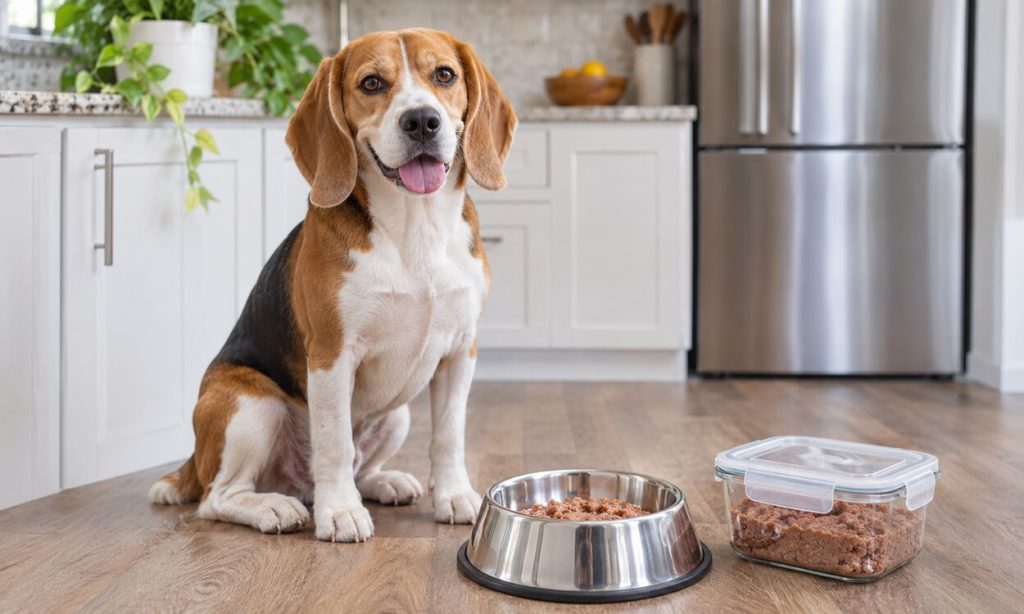
A dog with a sensitive stomach may react badly to a sudden food change, but spoiled wet food can cause problems even when the formula itself is appropriate. Canned food is perishable after opening and requires careful handling. Serving a consistent diet means protecting leftovers, measuring portions, washing bowls, and noticing whether symptoms follow storage mistakes or a genuine medical issue. A safe feeding routine supports the veterinarian’s plan without adding unnecessary variables.
This guide explains how to store canned dog food for a sensitive stomach safely, from unopened packages to refrigerated leftovers and travel meals. It also covers portion records, serving temperatures, warning signs, and when to call the veterinarian. Our guide to canned dog food for sensitive stomachs provides related background on feeding needs.
Keep Unopened Cans Cool, Dry, and Intact
Store unopened cans indoors in a cool, dry place away from direct sun, damp floors, heat sources, and household chemicals. The FDA recommends a cool and dry environment for unopened canned pet food. A garage that becomes very hot in summer or a damp shed is a poor choice. Rotate older packages forward and check dates before feeding. Keep the original label and lot number available in case a package is damaged or a food concern needs investigation.
Inspect each can before opening. Bulging ends, leaks, severe dents along seams, rust, punctures, or unusual pressure can indicate damage. Do not offer food from a questionable container simply to avoid waste. A dog with digestive sensitivity is not a useful test subject for compromised packaging. Dispose of unsafe food, clean any surfaces that contacted it, and retain the label details if you need to report a problem.
Refrigerate Opened Portions Right Away
Once you open a can, unused food should be refrigerated promptly or discarded. The FDA recommends storing leftover canned and pouched pet food in a refrigerator maintained at 40°F or below. Use a clean covered food-safe container or a compatible secure lid. Avoid leaving exposed food beside raw meat, household spills, or strong-smelling items. Label the container with the opening date and time so that every caregiver knows how long it has been stored.
Follow the package’s instructions for how long an opened product remains suitable, using the more conservative guidance when uncertain. If the refrigerator loses power and the food’s temperature history cannot be verified, discard it. Repeatedly opening a large container to serve tiny meals can introduce contamination; portioning with clean utensils may help. Do not freeze an opened food unless the specific product instructions and veterinarian agree that its texture and nutritional use will remain appropriate.
Use Clean Utensils and Serve Small Measured Meals
Wash feeding bowls after every wet-food meal and water bowls daily, following FDA food-handling advice. Use clean spoons and avoid putting utensils that touched the dog’s saliva back into the stored can. Offer the veterinarian-approved meal amount, then remove and discard leftovers that have sat out. Bacteria can multiply in moist food at room temperature, especially in a warm home. Do not save half-eaten food from a used bowl by returning it to the refrigerator.
For dogs whose digestive symptoms are being evaluated, measure each serving accurately and record how much was actually eaten. The number of grams or calories matters more than the appearance of a full bowl. Give meals at consistent times and avoid using table scraps to tempt the dog without veterinary guidance. A food journal helps the care team distinguish reactions linked to diet changes, treats, illness, or potential contamination.
Warm Food Gently and Avoid Unapproved Additions
Some dogs prefer food that is not refrigerator-cold. If warming a portion, use a gentle safe method and check that it is not hot before serving. Do not let opened food sit at room temperature for hours while waiting for appetite. Stir well if heated using a permitted method so there are no hot spots. Use a separate clean utensil for each portion. Offer fresh drinking water with every meal.
Do not automatically add oils, salty broth, milk, or seasoning to a sensitive-stomach diet. These can introduce ingredients the dog does not tolerate and make a veterinarian-directed dietary trial difficult to interpret. If the dog refuses a prescribed formulation, contact the veterinarian to discuss texture, nausea, portion size, or alternative diets. Disguising a poor appetite can delay recognition of a medical problem.
Track Digestive Symptoms Without Blaming Every Food
Record stool consistency, vomiting, appetite, energy, and any skin or ear issues together with meal times. A single loose stool does not identify food allergy, and recurring symptoms can have multiple causes. Ask the veterinarian whether parasites, medication effects, infections, or other conditions should be evaluated. A new diet should generally be introduced according to a veterinary plan, not through frequent unrecorded switches.
Seek prompt care for repeated vomiting, blood in vomit or stool, a painful or swollen abdomen, marked lethargy, or dehydration. Dogs may need examination rather than another food change. Our overview of food-related allergy concerns in dogs may be useful background, but it cannot diagnose an individual animal’s digestive symptoms. Keep the original food package when a safety complaint is suspected.
Handle Travel, Boarding, and Multi-Dog Feeding
When traveling with opened wet food, use sealed containers and an insulated cooler capable of maintaining food-safe cold conditions. A cooler without adequate ice or temperature control is not equivalent to refrigeration. Pack clean bowls and label each portion. If boarding staff or a sitter feeds the dog, give clear written directions, the opening date of any prepared container, and the veterinarian’s contact information. Avoid abrupt substitutions because the preferred diet is unavailable.
In multi-dog homes, keep individual meals separate so the sensitive dog does not steal a different formula. Ensure other pets cannot access spoiled leftovers. If several people feed the dogs, a daily checklist prevents accidental double portions and unplanned treats. The goal is to keep variables stable: food, amount, timing, and handling. This makes veterinary follow-up more informative if symptoms continue.
Recognize Spoilage and Discard Questionable Food
Discard food with an unusual odor, mold, abnormal color, slime, or gas pressure. Do not taste questionable pet food or feed a small test portion to see what happens. A dog may eat unsafe food eagerly, and that behavior is not evidence of safety. Wash containers thoroughly before reusing them and follow safe handwashing practices. Separate discarded food from areas where a curious dog could retrieve it.
Keep an unopened backup supply of the correct formula for emergencies, but do not stock so much that it expires. Check packaging dates when shipments arrive. If a dog develops sudden illness after eating from a particular container, contact the veterinarian and retain identifying package details. Proper storage cannot eliminate every digestive problem, but it removes an avoidable source of risk.
Frequently Asked Questions
Storage decisions are especially important when digestive signs are already being tracked. Check the actual food label for handling instructions and follow veterinary feeding plans.
When in doubt about a package’s safety, discard it. Uncertain leftovers are not worth an avoidable illness or a confusing new variable during dietary assessment.
How soon should opened canned dog food go into the refrigerator?
Promptly after opening. Refrigerate or discard unused food and keep the refrigerator at 40°F or below, following the product’s specific directions.
Can I refrigerate food left in the dog’s bowl?
Discard leftovers exposed to saliva or left out for a prolonged period. Do not return a half-eaten serving to the clean storage container.
Is it okay to serve cold wet food?
Some dogs accept cold food, while others prefer gentle warming. Follow safe methods and avoid hot spots or prolonged room-temperature holding.
Should I add broth to help a sensitive dog eat?
Ask the veterinarian first. Added ingredients can introduce intolerances or interfere with a prescribed dietary trial.
What signs mean the dog needs veterinary care?
Repeated vomiting, blood, significant diarrhea, abdominal pain, dehydration, lethargy, or prolonged poor appetite deserve professional attention.
Final Words
To store canned dog food for a sensitive stomach safely, protect unopened cans from heat and damage, refrigerate opened portions promptly, and maintain a refrigerator at 40°F or below. Use clean tools, serve measured meals, and discard food that was left out or shows spoilage. A consistent routine makes digestive changes easier to monitor.
Work with your veterinarian to assess recurring symptoms rather than blaming a particular can automatically. Good food handling is an important part of caring for a sensitive dog, but it does not replace medical evaluation when vomiting, diarrhea, or appetite problems persist.









