
When your dog vomits after meals or has recurring soft stool, finding the best canned dog food for a sensitive stomach can feel urgent. Canned food offers different textures and ingredients, but a label cannot explain why symptoms happen. Eating too quickly, parasites, infection, medication, obstruction, and other health problems can also cause vomiting. This guide compares seven wet foods by their verified format, named ingredients, and product positioning. Some are routine adult foods; none should be treated as a cure or a substitute for veterinary care. If vomiting is repeated, severe, includes blood, or comes with weakness, pain, poor appetite, or weight loss, contact a veterinarian before changing food. Ask the clinic which texture, ingredients, and feeding schedule fit your dog’s history.
Quick Picks
These options vary by texture, ingredients, and pack size. Confirm that a recipe fits your dog’s age, health, and veterinary feeding plan.
| Product | Best For | Key Advantage | Buy | |
|---|---|---|---|---|
| Purina Pro Plan Sensitive Skin & Stomach Salmon Pâté | Adult dogs needing a canned salmon-and-rice option | Salmon pâté with rice and prebiotic fiber | View on Amazon | Jump to Review |
| Hill’s Science Diet Sensitive Stomach Chicken Stew | Adult dogs whose owners prefer a stew texture | Chicken-and-vegetable stew with digestibility positioning | View on Amazon | Jump to Review |
| Purina Pro Plan Sensitive Skin & Stomach Lamb Pâté | Dogs whose plan includes lamb and oatmeal | Lamb pâté with oatmeal and prebiotic fiber | View on Amazon | Jump to Review |
| Weruva Awesome Belly Sensitive Stomach Variety Pack | Owners wanting a small canned variety pack | Six-ounce cans with multiple named recipes | View on Amazon | Jump to Review |
| Blue Buffalo True Solutions Digestive Care Chicken Wet Dog Food | Adults needing a chicken-based digestive-care pâté | Chicken-first formula with prebiotic fiber | View on Amazon | Jump to Review |
| Wellness CORE Digestive Health Pâté Variety Pack | Households comparing two pâté flavors | Chicken and beef pâté recipes with prebiotic fiber | View on Amazon | Jump to Review |
| Go! Solutions Sensitivities Duck Pâté | Dogs whose veterinarian approves duck as a protein option | Chicken-free duck pâté with limited-ingredient positioning | View on Amazon | Jump to Review |
What to know about sensitive stomach food
“Sensitive stomach” is a broad label, not a diagnosis. Vomiting after eating can have dietary and non-dietary causes. The Merck Veterinary Manual notes that persistent vomiting or vomiting with blood, pain, dehydration, weakness, or weight loss needs a more detailed veterinary examination. If your dog has had repeated episodes, contact a veterinarian before trying several new foods.
If a veterinarian recommends a diet change, keep it simple and follow the clinic’s instructions. For dogs being evaluated for a food reaction, record meals, treats, symptoms, and exposures using the approach in our guide to tracking a veterinarian-guided elimination diet. That article applies specifically when the vet is investigating a food reaction, not to every vomiting episode.
For additional context on when vomiting needs examination, read the Merck Veterinary Manual’s guidance on vomiting in dogs.
Product reviews
The seven products below represent different canned textures and ingredient profiles. Check the full package label and discuss recurring symptoms with your veterinarian before switching.
1. Purina Pro Plan Sensitive Skin & Stomach Salmon Pâté

- Salmon is the named animal protein
- Rice is identified as easily digestible
- Prebiotic fiber is included
- 12 cans provide a pantry-size pack
- Not a diagnostic diet without veterinary direction
Purina Pro Plan Sensitive Skin & Stomach wet food is a salmon-and-rice pâté sold in a twelve-can pack. The verified product information describes real salmon and rice, with rice presented as easily digestible. It also lists natural prebiotic fiber and an adult complete-and-balanced positioning. Those are useful label details for comparing canned options, but they do not establish why a particular dog has stomach upset. A veterinarian should assess recurring signs before a food change is treated as a solution.
The pâté texture offers a different meal format from kibble and may suit dogs that prefer moist food or need a canned option. The listing also mentions omega fatty acid linoleic acid for skin and coat support, plus a high-protein recipe. Check the current can label for feeding directions, calorie information, life stage, and the full ingredient list. Product features and formulas may change, so confirm the exact salmon-and-rice recipe rather than relying on a similar package photo.
This product may fit routine feeding when the veterinarian agrees that an adult salmon-and-rice food makes sense. It is not a prescription hydrolyzed diet or a diagnostic tool. If your dog has vomiting, diarrhea, weight loss, or a known food reaction, bring the ingredient history to the clinic first. During any instructed trial, ask whether this exact food is allowed and keep treats, chews, supplements, and flavored medicines consistent with the plan. Check whether the can’s current feeding guide matches your dog’s weight and activity, and discuss any planned transition with the veterinary team.
My Recommendation
This is a reasonable option to discuss when your veterinarian approves a salmon-and-rice adult canned food and your dog accepts pâté. The twelve-can case supports planned feeding, and the listing highlights prebiotic fiber. Its key limitation is that it is a routine sensitive-stomach formula, not a tool for diagnosing food allergy or repeated vomiting. Confirm the feeding amount and trial rules before serving it. Ask whether the recipe’s calories and portion guide fit your dog’s daily needs, especially if this food will replace dry food.
2. Hill’s Science Diet Sensitive Stomach Chicken Stew

- Stew texture instead of pâté
- 12.5-ounce cans in a 12-pack
- Prebiotic fiber is part of the digestive-support formula
- Omega fatty acids are listed
- Chicken may not fit every dog’s food history
Hill’s Science Diet Sensitive Stomach & Skin wet food is an adult chicken-and-vegetable stew in a twelve-pack of 12.5-ounce cans. The verified listing describes a highly digestible recipe and includes prebiotic fiber as part of its digestive-support positioning. A stew differs from a smooth pâté, which may matter to a dog that accepts one texture more readily than another. The label information is a comparison point, not a guarantee that the food will settle every dog’s stomach.
The product listing also names antioxidants and vitamins E, omega-3, and omega-6 fatty acids. It is marketed for adult dogs, so check the package carefully if you are feeding a puppy, pregnant dog, or animal with a medical condition. Chicken appears in the recipe name and is a material consideration if your dog has reacted to chicken before. Review the current ingredients and nutritional-adequacy statement before deciding whether the product fits your veterinarian’s recommendations.
A twelve-can case may suit households that have already confirmed their dog accepts the texture and recipe. It is a poor choice for an unsupervised elimination trial if the veterinarian has excluded chicken or selected another diet. Ask what portion to feed, whether a gradual transition is appropriate, and what symptoms should prompt a follow-up. Recurrent vomiting is not something to manage by rotating canned foods without investigating the cause. The product’s adult positioning is important; puppy growth, pregnancy, and chronic illness may call for a different nutritional plan and closer oversight.
My Recommendation
Choose this only if the chicken-and-vegetable stew fits your dog’s ingredient history and life stage. Its 12.5-ounce cans and stew texture distinguish it from pâté options, and the verified listing describes a highly digestible adult formula. The tradeoff is chicken, which may not suit every dog or trial plan. Ask the veterinarian whether it is appropriate before using it to address recurring digestive signs. Confirm the adult recipe matches your dog’s life stage, and follow the clinic’s advice if digestive signs continue.
3. Purina Pro Plan Sensitive Skin & Stomach Lamb Pâté

- Lamb is the listed protein
- Oatmeal is the named grain
- Prebiotic fiber is included
- 12 cans support planned feeding
- Check prior lamb exposure if food sensitivity is suspected
This Purina Pro Plan canned recipe pairs lamb pâté with oatmeal and is sold as twelve 13-ounce cans. The product listing describes the oatmeal as easily digestible and identifies prebiotic fiber as another digestive-support feature. Compared with the salmon-and-rice recipe, this formula offers different named ingredients and a pâté texture. The ingredient difference may be useful in a veterinarian-guided feeding discussion, but it does not prove that lamb or oatmeal will suit a particular dog.
The verified listing also describes a high-protein food and mentions linoleic acid for skin and coat. Check the complete ingredient panel and feeding statement on the current can, especially if your dog has a prior food sensitivity or follows a veterinarian’s diet plan. Do not assume that lamb is a novel protein; many dogs have eaten lamb in other foods, treats, or chews. Product names are not enough to establish a controlled diet history.
The twelve-can format can simplify portioning once a veterinarian approves the recipe. Keep the feeding routine steady, note how much the dog eats, and avoid introducing other new foods at the same time. If vomiting is persistent, severe, or accompanied by weakness, blood, pain, or poor appetite, contact a veterinarian rather than continuing to test different recipes. A canned food can support routine nutrition, but it cannot identify or treat the underlying cause by itself. If this recipe is being considered during a trial, keep the same lamb-and-oatmeal formula and avoid adding other foods unless your veterinarian permits them.
My Recommendation
This lamb-and-oatmeal pâté is worth comparing if the veterinarian approves both ingredients and your dog prefers canned food. The listing identifies prebiotic fiber and a twelve-can format. Its limitation is that prior lamb exposure matters, especially when investigating a suspected food reaction. Use the exact recipe under a consistent plan, and contact the clinic if vomiting persists rather than changing foods again. If your dog has eaten lamb before, tell your veterinarian before using this recipe in any ingredient-based trial.
4. Weruva Awesome Belly Sensitive Stomach Variety Pack

- Pack contains nine small cans
- Variety includes beef, chicken, pumpkin, and rice
- Small format helps portion planning
- No corn, soy, wheat, or gluten is listed
- Multiple proteins can complicate a diagnostic food trial
Weruva Awesome Belly is a nine-can variety pack of six-ounce wet dog food. The verified listing names recipes with beef, chicken, pumpkin, and white rice and describes the product as designed for sensitive stomachs. Smaller cans can be convenient for measured portions and reduce the amount of an opened can left in the refrigerator. Because it is a variety pack, however, the product includes more than one recipe and more than one animal protein.
The listing says the recipes exclude corn, wheat, soy, gluten, and meat by-products. These are label attributes to compare with your dog’s needs, not proof that the food is suitable for every sensitive stomach. Variety can help households see which texture or recipe a dog accepts, but it can make ingredient tracking less simple. Check the current can labels to confirm which recipe is inside and whether it is complete and balanced for your dog’s life stage.
This pack is more appropriate for routine rotation only when your veterinarian approves the ingredients. Avoid using a mixed-protein variety pack for a strict elimination trial unless the clinician specifically chooses it. The smaller cans may help with portion control, yet each opened can still needs safe storage and timely use according to the label. If your dog has ongoing vomiting or diarrhea, seek veterinary advice instead of treating the variety pack as a medical diet. The variety format is a routine-feeding convenience, not a clinical test; introduce it only when its recipe variety fits the dog’s needs.
My Recommendation
The small cans and mixed recipes can suit an adult dog that tolerates the ingredients and benefits from portion convenience. Its main advantage is variety in a compact pack; the tradeoff is that multiple proteins are a poor fit for some controlled diet trials. Ask your veterinarian whether the recipes are complete for your dog’s needs and whether the pack’s ingredients align with the current feeding plan. Check that your dog tolerates every included recipe and keep opened portions refrigerated as the package directs.
5. Blue Buffalo True Solutions Digestive Care Chicken Wet Dog Food

- Chicken is identified as the first ingredient
- 12.5-ounce cans
- Prebiotic fiber is highlighted for digestive care
- Antioxidant-rich ingredients are listed
- Not a prescription elimination diet
Blue Buffalo True Solutions Digestive Care is a chicken-based canned food sold in twelve 12.5-ounce cans. The verified listing identifies real chicken as the first ingredient and describes prebiotic fiber for digestive-health support and stool quality. It also mentions apples and omega-3 and omega-6 fatty acids. Those product details may help you compare adult wet foods, but they do not replace an evaluation of repeated stomach symptoms or prove that a formula is right for every dog.
A chicken-first recipe can be a familiar option for some dogs, though it is not appropriate if a veterinarian has asked you to avoid chicken. Read the complete ingredient list rather than focusing on the front label. The listing describes the formula as free from corn, wheat, and soy and without poultry by-product meals. Confirm those details against the package you receive, because label presentations and product formulas can change over time.
This food may be considered for regular adult feeding when your veterinarian agrees with the recipe and the dog’s calorie plan. It should not be treated as a prescription diet for a diagnosed gastrointestinal condition. If your dog is already on a controlled trial, check before introducing it. Keep an eye on appetite, stool, and vomiting frequency, and share changes with the clinic rather than switching foods repeatedly in response to a single episode. Confirm chicken is acceptable before ordering, particularly if your dog has a prior reaction or a veterinarian-directed ingredient restriction.
My Recommendation
Consider this chicken-first option when your veterinarian approves chicken and an adult digestive-care food. The twelve-can case and prebiotic-fiber positioning are practical features to compare. The tradeoff is that it is not a prescription gastrointestinal diet and should not be used to explain ongoing vomiting. Check the current ingredients and follow the clinic’s feeding advice, particularly if your dog has a known sensitivity. Compare the complete ingredient panel with your dog’s history before making this a regular meal.
6. Wellness CORE Digestive Health Pâté Variety Pack

- Six 13-ounce cans in the pack
- Includes chicken and beef recipes
- Smooth pâté texture
- Pumpkin and papaya are listed as superfoods
- Variety recipes introduce more than one protein
Wellness CORE Digestive Health is a six-can variety pack of 13-ounce adult pâté foods. The verified listing says the pack includes chicken and beef recipes, with prebiotic fiber and pumpkin and papaya among the listed ingredients. The smooth pâté texture may suit dogs that prefer soft food. Because the case contains more than one protein recipe, check which can is served and make sure both recipes fit your dog’s feeding plan.
The listing describes the product as grain-free and highlights digestive support, immune health, and omega fatty acids. Those are manufacturer descriptions and should not be read as treatment claims for vomiting or chronic gastrointestinal disease. Confirm the current label’s nutritional adequacy, feeding amounts, calories, and life-stage suitability. If your dog has an allergy history, the two-protein format makes it especially important to compare every recipe with the known diet history.
A variety pack is practical for routine feeding when the dog tolerates both flavors and the veterinarian has approved them. It is less useful if you need to identify a single ingredient trigger, because multiple recipes make tracking more complex. Store opened cans as directed and introduce changes only according to the clinician’s plan. Contact your veterinary team for persistent signs or appetite changes instead of relying on a food swap alone. Check that both flavors suit your dog’s history before serving the case, and store opened cans according to the package directions.
My Recommendation
This variety pack may fit a dog that tolerates both chicken and beef and prefers soft food. It includes six larger cans and a smooth pâté format. The key drawback is that two proteins make it less straightforward for a controlled elimination plan. Confirm that both recipes suit your dog’s diet and life stage, and keep meal portions and other treats consistent. Confirm both flavors fit the approved diet and rotate only if the veterinarian agrees.
7. Go! Solutions Sensitivities Duck Pâté
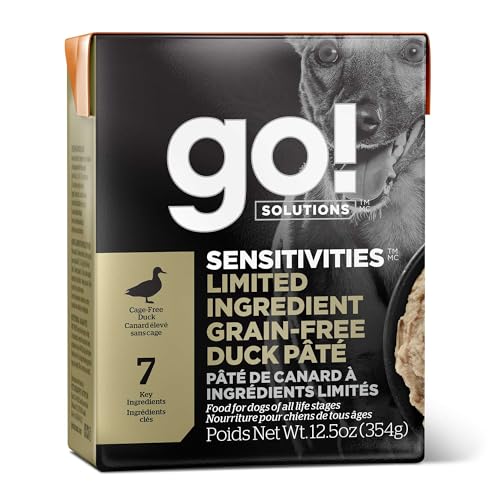
- Duck is the named single animal protein
- Chicken-free recipe is stated
- Pumpkin provides a named fiber source
- Pâté format can be easy to portion
- Novel-protein status depends on your dog’s history
Go! Solutions Sensitivities is a duck pâté presented as a limited-ingredient wet food for sensitive stomachs and food allergies. The verified listing identifies duck as the single animal protein and describes the formula as chicken-free, with pumpkin as a fiber source. Pâté can be easy to portion, but the package size and exact feeding statement should be checked on the current label. Limited-ingredient marketing does not by itself confirm that a food is appropriate for a diagnostic trial.
The product information says the recipe is grain-free and gluten-free and uses a limited-ingredient approach. These label claims can help you compare options if your veterinarian is considering duck, but whether duck is novel depends on what your dog has eaten before. Ask about prior foods, treats, chews, and flavored medications. The listing covers puppies, adults, and seniors, but you should still confirm the nutritional-adequacy statement for your dog’s life stage and intended use.
This may be a candidate to discuss when the clinician approves duck and a wet format. It should not be selected solely because the dog’s stomach seems sensitive or because the word “sensitivities” appears on the package. If vomiting is frequent or the dog seems unwell, prioritize veterinary assessment. For a controlled food trial, feed only the approved product and record any accidental exposures so your veterinarian can interpret the response. Duck is novel only if your dog has not eaten it before; the veterinarian can check that history and the product’s complete feeding statement.
My Recommendation
This duck pâté may be worth asking about when duck fits your dog’s history and your veterinarian approves a limited-ingredient wet food. The chicken-free listing and pumpkin detail help distinguish it from other options. Its limitation is that “limited ingredient” does not automatically mean diagnostic or hypoallergenic. Confirm the complete recipe, nutritional statement, and trial rules before making it your dog’s sole food. Follow the veterinarian’s instructions for trial duration, treats, and the next follow-up.
How to choose best canned dog food for sensitive stomach
First decide whether you are choosing a routine food for a dog with occasional digestive sensitivity or responding to ongoing vomiting. Repeated symptoms deserve a veterinary assessment because food is only one possible cause. Tell the clinic how often your dog vomits, what the material looks like, when it happens relative to meals, and whether there is diarrhea, appetite change, pain, lethargy, weight loss, or access to garbage, toys, medications, or toxins. Bring the current food label and a list of treats and supplements.
Compare texture, recipe, and life stage
Pâté, stew, and small-can varieties differ in texture and portion convenience. Choose a texture your dog accepts, but do not assume that canned food is automatically gentler than kibble. Compare the named proteins, grains, fiber sources, calorie content, can size, and nutritional-adequacy statement. If a veterinarian suspects food allergy or intolerance, ingredient history matters more than a package’s “sensitive stomach” wording. A variety pack may be convenient for routine feeding but can complicate a controlled trial when it contains multiple proteins.
Change food with a plan
Ask your veterinarian whether to transition gradually, use a particular food for a defined period, or arrange tests first. Do not withhold water or use a fasting plan unless the veterinarian specifically instructs you; vomiting can lead to dehydration, and the right response depends on the dog’s condition. Measure portions, keep opened cans stored as directed, and record meals and symptoms. Repeated or severe vomiting, blood, abdominal pain, weakness, dehydration, or poor appetite calls for prompt veterinary advice. A food change should never delay urgent care.
Keep a brief record for each meal: the food name, amount, time, treats, and whether vomiting or stool changes followed. Bring that log to the appointment, along with photos of the cans and ingredient panels. If the dog has eaten a foreign object, garbage, or a medication, tell the veterinary team promptly. Do not withhold water or give human stomach medicine unless the veterinarian directs you. A product’s sensitive-stomach wording is a shopping cue only; the clinical plan should guide changes when symptoms recur.
Frequently Asked Questions
Use these general answers to prepare questions for your veterinarian; the right food depends on the cause and pattern of your dog’s symptoms.
Is canned food better for a sensitive stomach?
Not automatically. Texture, ingredients, digestibility, portion size, and the cause of symptoms matter. Ask your veterinarian what fits your dog.
Can a dog food stop vomiting?
A food may be part of a veterinarian’s plan, but vomiting has many possible causes. Repeated vomiting needs medical assessment rather than repeated food changes.
Should I switch foods suddenly?
Ask your veterinarian. A gradual transition is often used for routine food changes, but the right schedule depends on the dog’s condition.
Can I feed a variety pack during a food trial?
Only if your veterinarian approves the exact recipes. Multiple proteins can make ingredient tracking and interpretation harder.
When should vomiting be treated as urgent?
Contact a veterinarian promptly for repeated or severe vomiting, blood, pain, weakness, dehydration, poor appetite, or other concerning signs.
Final Verdict
The best canned dog food for a sensitive stomach is the one that suits your dog’s nutritional needs and the reason symptoms are occurring. These products offer salmon-and-rice, chicken, lamb-and-oatmeal, duck, and variety-pack choices, but none can diagnose vomiting or replace veterinary care. Compare the can’s complete recipe, texture, portion size, and life-stage statement. If signs recur, become severe, or occur with blood, weakness, pain, or appetite loss, contact your veterinarian before changing foods.
Affiliate disclosure: This article contains Amazon affiliate links. If you purchase through them, PetAdvisorPro may earn a commission. As an Amazon Associate I earn from qualifying purchases.