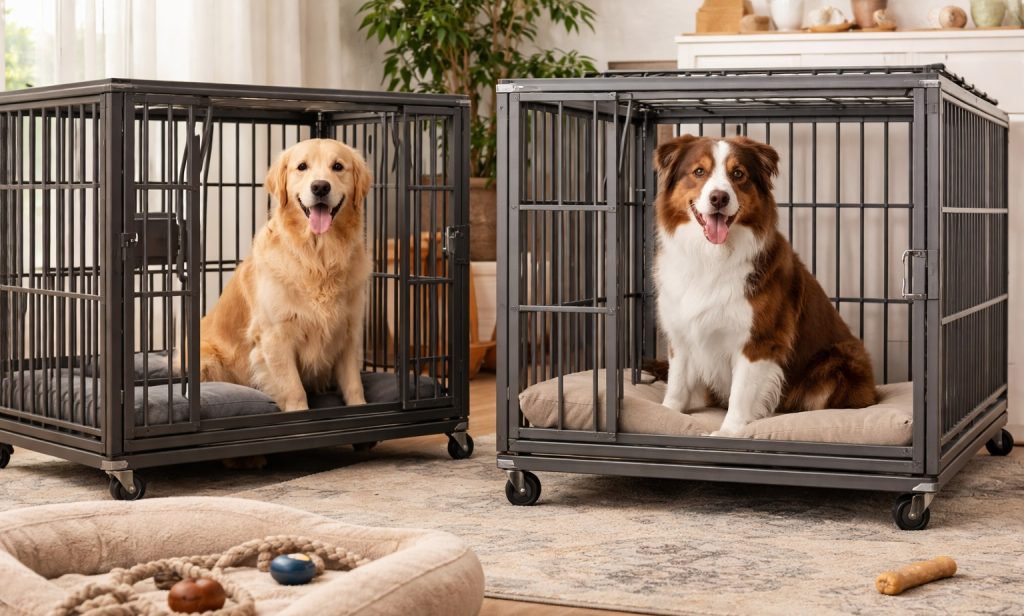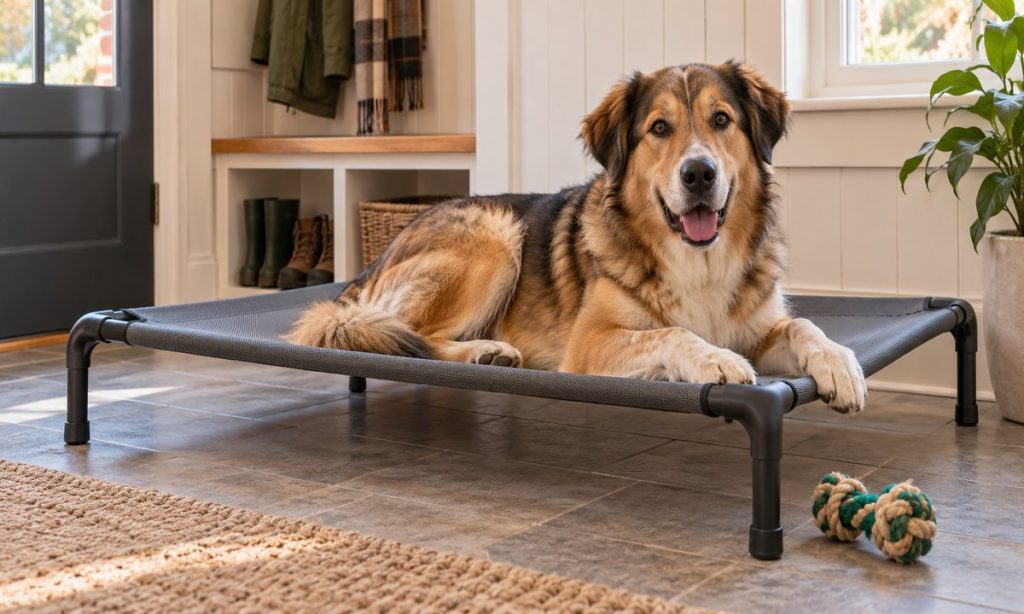
Finding the best dog bed for chewers means balancing comfort with realistic expectations about durability. Beds described as chew proof can slow damage, but no fabric or frame is indestructible, and dogs that swallow bedding need close supervision. Raised cots hide edges and improve airflow; padded mats feel softer but expose fabric and filling. These picks compare frame design, corner protection, surface, size, and cleanup so you can match a bed to how your dog sleeps and chews. Measure your dog and crate before buying, then inspect any new bed during early use. Remove a damaged bed promptly. Raised cots, padded surfaces, crate mats, and reinforced corners solve different problems, so choose based on the surfaces your dog targets and the supervision you can provide. Check stated size and weight limits before purchase.
Quick Picks
| Product | Best For | Key Advantage | Buy | |
|---|---|---|---|---|
| Senneny Chew-Proof Elevated Dog Bed | Best concealed-edge cot | 900D fabric edge is tucked inside aluminum rails | View on Amazon | Jump to Review |
| Veehoo Aluminum Chew-Proof Dog Cot | Best mesh cot | Textilene mesh cot with a hose-cleanable surface | View on Amazon | Jump to Review |
| Veehoo Padded Chew-Proof Dog Cot, 41 × 27 in | Best padded raised cot | Padded raised surface with alloy corner guards | View on Amazon | Jump to Review |
| Veehoo Orthopedic Chew-Proof Dog Bed, 49 × 32 in | Best larger cushioned cot | Removable padded cover with enclosed fabric edges | View on Amazon | Jump to Review |
| RRPETHOME Chew-Proof Dog Mat, 35 × 22 in | Best compact foam mat | Three-inch foam layer with reinforced seams | View on Amazon | Jump to Review |
| Waterproof Canvas Chew-Proof Crate Bed | Best armored crate pad | 600D canvas with reinforced corners and a chew shield | View on Amazon | Jump to Review |
| Veehoo Armored Chew-Proof Crate Pad | Best thick crate bed | 4.3-inch cushion with dual-layer corner caps | View on Amazon | Jump to Review |
Senneny Chew-Proof Elevated Dog Bed

- Reinforced design addresses common chew points
- Useful bed style for the right sleeping preference
- Practical cleaning features
- Listing provides dimensions to compare
- Not truly chew-proof; supervise and inspect
- Size or padding may not suit every dog
Senneny’s medium raised cot uses a 900D Oxford fabric surface tucked inside aluminum rails, hiding the exposed edge many dogs grab first. The listed 42-by-27-inch frame sits six inches high and has a water-resistant surface with airflow below. This format gives a dog a firm resting spot and keeps it off the floor. Its enclosed edge is a practical design feature for chewers, although the fabric itself can still be damaged.
Because this model is a raised cot, compare the sleeping surface with the dog’s length and look at how stable the frame feels on the intended floor. Raised beds can improve airflow and keep the dog off a damp surface, but they do not provide the deep cushioning of a mattress. Check the current weight guidance and inspect the rail connections after setup. A concealed perimeter helps with edge-picking, yet it does not make the product safe to leave with a dog that tears and eats fabric.
Think of the tucked edge as a resistance feature, not a guarantee. Check the bed during early use and remove it if the dog opens the fabric or loosens a connection. For dogs that swallow cloth or foam, consult a veterinarian about safer rest arrangements and provide appropriate chew outlets. The right choice depends on dimensions, sleeping style, and supervision, not a breed label or the word indestructible on a product page.
My Recommendation
Senneny stands out for hiding its fabric edges inside the frame, a practical choice for dogs that target cot borders. Its medium footprint is the main limitation, so measure before buying. I would choose it for a dog that likes a raised, wipeable resting surface and can be supervised. Inspect it regularly; even reinforced materials can fail under determined chewing. Compare the dimensions and care instructions, then supervise initial use and remove the bed if a tear or loose connection appears.
Veehoo Aluminum Chew-Proof Dog Cot

- Reinforced design addresses common chew points
- Useful bed style for the right sleeping preference
- Practical cleaning features
- Listing provides dimensions to compare
- Not truly chew-proof; supervise and inspect
- Size or padding may not suit every dog
Veehoo’s raised cot pairs an aluminum frame with Textilene mesh and folds the fabric edge inside the frame. The listing gives a 42-by-30-inch surface, seven-inch elevation, and 150-pound capacity, with a surface that can be rinsed clean. Open mesh allows air to move under the dog and offers a taut, firm feel rather than a padded mattress. The smooth perimeter removes obvious loose tabs, but mesh is still a material a persistent chewer can tear.
With this mesh cot, the main tradeoff is firm support in exchange for airflow and easy rinsing. Measure the dog’s full stretched sleeping posture and compare it with the usable fabric area rather than the title’s size label. Place the frame on a level surface and make sure it does not rock when the dog steps on or off. If your dog needs substantial padding or has joint discomfort, discuss bed needs with a veterinarian instead of treating a mesh surface as an orthopedic solution.
Choose this model if your dog likes a taut surface and you value airflow and hose-cleaning. Its lack of plush fill is a clear downside for dogs that nest or seek a soft landing. Follow the frame assembly instructions and recheck fasteners over time. Any tears in mesh should be treated as a reason to remove the cot, since a loose strip can become a tempting chew object. No raised bed should be left with a dog that dismantles fabrics.
My Recommendation
Veehoo’s Textilene cot is the straightforward airflow-focused pick: aluminum frame, mesh surface, and an enclosed mat edge. It is easy to rinse but offers little padding. Check the 42-by-30-inch size and stated capacity. It suits a dog that accepts a firm cot and benefits from a raised surface, with routine checks for fraying. Compare the dimensions and care instructions, then supervise initial use and remove the bed if a tear or loose connection appears.
Veehoo Padded Chew-Proof Dog Cot, 41 × 27 in

- Reinforced design addresses common chew points
- Useful bed style for the right sleeping preference
- Practical cleaning features
- Listing provides dimensions to compare
- Not truly chew-proof; supervise and inspect
- Size or padding may not suit every dog
This Veehoo cot adds padding to an elevated frame and lists alloy corner guards, ripstop fabric, and reinforced edges. The roughly 41-by-27-inch bed arrives largely assembled, with screw-in legs and waterproof barriers intended to make cleanup easier. Padding makes the surface softer than bare mesh while the raised frame encourages airflow under the bed. Its protected corners aim to reduce common bite points, though any stitched cover remains something to monitor.
The padded cot is a middle ground for dogs that want a softer surface but do not need a loose stuffed pillow. Check that the listed dimensions and weight limit fit your dog, then confirm how the cover should be cleaned and dried. A raised surface may help in warm rooms or outdoor settings, while the padding can be more comfortable for resting. Reinforced edges are useful, though chewing can still start at seams or where the fabric meets a corner guard.
This is a candidate for owners who want padding without moving to a floor cushion. It takes less space than a large mattress and its guarded corners add a practical barrier, but the product still includes fabric and seams. If washing is a priority, verify the cover and inner layer are both manageable. Stop use if padding becomes exposed, and use supervised rest periods until you know how your dog treats the bed. Measure the sleeping area and compare it with the product’s usable dimensions and stated weight limits. No chew-resistant material is guaranteed to remain intact.
My Recommendation
This padded Veehoo cot balances an elevated frame with a softer top and guarded corners. It is a reasonable candidate for a dog that finds bare mesh too firm but still needs a surface that wipes down easily. The compact 41-by-27-inch size is the key constraint. Choose it only if your dog’s chewing can be monitored. Compare the dimensions and care instructions, then supervise initial use and remove the bed if a tear or loose connection appears.
Veehoo Orthopedic Chew-Proof Dog Bed, 49 × 32 in

- Reinforced design addresses common chew points
- Useful bed style for the right sleeping preference
- Practical cleaning features
- Listing provides dimensions to compare
- Not truly chew-proof; supervise and inspect
- Size or padding may not suit every dog
The larger Veehoo cot combines a raised frame with a removable padded cover, dual-layer fill, and enclosed edges. It measures about 49 by 32 inches, according to the listing, and includes anti-digging corner protection and non-slip feet. This design offers more cushioning than an open mesh cot, while the elevated base separates the sleeping surface from the floor. Its removable cover may simplify washing, but the padding and seams remain vulnerable to sustained chewing.
This larger padded cot offers a more cushioned feel and a removable surface, but its footprint may be too large for smaller rooms or crates. Confirm the manufacturer’s size and weight advice before ordering, and check whether the cover and inner cushion have separate care instructions. A raised frame can feel cooler than a floor mattress, so consider your dog’s preference. If your dog routinely digs or bites beds, start with brief supervised sessions and check the corners after each use.
Consider this option when your dog prefers padding and you have enough room for a larger cot. Its removable cover may help with routine cleaning, but it does not remove the need to check for chewing damage. Remove it if any part begins to fray or if stuffing is accessible. Dogs with persistent bed destruction may need enrichment, a safe chew plan, and help addressing stress or confinement triggers alongside any product change. Measure the sleeping area and compare it with the product’s usable dimensions and stated weight limits. No chew-resistant material is guaranteed to remain intact.
My Recommendation
The larger padded Veehoo cot adds a removable cover and cushioning while keeping fabric edges within the frame. It is a better match for dogs that prefer padding over mesh, though it takes more room and remains vulnerable to persistent tearing. Verify dimensions and care instructions. Its reinforced corners help, but supervision is still necessary. Compare the dimensions and care instructions, then supervise initial use and remove the bed if a tear or loose connection appears.
RRPETHOME Chew-Proof Dog Mat, 35 × 22 in

- Reinforced design addresses common chew points
- Useful bed style for the right sleeping preference
- Practical cleaning features
- Listing provides dimensions to compare
- Not truly chew-proof; supervise and inspect
- Size or padding may not suit every dog
RRPETHOME describes this 35-by-22-inch mat as a chew-resistant dog bed with heavy-duty fabric, reinforced seams, and a three-inch foam layer. Its lower, flat shape works for crate floors or other compact spaces and gives a dog more cushioning than a raised cot. The product listing also claims use indoors and outdoors. The compact footprint is a useful fit for smaller dogs or crates, but foam bedding is not appropriate for an unsupervised dog that swallows material.
The flat foam mat gives a more familiar mattress feel than a cot, but verify that the size fits the crate and the dog can stretch out without the pad bunching. Check the care instructions and ask whether the cover comes off if washability matters. Foam may offer cushioning, but claims like orthopedic do not establish a medical benefit. Reinforced seams are helpful for everyday wear, though dogs that open fabric can reach the filling quickly, so inspect it regularly.
The padded surface is appealing for crate or floor use, but the listed size is relatively small and foam should be kept away from dogs that ingest bedding. Confirm whether the cover is removable before purchase. A durable mat can make rest more comfortable, but it cannot replace appropriate behavior support. Inspect the whole surface, especially seams and corners, and remove the bed once a tear lets a dog reach its filling. Measure the sleeping area and compare it with the product’s usable dimensions and stated weight limits. No chew-resistant material is guaranteed to remain intact.
My Recommendation
RRPETHOME provides a lower, foam-filled mat for dogs that prefer a traditional sleeping surface. Reinforced seams and compact shape are useful, but 35 by 22 inches may be small for many dogs, and foam is unsafe for dogs that ingest bedding. Confirm dimensions and wash instructions, then monitor for exposed filling. Compare the dimensions and care instructions, then supervise initial use and remove the bed if a tear or loose connection appears.
Waterproof Canvas Chew-Proof Crate Bed

- Reinforced design addresses common chew points
- Useful bed style for the right sleeping preference
- Practical cleaning features
- Listing provides dimensions to compare
- Not truly chew-proof; supervise and inspect
- Size or padding may not suit every dog
This 35-by-22-inch crate pad is made with 600D Oxford canvas, reinforced corners, and a UHMW-PE chew shield, per its listing. It has a 3.5-inch profile, a waterproof inner barrier, and a removable cover described as machine washable. The flat format can suit crate use, car travel, or a defined rest area. Its corner reinforcement targets areas dogs often seize, while the waterproof layer can help with spills; neither feature guarantees resistance to a determined chewer.
This armored pad has a low profile and reinforced corners, which may be convenient in a crate or during travel. Measure the crate’s interior floor, including the area near the door, and verify the cover’s washing directions before buying. The waterproof barrier is meant to contain moisture, not prevent chewing. Use the pad only when the dog’s behavior allows safe supervision; if the dog pulls apart bedding or eats cloth, a soft pad can still create an ingestion hazard even when its corners are reinforced.
The reinforced corners and washable cover make this pad attractive for a crate, but first ensure its footprint fits the crate exactly. The flat style offers less airflow than a cot and the listing’s durability claims cannot predict how an individual dog will behave. Check it after the first few uses, then continue routine inspections. Dogs that ingest bed pieces should not be left alone with any soft mat without veterinary guidance.
My Recommendation
The Canvas Armored pad focuses protection on corners and adds a waterproof barrier in a crate-friendly format. It is appealing for travel or crate use when dimensions fit. Any soft pad can still be chewed open, especially by dogs who swallow fabric. Check care details and wear before making it an unsupervised bed. Compare the dimensions and care instructions, then supervise initial use and remove the bed if a tear or loose connection appears.
Veehoo Armored Chew-Proof Crate Pad

- Reinforced design addresses common chew points
- Useful bed style for the right sleeping preference
- Practical cleaning features
- Listing provides dimensions to compare
- Not truly chew-proof; supervise and inspect
- Size or padding may not suit every dog
Veehoo’s armored crate bed has dual-layer corner caps, ripstop fabric, reinforced seams, and a listed 4.3-inch cushion. The 35-by-22-inch pad is described as machine washable; the maker says vacuum-packed filling needs 24 to 48 hours to expand. This is the thickest cushioned crate-pad style in our group, offering more softness than a thin mat while reinforcing high-stress corners. It may suit a dog that likes a cushioned floor bed, if the size and chewing behavior are a good match.
The thick cushion may be more inviting than a thin crate mat, but it uses more vertical room and should be checked against the crate’s usable dimensions. Allow the fill to expand as directed, then look for uneven spots and make sure the bed lies flat. A machine-washable product can save time, but follow its instructions to protect the seams and filling. Corner caps reduce some exposed edges, yet regular inspection remains necessary for any dog that chews bedding.
The thicker build is the comfort-focused crate option here, though 35 by 22 inches may not suit larger dogs. Check the product dimensions and your crate’s space before ordering, and follow the expansion and washing instructions. Its reinforced corners can help resist early damage, but supervision remains important. If a dog eats bedding, choose safety planning with a veterinarian over relying on marketing claims about strength. Measure the sleeping area and compare it with the product’s usable dimensions and stated weight limits. No chew-resistant material is guaranteed to remain intact.
My Recommendation
Veehoo’s armored bed has the thickest cushion in this set and reinforces corners, making it the comfort-focused crate pad. The washable design is convenient, though its size is compact and the thick fill takes up space. Let it expand as directed and inspect the caps and seams. It works best when chewing is manageable with supervision. Compare the dimensions and care instructions, then supervise initial use and remove the bed if a tear or loose connection appears.
How to choose best dog bed for chewers
Match the bed style to your dog
Start by watching how your dog rests. A dog that sprawls may do well on a raised cot with an open mesh surface, while a dog that curls or seeks softness may prefer padding. Cots keep fabric edges tucked into a frame and let air flow below, but they can feel firm and require a flat setup. Mats fit crates and travel more easily, though their fabric, seams, and filling can be tempting targets. Measure the dog stretched out and compare the usable surface, not just the product’s “large” or “medium” label.
Inspect chew points and care instructions
Look closely at corners, seams, zippers, straps, and exposed piping. Metal or reinforced corners may reduce easy grab points; ripstop fabrics and hidden edges can add resistance, but none make the bed indestructible. Check whether a cover comes off, whether the whole bed can be washed, and how it should dry. A waterproof barrier can be useful for spills, but it does not prevent chewing. Check weight capacity and frame stability for cot styles, and make sure a crate pad lies flat without blocking the door.
Put safety and fit first
Supervise the first sessions and inspect the bed daily while your dog learns to use it. Remove a bed as soon as fabric tears, foam becomes exposed, or a frame loosens. Dogs that eat cloth or stuffing may need a bed-free supervised area until a veterinarian or qualified behavior professional helps address the risk and cause. Provide safe chew outlets, exercise, and enrichment matched to the dog. For persistent chewing, consider whether stress, confinement, teething, or lack of activity is involved. A tougher bed can be one management tool, but it cannot replace supervision or training.
Consider where the dog sleeps and how the bed will be used. Raised cots often suit outdoor or warm settings, while flat pads fit crates and travel. A bed that is too small can bunch or put pressure on edges; one that is too large may not fit the crate or room. Make a short list of must-haves, then compare verified dimensions, weight limits, and care directions on the product page.
Frequently Asked Questions
Are any dog beds truly indestructible?
No. “Indestructible” is a marketing description, not a guarantee. A determined dog can damage fabric, seams, mesh, or a frame. Supervise and inspect the bed.
Are elevated cots better for chewers?
Some cot designs hide fabric edges and remove loose corners, which may help with dogs that tug at seams. Mesh can still be chewed, so monitor use.
What should I do if my dog eats bed stuffing?
Remove the bed and contact your veterinarian for advice, especially if your dog may have swallowed fabric or foam or shows signs of illness.
How do I choose the right bed size?
Measure your dog while stretched out and compare it with the usable sleeping surface and space where the bed will sit. Check the stated weight limit.
Can a chew-resistant bed stop destructive chewing?
A more resistant bed may slow damage but does not resolve the reason for chewing. Safe chew items, supervision, and behavior support may be needed.
Final Verdict
For dogs that target bed edges, designs with enclosed rails or reinforced corners are the most useful place to start. The Veehoo Textilene cot is a simple choice for airflow, while padded Veehoo models offer more cushioning; crate pads are better for compact spaces if your dog does not ingest fabric. Measure carefully and supervise, because no bed can be promised chew proof. If your dog swallows bedding, discuss safer management with a veterinarian before leaving any soft bed unattended.
Affiliate disclosure: This article contains Amazon affiliate links. If you purchase through them, PetAdvisorPro may earn a commission. As an Amazon Associate I earn from qualifying purchases.