
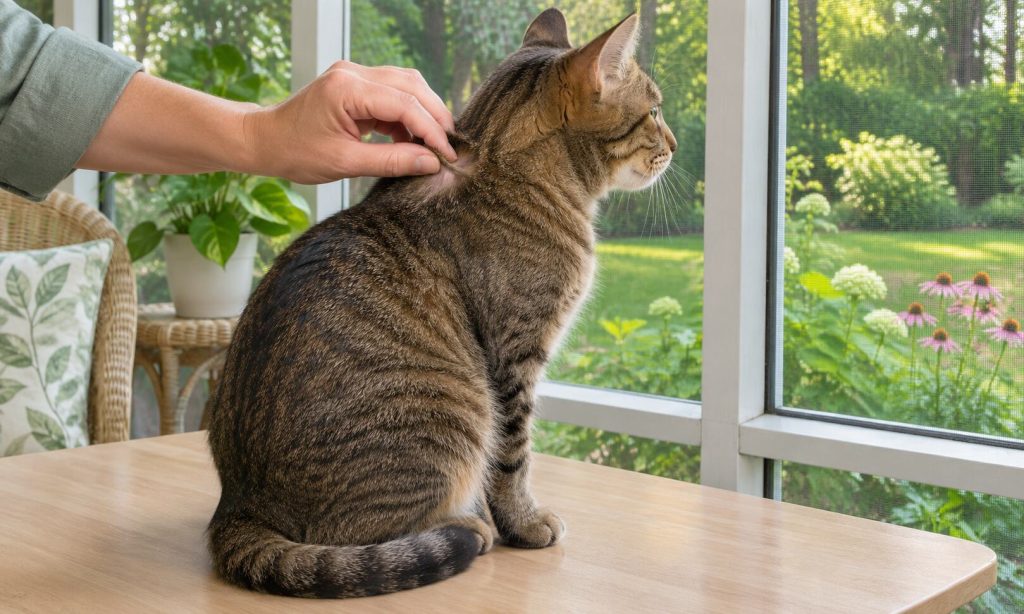
Introducing flea treatment to an outdoor cat safely begins with choosing a veterinarian-approved product for that exact cat. Outdoor exposure can increase contact with fleas, but medicines differ by species, weight, age, health status, and how they are applied. Dog flea products must never be substituted for cat products, and a frightened cat should not be restrained roughly just to finish an application. A successful introduction protects both your pet’s physical safety and trust.
This guide explains how to introduce flea treatment for outdoor cats in calm steps, including preparation, label checks, application routines, monitoring, and household control. It does not recommend a dose or replace the package directions. If you are researching the best flea treatment for outdoor cats, ask your veterinarian which active ingredient and formulation suit your cat before choosing among options. A predictable routine makes repeat treatments easier without compromising safety.
Ask the Veterinarian to Match Treatment to the Cat
Before introducing flea treatment for outdoor cats, confirm your cat’s current weight, age, medical conditions, other medications, and reproductive status. An adult rescue cat of unknown health history may need a different plan from a healthy, regularly examined adult. Tell the clinician how much time the cat spends outdoors and whether dogs, other cats, or wildlife share the environment. Tick exposure and local parasite patterns may also influence prevention.
Follow the clinic’s directions for the exact medication, including whether it is prescription or over the counter, and check the packaging each time. Some products are regulated as drugs while others are pesticides, but both require careful use. Do not combine a collar, spot-on, spray, or oral treatment unless the veterinarian explicitly approves the combination. More product does not mean better protection and may increase the risk of toxicity.
Read Species, Weight, and Age Restrictions
An essential step in introducing flea treatment for outdoor cats is checking the label for species and minimum age or weight. Never apply a dog-only product to a cat. Certain canine formulations contain ingredients, including concentrated permethrin, that are dangerous to cats. Do not split a large-dog dose or guess a fraction based on body size. Packaging that looks similar can still contain a different active ingredient or concentration.
Check the expiration date, intact seal, route of administration, and any cautions for pregnancy, nursing, or illness. If the label conflicts with your veterinarian’s instructions or your cat recently changed weight, call before applying. Store the product in its original container away from children and pets. The EPA flea and tick safety guidance reinforces the importance of species-specific label directions.
Create a Calm Pre-Treatment Routine
To introduce flea treatment for outdoor cats gently, choose a quiet familiar room and a time when your cat is naturally settled. Close doors and windows so the animal cannot escape outdoors during handling. Gather the product, written instructions, gloves if directed, and a small reward before bringing the cat into place. Practice brief, gentle touch near the shoulder area on earlier days if your cat is shy, without opening medication prematurely.
Use calm body language and a steady surface with good traction. An assistant may help with a wriggly animal, but do not force a panicked cat into prolonged restraint. For cats that cannot tolerate handling, ask the veterinary clinic about a different formulation or professional administration. The purpose of gradual introduction is to reduce stress while ensuring the full labeled treatment can be administered correctly.
Follow the Exact Route of Administration
Different flea treatments are not interchangeable. A spot-on liquid, oral medicine, and flea collar each have distinct application instructions. When introducing flea treatment for outdoor cats, read the manufacturer’s steps immediately before use and follow the veterinarian’s plan. Topical products often go on exposed skin at a specified location, not merely on top of fur, but the exact site and instructions vary. Do not improvise with a food or water mixture.
For oral treatments, use only the directed method and ensure the dose is actually swallowed as instructed. For collars, follow fitting and safety-breakaway guidance without making the collar too tight or loose. Never apply a topical product to damaged skin unless specifically instructed. If you spill, misapply, or lose part of a dose, contact the clinic rather than immediately repeating it.
Prevent Grooming and Contact After Application
After introducing flea treatment for outdoor cats, follow product-specific instructions for drying time, bathing, petting, and contact with other animals. A recently treated cat may groom itself or another pet, potentially ingesting topical medication. For households with several pets, separate them for the recommended period until the application is dry. Keep children from handling the treatment site as directed.
Do not let the cat outside immediately if the label or veterinarian requires a protected interval. Wet weather, swimming, and bathing can affect some formulations differently, so check the actual product rather than assuming a universal rule. Wash hands after handling medication, dispose of packaging safely, and protect the cat from licking applicators or discarded residue. If unexpected drooling, weakness, tremors, or unusual behavior occurs, seek prompt veterinary advice.
Watch for Side Effects and Act Early
Monitoring is part of how to introduce flea treatment for outdoor cats safely. Observe your pet after the first dose and subsequent applications for vomiting, marked lethargy, skin reactions, loss of coordination, tremors, or seizures. Some flea and tick drugs in the isoxazoline class carry FDA information about potential neurologic adverse events. Your veterinarian can review seizure history and help weigh benefits and risks for that individual animal.
If a cat shows concerning signs, call a veterinarian or emergency clinic immediately, and have the product name, active ingredient, time, and amount available. Do not give home remedies or induce vomiting without professional instructions. Report suspected adverse reactions through the appropriate channel as advised. Review the FDA isoxazoline safety fact sheet for context on this class.
Address Fleas in the Home and Other Pets
Introducing flea treatment for outdoor cats is only one part of flea management. Adult fleas on the animal may be accompanied by eggs or immature stages in bedding, rugs, and pet resting areas. Vacuum floors and soft furnishings, wash washable bedding, and follow a veterinarian-approved plan for all pets in the household. Do not apply a dog product to a cat or use household insecticides on an animal’s body.
A persistent infestation may take time to control because environmental stages continue to emerge. Check whether other pets are treated appropriately and coordinate dates so protection does not lapse. If using home environmental products, follow instructions and keep cats away until safe re-entry conditions are met. Our home flea removal guide explains routine cleaning without substituting for veterinary prevention.
Build a Repeatable Prevention Schedule
A clear schedule helps with introducing flea treatment for outdoor cats over the long term. Record the product name, formulation, date, site or route, next due date, and any reaction. Different products have different intervals, and a calendar reminder reduces accidental double dosing or gaps. If you miss a dose, consult the label and veterinary team rather than automatically applying twice.
Recheck weight periodically and ask whether seasonal or year-round prevention is appropriate where you live. An outdoor cat’s activity, travel, and other pets may change risk over time. Store spare products away from heat and moisture according to the label. Schedule regular veterinary exams, especially if the cat has flea allergy, anemia concerns, or concurrent health issues. A stable routine should be re-evaluated as the cat ages.
Avoid Common Introduction Mistakes
The most serious mistake in introducing flea treatment for outdoor cats is using an unapproved dog medicine or guessing a dose. Other mistakes include applying liquid onto fur instead of skin when skin contact is required, allowing pets to lick each other’s topical site, combining products without advice, and ignoring label age restrictions. Do not rely on essential oils or homemade blends as if they were proven flea medicines; some can be unsafe for cats.
Do not interpret scratching after one dose as permission to retreat early. Skin irritation, flea allergy, and environmental emergence can have several causes; ask the clinic before changing treatment frequency. For a cat that fears handling, work on gradual positive association or choose another veterinarian-approved route. Our cat flea medication selection guide covers the questions worth asking before the next purchase.
Frequently Asked Questions
These answers address how to make treatment introduction safer, not which active ingredient or dose an individual cat should receive. Product labels and veterinary instructions take priority.
Emergency symptoms after administration deserve immediate professional advice. Keep the packaging so the clinician can identify what was used.
Can I use my dog’s flea treatment on my cat?
No. Dog-only formulations can contain substances toxic to cats. Use only a product labeled and approved for cats of the appropriate age and weight, under veterinary guidance.
Should I bathe my outdoor cat before a spot-on dose?
Not routinely. Bathing restrictions differ by product. Follow the specific label and ask your veterinarian when bathing is safe before or after the application.
What if the cat wriggles during application?
Stop if handling becomes unsafe. Ask the clinic whether a calmer setup, professional application, or a different formulation is appropriate. Do not repeat a partially administered dose without advice.
How soon can treated cats interact?
For topical products, keep pets separated for the labeled interval or until the site is fully dry when directed. This helps prevent mutual grooming and accidental ingestion.
What if I see fleas after treatment?
Continue the veterinary prevention and household-control plan, and ask about persistent fleas before retreating. Environmental stages can persist, and a visible flea does not justify exceeding the recommended interval.
Final Words
To introduce flea treatment for outdoor cats, first confirm a cat-specific formulation and veterinary plan, then create a calm routine, follow the exact label, and monitor your cat afterward. The best flea treatment for outdoor cats comparison can help you understand available categories, but it cannot replace individual weight, age, health, and drug-interaction checks. A predictable, low-stress process is the safest foundation.
Preventing reinfestation also means cleaning the home, coordinating treatment for other pets, and tracking the next dose. Never use dog-only products on cats or combine flea medicines without advice. If your pet reacts badly or the application goes wrong, contact the veterinarian promptly rather than improvising another treatment.
Reference
These primary government and veterinary resources support the guidance on flea control, label compliance, and potential medication adverse effects. They do not prescribe a dose for your cat.
The correct prevention plan depends on local parasite exposure, the cat’s history, and the exact registered product. Consult a veterinarian before the first administration.









