
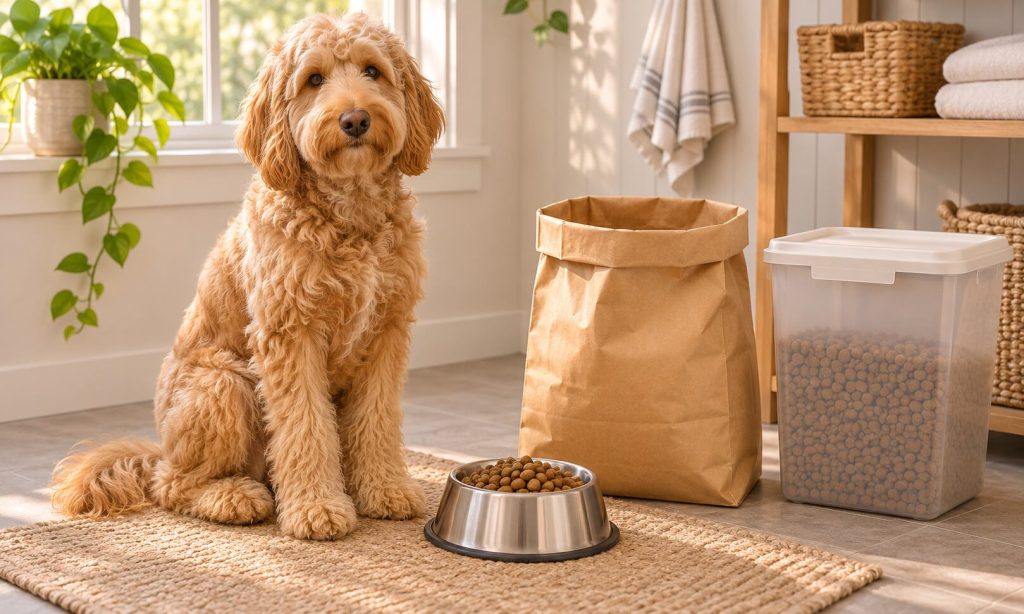
When should you replace dry dog food for Goldendoodles? Replace it immediately if it is contaminated, spoiled, recalled, or improperly stored, but do not switch formulas just because a new flavor is advertised. A healthy dog may do well on the same complete diet for a long time, while puppies, adults, seniors, and dogs with medical conditions can need different nutrition. The key is distinguishing an unsafe bag from a diet that no longer fits the animal.
This guide explains when to replace dry dog food for Goldendoodles for freshness, life stage, tolerance, and changing health needs. If you are searching for the best dry dog food for Goldendoodles, begin with nutritional adequacy, measured feeding, and an honest look at the dog’s condition. Our Goldendoodle puppy food guide covers growth-stage options, while this article focuses on replacement decisions and safe transitions.
Separate a Fresh Bag From a New Formula
Replacing dry dog food for Goldendoodles can mean opening another bag of the same recipe or choosing a genuinely different diet. A new bag is needed when the current supply is finished, unsafe, or no longer fresh. A formula change is warranted when growth stage, body condition, health, or feeding tolerance requires reassessment. These triggers should not be confused because one is a food-safety decision and the other is nutritional planning.
If your dog is thriving on a complete diet, there is no need to rotate brands solely to keep meals exciting. Sudden changes can lead to digestive upset and make it harder to identify an actual food-related problem. Ask the veterinarian to review the feeding plan before making major changes, particularly for dogs taking medication or eating prescription nutrition. Keep a log of the current product and portion.
Discard Spoiled or Contaminated Kibble Promptly
The clearest time to replace dry dog food for Goldendoodles is when it shows mold, pests, damp clumps, unusual discoloration, or a rancid smell. A torn bag exposed to rain or rodents may be unsafe even if most pellets look normal. Do not attempt to rescue suspect kibble by rinsing, baking, sun-drying, or mixing it with fresh food. Contamination is not reliably removed by home treatment.
Check the package seal and printed date before each new bag is opened. If you suspect a manufacturing problem or recall, isolate the food in its original packaging and keep the lot code for the retailer, manufacturer, or regulator. If your dog becomes ill after eating the product, seek veterinary advice and tell the clinic exactly what was fed. Replace the meal only with a safe, appropriate alternative.
Use Dates and Storage Conditions Together
A best-before date is useful, but storage determines how well dry dog food for Goldendoodles remains in condition. Heat, humidity, sunlight, and open air can accelerate quality loss. Keep the bag secured in a cool dry area, preferably inside a lidded container, and avoid leaving it in a hot garage. The FDA recommends retaining the original bag so its product information remains available.
Write the opening date on the bag and choose a size your household can finish while the food is still fresh. Do not pour a new bag over old crumbs in a bin; remove the remnants, wash and fully dry the container if used directly, and refill only when clean. See the FDA pet-food storage guidance for the underlying handling principles.
Replace Puppy Food at the Right Developmental Stage
A Goldendoodle puppy eventually needs a transition from growth nutrition to adult maintenance, but the timing depends partly on expected adult size and growth pattern. Replacing dry dog food for Goldendoodles too early may leave a growing dog on an unsuitable profile, while continuing a growth formula after maturity can provide unnecessary energy. Mini, medium, and standard Goldendoodles are not identical in size or development.
Ask your veterinarian to assess age, size, body condition, and growth before making the switch. Read the nutritional adequacy statement and confirm whether a growth formula is appropriate for a dog expected to become large. The large-breed growth nutrition resource explains why adult-size expectations matter. Do not add calcium or other supplements without professional direction.
Reassess When Weight or Activity Changes
When should you replace dry dog food for Goldendoodles if the dog gains weight? First confirm actual calorie intake, treats, exercise changes, and body condition. A formula change may help, but improved portion measurement can sometimes solve the mismatch. Our doodle food choice guide covers formula fit. Compare calories per kilogram or cup across recipes rather than keeping an identical volume. Activity can vary widely among Goldendoodles living as calm companions, agility dogs, or highly active outdoor pets.
Use a kitchen scale to track portions and work with your veterinary team on a realistic weight target. Unexpected weight loss, muscle wasting, or major appetite changes need assessment, not simply a richer bag. Our daily dog-food portion guide can help you calculate measured rations. A consistent log makes it easier to tell whether the original food or the feeding amount needs adjustment.
Watch for Tolerance and Health Signals
Some dogs develop persistent vomiting, diarrhea, itching, ear inflammation, or decreased appetite while eating a particular food. These signs can have multiple causes, so replacing dry dog food for Goldendoodles without medical input may delay diagnosis. A veterinarian can evaluate parasites, skin disease, gastrointestinal conditions, and other factors before recommending a food trial or therapeutic diet. Do not assume a doodle coat creates a universal ingredient allergy.
If symptoms are severe or accompanied by lethargy, blood, or dehydration, seek prompt care. For suspected food sensitivity, a structured veterinary elimination trial is more informative than repeatedly switching flavors. Save labels and feeding history to help the clinician compare ingredients and nutrient profiles. A food that causes no obvious symptoms can still need replacement if a new diagnosis changes nutritional requirements.
Do Not Replace a Prescription Diet Casually
If your Goldendoodle has a medically indicated diet for gastrointestinal, urinary, kidney, or other conditions, changing it can affect treatment. Ask the prescribing veterinarian before replacing the formulation with a general retail food. Even products using similar words on the front panel may differ in clinically important nutrients. Check whether the prescribed diet must be exclusive and whether treats are permitted.
If the therapeutic product is unavailable or too expensive, call the clinic for a suitable alternative rather than feeding another bag by guesswork. Keep enough supply to avoid an unexpected gap where possible, but do not buy excessive quantities that may expire. Monitor the dog’s appetite and symptoms after an approved switch and attend recommended follow-ups. The goal is medically appropriate nutrition, not brand loyalty.
Introduce New Kibble Gradually
When a formula change is appropriate, replace dry dog food for Goldendoodles gradually over the veterinarian’s recommended interval. Begin with a small portion of the new food mixed into the old ration and increase as tolerated. Some dogs need a slower process, while urgent medical conditions require an individualized plan. Keep both bags separate and labeled during the transition. Do not offer the full daily serving of each simultaneously.
Watch appetite, stool consistency, gas, itching, and energy. Stop and contact the veterinarian if concerning problems persist rather than cycling through many recipes. A stable eating location and clean bowl help minimize unrelated changes. The new food may have a different energy density, so recalculate grams or cups for the total daily target rather than copying the old feeding volume.
Check Recall Notices and Packaging Information
Another reason to replace dry dog food for Goldendoodles is a verified recall affecting the specific product and lot. Check the manufacturer’s official announcement or the appropriate regulator rather than relying on unverified social posts. Keep the original package and lot code so you can determine whether the bag is affected. If the food is recalled, stop feeding it and follow official handling and refund guidance.
The FDA pet-food complaint guidance explains why product details matter. Do not assume that every formula from a brand is affected by a targeted recall, but do not ignore a notice that matches your lot. If illness is suspected, retain a safe sample as advised by the veterinarian or regulator, kept out of animal reach. Reporting concerns supports wider food safety.
Frequently Asked Questions
These answers distinguish replacing spoiled food from changing a nutritionally suitable formula. Always prioritize immediate food safety and individual veterinary needs.
A dog’s size, growth, activity and health history determine the right nutrition; breed name alone does not dictate a replacement schedule.
Must I change my Goldendoodle’s food regularly?
No. A complete, tolerated diet that fits life stage and body condition can remain appropriate. Switch when freshness, growth, health, tolerance, or availability provides a sound reason.
Is kibble still safe after the best-before date?
Do not assume it is suitable. Follow package information, storage directions, and manufacturer advice; discard food showing spoilage or contamination regardless of printed date.
When should a puppy move to adult food?
Timing depends on expected adult size and growth, not a single birthday for all Goldendoodles. Ask the veterinarian and check the formula’s nutritional adequacy statement.
What if my dog refuses a new kibble?
Try a slower veterinarian-approved transition, but do not force prolonged food refusal. Ask for help if intake falls or other illness signs appear.
Can I mix old and new kibble during a switch?
Yes, for a gradual transition when medically appropriate. Measure the combined calorie ration and keep both products stored separately and safely.
Final Words
Replace dry dog food for Goldendoodles immediately when spoiled, contaminated, or recalled, but reconsider the recipe based on life stage, body condition, medical fit, and tolerance. The best dry dog food for Goldendoodles is not a fixed flavor for every doodle size and age. Use the Goldendoodle puppy food comparison for growth-stage context, then confirm the individual feeding plan with your veterinarian.
Protect food freshness in its original package, measure calories, and transition approved formulas gradually. Keep lot numbers and watch for appetite, stool, or weight changes. A deliberate replacement is safer and usually more economical than impulsively buying a new bag whenever marketing trends change.









