
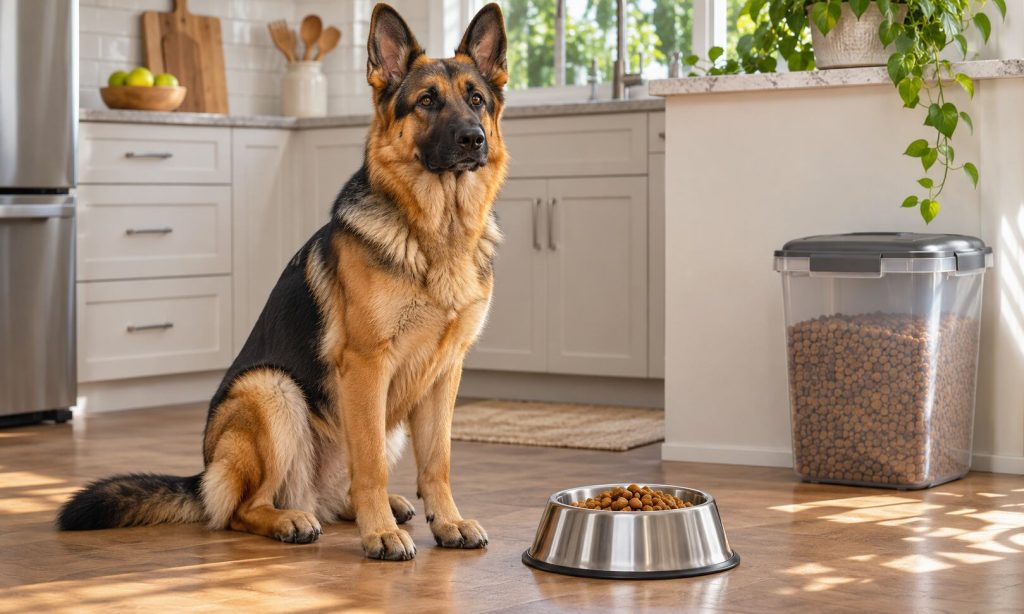
Using and caring for dry dog food for German Shepherds involves more than filling a large bowl. This active, powerful breed can have very different nutritional needs as a growing puppy, a working adult, or a senior with reduced mobility. A complete and balanced formula should match life stage, body condition, and any diagnosed medical restrictions. Proper portioning and storage help preserve the food’s value, while a predictable mealtime routine makes appetite changes easier to notice.
This guide explains how to use dry dog food for German Shepherds and keep it in good condition, including label checks, measured meals, gradual transitions, freshness, and daily monitoring. If you are researching the best dry dog food for German Shepherds, consider these handling and feeding principles alongside the review. A large breed needs careful nutritional management, not an automatically oversized scoop or an unverified performance supplement.
Match Food to Growth or Adult Maintenance
When using dry dog food for German Shepherds, start with the nutritional adequacy statement rather than a photo of the breed. Large-breed puppies need a growth diet appropriate for their expected mature size. Excessive energy and inappropriate mineral balance during rapid growth can affect skeletal development, so do not choose adult maintenance food or add calcium on your own. Ask your veterinarian which growth formulation fits your individual puppy.
Adults usually need a complete maintenance diet that supports their current activity and body condition. Seniors or dogs with chronic conditions may require adjustments directed by a clinician. The VCA large-breed nutrition guide explains why life-stage wording matters. Avoid treating all German Shepherds as the same weight or energy level; an endurance-working dog and a relaxed household companion have different needs.
Measure Calories, Not Just Cupfuls
Good use of dry dog food for German Shepherds requires knowing kilocalories per cup or kilogram and the daily target discussed with your veterinarian. Different kibble densities mean two similar-looking bowls can supply very different energy. Weigh portions on a kitchen scale when practical and divide the day’s ration among scheduled meals. Include treats, training rewards, and food used for medication in the overall calorie record.
Feed based on body condition, not the amount advertised for a generic weight range. A dog who gains fat around the ribs or waist may need portion changes even if activity seems high; unexpected loss merits assessment. Our daily dog-food portion guide provides a starting calculation. Use a veterinary plan for puppies, pregnant dogs, performance work, and any diagnosed illness.
Build a Calm Feeding Routine
A steady routine for dry dog food for German Shepherds supports good appetite tracking and helps owners measure intake. Offer meals in a quiet location without competition from other pets, and avoid leaving a large bowl available all day if it prevents accurate measurement. A clean non-slip dish and fresh drinking water are essential. Scheduled feeding also makes it easier to identify changes in appetite or stool habits.
Some large, deep-chested dogs are at risk of gastric dilatation-volvulus, a serious emergency, though no feeding pattern eliminates risk. Discuss individualized prevention and emergency signs with your veterinarian; do not rely on a raised bowl or one rule about exercise as a guarantee. Repeated unproductive retching, abdominal enlargement, restlessness, or collapse require emergency care. Feeding hygiene and observation are important but cannot prevent every medical emergency.
Store Kibble in the Original Bag
Caring for dry dog food for German Shepherds begins with keeping it protected from heat, humidity, air, and pests. The FDA recommends storing dry pet food in its original bag with the top secured, ideally inside a clean lidded container if extra protection is needed. Retain the lot number and date in case of a recall. A garage with large temperature swings is often a poor place for bulk kibble.
Do not mix a fresh bag into a bin of old crumbs. Finish the previous supply, wash and thoroughly dry the container if used directly, and then refill. Avoid buying an enormous bag just because a large dog eats more; calculate how long it will remain open. The FDA pet-food storage guide offers straightforward packaging and handling advice.
Keep Bowls and Scoops Clean
Using dry dog food for German Shepherds safely includes washing food and water bowls regularly, keeping scoops clean, and drying equipment before it touches kibble. Do not use a food bowl that has been on the floor to scoop from the storage bag. Saliva and residue can contaminate stored food. Wash your hands before and after handling pet food, and store cleaning chemicals away from the feeding area.
The CDC recommends daily cleaning for dry-food and water bowls and after every wet-food use. A stainless-steel or smooth ceramic bowl can be easier to inspect than a deeply scratched plastic one. Replace cracked dishes, rinse detergent thoroughly, and keep the feeding mat dry. Never wash or soak kibble as a way to make stale food safe; discard suspect spoiled food instead.
Introduce a New Formula Gradually
When changing dry dog food for German Shepherds, use a gradual transition if your dog is healthy and your veterinarian has not instructed otherwise. Replace a small portion of the current meal with the new recipe and increase over several days while watching stool quality and appetite. Some dogs need a slower schedule, especially with sensitive digestion. Do not abruptly switch from a prescribed therapeutic diet based on a retail claim.
Keep old and new bags separately labeled until the transition ends, and measure the total calories rather than offering a full serving of both. If vomiting, diarrhea, skin irritation, or refusal occurs, pause and seek veterinary advice. A repeated reaction may need an examination; simply switching protein flavors without a plan can obscure the cause. The goal is a stable, tolerated complete diet, not constant novelty.
Read Beyond High-Protein Marketing
A German Shepherd may be muscular and active, but a high protein percentage on the front of a kibble bag does not establish suitability. Using dry dog food for German Shepherds well means assessing nutritional adequacy, calories, formulation quality, and the dog’s actual condition. Compare nutrient information on a consistent basis rather than assuming a long ingredient list or exotic recipe is automatically superior.
Ask whether the maker employs qualified nutritional expertise, follows quality-control procedures, and can provide complete nutrient and calorie information. The WSAVA food selection guide lists practical questions. Avoid unsupervised supplements that could unbalance a complete diet. A working or growing dog may need additional clinical planning, but that is a separate discussion from marketing slogans.
Inspect Freshness and Packaging
Caring for dry dog food for German Shepherds includes checking the bag’s seal, expiry or best-before date, lot code, and smell before serving. Food that feels damp, smells rancid, contains insects, or has visible mold should not be fed. Do not attempt to restore it by rinsing, drying in the sun, or mixing it with new kibble. If a product seems defective, retain the packaging and contact the seller or manufacturer.
Watch for changes in your dog’s willingness to eat. Stale food may reduce acceptance, but sudden appetite loss can also signal disease or pain. Do not assume every skipped meal is a brand preference. Keep food away from rodents, household chemicals, and direct sunlight. Proper storage helps maintain nutrition and makes each bag easier to trace if there is a safety alert.
Monitor Weight, Coat, Stool, and Activity
The long-term use of dry dog food for German Shepherds should be reviewed as the dog ages and activity changes. Weigh regularly, feel the ribs, assess waist and muscle condition with veterinary guidance, and note stool consistency. A performance dog may need more energy during intense work, whereas a recovering or retired dog may need less. Adjust gradually according to the clinician’s target.
Persistent diarrhea, vomiting, weight loss, itchiness, or changes in thirst warrant assessment rather than repeated impulsive diet swaps. Our German Shepherd skin allergy signs guide provides context for one possible concern. A German Shepherd with diagnosed digestive or orthopedic disease may need a tailored plan. Keep a simple log of food batch, portion, treats, and symptoms to share at the appointment. Food is part of health management, but it does not diagnose or treat disease by itself.
Frequently Asked Questions
These answers cover everyday use of commercially prepared dry food. Puppies, sick dogs, and highly active working animals may require individualized veterinary feeding plans.
Follow the exact product instructions and measure the actual calories offered. Fresh food and clean bowls support a stable routine.
Does a German Shepherd puppy need large-breed puppy kibble?
A puppy expected to reach large adult size should have growth nutrition appropriate for large dogs, as indicated by the adequacy statement. Ask your veterinarian to match the formula and growth portions.
Should I free-feed my German Shepherd?
Measured meals generally make intake and weight easier to monitor. Feeding schedule should account for age, activity, health, and veterinary guidance.
Can I store kibble directly in a plastic bin?
It is preferable to keep the original bag inside a clean sealed bin. If decanting, clean and dry it completely and retain the original label and lot information.
Should I add calcium to large-breed puppy food?
Do not supplement a complete growth diet without veterinary advice. Inappropriate calcium or energy balance can be harmful during skeletal development.
What if my dog suddenly refuses kibble?
Check food freshness and contact a veterinarian if refusal persists or occurs with illness signs. Dental pain, gastrointestinal problems, and other conditions may need evaluation.
Final Words
To use and care for dry dog food for German Shepherds, match the formula to growth or maintenance needs, measure calories, introduce changes steadily, and store each bag carefully. The best dry dog food for German Shepherds list is a starting point for comparing diets, but suitability depends on the individual dog’s condition and the quality of the complete feeding plan. A clean bowl and consistent portions support reliable monitoring.
Keep packaging and lot details, follow veterinary advice for large-breed puppies and illness, and check appetite, weight, and stool trends. Do not use supplements or drastic meal changes to compensate for an unsuitable diet. Thoughtful handling protects both the food and your dog’s well-being.









