
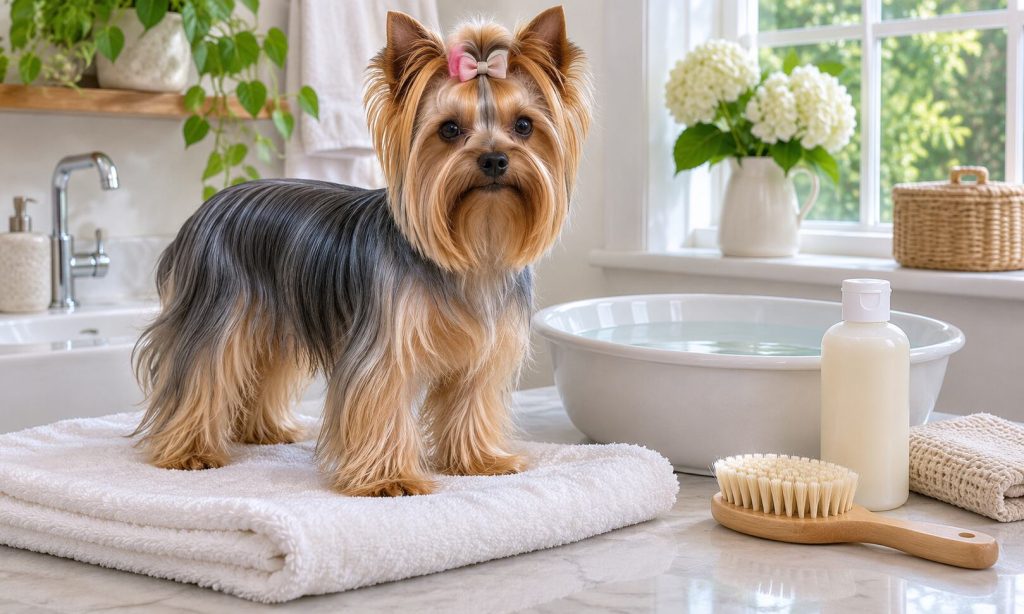
Comparing dog shampoo for Yorkies by fit and use is different from choosing a bottle for a short-coated dog. Yorkshire terriers often have long silky hair that tangles easily, while skin sensitivity, grooming frequency, and coat length vary by individual. The right shampoo should be formulated for dogs, rinse cleanly, and suit the dog’s skin condition without leaving heavy residue. A cosmetic promise of extra shine does not matter if the bath causes itching or discomfort.
This guide shows how to compare dog shampoo for Yorkies options by fit and use, including gentle cleansing, fragrance, conditioners, dilution, tear-free claims, and practical grooming routines. If you are researching the best dog shampoo for Yorkies, start by assessing the dog’s coat and skin, then use the comparison criteria below. Medical shampoos belong in a veterinarian’s treatment plan, not a generic breed-based shopping decision.
Start With the Individual Dog’s Skin
To compare dog shampoo for Yorkies, examine skin comfort before judging coat shine. Redness, flaky areas, bumps, hair thinning, odor, or frequent scratching may indicate an underlying issue needing veterinary assessment. A shampoo marketed for sensitive dogs is not a diagnosis. A dog with healthy skin and an uncomplicated long coat may need a simple mild formula, while a dog with allergies or infection may require specific medical treatment.
Check how the skin responds to the current bathing routine and whether symptoms appear after grooming. Write down the product ingredients and frequency so your veterinarian can evaluate potential irritants. Do not use human shampoo as a substitute: veterinary sources explain that canine skin differs from human skin and may be irritated by products designed for people. The VCA grooming guidance outlines these differences.
Compare Cleansing Strength and Mildness
Gentle cleansing is an important dog shampoo for Yorkies feature because repeated harsh washing can leave skin dry and hair difficult to comb. Read whether the product is intended for everyday maintenance, deep cleaning, degreasing, or a medical indication. A highly concentrated formula may need dilution according to the manufacturer. More foam is not proof that a shampoo cleans better or is safer for sensitive skin.
If the dog has a normal coat and no medical symptoms, choose a dog-specific shampoo with clear instructions and realistic claims. Strong deodorizing fragrances can be unnecessary, particularly for animals sensitive to scents. Avoid using homemade mixtures of detergents or essential oils. A product suited to a muddy working dog may be unnecessarily aggressive for a small indoor Yorkie that receives regular light baths.
Assess Coat Length and Detangling Needs
When you compare dog shampoo for Yorkies, consider whether the coat is kept in a long show-style length or a shorter practical trim. Long silky hair may require a conditioning step that helps reduce friction during brushing. Our poodle shampoo comparison shows how another high-maintenance coat changes the shampoo criteria, though Yorkies need individual assessment. A short trim can be easier to rinse and dry. Shampoo alone will not remove tight mats safely; pulling or cutting close to skin can injure a dog. Address tangles before the bath when possible.
Choose a conditioner or detangling product made for dogs and apply it as directed rather than pouring in extra shampoo. Rinse thoroughly because residue can make hair feel greasy and irritate skin. Use a wide-tooth comb gently and support the hair near the skin. If mats are severe, seek a professional groomer rather than trying to soak and force them apart at home. Comfort outweighs a perfectly styled coat.
Read Ingredients Without Falling for Buzzwords
Ingredient labels matter, but phrases such as natural, botanical, hypoallergenic, or luxury do not automatically prove tolerability. A useful way to compare dog shampoo for Yorkies is to identify fragrance, essential oils, cleansers, preservatives, and any active medicated ingredients, then evaluate them against the dog’s history. Some plant-derived substances can still irritate. Patch testing is not a substitute for veterinary assessment when a dog has skin disease.
A therapeutic product containing an antimicrobial or other active ingredient may be appropriate for an examined condition but should not be used as an all-purpose cosmetic shampoo. Check the indicated species, dilution, contact time, and warnings. Do not combine multiple medicated shampoos or apply human skin medications without veterinary advice. The correct formula treats a real need and has directions the owner can follow consistently.
Check Tear-Free Claims and Eye Safety
The face of a Yorkie is a common source of grooming difficulty because hair grows close to the eyes. While comparing dog shampoo for Yorkies, do not assume that a tear-free claim makes it safe to pour product near the eyes or inside ears. Protect sensitive areas, use controlled amounts of water, and avoid directing a spray into the face. Clean facial hair with a damp cloth when appropriate.
If shampoo reaches an eye, follow first-aid instructions on the product and seek veterinary guidance for persistent squinting, redness, or pain. Never put cotton swabs deep into ear canals to remove water. Dogs with chronic eye discharge, ear odor, or inflammation should be examined before using new grooming products. Bathing should be calm and gentle, not a race to lather every part of the animal.
Compare Dilution, Contact Time, and Rinsing
A concentrated dog shampoo for Yorkies may be economical but only if you can measure and dilute it correctly. Our oatmeal shampoo measurement guide illustrates why bottle yield and dilution matter. Read whether the label calls for dilution or direct application; do not guess ratios. Some therapeutic formulas require a specific contact time before rinsing, while ordinary shampoos may be removed more quickly. Follow the directions rather than applying extra product in hopes of improving results.
Plan enough time to rinse the dense coat thoroughly, working from neck toward body and avoiding eyes. Water that runs clear does not always mean every residue is gone, so separate the hair and check areas around the belly, legs, and tail. Leftover cleanser can lead to irritation or a dull, sticky feeling. A simple well-rinsed shampoo often performs better than an elaborate multi-product routine.
Choose a Bath Frequency That Fits
Comparing dog shampoo for Yorkies also involves how often the product will be used. A long coat may require regular grooming, but bathing frequency should be guided by skin health, lifestyle, and professional advice. Too-frequent washing can strip protective oils in some dogs, while infrequent bathing may allow debris and allergens to accumulate. There is no universal schedule that suits every Yorkie.
Watch for dryness, scratching, or excess oil after bathing and discuss changes with your groomer or veterinarian. Between baths, brushing and carefully cleaning small soiled areas may be enough. If a medicated shampoo is prescribed, follow its treatment schedule exactly even if it differs from your normal routine. Use lukewarm water, a non-slip bathing surface, and treats or praise to keep the process low stress.
Account for Drying and Grooming Time
The best practical dog shampoo for Yorkies is one that fits the time you have to rinse, dry, and comb the coat safely. Long hair can retain moisture around the ears, belly, and underarms. Gently towel dry, keep the dog warm, and use a pet-safe dryer at an appropriate setting if the dog tolerates it. Avoid hot air directed at the skin and never leave a small dog shivering in a draft.
Brush with care as the coat dries, using a conditioner when appropriate. Inspect for redness and tangles rather than focusing only on appearance. A product that leaves a persistent heavy coating may make maintenance harder even if it smells pleasant. If the dog becomes frightened by water or dryer noise, desensitization in short sessions or professional grooming can make the routine safer.
Compare Value Through Usable Baths
Price per bottle is a poor way to compare dog shampoo for Yorkies when formulas differ in concentration and recommended amount. Estimate cost per properly diluted bath and consider whether you need a separate conditioner. Larger bottles can become stale or clutter a small bathroom if you rarely wash the dog. Check the expiry or period-after-opening information and store the product away from heat and pets.
Avoid paying more solely for breed images, perfume, or a claim of instant whitening. A reliable gentle formula with clear directions and a rinse-friendly texture can be excellent value. Keep the original bottle so active ingredient information and precautions remain available. See our Yorkie dog shampoo comparison for examples of common product categories, then choose based on the individual dog’s coat and skin.
Frequently Asked Questions
Yorkies may have fine, long hair, but shampoo tolerance is individual. These questions help distinguish routine coat care from situations needing veterinary attention.
Stop using a product that causes a reaction and ask a veterinarian about persistent itching, redness, sores, or hair loss. Medicated formulations require their own directions.
Can I use baby shampoo on a Yorkie?
It is better to use a product specifically formulated for dogs. Human and baby shampoos can have unsuitable pH and ingredients for canine skin, as veterinary grooming guidance explains.
Does a Yorkie need a conditioner?
Not always. Longer silky coats may benefit from an appropriate dog conditioner to reduce tangles, while short trims may need little additional product. Rinse thoroughly.
Are fragrant shampoos better for odor?
Fragrance masks scent rather than resolving the cause. Persistent odor can signal skin, ear, or dental disease. Ask a veterinarian if odor returns rapidly or accompanies discomfort.
How often should I bathe my Yorkie?
It depends on coat length, skin condition, activity, and product. A groomer or veterinarian can help set a schedule; avoid bathing excessively simply to maintain perfume.
What should I do after a shampoo reaction?
Stop the product, follow label rinsing advice if safe, and contact a veterinarian for irritation, swelling, eye pain, or systemic symptoms. Keep the bottle and ingredient list.
Final Words
To compare dog shampoo for Yorkies options by fit and use, prioritize canine skin compatibility, coat length, gentle cleansing, rinsing, and a realistic grooming routine. The best dog shampoo for Yorkies may differ for a healthy short-trimmed companion and a long-coated dog with tangles. Claims about natural ingredients or extra shine cannot replace evidence of comfort and suitability.
Use dog-specific products, protect the eyes, rinse completely, and observe the skin after each bath. If your Yorkie has persistent itching or unusual odor, seek veterinary advice before buying another cosmetic bottle. A calm bath followed by careful drying and brushing is the real foundation of a healthy-looking coat.









