
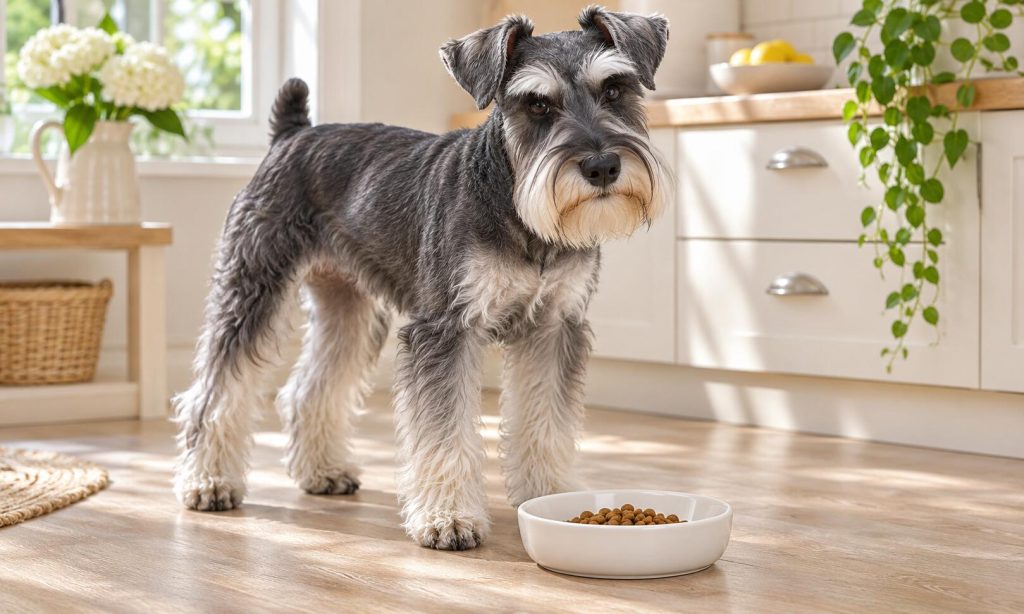
Miniature Schnauzers are small dogs, but their nutrition decisions deserve more care than simply choosing tiny kibble. These dogs can be predisposed to elevated blood lipids and pancreatitis, so excess calories and fatty extras should not be taken lightly. The best dog food for mini Schnauzers depends on age, body condition, and actual medical history. A healthy adult does not automatically require prescription low-fat food, while a dog with diagnosed disease may need one.
I compared five everyday adult foods, one breed-specific puppy formula, and one veterinary-only low-fat diet. Their features come from verified product listings, with medical limitations explained separately. If your Schnauzer repeatedly vomits, has abdominal pain, loses appetite, or seems unusually tired, seek veterinary advice promptly. Do not attempt to treat pancreatitis by choosing a retail bag from a roundup. Ask your veterinarian about fasting lipid tests or a clinical feeding plan when indicated.
Quick Picks for Miniature Schnauzers
For a healthy adult, start with complete small-breed nutrition and measured portions. A puppy needs growth food. A veterinarian-directed low-fat diet belongs to a separate category for diagnosed digestive or lipid-related problems.
| Product | Best For | Key Advantage | Buy | |
|---|---|---|---|---|
| Royal Canin Mini Schnauzer Adult | Breed-specific adult feeding | Schnauzer kibble and weight focus | View on Amazon | Jump to Review |
| Hill’s Science Diet Small & Mini | Standard small adult maintenance | Digestible chicken and brown rice | View on Amazon | Jump to Review |
| Purina Pro Plan Small Breed | Active small adults | Chicken protein and probiotics | View on Amazon | Jump to Review |
| IAMS Proactive Health Small Breed | Everyday small kibble | Prebiotics and poultry nutrition | View on Amazon | Jump to Review |
| Wellness Healthy Weight Small Breed | Portion-conscious adult feeding | Weight-focused turkey recipe | View on Amazon | Jump to Review |
| Royal Canin Mini Schnauzer Puppy | Eight-week-to-ten-month puppies | Breed-specific growth kibble | View on Amazon | Jump to Review |
| Hill’s Prescription Diet i/d Low Fat | Veterinary low-fat management | Clinically directed low-fat digestive formula | View on Amazon | Jump to Review |
1. Royal Canin Miniature Schnauzer Adult — Best Breed-Specific Fit
What We Like
- Developed for purebred Mini Schnauzers
- Ten-month-plus adult target
- Distinctive pickup-and-chew kibble
- Weight-maintenance focus
- EPA and DHA coat nutrients
What We Don’t Like
- Breed label does not determine portions
- Not for diagnosed pancreatitis without vet review
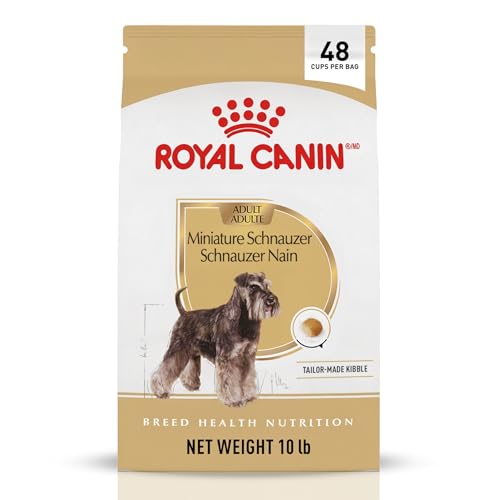
Royal Canin Miniature Schnauzer Adult is the most directly breed-targeted food in this group. Its listing specifies purebred Miniature Schnauzers ten months and older and describes a specially shaped kibble to support picking up and chewing. It also emphasizes weight maintenance, skin support, and coat nutrients such as EPA and DHA. These features make it worth comparing, but they are not a personalized nutrition plan. Body condition and the precise caloric density still decide the feeding amount. A Schnauzer can gain weight on a breed-specific food if portions and treats are excessive.
The breed focus matters partly because owners may be particularly attentive to weight and lipid health. However, a marketed weight-maintenance formula is not necessarily low enough in fat for a dog with diagnosed hypertriglyceridemia or pancreatitis. Those conditions require veterinary evaluation and sometimes prescription diets with defined nutritional targets. Do not swap a clinician-selected low-fat diet for this product based on a picture of a Schnauzer on the bag. If the dog is healthy and tolerates standard adult food, a complete breed-targeted formula may be reasonable. Make any transition gradually and keep the rest of the diet consistent.
The ten-pound bag is manageable for a small dog when stored properly, although the calorie cost per day should still be checked. Follow the measured feeding guide and monitor waist and rib coverage. Miniature Schnauzers are enthusiastic about treats, so uncounted snacks can undo a sensible meal plan. The shaped kibble may make eating comfortable, but dental disease still needs its own care. Royal Canin’s advantage is a clear breed-specific maintenance role. Its limitation is that no brand can diagnose whether an individual dog needs medical fat restriction.
My Recommendation
Royal Canin Mini Schnauzer Adult is my starting point for a healthy adult when the owner wants breed-specific kibble and weight-focused maintenance. The shape and nutrient targeting are clear features. I would still calculate calories and monitor body condition. A dog with elevated lipids or pancreatitis needs an individual veterinary plan.
2. Hill’s Small & Mini Adult 1–6 — Best General Adult Alternative

What We Like
- Designed for small adults
- Defined one-to-six age range
- Chicken and brown rice
- Digestible ingredients including pumpkin
- Balanced-energy positioning
What We Don’t Like
- Not breed-specific for Schnauzers
- Not a therapeutic low-fat formula
Hill’s Science Diet Adult 1–6 Small & Mini is a complete adult diet for small dogs. Its chicken-and-brown-rice recipe is described as digestible, with ingredients including pumpkin. The listing highlights balanced energy and lean-muscle support. That may be sufficient for a healthy Miniature Schnauzer with no special medical needs. Breed-specific branding is not necessary when the food’s life stage, nutrients, and calories fit the individual dog. Compare the nutritional statement and calorie density before choosing. A comfortable kibble size can help with daily feeding, but small pieces do not automatically prevent fast eating.
Hill’s is a useful baseline for portion control. A Mini Schnauzer may need small servings, and a few extra treats can change the daily energy total substantially. Measure food with a consistent scale or scoop and monitor body condition. The age range is a general guide, not an instruction to switch all dogs at the same birthday. A senior dog may have different needs, particularly with chronic disease. If the dog is vomiting repeatedly or developing greasy stool, do not assume a standard sensitive-looking ingredient list is enough to address the cause.
Chicken is common in adult diets but may be inappropriate for a dog on a veterinary protein elimination trial. This formula is also not a substitute for a prescribed low-fat plan when a clinician identifies a lipid disorder. Keep the food sealed, transition gradually, and monitor appetite and stool changes. For a healthy adult whose main goal is steady maintenance, Hill’s offers a straightforward option. Its strength is the clear life-stage and small-dog focus. Its limitation is that a general product cannot account for every Schnauzer’s metabolic risk.
My Recommendation
Hill’s Small & Mini Adult is a sensible general alternative for a healthy Mini Schnauzer that tolerates chicken. I like its defined small-adult purpose and digestion-oriented ingredients. Measure food carefully and keep treats counted. It is not a medical low-fat diet, so ask the veterinarian before using it for pancreatitis or high triglycerides.
3. Purina Pro Plan Small Breed — Best for Active Mini Schnauzers
What We Like
- Small-breed adult formula
- Chicken first ingredient
- High-protein active-dog positioning
- Guaranteed live probiotics
- Six-pound pack size
What We Don’t Like
- Not intended for clinical fat restriction
- Activity claims may invite overfeeding
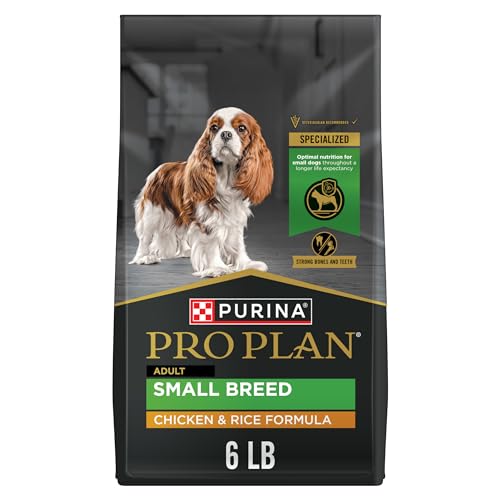
Purina Pro Plan Small Breed Chicken & Rice is positioned for active small adult dogs. The listing identifies chicken first, describes higher protein for activity, and includes guaranteed live probiotics for digestive and immune support. These are useful features when a Mini Schnauzer enjoys substantial walks and games. They do not mean the food should be fed in unlimited amounts. A dog can be energetic and still need weight management. For this breed, portion accuracy and avoiding fatty table scraps deserve special attention. Choose on the label’s full nutrition and calories, not a simple high-protein promise.
The small six-pound bag can be a practical way to keep kibble fresh for one dog. If buying the food as a replacement, shift gradually rather than introducing a complete new meal overnight. Track stool and appetite during the transition. Live probiotics are a formulation feature, but they are not treatment for vomiting or abdominal pain. Any Miniature Schnauzer with recurrent digestive signs should be examined, especially because breed-associated high triglycerides can complicate the picture. A chicken-and-rice formula is not a veterinary elimination diet if food allergy is suspected.
This food makes sense for a healthy adult with genuine daily activity and a consistent feeding routine. Compare its calorie density with the previous food; the same cup size may not deliver the same energy. Keep treats modest and avoid sharing rich human foods. If a blood test reveals lipid abnormalities, the veterinarian may recommend a different fat level or a therapeutic diet. Purina’s strength is an explicit small, active adult purpose. Its limitation is that the activity label should not override a Schnauzer’s weight or medical history.
My Recommendation
Purina Pro Plan Small Breed is a good comparison for an active, healthy Mini Schnauzer that tolerates its chicken recipe. I like the live probiotic feature and manageable bag size. Do not use activity as a reason to overfeed. If there is pancreatitis or a lipid concern, discuss a clinically appropriate diet first.
4. IAMS Proactive Health Small Breed — Best Familiar Kibble

What We Like
- Small kibble for little mouths
- No fillers or artificial flavors
- Natural fiber blend
- Prebiotics included
- Fifteen-pound bag value
What We Don’t Like
- Large package may last a long time
- No specialized clinical fat management
IAMS Proactive Health Small Breed uses a chicken-and-grain adult formula with kibble sized for smaller dogs. Its listing describes prebiotics and natural fiber for digestive support, along with chicken first. This can be a sensible everyday maintenance choice when a Miniature Schnauzer has no diagnosed disorder requiring special treatment. The small pieces may be easy for the breed to pick up, although an individual dog’s mouth and dental condition still matter. Complete nutrition and calorie fit remain the main tests. Digestive marketing does not make a food suitable for pancreatitis on its own.
The fifteen-pound size can be economical, but one small dog may take months to finish it. Check the use-by date and store the bag sealed, cool, and dry. Keep the original packaging so lot and feeding information remain available. Measure daily food rather than topping up the bowl whenever it looks empty. Small breeds can gain unwanted weight from minor repeated extras. If the dog suddenly loses appetite, vomits, or seems painful, stop treating the issue as food pickiness. A veterinarian can determine whether a medical problem needs testing and a different diet.
Prebiotics and fiber are reasonable formulation details to compare, but not every dog needs a more complicated gut-health blend. Keep feeding stable and gradually adjust to this recipe if chosen. Watch stool consistency and body condition over several weeks. For Schnauzers, it is particularly sensible to keep high-fat treats and table scraps off the menu. This IAMS product is attractive for owners who want routine small-breed food in a larger package. It offers convenience rather than a condition-specific solution. A known lipid disorder should guide food choice more directly.
My Recommendation
IAMS Small Breed is my everyday kibble comparison for a healthy Schnauzer whose owner prefers a familiar chicken formula. The small pieces and prebiotic fiber are practical features. I would check whether a fifteen-pound bag stays fresh for one dog. It cannot replace a vet-directed low-fat plan when disease is present.
5. Wellness Healthy Weight Small Breed — Best Weight-Conscious Alternative

What We Like
- Healthy-weight adult positioning
- Turkey and brown rice
- Small-breed kibble
- Probiotic and antioxidant features
- Twelve-pound bag
What We Don’t Like
- Weight label is not prescription fat restriction
- Calorie comparison still essential
Wellness Complete Health Healthy Weight Small Breed is aimed at adult small dogs needing attention to body condition. The listing names turkey and brown rice, with additional antioxidants, omega fatty acids, probiotics, and joint-oriented ingredients. A weight-focused formula may be worth comparing for a Mini Schnauzer that tends to gain easily. It is not automatically the best choice for a dog with high triglycerides. A lower-calorie or weight-management food and a medically required low-fat diet can have different purposes and nutrient profiles. Check actual fat and energy values with the veterinarian when metabolic disease is involved.
The biggest practical advantage is the invitation to measure portions carefully. A Miniature Schnauzer can look sturdy while carrying unnecessary fat. Use body-condition scoring and regular weighing rather than judging by its wiry coat. If the veterinarian has set a weight-loss target, calculate calories and count treats as part of the plan. A formula advertised for weight care cannot compensate for unlimited snacks. Turkey is also not automatically hypoallergenic; protein restrictions require a proper diagnostic strategy. Introduce changes gradually and record appetite, stool, and body weight so the effect is interpretable.
The twelve-pound bag may suit a household that will use it within the expected freshness window. Check serving cost, caloric density, and the nutritional adequacy statement before switching. This Wellness food is a retail adult formula, not a prescription treatment for pancreatitis or high lipids. It may be a practical option for ordinary weight management in a healthy dog, especially when the owner values a turkey-led recipe. Its limitation is that different fat-related problems should never be collapsed into a single marketing category. Veterinary testing decides when more specific restriction is needed.
My Recommendation
Wellness Healthy Weight is worth comparing for an adult Mini Schnauzer with ordinary weight-control needs and no diagnosed fat-metabolism disorder. I like the defined purpose and turkey recipe. Check calories and measured servings. If the veterinarian identified pancreatitis or high triglycerides, do not treat a retail healthy-weight label as equivalent to clinical low-fat nutrition.
6. Royal Canin Miniature Schnauzer Puppy — Best Growth-Stage Pick

What We Like
- Designed for Schnauzer puppies
- Eight-weeks-to-ten-months target
- Specialized pickup kibble
- Developmental antioxidants
- Moderate-fat positioning in listing
What We Don’t Like
- Puppy-only age category
- Small bag may require frequent purchase
Miniature Schnauzer puppies need a complete growth diet, not an adult formula in small pieces. Royal Canin Miniature Schnauzer Puppy is designed for purebred puppies from roughly eight weeks to ten months. The listing describes a breed-oriented kibble shape, developmental antioxidant nutrients, and moderate fat levels with L-carnitine. Those features belong in a growth context. Do not put a healthy puppy on a severe fat restriction because the breed can develop lipid disorders later. Growing dogs need sufficient energy and essential nutrients, and the exact feeding amount changes quickly as body weight rises.
The small kibble may help a developing dog handle meals, although supervision and appropriate texture still matter. Measure portions using the product’s puppy guidance, then adjust with veterinary input. Establish a consistent mealtime routine and avoid rich scraps. Puppy treats also add calories, so keep training rewards proportionate and appropriate. If the puppy has persistent diarrhea, vomiting, or a poor growth pattern, a veterinarian should evaluate it. Do not simply switch to an adult weight-control food. A growing Schnauzer can have digestive issues unrelated to eventual adult breed predispositions.
Royal Canin’s two-and-a-half-pound bag is convenient for a small puppy but may be costly per pound. The age range is a manufacturer target, not a substitute for individual advice about growth-to-adult transition. Check the full nutritional adequacy statement on the bag. Keep fresh water available and make transitions gradually. This product is included to prevent a common mistake: judging all Schnauzer food by adult weight or fat concerns. Puppy nutrition deserves its own plan. Its strength is a defined growth role; its limitation is that it is inappropriate once adult maintenance becomes the correct stage.
My Recommendation
Royal Canin Miniature Schnauzer Puppy is my breed-specific growth comparison for puppies within its stated age range. I like the dedicated kibble and developmental approach. Follow puppy portions and confirm the transition timing with the veterinarian. Do not apply adult low-fat disease recommendations to an otherwise healthy growing dog without clinical advice.
7. Hill’s Prescription Diet i/d Low Fat — Best Vet-Only Consideration

What We Like
- Low-fat veterinary formulation
- Highly digestible recipe
- Intended for dogs needing fat restriction
- Digestive care purpose
- Clear separation from retail diets
What We Don’t Like
- Requires veterinarian recommendation
- Not a routine choice for healthy dogs
Hill’s Prescription Diet i/d Low Fat is not a standard recommendation for every Miniature Schnauzer. It is a veterinary therapeutic diet formulated for dogs that require low-fat digestive nutrition. That distinction matters because some Schnauzers develop hypertriglyceridemia or pancreatitis, conditions where a veterinarian may need to control dietary fat and investigate other causes. The current listing describes a highly digestible, low-fat chicken formula intended for digestive care. It should be selected only with the veterinarian who knows the dog’s tests, symptoms, medications, and other nutritional needs. Do not use online availability as evidence of suitability.
Research has described breed-associated high blood triglycerides in Miniature Schnauzers, but the correct diet depends on the individual diagnosis. The published study on low-fat feeding in affected Mini Schnauzers addresses a specific clinical population, not all healthy pets. A dog that vomits repeatedly or shows abdominal pain may need urgent care before any food decision. Veterinary management may involve fasting blood tests, hydration, medication, and a tailored nutrition plan. A retail healthy-weight food cannot automatically substitute for this formula, and the prescription diet should not be copied from another dog’s regimen.
If a clinician prescribes i/d Low Fat, follow the recommended transition, portions, and follow-up testing. Feeding fatty treats can defeat the purpose of a carefully controlled low-fat diet. Ask which rewards are allowed and whether the dog needs a specific caloric target. Monitor appetite, stool, body weight, and any return of symptoms. This formula’s advantage is a clearly defined clinical purpose that ordinary small-breed foods do not provide. Its limitation is equally important: it is designed for selected patients, not as preventive insurance for a healthy Schnauzer.
My Recommendation
I include Hill’s i/d Low Fat solely for veterinary-directed cases, such as a Schnauzer with a documented need for fat restriction. Do not choose it from breed reputation alone. A vet can review triglycerides, pancreatitis history, and other conditions before recommending it. Healthy dogs generally need complete stage-appropriate maintenance food instead.
How to choose best dog food for mini schnauzers
The key is to separate ordinary small-breed feeding from a confirmed medical problem. Mini Schnauzers can have breed-associated lipid concerns, yet many healthy dogs do well on standard complete adult food with measured portions.
Control Calories and Treats in Healthy Adults
Choose a complete food for the dog’s actual life stage. Small kibble can improve handling, but it does not determine nutritional quality. Compare calories per cup, portion guidance, and the dog’s body condition. Miniature Schnauzers may gain weight if rich treats or table scraps are offered frequently. Use a scale or measured serving, and count training rewards within the day’s calories. A weight-care label may help an ordinary calorie-management plan, but the actual numbers matter more. Our guide to estimating daily dog food portions explains the practical calculation process. If your dog is overweight, ask the veterinarian for a safe target.
Review ingredient tolerances and the nutritional adequacy statement. The guide to reading dog food labels can help compare full formulas instead of reacting to one highlighted ingredient. Keep water available and transition gradually.
Know When Low-Fat Diets Require a Veterinarian
Miniature Schnauzers have a documented predisposition to increased blood triglycerides. Some affected dogs also have pancreatitis or other health problems. A diagnosis matters because ordinary weight management and clinical fat restriction are not interchangeable. Repeated vomiting, abdominal pain, loss of appetite, lethargy, or unexplained stool changes call for veterinary assessment. Depending on findings, the clinician may recommend fasting lipid testing and a therapeutic diet. Do not attempt to self-prescribe a prescription formula or add oils and fatty supplements without asking. A diet that is suitable for a healthy dog may be wrong for an ill one.
If a veterinarian has ordered a low-fat regimen, ask how to handle treats, table scraps, transition timing, and follow-up tests. The Journal of Veterinary Internal Medicine study on Mini Schnauzer triglycerides provides clinical context. It is not a reason to place every puppy or adult on a low-fat medical diet.
Match Kibble Size and Life Stage
Miniature Schnauzer puppies need complete growth nutrition and frequent feeding adjustments. Do not replace a puppy diet with adult low-calorie food to prevent a future problem. Adult and senior dogs should be assessed separately, particularly after weight or activity changes. Small kibble and predictable meals may improve daily practicality. Dental pain, however, needs treatment rather than a different kibble shape. The right food must be nutritionally adequate, palatable, and manageable for the individual animal. Review the manufacturer’s age target alongside the veterinarian’s recommendations rather than relying on a breed image alone.
For a dog that needs ordinary weight management, the guide to evaluating overweight-dog foods explains useful product features. Maintain one consistent feeding plan long enough to assess weight and stool. Seek care quickly for concerning symptoms. A thoughtful Schnauzer diet is primarily about life-stage adequacy, portion control, and recognizing when medicine takes priority.
Frequently Asked Questions
The main confusion is between a healthy small dog and one with a verified fat-metabolism disorder.
Do all Miniature Schnauzers need low-fat dog food?
No. The breed has a predisposition to lipid problems, but a healthy dog may use suitable complete maintenance food. A veterinarian should decide whether clinical fat restriction is necessary.
Can a Mini Schnauzer eat a general small-breed diet?
Yes, if the food meets the dog’s life-stage needs and supports healthy body condition. Breed-specific kibble is an option, not a universal requirement.
What symptoms of pancreatitis need veterinary care?
Repeated vomiting, abdominal pain, loss of appetite, lethargy, and other illness signs warrant prompt evaluation. Severe symptoms require urgent care. Do not attempt treatment with food switching alone.
Is healthy-weight food the same as a low-fat prescription diet?
No. Calorie-control diets and veterinary low-fat formulations serve different purposes. Check actual nutrient values and follow the clinician’s recommendation for diagnosed disorders.
What should a Mini Schnauzer puppy eat?
A complete puppy growth formula appropriate for small dogs, with measured portions and veterinary guidance. Do not default to an adult weight-loss diet for a healthy growing puppy.
Final Verdict
For a healthy adult, Royal Canin Miniature Schnauzer Adult is the clearest breed-specific comparison. Hill’s, Purina Pro Plan, and IAMS provide general small-breed alternatives, while Wellness Healthy Weight addresses ordinary calorie-management concerns. Royal Canin Puppy belongs to the growth stage. Hill’s i/d Low Fat is a distinctly veterinary-only consideration for diagnosed fat-related digestive needs. The best choice follows the individual Schnauzer’s life stage, body condition, tests, and response, not assumptions about every dog in the breed.
Affiliate disclosure: This article contains Amazon affiliate links. If you purchase through them, PetAdvisorPro may earn a commission. As an Amazon Associate I earn from qualifying purchases.









