
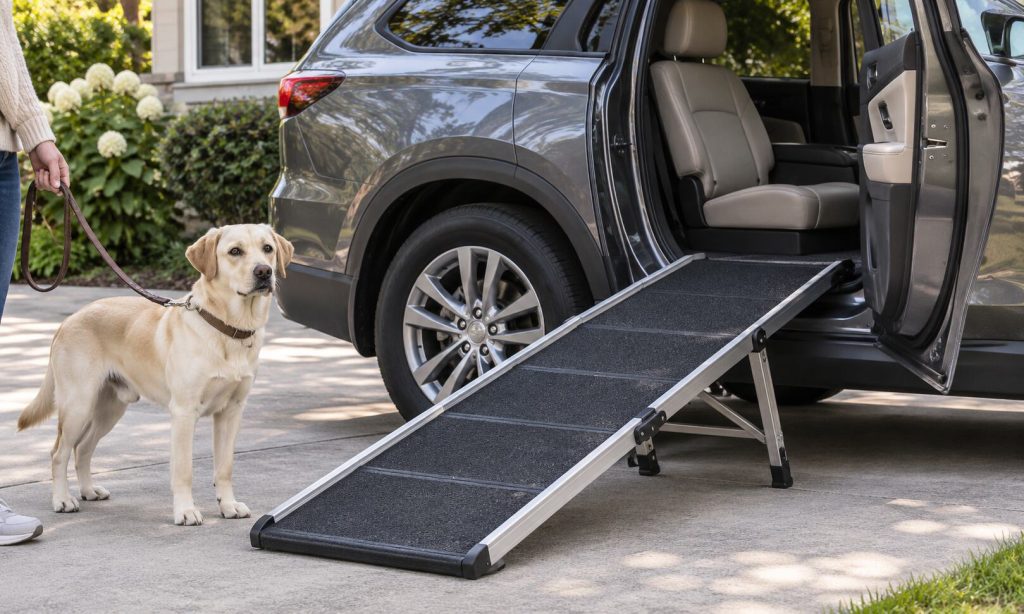
What features matter most in a dog ramp for a car side door? Prioritize secure doorway support, a manageable slope, traction, width, and adequate rated capacity. Side doors pose different challenges from rear hatches: the opening is narrower, the door can swing, and the seat edge may not provide a secure flat landing. A ramp that fits the trunk of a sport utility vehicle may be unsafe at the passenger door.
This guide explains which dog ramp for car side door features deserve priority and how to measure before buying. It covers slope, platform length, material, non-slip surfaces, vehicle clearance, portability, and gradual training. If you are looking for the best dog ramp for car side door access, begin with your vehicle and your dog’s mobility, then compare our related SUV dog ramp guide. Safety comes from the complete setup, not a weight rating alone.
Measure the Side Door and Landing Height
The most important feature in a dog ramp for a car side door is physical compatibility with the specific vehicle. Open the intended door fully on level ground and measure the vertical height to the stable step or entry platform where the ramp would rest. Also measure the clear width between door frame, seat, hinges, and surrounding bodywork. A ramp cannot be judged by length alone if its upper end has no secure support.
Check whether the side-door sill is rounded, narrow, or slippery. Some ramps need a dedicated support plate or vehicle-specific attachment to prevent sliding. Do not balance a ramp on the upholstered seat or a moving door panel. The ramp’s manual should identify approved contact points and attachment methods. If the opening cannot support a stable ramp, investigate another approved loading method rather than improvising.
Calculate a Comfortable Slope
A dog ramp for a car side door should be long enough to make the rise manageable for the individual dog. Steeper angles require more strength and traction, especially for seniors and dogs with arthritis. To estimate the geometry, divide the rise by the ramp’s usable horizontal reach and consider the angle, not only the advertised unfolded length. The longer the available run, the gentler the incline for a given height.
Driveway slope, parking space, and the width of an adjacent sidewalk can alter the actual angle. Measure where you normally park, leaving room to position the lower end on firm flat ground. For dogs with pain, weakness, or recent surgery, ask a veterinarian or rehabilitation professional whether ramp use is appropriate and what slope they can tolerate. Never force a dog up a ramp that causes slipping or hesitation.
Prioritize Traction and Side Guidance
Traction is central to dog ramp for car side door safety. A textured, non-slip walking surface should provide grip in dry and lightly damp conditions without abrasive material that hurts paw pads. Raised side edges can help a dog stay centered, especially when the ramp is elevated. However, very narrow rails may not prevent a large dog from stepping off; the usable walking width remains essential.
Inspect the surface for peeling grip tape, loose carpet, or worn rubber. Rain, mud, snow, and claws can change traction, so clean and dry the ramp between uses. Avoid smooth plastic ramps unless the manufacturer provides proven gripping features. A dog who hesitates may need more stable footing, not a stronger leash pull. A ramp should make entry feel predictable and controlled.
Check Load Capacity and Deflection
A ramp for a car side door needs a weight rating that safely exceeds the dog’s body mass, but the rating must be interpreted with the manufacturer’s setup instructions. Dynamic movement and a heavy dog stepping near one edge can create different loads from a static centered test. Look for a rigid, stable structure with minimal flex or bounce. The ramp should not twist, sag, or shift as the dog advances.
Consider future weight changes and whether a person will need to assist the dog. Do not step onto a pet ramp yourself unless the manufacturer expressly rates it for human loads. Test the empty ramp for movement before the dog approaches, then support the animal with an appropriate harness during supervised training. If the hinges, locks, or mounting feet feel loose, stop and inspect rather than relying on an advertised maximum number.
Choose an Appropriate Walking Width
The usable walking width of a dog ramp for a car side door should allow the dog to place all paws comfortably and maintain balance while moving. Measure shoulder width, natural gait, and how much room the side rails consume. A broad ramp can be reassuring for a large or uncertain dog but may not physically fit the passenger doorway. Balance the dog’s need for space with vehicle clearance.
Small dogs may still need adequate width if they weave or turn while learning. A dog with poor rear-limb control may need extra side guidance and a slower approach. Practice with the ramp flat on the ground before trying a slope. If the dog repeatedly steps off the edge, stop and consider a wider or differently configured solution. Safety is more important than making a narrow ramp work.
Compare Folding, Telescoping, and Fixed Designs
Portability is a practical dog ramp for car side door feature if you plan to load the equipment every day. Folding ramps may be compact but can have hinges or seams along the walking surface. Telescoping models adjust length yet need reliable locks. Fixed ramps can be sturdy but difficult to store in a passenger compartment. Compare folded dimensions with the vehicle’s cargo space, not just marketing photos.
Check the carrying handle, weight, latches, and whether a single person can deploy the ramp without pinching fingers. A heavy ramp that remains in the garage because it is awkward to lift is unlikely to help. Ensure the folded device cannot spring open during travel and cannot become an unsecured projectile in the vehicle. Read the transport and storage directions before purchase.
Secure the Upper and Lower Ends
A dog ramp for a car side door must not slide at either end. Look for non-slip feet on suitable ground, an approved top hook or contact plate, and any anchoring system specified by the maker. Check that the setup does not interfere with the closing door or damage weather stripping. The lower end should sit flat without rocking on gravel, cracked pavement, or a steep curb.
Before each use, press gently on the ramp to verify it is stable, and watch for movement as the dog steps on. Keep the vehicle parked with the engine off and door secured from swinging. Do not place the ramp where traffic, cyclists, or pedestrians could strike it. A second person can help manage a dog while another checks the setup in a difficult parking location.
Introduce the Ramp Through Short Training
Even the best dog ramp for a car side door can fail if the dog has never practiced. Start indoors or on a level surface with the ramp fully supported, reward calm investigation, and invite the dog to walk at its own pace. Gradually increase the incline only when the dog is comfortable. A well-fitted body harness offers more controlled support than pulling the neck collar; see our harness fit adjustment guide.
Practice both going up and coming down, because descending often feels more difficult. Keep sessions brief and stop before fatigue. Do not drag a fearful dog, rush one with sore joints, or assume a high ramp can be mastered in a single day. VCA’s mobility-support guidance highlights the value of non-slip ramps for dogs with limited movement.
Maintain the Ramp and Plan Travel Restraint
Dog ramp for car side door features need routine inspection after purchase. Check hinges, fasteners, grip surface, feet, and attachment points before every trip. Wipe dirt and moisture away and store the ramp dry. Replace worn anti-slip material according to the manufacturer’s instructions and remove a cracked or unstable ramp from use. Keep moving joints clear of debris without applying unapproved lubricants to gripping areas.
A ramp helps a dog enter the vehicle but does not restrain the animal while driving. Our dog travel gear overview covers other practical trip essentials. Use a suitable secure travel arrangement, such as a properly fitted travel harness or crate, as appropriate. The AVMA travel guidance discusses safe pet transport. Prevent an eager dog from jumping out as soon as the door opens; set up and secure the ramp first.
Frequently Asked Questions
These answers summarize the fit and safety checks that matter most at a passenger-side doorway. They do not replace manufacturer installation limits.
For a dog with arthritis, weakness, pain, or recent surgery, consult a veterinarian or rehabilitation professional before using a new access ramp.
Will an SUV trunk ramp work at the side door?
Not necessarily. Side doors have different opening width, sill shape, and landing support. Confirm that the ramp is approved for that placement and has secure contact at both ends.
How long should the ramp be?
Measure the actual vertical rise and available horizontal space, then choose a length that creates a manageable incline for your dog. A taller doorway usually requires a longer ramp.
Is a high weight rating enough?
No. Stability, dynamic load, width, grip, and secure supports matter. Choose a rated ramp with a comfortable margin and follow all setup conditions.
What if my dog is afraid of the ramp?
Practice on the flat ground with rewards, then slowly add height. Never pull the dog by the collar or force a painful movement. Seek professional support if fear or mobility limits persist.
Can I leave a portable ramp outside?
Only if the maker explicitly permits outdoor storage. Weather can deteriorate surfaces and hinges. Clean and dry the ramp, check for damage, and secure it between trips.
Final Words
The features that matter most in a dog ramp for car side door access are secure geometry, enough length, non-slip traction, adequate width, a stable load rating, and reliable anchoring. Measure the exact doorway before shopping, and assess your dog’s gait rather than assuming a universal size will fit. The SUV ramp comparison can provide context, but side-door compatibility must be independently checked.
Train patiently with a harness and rewards, inspect the ramp before each use, and secure your dog for the drive. A well-chosen ramp reduces the need for risky jumps without creating a new slipping or entanglement hazard. If the car door cannot support a stable ramp, choose a safer loading arrangement. The best dog ramp for car side door use is the one that fits the actual vehicle safely.









