
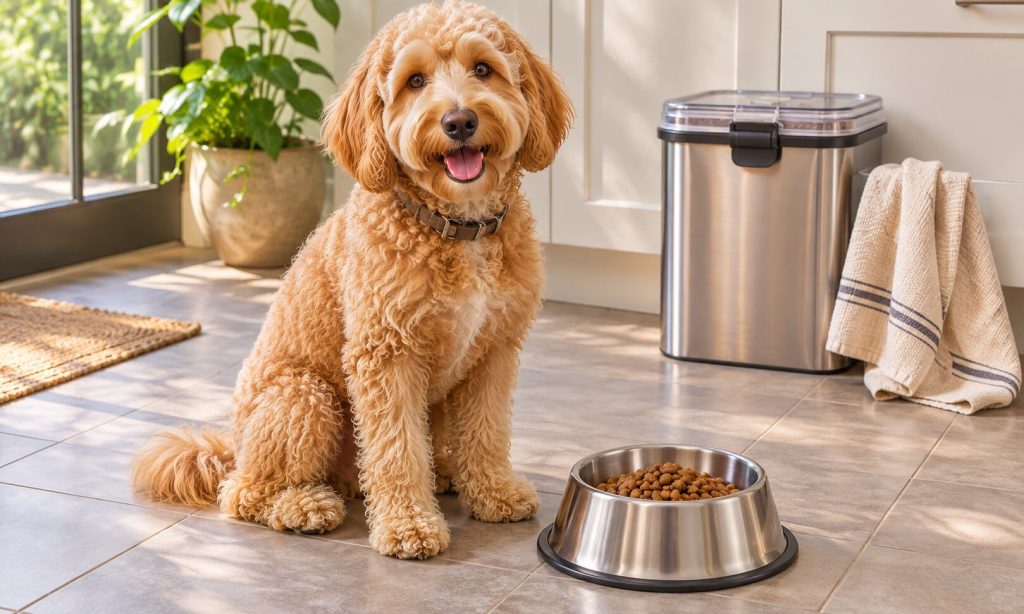
You should not wash dog food itself to make it clean. If you are wondering how to clean dog food for mini Goldendoodles and keep it in good condition, the safe approach is to protect the food from contamination and clean the bowl, scoop, storage bin, and feeding surface. Rinsing dry kibble changes its moisture level and can encourage spoilage. Washing canned or freshly served food is not a food-safety procedure either. Good hygiene belongs around the meal, not in the meal.
This guide explains how to keep mini Goldendoodle dog food and feeding tools clean, including daily bowl washing, storage, measuring, stale-food checks, and care during diet transitions. The search phrase best dog food for mini Goldendoodles should still lead to a complete and balanced formula appropriate to your dog’s age, size, and health. For growing dogs, our Goldendoodle puppy food comparison covers nutrition categories rather than cleaning methods.
Understand What Should and Should Not Be Washed
Cleaning dog food for mini Goldendoodles means cleaning the equipment that contacts food. Dry kibble, freeze-dried diets, and canned foods are not meant to be washed as a routine freshness fix. Water added to a dry product can make its storage life shorter. If a bag smells rancid or contains mold, pests, or moisture, discard the compromised food and contact the manufacturer as appropriate rather than trying to rinse it.
A bowl, spoon, scoop, placemat, and reusable food-storage container can be washed according to their material instructions. Empty residues first, use soap and water, rinse well, and dry thoroughly. Keep cleaning chemicals away from open dog food and avoid leaving detergent residue on dishes. The distinction prevents well-meaning owners from introducing a new hazard while trying to improve hygiene.
Wash Bowls on a Reliable Schedule
To keep mini Goldendoodle dog food clean at mealtime, start with the serving bowl. The CDC recommends cleaning pet food bowls after each wet-food use and at least daily when used for dry food or water. Food residue and saliva can build up even when a stainless-steel dish looks clean. A smooth, easy-to-wash bowl is practical for a small dog that eats several measured meals.
Scrape leftovers into the appropriate waste container, wash with dish soap and warm water, and rinse thoroughly. Dry with a clean towel or allow air drying before use. If the bowl is dishwasher-safe, follow both the product and dishwasher instructions. Inspect plastic dishes for scratches that trap residue and replace damaged ones. Keep a separate clean water dish available and refresh it throughout the day.
Clean Scoops, Measuring Cups, and Mats
Cleaning a mini Goldendoodle feeding station includes the tools used to portion meals. Do not use the food bowl as a scoop inside the bag, because saliva or floor residue can contaminate stored kibble. Choose a dedicated measuring utensil and clean it regularly. Dry it completely before returning it to dry food. For consistent portions, a kitchen scale can reduce variations between different kibble shapes.
A feeding mat collects crumbs, splashes, and tracked dirt. Wipe or wash it according to its material and let it dry before putting the dish back. Clean the surrounding floor after spills. A small dog may lick at fallen pieces, so avoid strong floor cleaner residues. Store food and cleaning supplies separately, and wash your hands before and after handling meals as the FDA pet-food handling guide recommends.
Store Dry Kibble in Its Original Bag
Keeping mini Goldendoodle dog food in good condition requires controlling heat, air, light, and moisture. The FDA recommends retaining dry food in its original bag, with the top tightly folded, inside a clean storage container if desired. This helps preserve the lot number, best-before date, and feeding instructions for any recall or product question. A snug lid also reduces pest access and accidental spills.
Do not empty new kibble onto the remains of an older bag. Finish the old supply first, wash and completely dry the bin if used directly, and only then refill it with fresh food. Store in a cool dry room, away from direct sun, garages that overheat, and damp laundry spaces. A massive bulk bag may not be economical if your small dog needs weeks or months to finish it before freshness declines.
Refrigerate Wet Food Promptly
To keep mini Goldendoodle dog food clean when serving cans or pouches, use a clean utensil and plate only the measured portion. Cover and refrigerate leftovers promptly according to the manufacturer’s directions. Do not leave opened wet food on the counter for prolonged periods, especially in warm weather. Once a meal is finished, remove the remaining food and wash the dish before the next serving.
Check for bulging cans, leakage, damaged seals, and unusual odors. Discard questionable food rather than tasting it or giving the dog a trial bite. Keep pet food separate from cleaning chemicals and other household hazards in the refrigerator. The FDA storage advice covers practical ways to retain labels and keep food protected in original packaging.
Inspect Food Before Every Meal
Cleaning dog food for mini Goldendoodles does not rescue a bad batch. Check the bag or can for an intact seal, date, and any visible change. Dry food should not feel damp or unusually oily, contain insects, or smell rancid. Wet food that has changed color or developed an unexpected odor should not be offered. Use the product’s normal appearance and manufacturer instructions as reference points.
If you suspect spoilage, isolate the product in its packaging, photograph the label and lot information, and contact the seller or manufacturer for guidance. Seek veterinary advice if the dog becomes ill after eating it. Do not attempt to neutralize spoiled food with baking soda, rinsing, heating, or mixing it with fresh food. Proper disposal and a clean replacement meal are safer than experimentation.
Keep Portions Appropriate for a Mini Goldendoodle
A clean bowl does not guarantee a nutritionally suitable meal. For broader formula questions, see our doodle food selection guide. Mini Goldendoodles vary in adult size and life stage, so feeding amounts should reflect weight, body condition, activity, and veterinary advice. When caring for mini Goldendoodle dog food, read the nutritional adequacy statement and measured calorie content. Puppies need growth-appropriate food, while healthy adults generally need maintenance nutrition. Medical issues may change the recommendation.
Use a separate scoop or scale and record the amount offered, including training rewards and toppers. Avoid leaving a large communal bowl available if one pet steals another’s ration. A slow-feeding bowl may help a dog that gulps meals, provided it is easy to clean. Our dog food portion guide explains how to estimate servings and refine them with body-condition checks.
Plan a Hygienic Food Transition
A transition to another formula can introduce messy feeding habits if several foods and toppers are used at once. Keep mini Goldendoodle dog food fresh by portioning both old and new products with clean utensils and storing them separately. Follow a veterinarian-approved gradual transition for a stable dog. Observe stool quality, appetite, and skin or ear concerns, but do not assume every symptom is a food allergy without an examination.
Label containers clearly if household members feed at different times. Measure the total combined ration rather than adding a full serving of each food. Wash bowls after wet meals and remove leftovers. If vomiting, diarrhea, or refusal continues, contact the veterinarian instead of repeatedly switching formulas. Clean equipment supports the transition but cannot make an unsuitable food nutritionally appropriate.
Know When to Replace Bowls and Storage Tools
Part of cleaning mini Goldendoodle feeding tools is recognizing when they have become difficult to sanitize. Replace cracked plastic bowls, chipped ceramic dishes, rusty metal containers, or scoops with damaged surfaces. Deep scratches and inaccessible seams can trap old food. A cracked storage bin may admit pests and moisture even if its lid looks tight. Choose durable food-safe materials that tolerate the manufacturer’s cleaning method.
Inspect the feeding area each week and check under mats for trapped water. A small washable mat is often easier to maintain than an elaborate feeding station with narrow grooves. If a dog chews a bowl or scoop, remove it and consider a safer design. The best setup is simple enough to clean consistently and stable enough that your dog can eat without sliding or tipping it.
Frequently Asked Questions
Food hygiene is about safe handling, clean equipment, and proper storage. It does not require washing or disinfecting the actual dog food.
These answers apply to routine commercial pet-food feeding. Follow any special storage or handling directions provided for a veterinary or fresh-food diet.
Should I rinse dry kibble before serving?
No. Rinsing is not a food-safety step and adds moisture. If the food is dusty, rancid, damp, or suspect, contact the manufacturer or replace it rather than washing.
How often should a mini Goldendoodle’s bowl be washed?
Clean after wet-food use and at least daily for dry-food and water bowls, following CDC pet-supply hygiene guidance. Rinse and dry thoroughly before reuse.
Can I pour kibble straight into a plastic bin?
The FDA prefers keeping the original bag inside a clean sealed container. If you decant, the bin must be clean, fully dry, and lidded, and you should retain the label and lot information.
What if the dry food smells stale?
Do not try to wash it. Check the date, seal, and storage conditions, and avoid feeding suspect food. Retain packaging information if you contact the manufacturer.
Does a mini Goldendoodle need special bowl cleaning?
No unique breed-specific disinfectant is required. Choose a stable, easy-to-clean bowl, measure appropriate portions, and maintain the same routine hygiene used for other dogs.
Final Words
If your question is how to clean dog food for mini Goldendoodles, remember the core distinction: clean bowls, tools, bins, and feeding mats, but never attempt to wash or rescue spoiled food itself. Keep dry kibble sealed in original packaging, refrigerate wet leftovers promptly, and inspect meals before serving. Searching for the best dog food for mini Goldendoodles should still prioritize complete nutrition and age-appropriate portions, not a special cleaning treatment.
A simple, repeatable feeding-station routine protects freshness and makes changes in appetite easier to notice. Record labels and lot codes, wash hands, and discard questionable food. Consult your veterinarian if a dog develops illness after eating or needs a medically tailored diet.









