
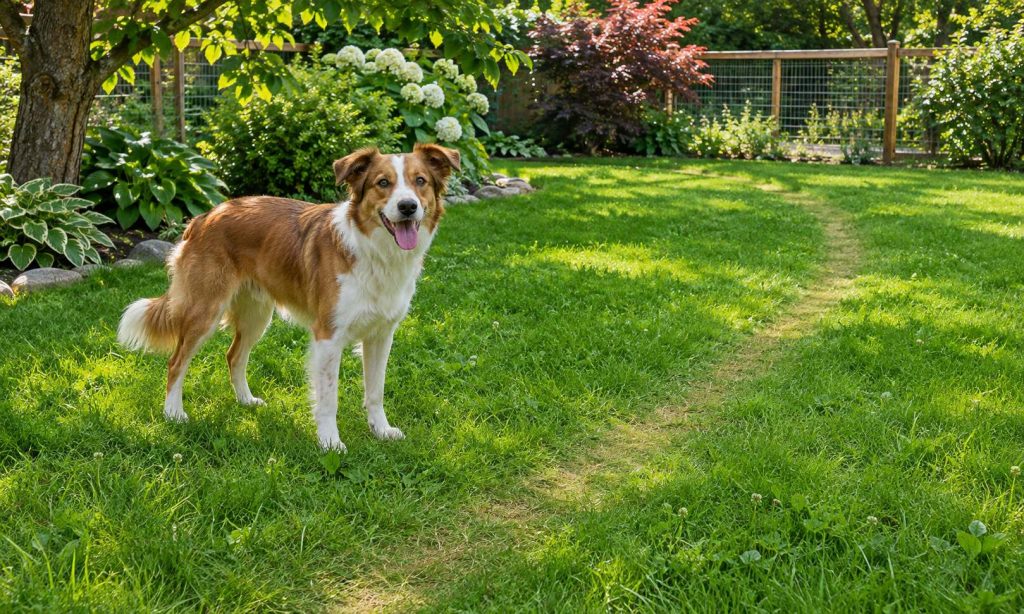
Choosing the right grass for high-traffic dogs starts with climate, sunlight, soil drainage, and the way pets use the yard. A lawn that handles children walking across it may still show worn paths when a dog races along the fence every day. No grass survives unlimited pounding, persistent shade, compacted soil, or concentrated urine without care. The goal is a resilient turf mix supported by sensible site preparation and places where dogs can run without destroying new seedlings.
This guide explains how to choose grass for high-traffic dogs by comparing cool-season and warm-season options, seed versus sod, recovery ability, and practical maintenance. If you are searching for the best grass for high traffic dogs, start by identifying your local growing season and site conditions rather than buying a seed blend from a generic photo. Thoughtful design can reduce the need for constant reseeding and chemical lawn treatments around pets.
Map Where Dogs Actually Run
Before choosing grass for high-traffic dogs, watch the yard for a week. Dogs often follow the same route between doors, gates, fences, and favorite play spots. Those corridors experience repeated paw pressure, soil compaction, and wear even when the rest of the lawn looks healthy. Mark shaded sections and areas that stay wet after rain. The best seed for an open sunny space may fail beneath a tree canopy.
Consider creating a dedicated gravel, mulch, or approved hardscape path where traffic is concentrated, while maintaining turf in lower-pressure play areas. Choose pet-safe materials that will not injure paws or invite ingestion. A narrow path takes far less maintenance than repeated attempts to seed a deeply compacted track. Dogs also need temporary access limits while grass establishes, so plan a separate potty and play area during renovation.
Choose Grass for Your Climate Zone
Choosing grass for high-traffic dogs depends on whether your region supports cool-season or warm-season turf. Cool-season lawns may use Kentucky bluegrass, turf-type tall fescue, or perennial ryegrass mixtures according to local guidance. Warm-season regions may use bermudagrass or zoysiagrass where suitable. No species is best everywhere: winter temperatures, summer heat, drought, disease pressure, and shade all matter.
Your county or university extension service can recommend locally adapted cultivars and sowing dates. A label listing several seed species may include varieties that perform poorly in your zone, so read the composition and germination information carefully. University of Minnesota Extension discusses cool-season seeding options, while warm regions need different recommendations. Start with local agronomy, not national rankings alone.
Compare Wear Tolerance and Recovery
A durable grass for high-traffic dogs must both resist wear and recover after damage. Turf-type tall fescue can offer useful wear and drought tolerance in suitable cool-season climates, while Kentucky bluegrass can spread to fill small bare patches under favorable conditions. Perennial ryegrass often establishes quickly but may not persist in every climate. Warm-season grasses also differ in growth habit and recovery rate.
Do not confuse fast germination with long-term toughness. A seed that greens up in a week may still need months of root development before heavy dog play. Compare traffic tolerance, recuperative capacity, shade tolerance, and maintenance requirements as separate criteria. The University of Minnesota lawn renovation advice discusses mixes and fescue use where wear and drought matter.
Check Sun, Shade, and Drainage
Even good grass for high-traffic dogs can fail when planted in deep shade or poorly drained clay. Most durable turf types need enough sunlight to produce energy for recovery. Heavy foot traffic compacts wet soil, reduces air spaces, and makes rooting harder. Before buying seed, evaluate daily sun hours, drainage after rain, and whether the surface has puddles or hard bare areas.
Improve the site with appropriate soil preparation rather than covering a compaction problem under fresh seed. A soil test can guide nutrient needs and pH adjustments, and drainage corrections may be necessary. Avoid excessive tilling around tree roots and ask an extension specialist about suitable techniques. In a persistently shaded corridor, a safer path or mulched play area may work better than turf regardless of product name.
Decide Between Seed, Sod, and Repair
Choosing grass for high-traffic dogs includes how quickly the lawn needs to be usable. Seed is flexible and often less expensive but requires protection from dogs while it germinates and roots. Sod provides immediate green cover, yet the roots still need to establish before running traffic is allowed. Neither method is instant dog-proofing. Choose a practical establishment window when a temporary fenced-off area is possible.
For small damaged patches, remove dead material, loosen compacted soil appropriately, add the recommended seed, and water consistently. For a large worn yard, a comprehensive renovation may be more economical than countless patches. Follow local seasonal timing: seeding during extreme heat or cold can create weak turf and wasted effort. Keep dogs off treated or newly seeded sections until established and safe.
Protect Roots During Establishment
Young grass for high-traffic dogs is especially vulnerable to paws, digging, and urine. Use temporary fencing or movable barriers to protect freshly seeded areas, and provide an alternative route for normal activity. Water lightly and consistently according to the selected turf’s establishment guidance rather than leaving the surface soaked. Wet soil plus running can tear new roots and compact the seedbed.
Wait for strong rooting and several appropriate mowing cycles before reintroducing intense play, following local extension advice rather than a universal number of days. Begin with supervised brief access and monitor for torn spots. A dog that loves retrieving may need a separate durable lane or rotating play area. Protecting the lawn during its first growth phase often matters more than buying a premium seed bag.
Manage Urine Damage Without Risky Remedies
Dog urine can cause localized burned patches because of concentrated nitrogen and salts. When choosing grass for high-traffic dogs, do not expect a particular seed to be completely urine-proof. Encourage use of a designated potty area and, when practical, water the spot promptly to dilute residue. Never punish the dog for using the lawn or change its drinking water access in an effort to protect grass.
Avoid giving supplements or changing the dog’s diet solely to alter urine chemistry without veterinary advice. Brown patches can also result from drought, fungi, insects, or fertilizer damage, so diagnose before treating. Penn State Extension’s Dogs vs. Lawns guidance describes damaged patch repair. A safe yard balances plant health with a dog’s freedom to drink, play, and eliminate normally.
Adjust Mowing and Soil Care
Maintenance supports grass for high-traffic dogs after establishment. Mow at the height recommended for the species, avoid removing too much leaf at one time, and keep mower blades sharp. Taller appropriate turf can shade soil and support healthier roots in many cool-season lawns. Aeration may help compacted ground when timed correctly, but it must suit the turf type and soil conditions.
Use a soil test to avoid unnecessary fertilizers and follow all label directions for any lawn treatment. Keep dogs away from treated areas for the full interval required on the product label, and store pesticides securely. Consider lower-chemical approaches where practical. The dog-friendly lawn care guide discusses planning a safer maintenance routine. A healthy established lawn resists traffic better than one stressed by scalping or overwatering.
Balance Turf With Durable Yard Design
Sometimes the right solution for high-traffic dogs is not more grass but a mixed landscape. Our artificial grass potty-area overview explores another option, though synthetic surfaces need heat and hygiene checks. A stable path from door to gate, a designated digging area, and a separate shaded resting spot can protect the most valuable turf sections. Use materials suitable for paws and local climate, and make sure surfaces do not become dangerously hot in summer. Grass remains a comfortable play surface, but it need not cover every square foot.
Provide shade, fresh water, and safe fencing in the yard. Rotate fetch lanes or use movable play areas when possible to spread wear. Clean feces promptly and check for burrows, sharp debris, or plants unsafe for pets. The yard should serve the animal as well as the appearance of the landscape. A realistic design reduces both maintenance costs and frustration.
Frequently Asked Questions
High traffic describes a pattern of use, not a single grass species. These answers help you balance plant durability with pet comfort and a practical renovation schedule.
Ask a local extension service for varieties and seasonal timing, and follow product labels to protect dogs during lawn care.
Is there grass that dogs cannot wear out?
No. Heavy repeated running, digging, shade, compaction, and urine can damage any turf. Choose climate-appropriate resilient varieties and redesign concentrated traffic routes.
Is seed or sod better for a dog yard?
Both can work. Seed costs less and offers variety choice; sod looks finished quickly. Both need root establishment and temporary protection from heavy dog traffic.
Does tall fescue handle traffic well?
Turf-type tall fescue can be useful for wear and drought tolerance in suitable cool-season regions. It is not ideal in every climate or deep shade. Local extension guidance matters.
How do I stop urine spots?
Provide a designated potty area, water affected spots when practical, and repair damaged patches. Do not restrict drinking water or give unapproved supplements to manipulate urine.
When can my dog use newly seeded grass?
Wait until the chosen turf has developed a strong root system and can tolerate walking, following local establishment guidance. Gradually reintroduce supervised use rather than opening it to vigorous play immediately.
Final Words
To choose grass for high-traffic dogs, match climate and sunlight first, then compare wear tolerance, recovery, soil needs, and your ability to protect new turf. The best grass for high traffic dogs comparison can help identify seed types, but a smart yard layout and strong roots determine lasting success. No grass will survive repeated digging and running in the same corridor without support.
Plan a durable path where traffic is concentrated, create a safe establishment area, and manage mowing, watering, and pet access carefully. Avoid unverified urine remedies and follow lawn-treatment labels. A successful dog yard values healthy turf and comfortable play equally.









