
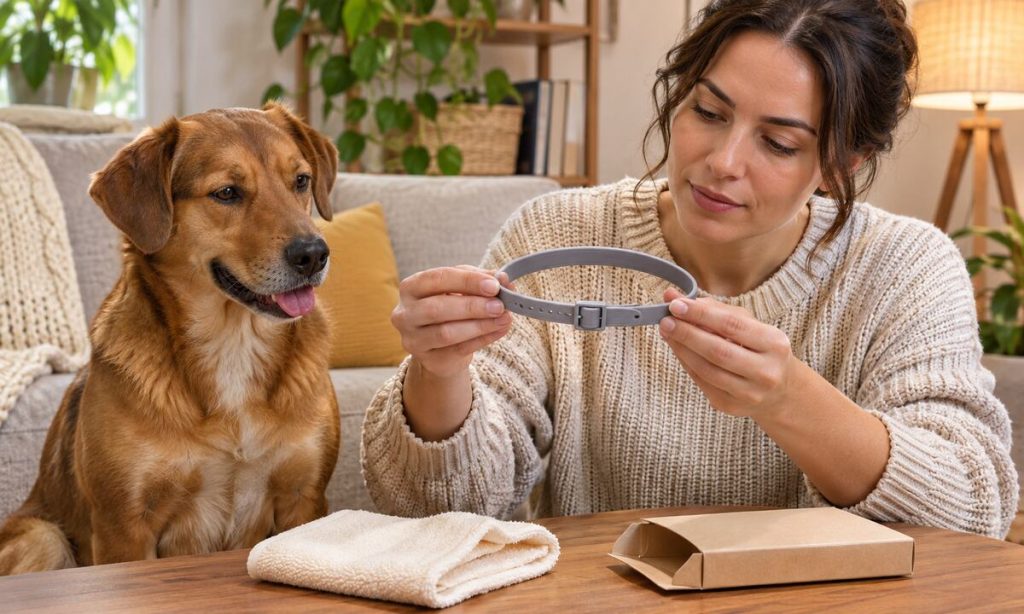
If you are asking how to clean the best flea collar for dogs, the first answer is to read that exact product’s label. A flea or tick collar is not an ordinary fabric collar: many contain pesticides or other active materials intended to work under specific conditions. Washing it with soap, soaking it in disinfectant, or scrubbing off a coating may damage the product, change exposure, or contradict directions. Some individual labels permit limited wiping, but that permission cannot be generalized to all collars.
This guide explains how to assess dirt, inspect fit and wear, determine whether any cleaning is allowed, and decide when replacement is safer. It also covers handling precautions, exposure to other animals and children, and what to do if the dog develops a reaction. Because flea control is medical and pesticide-related, a veterinarian and current label should guide decisions rather than generic cleaning tricks.
Identify the Exact Collar Before Touching It
Find the original package, product name, active ingredients, registration information where relevant, expiration or replacement interval, and complete directions. A similar-looking collar can use a different active ingredient or construction. Do not rely on a photograph from an online best-of list to identify what is on the dog’s neck. If the collar is unmarked and its origin is unknown, remove it safely with appropriate precautions and consult the veterinarian.
Check whether the label is for dogs of the animal’s species, size, weight, and age. Never assume a dog collar is safe on a cat, and avoid giving a used dog collar to another pet. Look for instructions on water exposure, swimming, bathing, trimming excess length, and disposal. These points affect whether a dirty collar can be maintained at all.
Check What the Label Actually Allows
A manufacturer may describe specific wiping or dust-removal steps, or may say to leave the collar alone during its active period. Follow the instructions for your own formulation exactly. Do not combine techniques from different brands. For example, one EPA-registered collar label permits wiping storage dust with a damp disposable cloth before application, but that does not establish a cleaning method for every flea collar in use.
If the current label does not explain how to clean the collar, ask the manufacturer or veterinarian before using water, detergent, alcohol, essential oils, or disinfectant. Never heat a collar to dry it quickly or use an abrasive brush to restore appearance. A visibly dirty item may be better replaced according to the product’s schedule than subjected to an unapproved wash.
Handle the Collar With Exposure Precautions
Follow instructions about gloves, handwashing, children, and other pets. Wash hands after handling unless more protective steps are specified. Keep the collar away from food preparation surfaces and never place it where children can play with it. If there are cats in the household, be especially careful about dog-only pesticides and their potential hazards. Store packaging and cut-off pieces securely out of animal reach.
Do not let a pet chew the collar or loose end. A dog that scratches at the collar may have discomfort, an overly tight fit, or an adverse reaction rather than a hygiene problem. Take the concern seriously. If the dog has an unexpected skin or systemic response, follow the label’s first-aid instructions, remove the collar as directed, and contact a veterinarian promptly.
Inspect Fit and Skin Instead of Only Surface Dirt
Check the neck under the collar for redness, hair loss, sores, swelling, or unusual odor. Verify the manufacturer’s fit instructions; an ordinary collar rule of thumb is not a substitute for a specific medicated product’s requirements. Leave only the amount of spare length the label directs and manage the excess as instructed. Too-tight or poorly positioned collars can rub even when clean.
Monitor especially closely when the collar is first applied or if the dog has been bathed, exercised heavily, or groomed. A change in coat or skin is not automatically due to fleas. If there is persistent itching, consult the veterinarian for possible flea allergy, a reaction to the product, infection, or another cause. Do not hide symptoms by adding a second pesticide treatment without veterinary guidance.
Know When Replacement Is the Better Choice
Replace the collar at its labeled end-of-use interval, or sooner if it becomes broken, cannot fasten properly, is chewed, or has a damaged active surface and the product directions call for replacement. No amount of polishing makes an expired collar regain reliable protection. If the packaging was lost and the start date cannot be established, seek advice rather than estimating how much active ingredient remains.
Do not reuse a disposable treated collar on another dog after the recommended interval. Keep a record of application date, product, lot number, and planned replacement. If a collar is removed because of an adverse effect, avoid putting it back on while waiting for symptoms to settle. The veterinarian can recommend an alternative preventive approach based on the dog’s health and local parasite risks.
Dispose of Used Products Safely
Read disposal directions on the exact label because treated collars and packaging can contain pesticide residues. Do not wash residues into drains or water bowls, burn the collar, or leave it in an open trash can where a pet might chew it. Some labels specify wrapping a used item and placing it in household trash; others may have different local requirements.
Keep unused spare collars in their original closed package, protected from heat, moisture, food, and curious animals. Store the full label for future reference, including emergency contact information. Do not transfer an old collar into a new product’s package. Safe storage and disposal are part of flea-control care, even though they do not make a dirty collar cleaner.
Support Flea Prevention Beyond a Collar
A collar is one element of an overall flea-control plan. Check the dog’s coat regularly, wash or clean suitable bedding according to its instructions, vacuum appropriate areas, and coordinate prevention for all pets under veterinary advice. Home flea-control guidance can help reduce environmental reinfestation without assuming more collar pesticide is always the answer. A regular flea inspection of the dog can help determine whether treatment is working.
If fleas persist despite apparently correct use, ask whether the collar has reached its end-of-life date, was fitted or used incorrectly, or is unsuitable for the local parasite challenge. Do not stack multiple topical, oral, and collar pesticides casually. The veterinarian can review interactions, medical history, and alternative products before you change the preventive routine.
Frequently Asked Questions
The questions below clarify whether treated collars can be washed, how to manage dirt, and which changes require veterinary advice. They are general safety principles, not permission to clean a particular collar.
Always follow the current directions on the specific package, which take precedence over a general household cleaning method. If directions are missing, do not experiment with chemicals.
Can I wash a flea collar with soap and water?
Do not unless the exact current label explicitly allows it. Household washing may change the treated product or conflict with directions.
Can I wipe dust off the collar?
Only as permitted by that specific product’s instructions. Some labels allow a limited damp wipe before fitting; others may not.
What if the dog gets red skin under the collar?
Remove the collar as directed by the label, follow first-aid precautions, and contact a veterinarian promptly. Do not simply clean and reapply it.
Should I reuse a collar after its expiration period?
No. Follow the labeled replacement and disposal interval. Cleaning cannot restore an expired product’s reliable protection.
Can a dog flea collar be used on my cat?
No, unless the specific product explicitly labels that use. EPA advises never using dog-only flea products on cats because of species-specific toxicity risks.
Final Words
A flea collar for dogs should be maintained according to its own label, not cleaned as though it were an ordinary accessory. Inspect the collar and the dog’s skin, confirm whether limited wiping is allowed, and replace a damaged or expired product on the correct schedule. Washing or scrubbing without approval can create unnecessary risk.
Keep packaging for directions and reporting details, handle treated materials carefully, and ask a veterinarian about itching, adverse reactions, or persistent fleas. Effective protection comes from an appropriate, properly used product and a broader prevention plan, not from trying to revive a used collar with household cleaners.
Reference
The following U.S. Environmental Protection Agency sources describe safe flea-and-tick product use, adverse-reaction steps, and the importance of following individual pesticide labels. Product-specific labels are examples only and do not establish universal cleaning instructions.
Veterinary advice is needed when a pet reacts to treatment, has a preexisting illness, or receives multiple parasite-control products. No general article can determine the best collar for an individual dog.









