
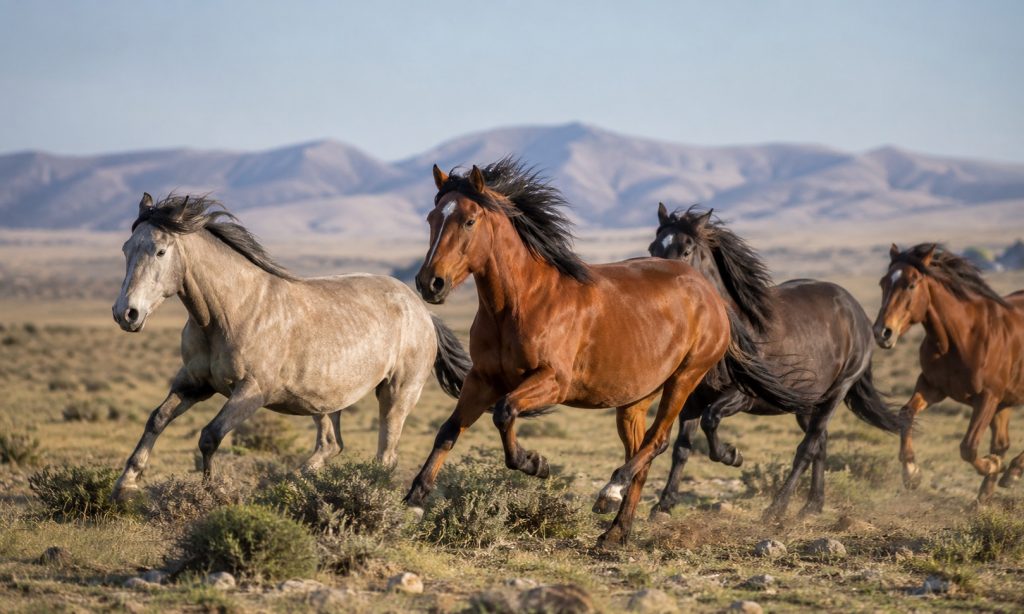
Wild horses wear down and shape their hooves by constant movement on rough terrain and natural breakover.
I have studied equine biomechanics and spent years observing feral herds and working with barefoot trimming. This article answers how do wild horses trim their hooves in depth. You will learn the biological processes, the role of landscape and movement, signs that trimming is failing, and practical lessons for domestic horses. My goal is to give a clear, evidence-based guide with hands-on insight you can trust.
How wild horses trim their hooves: natural mechanisms
Wild horses trim their hooves through a steady balance of growth and wear. The hoof wall grows continuously. Daily movement over varied ground wears the outer edge and sole. Natural breakover occurs when a hoof edge wears to a shape that lets the foot lift cleanly. This process keeps the toe length, hoof angles, and heel height in functional balance when herds move a lot.
How do wild horses trim their hooves when terrain changes? They adapt the wear pattern. Rocky ground wears the hoof faster. Soft plains slow the wear and demand different movement. Even seasonal shifts alter wear and growth balance.
 Source: reddit.com
Hoof structure and growth dynamics
The hoof is living tissue. The outer wall, sole, frog, and internal laminae all play a role. Growth rate averages about 6 to 12 mm per month, but it varies by horse, season, and nutrition. Faster growth means more frequent natural wear is needed. If wear and growth match, the hoof remains balanced.
How do wild horses trim their hooves and maintain healthy internal structures? The horn is layered and tough. The frog contacts ground and helps pump blood. Normal load and motion stimulate proper hoof form. Lack of movement or poor terrain can cause imbalances and hoof disease.
Terrain, movement, and behavior that promote trimming
Movement is the key driver. Wild horses travel miles daily to find food and water. This travel provides consistent abrasion. Substrates that aid trimming include:
- Rocky slopes that abrade the hoof wall and toe.
- Gravel and mixed soils that offer rough but not damaging wear.
- Hard-packed trails that encourage breakover at the toe.
Social behavior also matters. Herds follow trails and revisit salt licks, which concentrates wear in certain areas. Foals develop conditioning by playing and trotting, which sets hoof shape early. When you ask how do wild horses trim their hooves, remember the answer lies in repeated, varied, and sustained movement.

Environmental and biological factors that affect natural trimming
Climate, diet, and herd size all influence natural trimming. Dry climates make horn brittle. Wet climates soften the hoof and slow wear. Nutrition affects horn quality and growth rate. Parasites, hoof infections, or injuries can disrupt the balance and lead to overgrowth.
Wild horse populations adapt over generations. Herds in rocky deserts evolve hooves that shed quickly. Herds on lush grasslands may show wider, softer soles. These differences show how environment shapes the way wild horses trim their hooves.
src=”https://images.surferseo.art/5b0b6424-f830-44ea-8423-f9bf7689f0dc.jpeg”
alt=”Signs a wild hoof is self-maintained and when intervention is needed”
style=”max-width: 100%; height: auto; border: 2px solid black; border-radius: 10px; display: block; margin: 0 auto;”
loading=”lazy”
/>
Signs a wild hoof is self-maintained and when intervention is needed
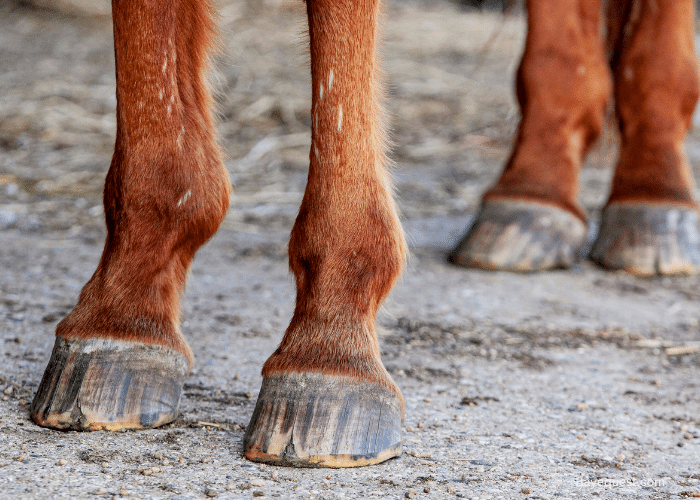
A self-maintained hoof will show even wear, a rounded toe, and a firm frog. Hoof walls should have modest length and no deep white-line separation. Watch for warning signs:
- Cracks that run deep toward the coronary band.
- Severe distortions of heel or toe angles.
- Chronic lameness or reluctance to travel.
When are wild hooves beyond natural trimming? Severe founder, infected laminae, or broken legs need human intervention. Some managed feral herds receive periodic vet or farrier care for welfare reasons. Knowing the signs helps you judge whether natural trimming is working or failing.
 Source: midsouthhorsereview.com
Lessons from wild hoof care for domestic horses
There is much to learn from wild trimming patterns. Key takeaways include:
- Movement matters. Encourage regular varied exercise to promote natural wear.
- Surface variety helps. Use gravel, hard tracks, and soft areas to mimic natural substrates.
- Watch nutrition. Balanced feed supports appropriate growth rates and horn quality.
How do wild horses trim their hooves in ways that inform trimming domestic horses? They show that keeping hoof growth and wear balanced prevents many problems. In my experience trimming barefoot horses, I found that gradual transition to more movement and better surfaces reduced trimming frequency. Avoid sudden changes. Trim incrementally and match the horse’s workload.
Practical steps for owners:
- Assess travel and turnout. Increase turnout time where safe.
- Add a controlled track with mixed substrate.
- Work with a trimmer who understands barefoot mechanics.
- Monitor monthly. Adjust trimming to the horse’s activity and terrain.
I once rehabilitated a neglected mare by increasing her turnout and adding a gravel path. Within two months, her toes shortened and her gait improved. That taught me to prioritize motion and surface over routine shoeing.
Common short questions (PAA-style)
Do wild horses need farriers?
No. Most wild horses do not need farriers because their daily movement supplies natural wear. Intervention is only needed for injury or severe pathology.
Can domestic horses achieve the same trimming naturally?
Yes, some can. It requires more turnout, varied surfaces, and time to transition safely. Not all domestic horses are suitable due to workload or hoof condition.
How fast do wild hooves grow?
Growth varies, but a common rate is 6 to 12 mm per month. Nutrition and season can speed or slow that rate.
Frequently Asked Questions of how do wild horses trim their hooves
How often do wild horses’ hooves naturally wear down?
Wild horses wear down hooves daily through movement. The precise balance depends on terrain and travel distance, but consistent activity keeps most hooves functional.
Are wild horses ever trimmed by people?
Occasionally. Wildlife managers or rescuers may trim or treat hooves for welfare reasons. Most wild herds remain self-sufficient without human trimming.
What terrain best helps wild horses trim their hooves?
Mixed terrain with hard-packed trails, gravel, and rocky areas offers the best natural abrasion. Soft, marshy ground reduces wear and can lead to overgrowth.
Can poor diet stop natural hoof trimming from working?
Yes. Poor nutrition changes horn quality and growth rate. If growth outpaces wear, hooves can become overlong even in wild settings.
How do I tell if a hoof is overgrown in a wild horse?
Look for long toes, low heels, flaring walls, or altered gait. Overgrowth often shows as cracks or a long toe that changes breakover and causes lameness.
Conclusion
Wild horses trim their hooves naturally by combining steady horn growth with constant movement across varied, often abrasive terrain. Understanding how do wild horses trim their hooves helps owners make better decisions for domestic horses. Apply the lessons: promote regular movement, offer mixed surfaces, monitor nutrition, and adjust trimming to each horse’s needs. Try one change this month—add turnout time or a short gravel path—and watch how hooves respond. If you found this guide useful, leave a comment, subscribe for more hoof-care insights, or explore hands-on trimming courses to learn deeper skills.