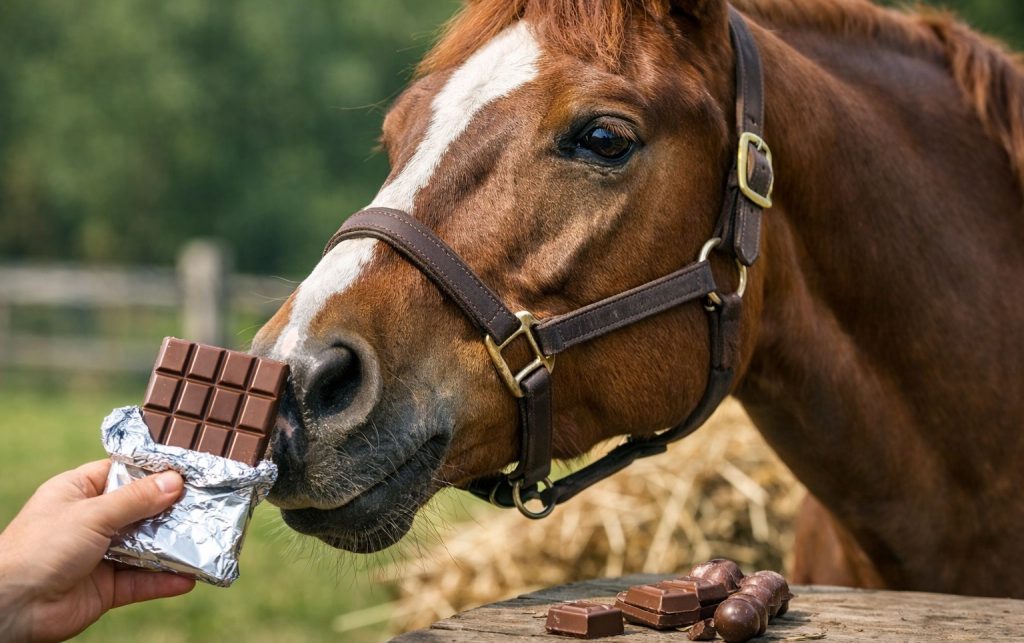
No — chocolate is toxic to horses and should never be fed to them.
As a veterinarian and long-time equine care specialist, I have seen how a single treat can turn into a dangerous emergency. This article dives deep into can horses eat chocolate, explains why chocolate hurts horses, how to recognize symptoms, and what steps to take if exposure happens. Read on for clear, practical advice based on clinical experience and current veterinary guidance.
Why chocolate is dangerous for horses
Chocolate contains stimulants called methylxanthines. The two main ones are theobromine and caffeine. These chemicals affect the heart, nervous system, and digestion in mammals, including horses. Because horses metabolize these compounds differently than humans, even small amounts can cause harm.
The amount of theobromine and caffeine varies by product. Dark chocolate and cocoa powder usually have the highest levels. Milk chocolate and white chocolate have much less. When answering can horses eat chocolate, the short answer is no, because the risk depends on dose, chocolate type, and the horse’s health and weight.
How chocolate affects a horse’s body
Methylxanthines block certain cellular receptors. This raises heart rate, causes muscle tremors, and stimulates the gut. Horses may become restless or colicky. In severe cases, irregular heart rhythms, seizures, and respiratory distress can follow.
Horses cannot vomit. That means ingested chocolate stays in the stomach and gut longer. This increases the window for toxins to be absorbed. Given these factors, can horses eat chocolate safely? No reliable blanket safe amount exists, so prevention is key.

Source: co.uk
Signs and symptoms of chocolate poisoning in horses
Early signs are often subtle. Watch for:
- Increased heart rate and rapid breathing.
- Restlessness, pacing, or unusual agitation.
- Tremors, muscle twitching, or weakness.
- Gastrointestinal signs such as colic, diarrhea, or excessive salivation.
- Severe cases may show arrhythmias, seizures, or collapse.
If you suspect a horse ate chocolate, monitor closely and contact a veterinarian. Quick recognition improves outcomes when answering the practical question of can horses eat chocolate and what to do.
How much chocolate is toxic to a horse?
Precise toxic doses for horses are not well established in veterinary literature. Toxicity depends on:
- Theobromine and caffeine content in the chocolate.
- The horse’s size, age, and health.
- Whether the chocolate is mixed with other foods or foreign objects.
As a rule of thumb, darker chocolates and cocoa products are far more risky per bite than milk chocolate. Because of this uncertainty, treat any ingestion as potentially hazardous. When owners ask can horses eat chocolate and how much is safe, the safest guidance is to assume none is safe and call a vet for a tailored risk assessment.
Practical steps if a horse eats chocolate
Take these actions immediately:
- Remove access to the chocolate and note how much and what type it was.
- Call your veterinarian and describe the amount, type, and time of ingestion.
- Do not attempt to induce vomiting; horses cannot vomit and this can cause harm.
- Follow your vet’s instructions, which may include monitoring, activated charcoal, IV fluids, or transport to a clinic.
- Keep records of the horse’s heart rate, behavior, and manure output to report to your vet.
Prompt action helps answer the urgent version of can horses eat chocolate responsibly and safely.
Prevention and safe alternatives to chocolate
Prevention is the best strategy. Keep chocolate and cocoa products locked away and out of reach. Educate guests, children, and staff about the risks. Use clear signage in feed rooms and tack rooms.
Safe treat alternatives include:
- Commercial horse treats made for equine diets.
- Small pieces of apple, carrot, or banana in moderation.
- Low-sugar, vet-approved reward sticks.
When people ask can horses eat chocolate as a way to reward them, suggest these safe alternatives instead.
 Source: equineinstitute.org
Personal experience and lessons learned
Early in my career, a barn received a late-night delivery with chocolate left in a feed room. Two curious mares sampled it and showed mild agitation overnight. We monitored them, called the vet, and treated supportively. No severe outcomes occurred, but the scare prompted a full barn safety review.
Lessons I learned:
- Assume minimal quantities can matter.
- Lock food in labeled bins.
- Train staff to report any ingestion immediately.
These real-world steps answer the common concern can horses eat chocolate by showing practical prevention that works.
Expert tips for owners and barn managers
Implement a simple emergency plan:
- Keep your veterinarian’s emergency number visible and accessible.
- Maintain an emergency kit with phone numbers, a flashlight, and basic records.
- Post a list of toxic items, including chocolate, in common areas.
- Run short training sessions for staff and boarders about equine toxins.
These steps turn the abstract question can horses eat chocolate into a clear, actionable barn policy.
Common misconceptions about can horses eat chocolate
Myth: A small bite is harmless. Fact: Even small amounts can cause problems, depending on chocolate type and horse size.
Myth: Only dark chocolate is dangerous. Fact: Dark chocolate and cocoa are higher risk, but milk chocolate still contains methylxanthines.
Myth: Horses will avoid chocolate. Fact: Horses are curious and may eat novel foods offered or left accessible.
Addressing myths helps owners make safe choices and reduces emergency visits.
 Source: reddit.com
PAA-style questions
How soon after ingestion do signs appear?
Signs can appear within 1 to 24 hours, often starting with restlessness or increased heart rate. Faster absorption can occur with powdered or baked products.
Is baking chocolate more dangerous than candy bars?
Yes, baking and dark chocolates usually have higher methylxanthine levels and are more toxic per bite than milk chocolate bars.
Can a large horse eat more chocolate safely than a pony?
Larger weight can dilute dose, but metabolism and individual sensitivity vary, so size is not a guarantee of safety. Treat any ingestion as a concern regardless of horse size.
Frequently Asked Questions of can horses eat chocolate
Can a single piece of chocolate harm a horse?
Yes. A single piece may be enough to cause mild signs in some horses. The type of chocolate and the horse’s size determine the level of risk.
What chocolate types are most dangerous to horses?
Dark chocolate, baker’s chocolate, and cocoa powder are the most dangerous due to higher theobromine and caffeine levels. These forms deliver more toxin per bite.
Should I induce vomiting if my horse ate chocolate?
No. Horses cannot vomit safely. Inducing vomiting is not an option and can be dangerous. Contact your veterinarian instead.
What treatments might a vet provide after chocolate ingestion?
Treatment may include activated charcoal, fluids to support hydration, close monitoring of heart rhythm, and medications to control seizures or arrhythmias. Treatment depends on signs and time since ingestion.
How can I store chocolate to keep horses safe?
Store chocolate in sealed containers on high shelves or locked cabinets away from feed and barn areas. Educate staff and visitors to avoid leaving treats in common spaces.
Can chocolate cause long-term harm to a horse?
Severe toxicity can lead to lasting organ or neurologic damage, but most cases caught early recover with supportive care. Long-term effects depend on dose and speed of treatment.
Are other cocoa products like cocoa nibs or powder risky?
Yes. Cocoa nibs, cocoa powder, and baking ingredients often have very high methylxanthine levels and can be especially hazardous to horses.
Conclusion
Chocolate is not a safe treat for horses. The risks come from theobromine and caffeine and the way horses process these compounds. If you ask can horses eat chocolate, the responsible answer is no — and any exposure should prompt a call to your veterinarian. Act now by securing chocolate, training your team, and keeping emergency contacts ready. Share this information with barnmates, subscribe for more equine safety tips, or leave a comment with your own experience.