The most effective way to keep squirrels out of bird feeders is to block access, use squirrel-proof feeders, and place feeders away from launch points.
Squirrels are clever, persistent, and often fearless, which is why bird lovers end up in a daily tug of war with them. I’ve tested enough feeder setups to know this: the best results come from combining the right feeder design, smart placement, and a few simple behavior tricks. If you want fewer raids and more birds at the feeder, this guide will walk you through what works, what fails, and how to build a setup that squirrels can’t easily beat.
Why squirrels target bird feeders
Squirrels do not treat bird feeders like a snack bar by accident. They are drawn to easy calories, especially sunflower seeds, safflower seeds, nuts, and suet. Bird feeders also offer a steady food source with very little effort, which is exactly what a squirrel is built to exploit.
From years of observing backyard feeders, one thing is clear: squirrels learn fast. If a feeder is easy to climb, easy to tip, or easy to hang from, they will keep coming back. Once they find a reliable feeder, they often return at the same time each day.
A few common reasons squirrels succeed include:
- Feeders placed too close to trees, fences, or roofs
- Weak poles that wobble or bend
- Open tray feeders with no protection
- Seeds spilled on the ground
- Cheap baffles that are too small or poorly mounted
Understanding the problem makes the solution easier. You are not just trying to scare squirrels away for one afternoon. You are changing the setup so the feeder is no longer worth the effort.

The best ways to keep squirrels out of bird feeders
The best answer to how do you keep squirrels out of bird feeders is to stack several defenses at once. One method may slow them down, but two or three together usually work much better. That layered approach is what most experienced birders rely on.
Use squirrel-proof bird feeders
Squirrel-proof feeders are often the strongest first line of defense. These feeders usually close off seed ports when a squirrel’s weight is detected, or they use cages that let small birds in while keeping squirrels out.
Useful designs include:
- Weight-activated feeders that shut under heavier animals
- Caged tube feeders with openings for small songbirds
- Feeders with metal ports that resist chewing
- Hopper feeders with guarded perches
In my own testing, weight-activated feeders can work very well, but they are not perfect. Very determined squirrels sometimes hang upside down, jump from nearby objects, or use their bodies in ways the maker did not plan for. That is why feeder choice matters, but it should not be your only defense.
Place feeders far from jumping points
Squirrels are excellent jumpers. If your feeder sits near a tree branch, fence, deck rail, or shed roof, you are practically offering them a bridge.
A good rule is to place feeders:
- At least 10 feet from trees, fences, and structures
- At least 5 feet off the ground on a smooth pole
- Away from overhanging limbs or vines
This spacing matters more than many people expect. I once moved a feeder only a few feet, and the squirrel traffic dropped almost overnight because I removed the launch point they had been using.
Install a proper baffle
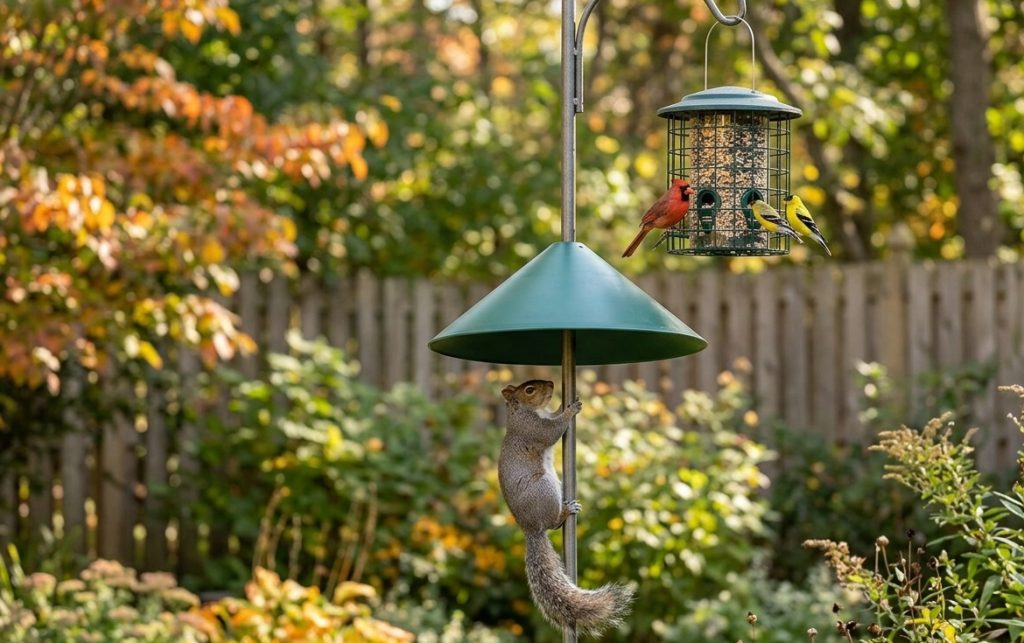
A baffle is one of the simplest and most effective tools for how do you keep squirrels out of bird feeders. It is a dome or cone shaped barrier that stops squirrels from climbing up a pole or dropping down from above.
There are two main types:
- Pole baffles, which block climbing from below
- Hanging baffles, which block access from above
For best results, choose a baffle that is large enough to be hard to reach around. Small baffles often fail because squirrels stretch, leap, or bypass them. A sturdy metal baffle mounted correctly is usually much better than a cheap plastic one.
 Source: birdseedandbinoculars.com
Use a pole system instead of hanging feeders
Hanging feeders look charming, but they are often easy for squirrels to attack. A freestanding pole system with a baffle gives you more control over access.
A strong pole setup should include:
- A smooth metal pole
- A ground mount that does not wobble
- A dome or cone baffle
- Feeders mounted high enough to stay out of reach
This is one of the most reliable setups I’ve used. If you want fewer squirrel battles and less frustration, a pole-mounted feeder with the right barrier often beats a hanging feeder every time.
Offer foods squirrels like less
Seed choice can help reduce interest, though it will not make squirrels disappear on its own. Safflower seed is a common option because many birds eat it, while squirrels usually ignore it more often than sunflower seed.
Other helpful choices include:
- Nyjer seed for finches
- White proso millet for ground-feeding birds
- Suet with hot pepper for birds that tolerate it
Avoid relying only on mixed seed with lots of filler. Many squirrels will sort through it and still find the expensive parts. In my experience, the cleaner the seed mix, the less mess and waste you deal with, too.
Try hot pepper bird seed or suet
Capsaicin, the compound that makes peppers hot, affects mammals more than birds. That means birds can usually eat treated seed, while squirrels find it unpleasant.
This method can work well for:
- Sunflower seed
- Suet cakes
- Seed blends marked for birds but not mammals
It is a smart option, but use it carefully. Always buy products made specifically for bird feeding, and avoid applying random pepper products yourself unless the label says it is safe. A little caution goes a long way here.
Stop seed from reaching the ground
A messy feeder invites squirrels. Seed on the ground becomes an easy buffet, and once squirrels are feeding below, they are already in the area.
To reduce this:
- Fill feeders only partway
- Choose feeders with trays that do not spill easily
- Sweep or rake under feeding areas often
- Use catch trays if needed
This is a detail many people miss. A clean feeding area makes the whole system less attractive to squirrels and helps reduce visits from raccoons, mice, and other unwanted guests too.
Use motion-based deterrents carefully
Some people use motion sprinklers, spinning devices, or reflective tape. These can help for a while, especially when squirrels are new to the setup.
Possible deterrents include:
- Motion-activated sprinklers
- Whirly devices or dangling ornaments
- Reflective pinwheels or tape
- Feeder cages with moving parts
The limitation is that squirrels often get used to them. I’ve seen motion devices work well at first, then lose power once the squirrels learned the pattern. Think of these as support tools, not a final answer.
What does not work very well
When people ask how do you keep squirrels out of bird feeders, they often hope for a single magic trick. The truth is that some popular fixes are weak on their own.
Here are methods that often disappoint:
- Hanging the feeder from fishing line alone
- Using tiny baffles
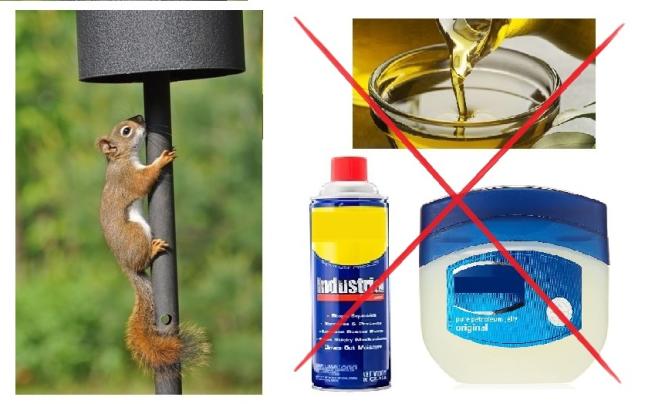
- Greasing poles with oil or petroleum products
- Moving the feeder only a few inches
- Relying on scarecrows or fake owls
These ideas may slow squirrels briefly, but many will adapt quickly. Worse, greasy poles can be messy and unsafe for wildlife. A better answer is to use physical barriers built for the job.
How to build a squirrel-resistant feeder setup
If you want lasting results, think like a squirrel. Look at the feeder from ground level, from a nearby branch, and from the roof line. If a squirrel can jump, climb, or drop in, it probably will.
A strong setup usually includes these steps:
- Choose a metal pole with a stable base.
- Add a properly sized baffle below the feeder.
- Keep the feeder far from jump points.
- Use squirrel-resistant feed.
- Clean up spilled seed regularly.
- Check the setup after storms or strong wind.
I always tell readers to treat feeder defense like a fence system, not a single lock. One weak point can ruin the whole setup. The more complete the system, the less time you spend refilling seed for squirrels.
Best bird feeder styles for keeping squirrels away
Some feeder styles are simply better at standing up to squirrels. If you are shopping for a new feeder, design matters as much as price.
Good options include:
- Tube feeders with metal ports
- Caged feeders for small birds
- Weight-activated feeders
- Metal mesh suet feeders
- Pole-mounted hopper feeders with baffles
Less ideal options include:
- Open tray feeders
- Hanging feeders with no guard
- Light plastic feeders with weak lids
- Feeders close to tree trunks or railings
If your current feeder keeps losing to squirrels, do not assume all feeders are equal. A better design can save you time, seed, and frustration.
Safety and animal welfare considerations
It is important to keep squirrels out of bird feeders without harming them. The goal is exclusion, not injury. That means avoiding glue, traps, poison, sharp spikes, or anything that could injure wildlife.
A few safe principles:
- Use barriers instead of harmful chemicals
- Keep feeders clean to reduce disease spread
- Avoid seeds that mold quickly in wet weather
- Do not place feeders where birds may hit windows
Trust matters here. Good bird feeding should support birds, not create new risks. The most ethical squirrel control is the kind that simply makes access difficult.
Common mistakes to avoid
Even good feeders fail when the setup is wrong. Here are the mistakes I see most often.
- Putting feeders too close to trees
- Mounting baffles upside down or too low
- Choosing a feeder with weak plastic parts
- Leaving spilled seed on the ground
- Expecting one product to solve everything
- Ignoring new squirrel routes after trimming trees
The biggest mistake is assuming squirrels will give up because you want them to. They are patient and inventive. If your setup is easy, they will test it every day.
Practical tips from real-world use
After trying many setups over time, a few lessons stand out. First, start with placement before buying more gear. A great feeder in a bad location still fails. Second, use a pole system whenever possible because it gives you more control.
A few field-tested tips:
- Mount feeders where you can see them from a window
- Switch seeds seasonally to match bird demand
- Recheck baffles after snow, wind, or cleaning
- Use only one feeder at first, then expand if needed
- Watch how squirrels approach before changing the setup
One of the best lessons I learned was this: do not fight the squirrel, redesign the problem. Once you shift your mindset, the solution gets simpler.
:max_bytes(150000):strip_icc()/how-to-keep-squirrels-out-of-bird-feeders-8646434-final-895c367fca1e4f8cbc344d3ae281a5a5.png) Source: thespruce.com
Source: thespruce.com
Frequently Asked Questions
What is the fastest way to keep squirrels out of bird feeders?
The fastest fix is to move the feeder away from trees and add a proper baffle. If you also use a squirrel-resistant feeder, you will usually see a big drop in visits right away.
Do hot pepper bird seeds really work?
Yes, they often do, because birds do not react to capsaicin the way mammals do. Results vary, though, and squirrels may still test the feeder if other food is nearby.
Will a squirrel baffle stop all squirrels?
Not always, but a properly sized and well-placed baffle stops many of them. Very athletic squirrels can still get around poor setups, which is why feeder placement matters so much.
Are squirrel-proof feeders worth the money?
Usually, yes. A good squirrel-proof feeder can save seed, reduce stress, and make bird feeding more enjoyable. The key is buying one that matches your feeding setup and local squirrel behavior.
How far should a bird feeder be from a tree?
Aim for at least 10 feet away from trees, fences, roofs, or other launch points. That distance makes jumping much harder and gives you a better chance of keeping squirrels out of bird feeders.
Conclusion
Keeping squirrels out of bird feeders is not about one trick. It is about using smart placement, solid hardware, the right seed, and steady upkeep. When you combine those tools, you turn an open invitation into a feeder that birds can enjoy and squirrels cannot easily conquer.
If you are ready to improve your setup, start with the basics: move the feeder, add a baffle, and choose a design that fits the job. Small changes can make a big difference, and the results are usually worth it. Try one upgrade this week, and watch how much calmer your bird feeding station becomes.