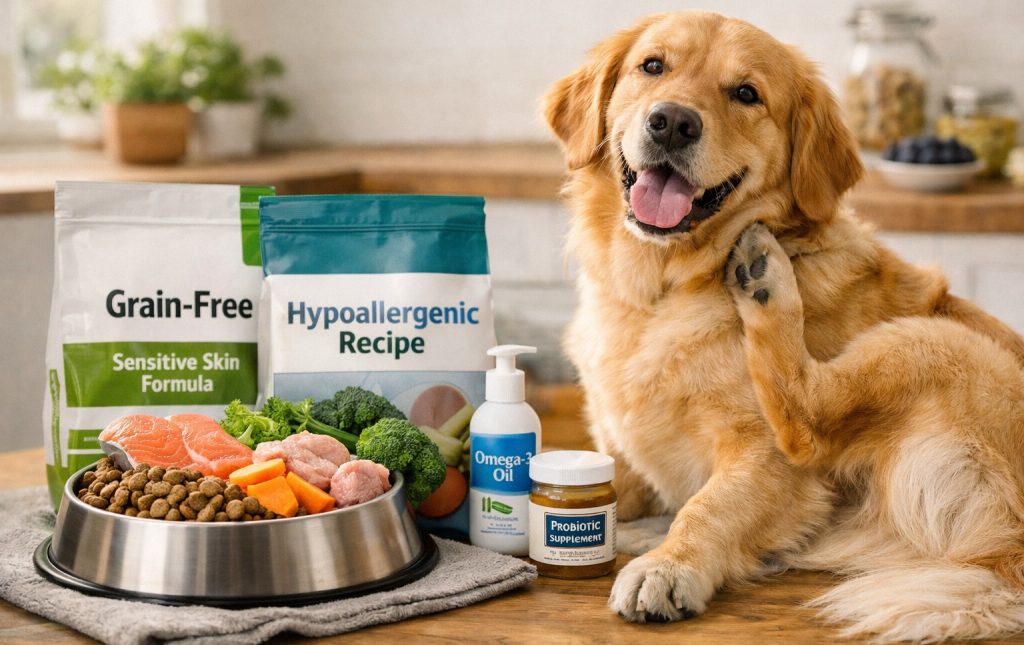
Dry, itchy skin can make a dog restless and leave you wondering whether the food bowl is part of the problem. The best dog food for dry itchy skin depends on the cause: food allergy is only one possibility, alongside fleas, infection, and environmental triggers. This guide compares seven verified foods with skin-and-coat or sensitive-diet positioning. They are not cures, and an over-the-counter “sensitive” label is not a diagnosis. If your dog has persistent itching, sores, odor, hair loss, or ear problems, ask a veterinarian to check the skin before switching diets. For suspected food allergy, follow a veterinarian-directed elimination trial rather than changing ingredients by guesswork. The products below vary in protein, size, and formulation. Use only a recipe your veterinarian approves, especially if your dog has a medical diet or known sensitivity.
Quick Picks
| Product | Best For | Key Advantage | Buy | |
|---|---|---|---|---|
| IAMS Advanced Health Skin & Coat Chicken & Salmon | Skin-and-coat recipe | Chicken and salmon recipe | View on Amazon | Jump to Review |
| Purina ONE Plus Skin & Coat Salmon | Sensitive stomach | Salmon is the first ingredient | View on Amazon | Jump to Review |
| IAMS Sensitive Skin Salmon & Rice | Chicken-free recipe | Salmon listed first | View on Amazon | Jump to Review |
| Forza10 Dermo Itchy-Skin Dry Food | Fish-based option | Fish-based recipe | View on Amazon | Jump to Review |
| Blue Buffalo True Solutions Skin & Coat Salmon | Salmon adult food | Salmon is the first ingredient | View on Amazon | Jump to Review |
| Purina Pro Plan Sensitive Skin & Stomach Salmon | Salmon and rice | Salmon-and-rice formula | View on Amazon | Jump to Review |
| Natural Balance Limited Ingredient Salmon & Brown Rice | Limited ingredient | Salmon as the sole named animal protein | View on Amazon | Jump to Review |
How We Chose These Foods
We verified each product identity through the authenticated catalog and compared listed proteins, skin-and-coat nutrients, and diet positioning. Product claims are not proof that a food treats an itchy condition. We favored distinct recipes and avoided claiming that any food cures allergies. A veterinarian should confirm ingredients and appropriateness for the individual dog.
1. IAMS Advanced Health Skin & Coat Chicken & Salmon

- Chicken and salmon recipe
- Omega fatty acids, zinc, and vitamin E
- Skin-and-coat nutrition focus
- Small 4.5-pound trial bag
- Adult dry food
- Chicken may not fit an elimination trial
- Small bag may not suit bulk buyers
This adult dry food combines chicken and salmon and lists omega fatty acids, zinc, and vitamin E as skin-and-coat nutrients. Those ingredients can support normal nutrition, but they do not diagnose or cure the cause of itching. Dry, flaky skin can come from parasites, infection, environmental allergies, or other conditions, so a veterinarian should assess persistent symptoms before a food change.
The 4.5-pound size can be useful when you want to introduce a new food gradually or see whether your dog accepts the kibble. It is not a true food-allergy test. If your veterinarian suspects an allergy, follow the specific elimination diet they recommend and avoid extras that can invalidate the trial. Check calories and feeding directions against your dog’s age and body condition.
This recipe is most appropriate for an adult dog whose veterinarian approves chicken and salmon. It may be unsuitable when a chicken-free or hydrolyzed diet is needed. Do not assume that adding omega-rich food will resolve severe itch. If the dog has sores, odor, hair loss, ear problems, or ongoing discomfort, ask for an exam and treatment plan instead of cycling through foods. Keep a weekly note of scratching, licking, and coat condition, but do not wait for the end of a food bag if symptoms are severe. The veterinarian may treat another cause at the same time. Bring the exact package to follow-up so the ingredient panel can be checked against the dog’s history.
My Recommendation
IAMS Advanced Health Skin & Coat Chicken & Salmon may suit an adult dog if your veterinarian approves the ingredients and nutritional profile. Its chicken and salmon recipe may fit your dog’s needs, but it is not a skin treatment. If the itch continues or a food trial is needed, follow the clinic’s exact plan.
2. Purina ONE Plus Skin & Coat Salmon

- Salmon is the first ingredient
- Omega-6 and vitamin E
- Sensitive-stomach positioning
- 31-pound bag for regular feeding
- Adult dry formula
- Large bag is a commitment
- Contains multiple ingredients beyond salmon
Purina ONE Plus Skin & Coat is a salmon-based adult kibble with vitamin E and omega-6 fatty acids listed for skin and coat support. Its larger 31-pound size may fit households with a dog already doing well on the recipe. A salmon-first label does not mean the food has only one protein, so review the complete ingredient list before using it for a suspected food allergy.
The product is positioned for sensitive stomachs and skin, but marketing language cannot establish why a dog is itchy. A veterinarian may need to check for fleas, mites, infection, or environmental triggers. If a strict diet trial is recommended, this retail recipe should be used only if the veterinary team selects it. Treats, table scraps, flavored medicines, and supplements can affect the trial.
This option may suit an adult dog that tolerates its ingredients and needs a larger dry-food bag. It is not a hypoallergenic prescription diet, and it is not appropriate for every dog with itching. If symptoms worsen or digestive signs appear, stop experimenting and contact the veterinarian. Compare calorie density and feeding amounts with the dog’s body condition. If a food trial is underway, the clinic may advise against switching to this recipe, even if its front label sounds relevant. Ask about an appropriate trial food first. Keep the package for follow-up and note whether the dog’s itching, ears, and digestion change over the veterinarian’s chosen period.
My Recommendation
Purina ONE Plus Skin & Coat Salmon may suit an adult dog if your veterinarian approves the ingredients and nutritional profile. The salmon-first recipe may fit your dog’s needs, but it is not a skin treatment. If the itch continues or a food trial is needed, follow the clinic’s exact plan.
3. IAMS Sensitive Skin Salmon & Rice

- Salmon listed first
- Salmon-and-rice recipe
- No chicken in the listed recipe
- Omega-3 and prebiotic fiber
- Small trial-size bag
- Cross-contact can still matter
- Not a veterinary hydrolyzed diet
This salmon-and-rice formula is marketed for sensitive skin and stomach and lists salmon first. The product information describes it as chicken-free, though it notes potential manufacturing cross-contact. That distinction matters for a dog with a confirmed sensitivity. A limited ingredient claim or a different protein does not replace a veterinarian-directed elimination trial when food allergy is being investigated.
The product data also identifies omega-3 fatty acids and prebiotic fiber. Those are formulation details, not proof that the food will stop itching. The 4.5-pound bag gives you a smaller quantity to evaluate for acceptance, but it is not long enough to complete a therapeutic trial. Follow the veterinary plan for duration and avoid unapproved treats or supplements.
This food may fit an adult dog whose veterinarian approves salmon and rice and who needs a chicken-free retail option. It is not hydrolyzed and may not be appropriate for a strict diagnostic trial. Watch for persistent itch, red skin, ear issues, or stomach changes. If symptoms continue, ask the veterinarian to reassess the cause rather than assuming another flavor will solve it. A trial should have a clear start and end date, with the clinic explaining which treats and flavored products are allowed. Do not use a small-bag test to decide whether an allergy is present. The veterinarian needs consistent exposure to the chosen diet before interpreting a response. Keep scheduled skin rechecks with the veterinarian.
My Recommendation
IAMS Sensitive Skin Salmon & Rice may suit an adult dog if your veterinarian approves the ingredients and nutritional profile. The salmon-first recipe may fit your dog’s needs, but it is not a skin treatment. If the itch continues or a food trial is needed, follow the clinic’s exact plan.
4. Forza10 Dermo Itchy-Skin Dry Food

- Fish-based recipe
- Hydrolyzed fish protein in listing
- Omega-3-rich anchovy oil
- Skin-and-coat focus
- 8.8-pound bag
- Ingredient list needs veterinary review
- Not automatically suitable for a food trial
Forza10 Dermo is a fish-flavored dry food marketed for itchy skin and coat support. The listing identifies hydrolyzed fish protein and anchovy oil, along with a shorter ingredient list than many standard kibbles. Those details may interest owners comparing fish-based options, but they do not prove that the formula is appropriate for a diagnostic elimination diet or for a particular dog’s medical history.
The product information also describes prebiotics and several plant ingredients. Dogs can react to different proteins or other ingredients, so a broad “sensitive” label does not guarantee tolerance. Ask the veterinarian to review the entire ingredient panel, nutritional-adequacy statement, and calorie content before using it. A true food trial requires one prescribed diet and strict avoidance of other foods.
This option may be worth discussing when the dog’s care team approves its ingredients and the family wants a fish-based kibble. It may not suit dogs with fish sensitivity or a veterinary diet restriction. If itch is severe or accompanied by infection, wounds, or ear symptoms, food alone is unlikely to be enough; obtain veterinary care. The shorter ingredient list is not a guarantee of fewer reactions, because a dog can respond to fish or plant ingredients too. Ask the clinic to verify every component. If the dog is already on treatment, keep the diet plan stable unless the veterinarian recommends a change. Discuss any new symptom with your clinician.
My Recommendation
Forza10 Dermo Itchy-Skin Dry Food may suit an adult dog if your veterinarian approves the ingredients and nutritional profile. Its fish-based recipe may fit your dog’s needs, but it is not a skin treatment. If the itch continues or a food trial is needed, follow the clinic’s exact plan.
5. Blue Buffalo True Solutions Skin & Coat Salmon

- No corn, wheat, or soy in the listing
- Omega-3 and omega-6 listed
- Formulated by veterinarians and animal nutritionists
- 11-pound bag
- Skin-and-coat recipe focus
- Contains additional ingredients
- Not a prescription allergy diet
Blue Buffalo True Solutions Skin & Coat is an adult salmon kibble whose product information lists omega-3 and omega-6 fatty acids. The bag size is smaller than some bulk options, which can make comparison easier for a household that has veterinary approval to try it. However, the recipe includes more than salmon, so review every ingredient if the dog has a known food sensitivity.
The product page says the formula was developed with veterinary and nutrition expertise. That claim does not make it a treatment for itching or a substitute for an allergy workup. A veterinarian may recommend testing for parasites, infection, and environmental allergy before changing diets. If a food trial is needed, use the exact formula and timeline prescribed by the clinic.
This could suit an adult dog whose veterinarian approves the recipe and whose symptoms do not require a prescription diet. It may be the wrong choice for a dog with salmon sensitivity or a strict hydrolyzed diet plan. Track itch, skin condition, stool, and food intake, and report meaningful changes. If the skin is raw or painful, seek care promptly. A formula aimed at skin and coat can still be the wrong match for the individual dog. Note the first date it is fed, how much is eaten, and any skin changes. Share that record with your veterinarian, who can decide whether to continue, modify, or stop the trial.
My Recommendation
Blue Buffalo True Solutions Skin & Coat Salmon may suit an adult dog if your veterinarian approves the ingredients and nutritional profile. The salmon-first recipe may fit your dog’s needs, but it is not a skin treatment. If the itch continues or a food trial is needed, follow the clinic’s exact plan.
6. Purina Pro Plan Sensitive Skin & Stomach Salmon

- Salmon-and-rice formula
- Oatmeal for digestibility
- Prebiotic fiber listed
- Omega-6 for skin and coat
- 30-pound bag
- Large bag is unsuitable for testing acceptance
- Not a substitute for allergy diagnosis
This Purina Pro Plan adult recipe combines salmon and rice and lists oatmeal, prebiotic fiber, and omega-6 fatty acids. The product page describes the recipe as sensitive-skin and stomach food. Those features may be relevant to a dog that already tolerates the ingredients, but they do not diagnose a food allergy or address fleas, infection, or environmental causes of itch.
The 30-pound bag is a large commitment. If your dog has not eaten the formula before, ask the veterinarian about a gradual transition and whether a smaller size is available. During a strict elimination trial, use only the diet selected by the clinician. Even a small treat or flavored supplement can interfere with interpreting the response.
This may be a practical maintenance option for an adult dog whose veterinarian approves the ingredient profile and who does not need a prescription hydrolyzed food. It is less useful as an unplanned first experiment for a dog with severe or persistent skin signs. Discuss the dog’s symptoms and medical history with a veterinarian before committing to a large bag. A large bag may be sensible after the dog has tolerated the recipe, but a smaller trial size is preferable when available. Ask about a transition schedule and do not switch abruptly unless directed. A balanced plan should account for treats, supplements, and any other calories the dog receives. Ask the clinic before adding supplements.
My Recommendation
Purina Pro Plan Sensitive Skin & Stomach Salmon may suit an adult dog if your veterinarian approves the ingredients and nutritional profile. Its salmon-and-rice formula may fit your dog’s needs, but it is not a skin treatment. If the itch continues or a food trial is needed, follow the clinic’s exact plan.
7. Natural Balance Limited Ingredient Salmon & Brown Rice

- Salmon as the sole named animal protein
- Brown rice recipe
- Limited-ingredient positioning
- 24-pound bag
- Limited ingredient does not mean hypoallergenic
- Large bag requires confidence in the choice
Natural Balance’s salmon-and-brown-rice recipe is marketed as a limited-ingredient adult food for sensitivities. The listing describes salmon as the single animal protein. That can help an owner compare protein sources, but it does not guarantee that the food is hypoallergenic or suitable for every dog. Review the entire ingredient list, including flavorings and supplements.
The product is available in a larger bag, which can be economical for a dog that already eats it comfortably. If you are investigating food allergy, however, the veterinarian should choose the diet and determine whether an over-the-counter formula is appropriate. Cross-contact in manufacturing and hidden exposures from treats or flavored medications can complicate an elimination trial.
This may suit an adult dog whose veterinarian approves the recipe and whose prior diet history makes salmon appropriate. It is not a replacement for a prescription hydrolyzed diet when the clinician recommends one. Keep a simple symptom log and assess itch over the schedule the veterinarian sets. Contact the clinic if the dog develops sores, odor, ear problems, or worsening discomfort. Even a single added treat or flavored chew can introduce a protein that is not part of the planned trial. Ask the veterinary team what rewards are allowed. If the dog refuses the new diet, contact the clinic for a workable plan instead of improvising another protein. Call for guidance before changing the food again on your own.
My Recommendation
Natural Balance Limited Ingredient Salmon & Brown Rice may suit an adult dog if your veterinarian approves the ingredients and nutritional profile. The salmon recipe may fit your dog’s needs, but it is not a skin treatment. If the itch continues or a food trial is needed, follow the clinic’s exact plan.
How to choose best dog food for dry itchy skin
Identify the cause before switching food. Fleas, mites, infections, environmental allergies, and food reactions can all cause itching. A veterinary exam can guide treatment. Food may be part of the plan, but a diet change alone can delay care for infection or parasites.
Ask whether a food trial is appropriate
If a food allergy is suspected, veterinarians commonly use an elimination-challenge diet trial. The clinic selects a complete diet, often hydrolyzed or based on a suitable novel protein, and sets the trial length. Every treat, chew, supplement, flavored medication, and table scrap can affect the result. Do not substitute an over-the-counter “limited ingredient” food unless your veterinarian approves it for the trial.
Compare labels with the dog’s history
Look beyond the front-panel claims. Review the full ingredient list, animal proteins, life-stage statement, calories, and feeding directions. “Salmon first” does not mean salmon is the only protein. Omega fatty acids, zinc, and vitamin E are nutrients, not a promise to stop itching. If the dog has another condition or uses a prescription diet, ask the veterinarian before mixing or switching foods.
Track symptoms and follow up
Record itch, skin appearance, ears, stool, and foods offered. Follow the schedule the veterinarian gives you, and report worsening signs. Our guides to food options for dogs with allergies and how vets diagnose suspected food allergies explain why a controlled trial matters. For short-term skin comfort, see anti-itch sprays for dogs, but use topical products only as directed.
Do not judge a diet by a few days of scratching. A veterinarian may set a strict trial lasting several weeks, and consistent feeding is essential for interpreting the result. Ask which treats, chews, toothpaste, and flavored medicines are permitted. Keep flea control and other prescribed treatments on schedule, and record skin, ear, and stomach changes. If the dog develops open sores, pain, odor, or worsening itch, contact the clinic promptly instead of waiting for the food trial to finish. Record whether itching changes after baths, outdoor time, or contact with bedding, and note every topical product, cleaner, or supplement used during the trial in your log. Keep the trial consistent until review.
Frequently Asked Questions
Can dog food cause dry itchy skin?
Food allergy can cause itching, but fleas, infection, and environmental allergies are also common causes. A veterinarian can investigate.
Will salmon food stop my dog from itching?
Not necessarily. A salmon recipe may still contain other ingredients, and itching may have a cause unrelated to food.
How long should a food trial last?
Follow the veterinarian’s timeline. A strict elimination trial often takes several weeks, and treats or flavored medicines can interfere.
Is limited-ingredient food the same as hypoallergenic food?
No. “Limited ingredient” is a product positioning term; a veterinarian should choose the diet for a diagnostic trial.
When should I call the vet?
Seek advice for persistent itch, sores, odor, hair loss, ear problems, pain, or signs that worsen despite care.
Final Verdict
The best food for a dog with dry, itchy skin depends on the diagnosis. These seven foods offer distinct salmon, chicken, and limited-ingredient recipes, but none should be treated as a cure. Ask your veterinarian whether a food trial is appropriate and which formula to use. Keep the trial consistent and report persistent skin signs rather than repeatedly changing foods.
This article contains Amazon affiliate links. If you purchase through these links, PetAdvisorPro may earn a commission. As an Amazon Associate I earn from qualifying purchases.