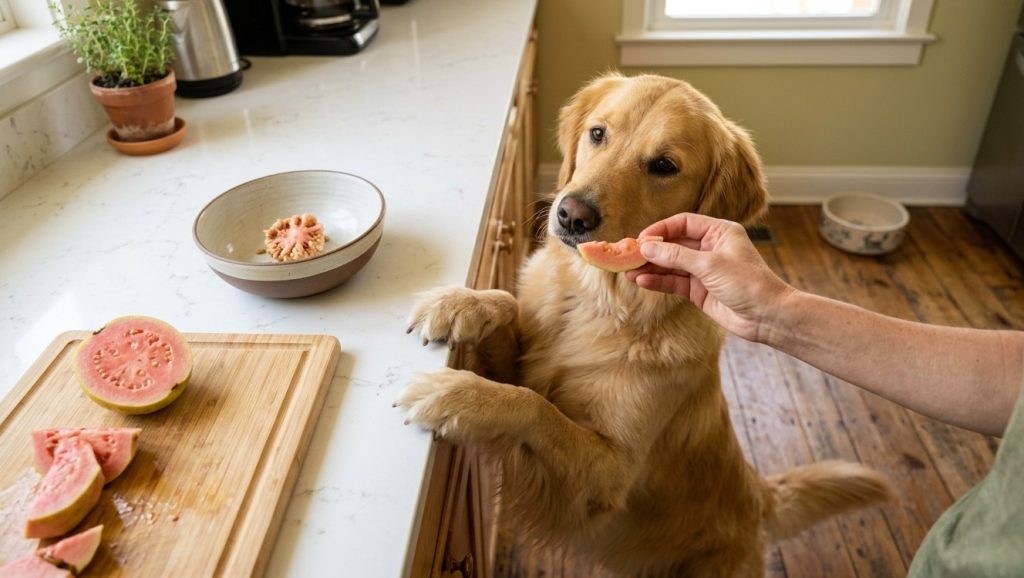
Picture this: You are sitting on your porch on a humid sunny afternoon, slicing up a cold, fragrant guava. Out of nowhere, a familiar set of puppy-dog eyes locks onto your cutting board. Your dog starts doing that hypnotic tail-thump on the floorboards, silently pleading for a bite. If you are anything like me, your instant instinct is to share the love. But before you toss a piece of tropical goodness to your four-legged shadow, stop and ask the critical question: Can dogs eat guava seeds?
The short answer is a resounding no. While the fleshy pink or white part of a ripe guava isn’t inherently toxic to dogs, the seeds inside are a completely different story. Feeding your pup guava seeds can lead to everything from broken teeth and choked throats to painful intestinal blockages and, in high amounts, potential toxicity.
Let’s unpack why guava seeds present a real hazard, what actually happens if your furry friend hoovers up a handful of them, and how to safely navigate tropical fruits in your dog’s diet without paying an unexpected visit to the emergency vet clinic.
What Are Guava Seeds and Why Are They So Tricky?
Guavas are popular tropical fruits packed with Vitamin C, dietary fiber, and antioxidants. For humans, chewing through those rock-hard little seeds in the center is just part of the experience. We barely give them a second thought.
However, a dog’s digestive tract is not built like ours. Dogs are facultative carnivores. Their digestive systems are designed to process meat, proteins, and simple fats efficiently—not to crush and break down dense, woody seeds.
Guava seeds are notoriously tough. Unlike soft banana seeds or the micro-seeds in blueberries, guava seeds are small, hard, and slippery. When a dog chows down on fruit, they rarely pause to savor and chew each bite thirty times like we do. They swallow food whole. That habit turns tiny, hard seeds into tiny, hard hazards inside a dog’s stomach and intestines.
Can Dogs Eat Guava Seeds? The Direct Verdict
To make it as clear as possible: Can dogs eat guava seeds? Absolutely not. You should never deliberately offer guava seeds to your dog, nor should you hand them a whole guava with the seeds intact.
While a stray seed or two accidentally swallowed by a 70-pound Golden Retriever might pass through without causing a disaster, intentional feeding is asking for trouble. For smaller breeds or dogs with sensitive stomachs, even a small cluster of these seeds can trigger serious gastrointestinal distress.
When pet owners ask can dogs eat guava seeds, they often assume seeds are harmless simply because the fruit flesh is safe. But nature works in sneaky ways. Many fruit seeds carry natural defenses to prevent animals from destroying them before they can plant themselves in soil—and those natural defenses do not agree with your pup’s gut.
The Real Dangers: Why Guava Seeds Pose a Risk to Your Dog
Why are we making such a fuss over tiny seeds? There are three main reasons why guava seeds belong in the compost bin and far away from your dog’s bowl.
+-----------------------------------------------------------------------+
|                       GUAVA SEED RISKS FOR DOGS                       |
+------------------------------------+----------------------------------+
| Risk Factor                        | Primary Threat Level             |
+------------------------------------+----------------------------------+
| Physical Obstruction / Blockage    | High (Especially small breeds)   |
| Choking & Dental Damage            | Moderate to High                 |
| Chemical Toxicity (Cyanide compounds)| Low to Moderate (In mass)     |
+------------------------------------+----------------------------------+
1. Intestinal Blockage (Gastrointestinal Obstruction)
This is the single biggest immediate threat. Guava seeds do not dissolve easily in gastric acid. When a dog ingests multiple seeds, they can cluster together with other undigested food materials, creating a clump. In small breeds like Yorkies, Chihuahuas, or Dachshunds, this clump can easily lodge in the narrow passages of the small intestine. An intestinal blockage is a medical emergency that often requires costly surgery to fix.
2. Choking Hazards and Broken Teeth
Guava seeds are ridiculously hard. If a dog actually attempts to chew them, they risk fracturing a premolar or canine tooth—a painful ordeal that leads to pricey veterinary dental work. Alternatively, because the seeds are slick, they can easily slip down the throat unchewed, causing choking or lodging in the esophagus.
3. Trace Toxic Compounds (Cyanogenic Glycosides)
Like apple seeds and cherry pits, guava seeds (particularly from wild or strawberry guava varieties) contain trace amounts of cyanogenic glycosides. When crushed or broken down, these compounds can release minute amounts of cyanide. While a dog would technically need to crunch through a substantial number of seeds for severe cyanide poisoning to occur, why take the risk? Toxic compounds have zero place in your pet’s snack rotation.
Signs Your Dog Ate Guava Seeds: What to Look For
Accidents happen. You turn your back for two seconds to grab a paper towel, and your sneaky pup vacuums up guava scraps off the counter. If you are asking yourself can dogs eat guava seeds because your dog just did, don’t panic immediately—but do start watching them closely.
Here are the warning signs that indicate those seeds are causing internal trouble:
-
Vomiting or Excessive Nausea: The stomach’s natural reaction to undigested, irritating foreign objects.
-
Diarrhea or Straining to Poop: Hard seeds can scrape and inflame the lining of the colon, leading to bloody or watery stools.
-
Abdominal Pain or Bloating: If your dog whines when you touch their belly, or assumes the “play bow” stance (front paws down, rear end up) to relieve pressure, their gut is in distress.
-
Lethargy and Loss of Appetite: A dog that suddenly turns down food or refuses to get up is communicating that something is very wrong inside.
-
Excessive Drooling: A common symptom of both throat irritation/choking and severe nausea.
If you notice persistent vomiting or extreme lethargy within 12 to 24 hours of your dog eating guava seeds, call your vet immediately.
What to Do: Immediate Impact, Treatment, and Recovery
If you catch your pet red-handed eating guava seeds, here is your step-by-step game plan:
-
Remove Remaining Fruit: Swiftly secure any leftover guava so your dog cannot get more.
-
Estimate the Quantity: Did they swallow one bite with a few seeds, or did they devour two whole guavas from the fruit bowl? Size matters here.
-
Provide Fresh Water: Ensure your dog has access to clean water to help flush small particles through the digestive tract.
-
Do NOT Induce Vomiting Unless Directed: Never try to force your dog to throw up using hydrogen peroxide or home tricks without explicit instructions from a veterinarian. Doing so can cause aspiration or damage the esophagus.
-
Monitor for 24–48 Hours: Keep a close eye on their stool, energy levels, and appetite.
In most cases where a large dog consumes just a couple of seeds, the body will pass them out in the yard within a day or two without issue. However, if a full obstruction occurs, your vet will need to take abdominal X-rays or run an ultrasound to pinpoint the obstruction. Treatment ranges from fluid therapy to help push the blockage out, to emergency abdominal surgery in severe cases.
Prevention Tips for Pet Parents
Keeping your dog safe from unsafe seeds comes down to simple kitchen habits. IMO, preventing a problem is always cheaper and less stressful than treating one at the emergency clinic 🙂
-
Prep Away from Prying Paws: Always cut, peel, and scoop your fruit over a sink or deep cutting board so seeds don’t bounce onto the kitchen floor.
-
Use Secure Trash Cans: Dogs are opportunistic scavengers. A trash can with a locking lid stops your pup from digging out discarded guava rinds and seed cores.
-
Educate the Family: Make sure kids and guests know the rule: No sharing fruit unless an adult has prepped it safely.
-
Drop-It Command: Train a reliable “Drop it” or “Leave it” command. It’s the single most life-saving skill you can teach your dog.
When to Visit a Vet
Knowing when to monitor at home versus when to race to the clinic can save your dog’s life.
You should contact your veterinarian right away if:
-
Your dog is a small or toy breed and swallowed multiple seeds.
-
You notice continuous, unproductive retching or vomiting.
-
Your dog’s abdomen appears swollen or feels tight and hard to the touch.
-
Your dog shows signs of severe distress, pale gums, or collapse.
Never hesitate to pick up the phone. Most vet clinics will happily tell you over the phone whether your dog’s specific situation warrants an in-person exam or simple home observation.
How Much Guava Can Dogs Eat? (Safe Prep & Portion Control)
Now that we’ve established that seeds are off-limits, what about the rest of the fruit? Can dogs enjoy guava flesh safely?
Yes! The sweet, fleshly pulp of a ripe guava contains Vitamin C, Vitamin A, potassium, and healthy dietary fiber. But moderation is everything. So, how much guava can dogs eat safely without causing stomach upset?
+-----------------------------------------------------------------------+
|                    SAFE GUAVA SERVING PORTIONS                        |
+--------------------------+--------------------------------------------+
| Dog Size                 | Recommended Daily Portion (Flesh Only)     |
+--------------------------+--------------------------------------------+
| Small (Under 20 lbs)     | 1 teaspoon of cubed flesh (Occasional)     |
| Medium (20 - 50 lbs)     | 1 tablespoon of cubed flesh                |
| Large (50+ lbs)          | 2 to 3 small bite-sized cubes              |
+--------------------------+--------------------------------------------+
How to Safely Prepare Guava for Your Dog:
-
Wash the Exterior: Remove any pesticides or chemical residues on the skin.
-
Peel the Rind: Guava skin is tough, hard to digest, and can cause stomach upset. Peel it off entirely.
-
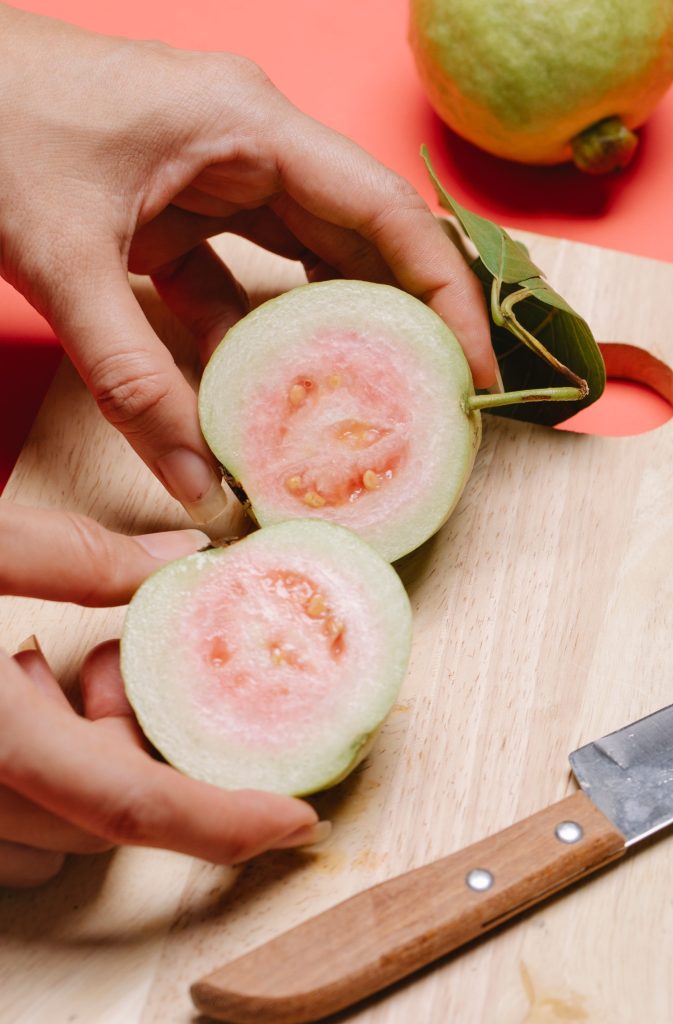
Scoop Out ALL Seeds: Take a spoon and meticulously carve out the central seed pod. Double-check for stray seeds!
-
Dice into Small Chunks: Cut the plain fruit flesh into bite-sized pieces to prevent choking.
Remember, fruit should only ever be an occasional treat. Treats—including healthy fruits—should never make up more than 10% of your dog’s total daily caloric intake.
Can Puppies Eat Guava?
If you have a bouncy new pup at home, you might wonder: can puppies eat guava?
It is best to hold off on offering guava to puppies. Young puppies have extremely sensitive digestive systems that are still developing. Introducing exotic, high-fiber, high-sugar tropical fruits like guava can easily trigger severe diarrhea, gas, and painful cramps in a young pup.
Furthermore, a puppy’s intestinal tract is much narrower than an adult dog’s. If a puppy accidentally ingests a stray seed, the risk of a life-threatening intestinal blockage is significantly higher. Stick to balanced puppy food and vet-approved puppy treats until your dog is fully grown and has an established gut.
Safe Alternative Fruits Dogs Can Eat
If carving seeds out of a guava sounds like too much work on a lazy afternoon, don’t worry. There are plenty of delicious, worry-free fruits dogs can eat that require way less surgical prep.
Here are a few dog-friendly fruit alternatives that make fantastic, nutritious rewards:
-
Blueberries: Packed with antioxidants and low in calories. Plus, zero seed removal required!
-
Apples (Cored and Seedless): Crisp, sweet, and great for breath. Just be sure to remove the core and apple seeds.
-
Watermelon (Seedless): A hydrating summer favorite made of over 90% water. Perfect after a long walk in the park.
-
Strawberries: Rich in Vitamin C and enzymes that can actually help whiten your dog’s teeth over time.
-
Bananas: A great source of potassium, though best served in tiny slices due to high natural sugar content.
When introducing any new fruit to your dog’s diet, start with a tiny piece and wait 24 hours to ensure it doesn’t cause gas or loose stools.
Frequently Asked Questions (FAQs)
What happens if my dog eats a single guava seed?
Don’t panic! A single guava seed passed by a medium-to-large dog will almost certainly travel through the digestive system and end up in your yard without causing harm. Just monitor your dog over the next 24 to 48 hours for any unusual symptoms like vomiting or diarrhea.
Is guava paste or guava jelly safe for dogs?
No, never give your dog guava paste, guava jelly, or guava candy. These commercially processed products are loaded with added sugars, preservatives, and sometimes artificial sweeteners like xylitol, which is extremely toxic to dogs even in tiny amounts.
Are pink guavas safer for dogs than white guavas?
Both pink and white guava varieties are safe in terms of their fruit flesh, but both contain hard seeds that must be removed completely before serving. Neither variety’s seeds are safe for dog consumption.
Can dogs drink guava juice?
Store-bought guava juice should be avoided because it contains high amounts of added sugar, preservatives, and artificial flavors. A tiny sip of 100% natural, pureed guava juice without added sugar won’t poison your dog, but solid water is always the best hydration choice.
Can dogs eat guava leaves?
No. Guava leaves are tough, fibrous, and difficult to digest. Ingesting guava plant leaves can cause significant stomach upset, vomiting, and intestinal distress in dogs. Keep potted guava plants well out of reach of curious chewers.
Final Words
Sharing human food with our pets is one of the simple joys of having a furry best friend, but safety always comes first. So, can dogs eat guava seeds? No—those rock-hard little seeds are a recipe for digestive trouble, choking hazards, and potential blockages.
The good news? Your dog doesn’t have to miss out on tropical flavor entirely! As long as you peel the rind, thoroughly scoop out every last seed, and serve only tiny pieces of the ripe flesh in moderation, your pup can safely enjoy a tropical bite alongside you.
Keep your fruit prep meticulous, keep the trash can locked, and when in doubt, stick to easy, seedless treats like blueberries or watermelon. Your dog’s belly—and your wallet—will thank you!