
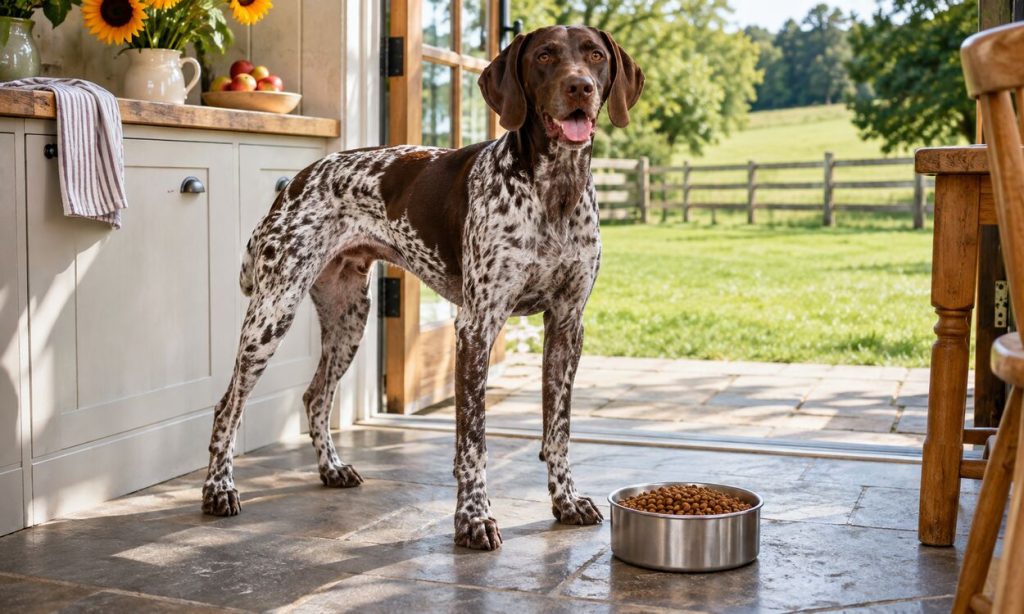
German Shorthaired Pointers are often energetic dogs, but it is easy to overestimate or underestimate how much food an individual needs. A GSP that spends weekends hunting may have different energy demands from one that enjoys short daily walks. Food choices also change with age, body condition, health, and activity season. The biggest mistakes come from assuming every member of the breed needs the same recipe, the same enormous portion, or a permanent high-performance feeding plan.
This guide covers common mistakes when choosing dog food for a GSP, short for German Shorthaired Pointer. It explains nutritional adequacy, calories, life stage, activity, treats, transitions, and warning signs. For related breed-feeding context, see our dog food for GSP overview. Here, the focus is on sound feeding decisions rather than promoting particular products.
Mistake 1: Choosing Food by Breed Claims Alone
A label mentioning sporting dogs or German Shorthaired Pointers does not establish that its nutrition fits your animal. The FDA explains that complete and balanced pet foods carry a nutritional adequacy statement specifying the life stage. Check that statement, then consider whether the food is appropriate for your dog’s actual age, health, and workload. Terms such as ‘high performance’ and ‘premium’ do not replace this evidence.
Ask your veterinarian about body condition and daily feeding needs before changing formulas. Some GSPs are lean and highly active; others become overweight when training drops but meal size stays the same. A food that suits a field-working adult may deliver too many calories to a less active companion. The right choice supports the dog in front of you, not an idealized photograph of a hunting breed.
Mistake 2: Ignoring Age and Growth Requirements
Puppies require a diet formulated for growth, whereas healthy adults typically need maintenance nutrition. The transition between life stages should reflect the individual dog’s development and veterinary advice. Do not put a young GSP on an adult-maintenance diet merely because the puppy already looks tall or athletic. Growing dogs need appropriate nutrition for healthy tissue and skeletal development.
Likewise, a senior dog may have different activity, dental, or medical needs than an active young adult. Do not assume every older GSP needs a special senior formula; examine appetite, weight, muscle, and health first. Our guide to German Shorthaired Pointer puppy feeding offers age-specific background. Keep the life-stage adequacy statement central to the decision.
Mistake 3: Treating Every Day as Peak Hunting Season
Energy use can change significantly between vigorous training days and quieter recovery periods. If an owner continues feeding large performance portions during months of reduced activity, weight may increase. Conversely, a hard-working dog may need more calories when sustained activity rises. Rather than guessing from exercise duration alone, review body-condition score, weight trends, appetite, and the veterinarian’s recommendations.
Make portion adjustments deliberately, using the calorie density of the actual food. One cup of a concentrated formula can supply more energy than a cup of another recipe. Use a consistent measuring tool or scale rather than an unmarked scoop. Track changes across several weeks rather than reacting to one long hike. FYI, a dog that runs enthusiastically for an hour does not automatically qualify for limitless dinner.
Mistake 4: Overvaluing Ingredient Buzzwords
Protein, fat, carbohydrate, vitamins, and minerals all contribute to a complete diet. A long list of exotic ingredients is not a quality guarantee, and ‘grain-free’ is not automatically superior for a healthy GSP. Review the food’s nutritional adequacy, calorie content, feeding instructions, and the manufacturer’s ability to provide sound formulation information. Ask a veterinarian about any ingredient restriction that claims to prevent problems without convincing evidence.
Homemade diets can be appropriate only when carefully formulated to meet nutrient requirements, often with veterinary nutrition specialist involvement. Arbitrary recipes or raw feeding may create imbalance and food-safety risks. Avoid adding multiple supplements to an already complete diet without professional advice. The goal is stable nutrition, not assembling a complicated bowl from every ingredient trend that appears online.
Mistake 5: Forgetting Treats, Training Rewards, and Table Scraps
GSPs often learn enthusiastically during training, and treats can accumulate quickly when sessions are frequent. Count those calories in the daily allowance. Use portions of the regular food for rewards when practical, or choose appropriately small approved training treats. Cornell veterinary guidance generally recommends keeping treat calories limited so they do not displace complete nutrition. Feeding a balanced meal and then adding substantial unmeasured treats changes the total diet.
Coordinate feeding with every household member. Dogs can receive extra snacks from children, visitors, and training partners without anyone realizing how much has been added. Keep a simple treat record on active training days. If weight is increasing, inspect unrecorded extras before assuming the main food is unsuitable. IMO, consistent portions may be less exciting than a new formula, but they make nutrition decisions much clearer.
Mistake 6: Switching Too Quickly or Too Often
An abrupt diet change may cause digestive upset in some dogs. When changing food for a healthy GSP, introduce the new formula gradually using a schedule appropriate to the individual dog and product instructions. Keep food amounts measured and observe stool, appetite, and energy. Avoid switching again after a single unusual bowel movement without considering exercise, stress, treats, or illness.
If vomiting, diarrhea, pain, or weight loss persists, seek veterinary assessment. Recurring digestive issues can be linked to causes other than food preference, including parasites or other illness. Do not rotate diets constantly in an attempt to solve unexplained symptoms. A stable food plan and clear feeding record make it easier for the veterinarian to understand what has changed.
Mistake 7: Failing to Monitor Body and Muscle Condition
A GSP may look slim yet still require more careful nutritional assessment. Ask a veterinarian to check body-condition score and muscle condition, then recheck as workload and age change. The World Small Animal Veterinary Association promotes regular nutritional assessment rather than relying on breed stereotypes. Notice whether the dog’s ribs are easily felt, the waist is visible, and muscle remains appropriate. Avoid trying to make the dog look excessively lean for athletic appearance.
Record weight at reasonable intervals and compare energy level, coat quality, appetite, and stool changes. A sudden drop in condition or unexplained weight loss warrants veterinary examination. A dog that becomes less active after injury may need a revised portion plan, not necessarily an entirely different food. Keep exercise safe and adjust nutrition with professional advice when medical issues arise.
Mistake 8: Neglecting Water, Feeding Routine, and Storage
Active dogs need reliable access to clean water and safe opportunities to drink during exercise. Do not assume a high-moisture meal alone covers hydration needs. Store dry dog food according to its packaging in a cool, dry location, and refrigerate opened canned food promptly. Wash feeding bowls and utensils regularly. Spoiled food can cause digestive problems unrelated to the recipe’s nutrient profile.
Plan meals around intense activity based on the dog’s comfort and veterinary advice, rather than offering an unusually large meal immediately before vigorous exercise. Large or deep-chested breeds can face serious abdominal emergencies, so discuss individual risk factors with a veterinarian. Avoid dramatic exercise-and-feeding experiments. Consistent meal sizes, measured calories, hydration, and appropriate rest are sensible habits for an energetic GSP.
Frequently Asked Questions
These questions summarize feeding mistakes that occur when activity and body condition change. Nutrition should fit the individual dog rather than a generalized breed image.
Look for complete nutrition, accurate calorie information, and a realistic feeding routine. Seek veterinary advice for unexplained changes in appetite, weight, or digestion.
Do German Shorthaired Pointers need high-protein performance food?
Not automatically. The appropriate diet depends on the individual dog’s age, health, workload, body condition, and a veterinarian’s nutritional advice.
Should a GSP eat more during hunting season?
Some dogs need extra energy during sustained high activity. Adjust portions using calorie information and weight trends with veterinary guidance.
Can a GSP puppy eat adult food?
The primary diet should be complete and appropriate for growth. Ask the veterinarian when to transition to adult-maintenance food.
How do I know if I overfeed my GSP?
Review body-condition score, weight trend, activity, and total calories including treats. Your veterinarian can help set an appropriate target.
Are grain-free diets automatically better for GSPs?
No. A grain-free label alone does not prove better nutrition. Prioritize complete balanced nutrition and discuss specific needs with a veterinarian.
Final Words
Common mistakes when choosing dog food for a GSP include ignoring life stage, overfeeding during quieter months, trusting marketing phrases, and forgetting training treats. Choose a complete diet, measure portions, and adjust according to the dog’s actual workload and body condition.
Keep the feeding routine consistent and assess changes with your veterinarian. An athletic appearance does not guarantee ideal nutrition, and one formula will not suit every GSP throughout life. A careful record and sensible adjustments help support this active breed for the long term.









