
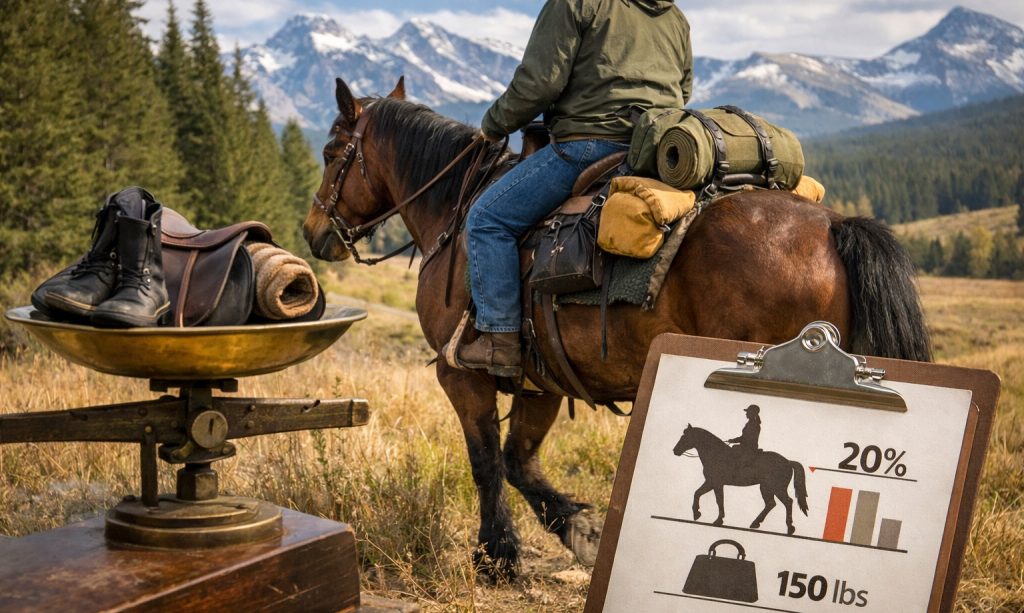
Most healthy horses can safely carry about 15–20% of their body weight, including tack.
I’ve worked with riders, packers, and vets for years, and I’ll walk you through exactly how much can a horse carry. This guide explains limits, safe practices, calculations, and real-world examples. You’ll learn to judge load for different breeds, ages, and activities, and leave with clear, practical rules you can apply today.

Source: youtube.com
How weight limits are defined and why they matter
When people ask how much can a horse carry, they usually mean the combined weight of rider, tack, and cargo. Experts often use a percentage of the horse’s body weight as a rule of thumb. Most safe guidelines fall between 10% and 20% for general riding, with 15–20% used for fit, conditioned horses.
Carrying too much weight raises the risk of injury, poor gait, and long-term back problems. Load affects balance, heart rate, and recovery time. Knowing how much can a horse carry helps prevent harm and improves performance.
Key factors that determine how much a horse can carry
Several elements change the answer to how much can a horse carry. Evaluate each before loading.
- Horse size and breed. Larger breeds usually carry more weight. Draft horses handle heavier loads than ponies.
- Fitness and conditioning. A fit, trained horse tolerates higher loads. Unfit horses need lower limits.
- Age and health. Young, growing, or senior horses should carry less. Back or joint problems reduce capacity.
- Terrain and pace. Steep or rough trails increase strain. Fast gaits need lighter loads than walking.
- Saddle fit and tack. Poorly fitting tack concentrates pressure and lowers safe carrying weight.
- Rider skill and balance. A balanced rider is easier for a horse to carry than a heavy, unbalanced rider.
By checking these factors, you can make a better decision about how much can a horse carry on any given day.
Common rules and practical weight limits
Here are practical guidelines many trainers and vets use when answering how much can a horse carry.
- 10% of body weight for unconditioned, young, or older horses, or hard terrain.
- 15% as a conservative, general guideline for most leisure riding.
- 20% for fit, conditioned horses on good footing and trained for weight work.
- 25–30% rarely, for short periods with well-conditioned pack or draft horses. Use caution.
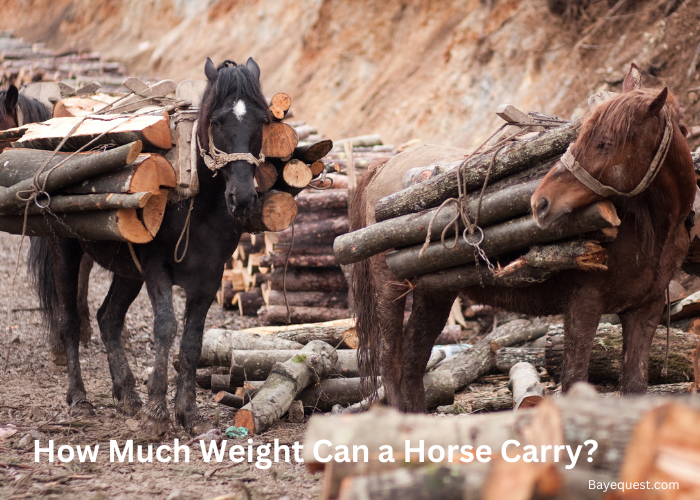
Example: A 1,000-pound horse carrying rider, saddle, and gear at 20% equals 200 pounds. Adjust down for poor fitness or rough trails.
Source: bayequest.com
How to calculate load step by step
You can calculate how much can a horse carry with a few simple steps.
- Weigh the horse or estimate using reliable methods. Record the body weight.
- Add rider weight plus saddle and tack weight. Include clothing and boots.
- Add any cargo or equipment weight.
- Compare total load to percentage limits (10–20%). Reduce if conditions are harsh.
Quick formula: Safe load = Horse weight × chosen percentage (0.10–0.20). Always err on the side of less for safety.
Pack horses, riding horses, and draft horses—differences explained
Different uses change how much can a horse carry.
- Riding horses
- Usually follow the 10–20% guideline. Endurance riding favors lower limits.
- Pack horses
- Trained pack animals can carry higher percentages for gear, often near 20% for repeated work.
- Draft horses
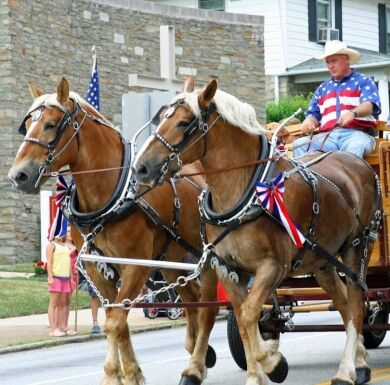
- Built to pull and carry heavy loads. They tolerate more weight but still benefit from care and correct fit.
Choosing the right type of horse for the task is as important as knowing how much can a horse carry.
Source: horserookie.com
Signs a horse is carrying too much
Watch your horse closely. Early signs that you have exceeded how much a horse can carry include:
- Short, choppy strides and reluctance to move.
- Excessive sweating or heavy breathing long after rest.
- Soreness along the back or girth area when touched.
- Change in attitude or refusal to pick up speed.
Stop, remove weight, and reassess load and tack fit if you see these signs. Prompt action prevents lasting injury.
Saddle fit, tack choices, and gear tips
Good gear increases how much can a horse carry safely. Focus on fit and distribution.
- Use a saddle that matches the horse’s back shape and width.
- Add saddle pads or therapeutic padding for pressure relief.
- Spread weight evenly in pack panniers. Avoid single-point pressure.
- Check stirrup length and rider position to reduce concentrated load.
A well-fitted setup reduces damage and increases comfort for both horse and rider.

Source: reddit.com
Training, conditioning, and gradual loading
Conditioning increases how much can a horse carry over time. Follow a slow, steady plan.
- Start light and add small weight increments every few weeks.
- Build cardiovascular fitness with hills and longer walks.
- Include strength work: transitions, hill work, and lateral exercises.
- Monitor recovery: pulse, respiration, and behavior after work.
I once conditioned a 14-hand mare for pack work. We increased load by 5 pounds every two weeks. The gradual plan kept her sound and confident.
Health checks, vet input, and testing methods
Always consult your vet when determining how much can a horse carry, especially for high loads or clinical concerns.
- Have a vet examine the back, saddle area, and joints.
- Use professional saddle-fitting services if possible.
- Consider conditioning tests: short loaded trials with rest and observation.
- Use objective measures like recovery heart rate to gauge readiness.
Veterinary input adds safety and authority to your decisions.
Real-world examples and scenarios
Concrete examples make the concept clear and usable.
- Trail riding: A 900-pound horse carrying a 140-pound rider plus 30-pound tack = 170/900 = 19% — acceptable on easy trails.
- Endurance: Lower the load to 10–12% to reduce fatigue during long events.
- Packing: A 1,100-pound mule carrying 200 pounds of gear on steady terrain = 18% — suitable with proper conditioning.
- Young horse: Cut recommended loads by half until maturity and training are complete.
These examples show how context changes how much can a horse carry.
Personal tips, mistakes to avoid, and lessons learned
From years of hands-on work, here’s honest advice about how much can a horse carry.
- Tip: Always weigh tack and pack items. Small items add up fast.
- Mistake to avoid: Relying on guestimates of rider or gear weight. Scale everything.
- Lesson learned: A calm, balanced rider matters more than a few pounds of extra gear.
- Practical habit: Keep a portable scale on long trips to verify gear weight.
These small steps improve safety and horse comfort.
Frequently Asked Questions of how much can a horse carry
How much weight can a pony carry compared to a horse?
Ponies generally carry a smaller absolute load due to lower body weight; use the same percentage rules but scale to their smaller mass. For many ponies, 10–15% is a safe target.
Can older horses carry the same weight as younger adults?
Older horses often need lighter loads because of joint wear and reduced recovery. Reduce load and consult a vet before increasing work for seniors.
Does rider skill affect how much a horse can carry?
Yes. A balanced, skilled rider distributes weight better and reduces strain, effectively allowing the horse to carry closer to the upper end of safe limits.
Is it safe to carry heavy loads on steep mountain trails?
No. Steep, rocky terrain increases effort and injury risk; reduce loads well below typical percentages for safety. Walk slowly and avoid sudden moves.
How can I test if my saddle fits before loading my horse?
Perform a saddle fit check with the horse standing and moving: look for even contact, no pinching, and watch the horse’s reaction. Professional fitting is best for heavy or repeated loads.
Conclusion
Knowing how much can a horse carry protects the animal and improves performance. Use percentage rules, check saddle fit, consider terrain and conditioning, and consult a vet when needed. Start light, ramp up slowly, and watch for signs of stress.
Take action today: weigh your gear, measure your horse, and adjust loads using the rules here. Share your experiences or questions in the comments to help others learn and keep horses safe.