
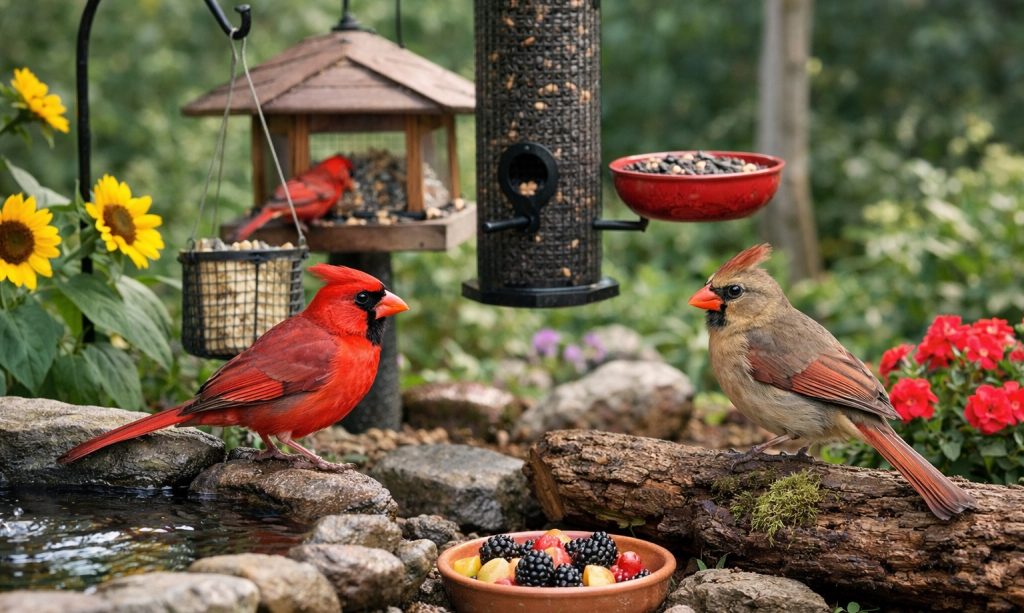
Provide seeds, shelter, water, and native plants to attract cardinals to your yard.
As a lifelong bird lover and field observer, I’ve guided many gardeners and neighbors on how to attract cardinals birds reliably and ethically. This article draws on field experience, backyard trials, and avian behavior knowledge to give clear, actionable steps you can use today. Read on to learn specific foods, feeder types, landscape plans, timing tips, and common mistakes to avoid so you can welcome bright, musical cardinals to your yard year-round.
Understanding cardinals and why they visit yards
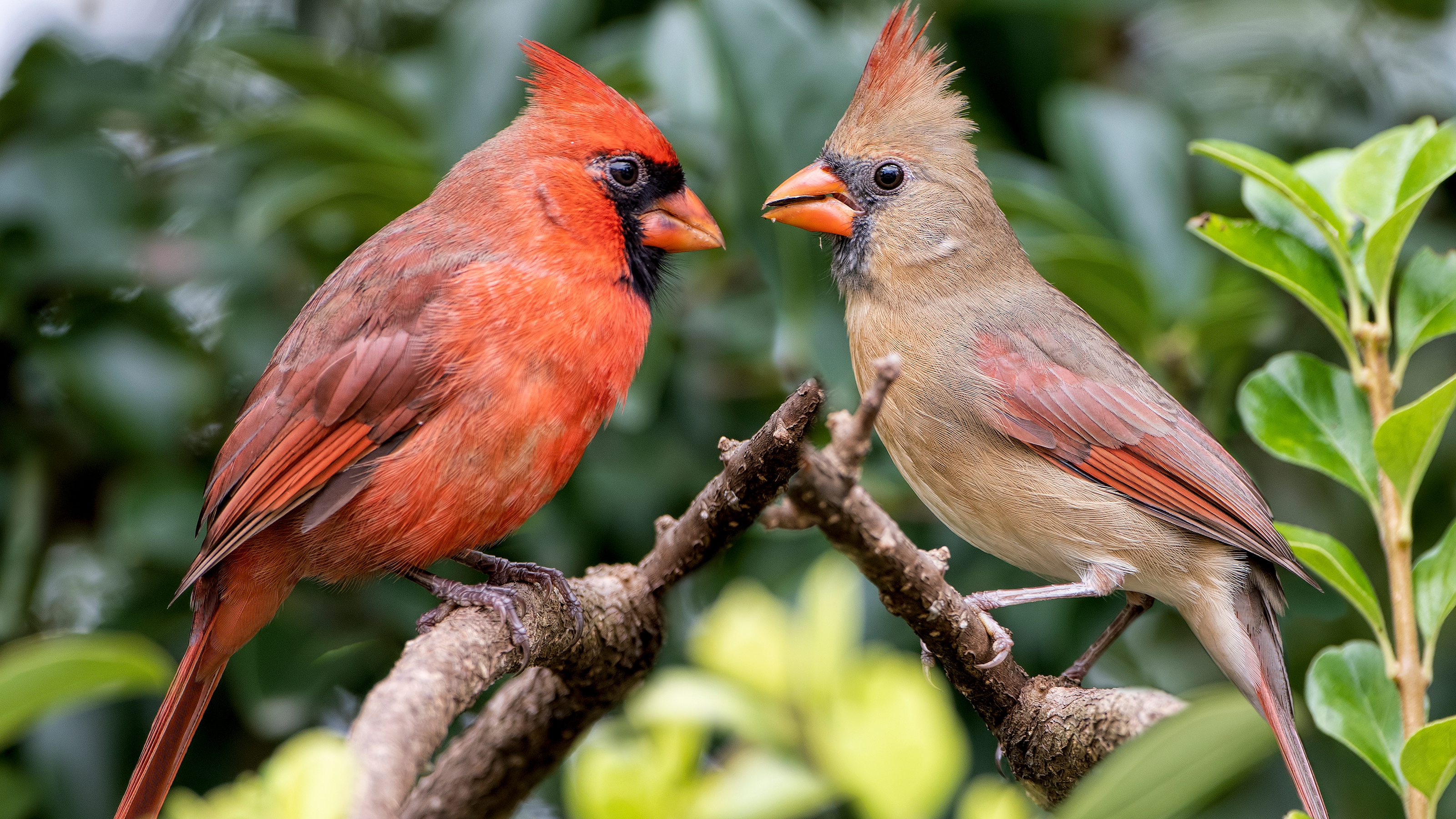
Cardinals are medium-sized songbirds known for their bright red males and warm brown females. They prefer dense shrubs, open understory, and accessible seed sources. Learning their habits is the first step in mastering how to attract cardinals birds.
Why cardinals come to yards:
- Food is the main draw. Seeds and fruits power their daily energy.
- Shelter matters. Dense shrubs and tangled branches offer safety from predators.
- Water attracts them for drinking and bathing.
How to attract cardinals birds hinges on matching these needs. Provide steady food, reliable water, and layered shelter to create a welcoming habitat.
Quick user questions about cardinal behavior
How can feeding affect cardinal presence?
Feeding regularly creates a dependable food source that encourages cardinals to return and set up territory.
Do cardinals use nest boxes?
Cardinals rarely use nest boxes. They prefer dense shrub cover and low, well-hidden nests.
When are cardinals most visible?
Cardinals are active year-round, but are easiest to spot during breeding season in spring when males sing and display.
 Source: gardeningknowhow.com
Food and feeders that work best
Food choice is critical to how to attract cardinals birds. Offer seeds and fruit they prefer. Keep offerings clean and consistent.
Best foods for cardinals:
- Black-oil sunflower seeds — top preference for energy and ease of handling.
- Safflower seeds — less attractive to some competitors and favored by cardinals.
- Shelled peanuts and peanut hearts — high-energy treat, good in cold months.
- Cracked corn and mixed bird seed — fine as a supplement, but not a sole staple.
- Fresh fruit — berries, chopped apple, and raisins attract seasonal interest.
Feeder types that work:
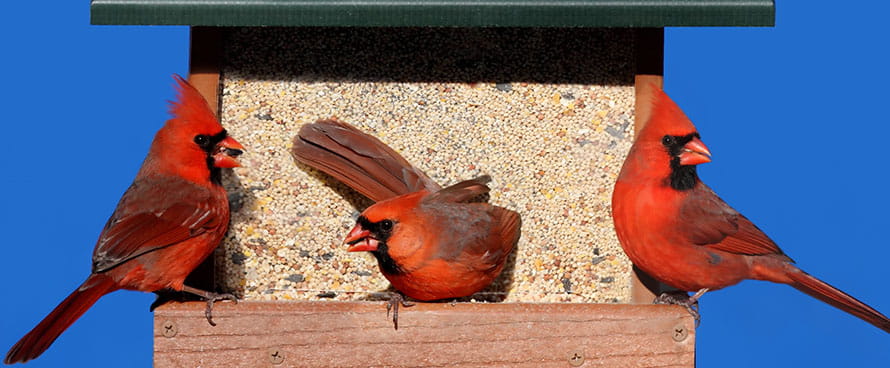
- Platform feeders — cardinals are ground-feeding adapted birds and love flat trays.
- Hopper feeders — offer protection and an easy perch.
- Large-seeded tube feeders with wider perches — allow cardinals to cling while eating.
Placement and maintenance:
- Place feeders 5–10 feet from cover so cardinals feel safe and can dash to shelter.
- Keep feeders 3–6 feet off the ground for comfort and predator avoidance.
- Clean feeders every two weeks to reduce disease risk.
Keeping consistent food year-round dramatically increases success in how to attract cardinals birds.
Water: bathing, drinking, and year-round supply
Water is as important as food for how to attract cardinals birds. They bathe often and need reliable drinking sources.
Effective water features:
- Low, shallow bird baths with gently sloping sides for easy access.
- Moving water like drippers, misters, or small fountains to attract attention.
- Heated baths in winter to prevent freezing and keep water available.
Placement tips:
- Situate water near cover but visible enough to lure birds.
- Keep water clean and change it frequently to prevent algae and mosquitoes.
A steady, clean water supply makes your yard a stopping point for cardinals.
Shelter, nesting, and safe habitat
Creating shelter is essential for how to attract cardinals birds. They nest in dense shrubs and low trees and prefer areas with layered vegetation.
Ideal shelter features:
- Dense evergreen or deciduous shrubs 3–10 feet tall for nesting and cover.
- Thickets and brush piles for winter shelter and predator refuge.
- Native shrubs that produce berries for seasonal food.
Plant recommendations:
- Dogwood — supports nesting and berries for fall/winter.
- Winterberry and holly — provide winter fruit and cover.
- Viburnum, serviceberry, and native honeysuckle — good for fruit and structure.
Nesting tips: - Avoid trimming shrubs during spring and early summer to prevent nest disturbance.
- Leave natural materials like twigs and grasses available for nest construction.
Providing layered cover and nesting-friendly shrubs directly supports how to attract cardinals birds to breed on your property.
:strip_icc()/Attract-Cardinals-e32e108d16884246a8ca3a79b7bb4ce3.jpg) Source: bhg.com
Source: bhg.com
Landscaping strategies to draw cardinals
A yard designed with cardinals in mind will encourage visits all year. Landscaping decisions are a long-term investment in bird presence.
Design principles:
- Use a mix of canopy trees, understory shrubs, and ground cover.
- Plant fruiting natives for seasonal food sources.
- Create edges between lawn and shrub beds where cardinals like to forage.
Seasonal planning:
- Spring and summer: emphasize dense shrubs for nesting.
- Fall and winter: ensure fruiting plants are left standing for food.
- Year-round: avoid pesticides and maintain native plant diversity.
These landscaping steps show gardeners exactly how to attract cardinals birds through habitat design and plant selection.
Timing, behavior, and increasing visits
Knowing cardinal behavior helps you time actions for best results. Cardinals defend territories, sing from exposed perches, and are resident birds in many regions.
Timing tips:
- Begin feeding before winter to establish regular visits.
- Offer nesting materials in early spring — natural fibers and small twigs help.
- Reduce yard disturbances during breeding season (April to July).
Behavior notes:
- Male cardinals sing to defend territory and attract mates; a singing male nearby signals a successful habitat.
- Pairs stay together through much of the year; attracting one can bring a mate.
Use behavior knowledge to fine-tune your approach to how to attract cardinals birds and maintain steady visits.
Common mistakes and how to fix them
Avoiding errors speeds success in how to attract cardinals birds. Small missteps can keep cardinals away.
Frequent mistakes:
- Offering only mixed seed blends low in sunflower may not attract cardinals.
- Placing feeders too far from cover makes birds feel exposed.
- Using pesticides reduces insect food and pollinators that feed chicks.
Fixes and best practices:
- Prioritize black-oil sunflower and safflower seed.
- Move feeders within 5–10 feet of shrubs.
- Use integrated pest management and native plants to support insects.
Correcting these issues usually produces rapid improvements in cardinal visits.
Personal experience and tested tips
I started a small bird-friendly plot in my suburban yard eight years ago. I used a platform feeder stocked with black-oil sunflower, added a heated bath, and planted two native hollies and a viburnum hedge. Within one season cardinals began visiting daily. The next spring a pair nested in the viburnum.
Key lessons learned:
- Consistency matters more than quantity when learning how to attract cardinals birds.
- Keep water and food steady through seasons to maintain territories.
- Be patient — habitat changes can take months to pay off.
Avoid rushing or changing setups frequently. A stable habitat is what brings cardinals back year after year.
 Source: wildaboutbirds.com
Practical checklist: first 30 days to attract cardinals
Follow this step-by-step plan if you want fast results on how to attract cardinals birds.
Week 1
- Install a platform or hopper feeder near shrubs.
- Start with black-oil sunflower seeds.
Week 2 - Add a low bird bath or dripper near the feeder.
- Plant one or two berry-producing shrubs if possible.
Week 3–4 - Keep feeders full and water clean daily.
- Minimize yard disturbance and avoid pruning nesting areas.
This simple checklist organizes actions and builds momentum toward a cardinal-friendly yard.
Conservation and ethical tips
Attracting cardinals is rewarding and carries responsibilities. Ethical practices protect birds and the environment.
Best practices:
- Feed year-round to prevent sudden food loss during shortages.
- Regularly clean feeders and baths to reduce disease spread.
- Use native plants and avoid pesticides to support a healthy ecosystem.
Being ethical increases success in how to attract cardinals birds while protecting local wildlife.
Frequently Asked Questions of how to attract cardinals birds
How often should I refill feeders to attract cardinals?
Refill feeders as needed to keep them consistently stocked, ideally every few days in high-use periods and weekly otherwise.
Do cardinals eat suet or nectar?
Cardinals rarely eat nectar. They may take suet, especially in winter when high-energy foods are needed.
How close should feeders be to shrubs for cardinals?
Place feeders 5–10 feet from dense shrubs so cardinals can quickly reach cover after feeding.
Will cardinals eat cracked corn or millet?
Cardinals will eat cracked corn, but black-oil sunflower is a stronger attractant. Millet is less preferred by cardinals.
Can I attract cardinals if I have cats?
Cats reduce cardinal visits. Keep cats indoors or supervise them to make your yard safer for cardinals.
Are cardinals territorial around feeders?
Yes. Cardinals can be territorial, especially during breeding season. Providing multiple feeding spots reduces conflict.
When do cardinals typically nest?
Cardinals generally nest in spring and early summer, with peak nesting from April through July.
Conclusion
Attracting cardinals is a practical mix of food, water, shelter, and patient care. Start with black-oil sunflower at a platform feeder, add a clean water source, plant native berry shrubs, and keep disturbance low during nesting season. These steps give you the highest chance to welcome cardinals and enjoy their color and song.
Take action this week: set up one feeder, add water, and plant at least one native shrub. Track changes and share your results to refine your approach. If you enjoyed this guide, subscribe or leave a comment with your own cardinal sightings and tips.