
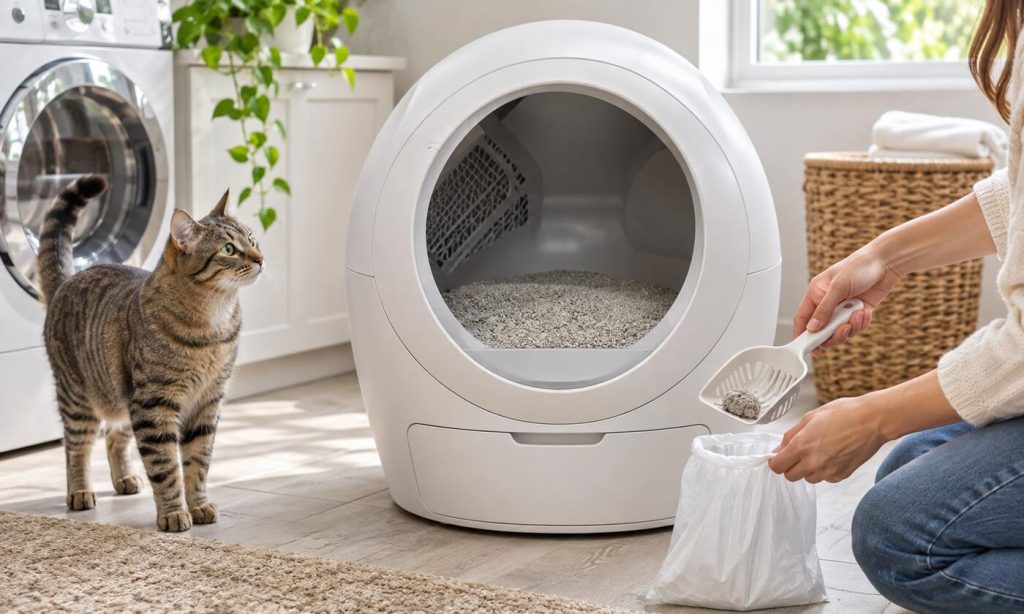
Clumping litter makes a rotating self-cleaning box easier to maintain, but the litter itself is not something you wash and reuse. Clean care means removing waste, maintaining a suitable fill level, and washing removable parts when the machine is powered down. If you want to keep clumping cat litter in a Litter-Robot in good condition, the first rule is to separate everyday waste handling from periodic equipment cleaning. That distinction protects both your cat and the device.
Choosing clumping cat litter for Litter-Robot is only part of the routine. You also need to check clump consistency, clean sensors or accessible surfaces according to the manual, empty the waste drawer, and watch for changes in bathroom habits. This practical guide covers safe daily upkeep, deep cleaning, odor control, and common mistakes. Model-specific directions always take precedence over general advice.
Understand what cleaning clumping litter actually means
Used clumping litter should be removed, not washed, dried, and returned to the box. Urine forms clumps that trap waste, while feces must also leave the litter area. In an automatic unit, the rotating mechanism usually separates waste into a drawer, but it may miss fragments or leave residue. Check the globe or interior after cycles and remove any visible waste safely. Never reach into a moving device. Pause operation according to the manual before inspecting the inside. A clean litter surface is a result of removing waste promptly, not disguising odor with fragrance.
Clumps that crumble or smear can stick to surfaces and create more maintenance. Watch how the litter behaves after a normal cycle instead of judging it only when first poured. If you notice loose wet fragments, check whether the litter depth, particle type, and cycle timing are compatible with your specific unit. Avoid adding water, deodorizing chemicals, or household powders to used litter. These may change clumping behavior or irritate a cat. For general cleaning schedules, how often to scoop and replace cat litter explains the difference between topping up and discarding used material.
Keep a simple daily and weekly routine
Check the waste drawer at least daily, especially in a home with several cats. Empty it when required rather than letting bags overflow or clumps press against moving components. Replace the liner as directed, tie the waste bag securely, and wash your hands afterward. Inspect the remaining litter for wet patches, odor, and excessive dust. Add only enough fresh litter to stay within your model’s indicated fill range. Too little material can leave wet areas exposed. Too much may interfere with the mechanism or lead to wasted litter.
Once or twice a week, inspect accessible edges, steps, mats, and the surrounding floor. Remove tracked grains and dried fragments without forcing tools against delicate components. Check the device for unusual noises, incomplete cycles, blocked openings, and loose waste near the drawer. FYI, an automatic box is a labor-saving tool, not an exemption from inspecting your cat’s bathroom. A regular look can also reveal unexpected changes in urine clumps or stool. The broader litter box cleaning and replacement guide can help you set a consistent household schedule.
Deep-clean the device without damaging it
Before deep cleaning, switch off and unplug the unit according to its owner’s manual. Remove all cats from the area and secure any moving parts. Empty used litter and dispose of it appropriately. Disassemble only the removable pieces approved for your model. Wash suitable parts with mild soap and water, rinse thoroughly, and let them dry completely before reassembly. Do not immerse the powered base, flood electronic compartments, or spray cleaner directly onto sensors. Avoid harsh disinfectants or heavily scented cleaners that could leave residue where a cat walks or grooms.
Check the manufacturer’s instructions before cleaning the globe, seals, contacts, or waste drawer. Different generations have different components, and advice for one model may harm another. Use a soft cloth rather than abrasive pads on sensitive surfaces. Inspect for cracks, rough edges, torn liners, and odors that persist after washing. If parts need replacement, obtain guidance for your exact unit rather than improvising a repair near moving machinery. Refill only with clean, compatible litter after everything is dry, then watch a full cycle from a safe distance before allowing normal unattended use.
Balance odor control with your cat’s preferences
Strong fragrance may be pleasant to people but unpleasant to cats. Cornell’s feline health guidance notes that many cats prefer unscented litter and that waste should be removed routinely. A clean waste drawer, intact seals, a dry globe, and adequate ventilation can be more helpful than masking smells. Avoid combining multiple fragranced additives. If the box smells strongly despite cleaning, investigate whether clumps are breaking, the drawer is overflowing, or moisture has collected beneath the device. Do not use household air fresheners inside the litter chamber.
Keep the box in a quiet, accessible location where the cat can approach safely. Some animals dislike enclosed spaces, motor noises, or unexpected movement. Provide a familiar conventional box during transitions and when the machine is offline. This is especially important for kittens, seniors, and cats with mobility difficulties. The guide to reducing litter box odor discusses hygiene without strong scent masking. If your cat suddenly avoids the box or strains to urinate, contact a veterinarian promptly. Equipment problems and health problems are not interchangeable explanations.
Solve clump residue and tracking problems safely
Sticky clumps may indicate incompatible litter, insufficient depth, or a cycle schedule that runs before the clump has firmed. Start by reading the model’s recommended litter type and maintenance instructions. Observe whether the issue occurs after one cat, during high-volume use, or only when the waste drawer is nearly full. Do not experiment with settings that defeat safety sensors. A clean, stable unit with an appropriate location is easier to troubleshoot than one that is overfilled or placed on an uneven floor. If the device repeatedly jams, pause use and seek qualified support.
Tracking is a separate concern from clump strength. Grains may escape as a cat exits, particularly with fine litter or an energetic digging style. Keep the surrounding floor clean and use a stable, easy-to-clean mat if your cat accepts one. Replace litter when it becomes generally dirty, damp, or unable to form consistent clumps. No material lasts indefinitely. The article on litter tracking considerations offers background on floor mess. IMO, a modest daily check is easier than fixing a hidden buildup after several missed cycles.
Frequently Asked Questions
Automatic litter systems still require regular cleaning, waste disposal, and observation. These answers address situations that often confuse new owners, including whether litter can be reused and how to protect electronics.
Follow your own device’s instructions whenever a general recommendation differs. Cats vary in how they tolerate noise, movement, texture, and scent. Keep an alternative litter box available during repairs.
Can I wash used clumping litter and reuse it?
No. Remove urine clumps and feces, then replace contaminated litter as needed. Washing does not make used litter reliably clean or suitable for reuse.
Do I need to scoop if the machine cycles automatically?
Inspect the litter daily. Remove any waste the mechanism misses, but pause the machine safely before reaching inside. Do not interfere with active movement.
Can I spray disinfectant into the globe?
Avoid direct sprays on sensors, electronics, or surfaces not approved for treatment. Follow the owner’s manual and use a mild compatible cleaner where permitted.
Why does litter stick to the interior?
Possible causes include poor clump formation, incorrect litter depth, moisture, or unsuitable cycle timing. Check compatibility and maintenance before changing settings.
When should I call the veterinarian about litter changes?
Seek advice for straining, blood in urine, repeated trips without output, accidents, or sudden avoidance. Inability to urinate is an emergency, particularly for male cats.
Final Words
Keeping a self-cleaning box hygienic means removing waste, topping up appropriately, and cleaning removable parts safely. Never wash and reuse clumping cat litter. Inspect the drawer and interior each day, unplug the equipment before deep cleaning, and follow model-specific directions. A reliable routine helps protect the machine while letting you notice changes in your cat’s health and comfort.
When using clumping cat litter for Litter-Robot, remember that the goal is a clean, cat-friendly bathroom, not a perfectly automated chore. Keep a backup box ready, respond quickly to odors or jams, and use the full litter box cleaning guide for routine planning.









