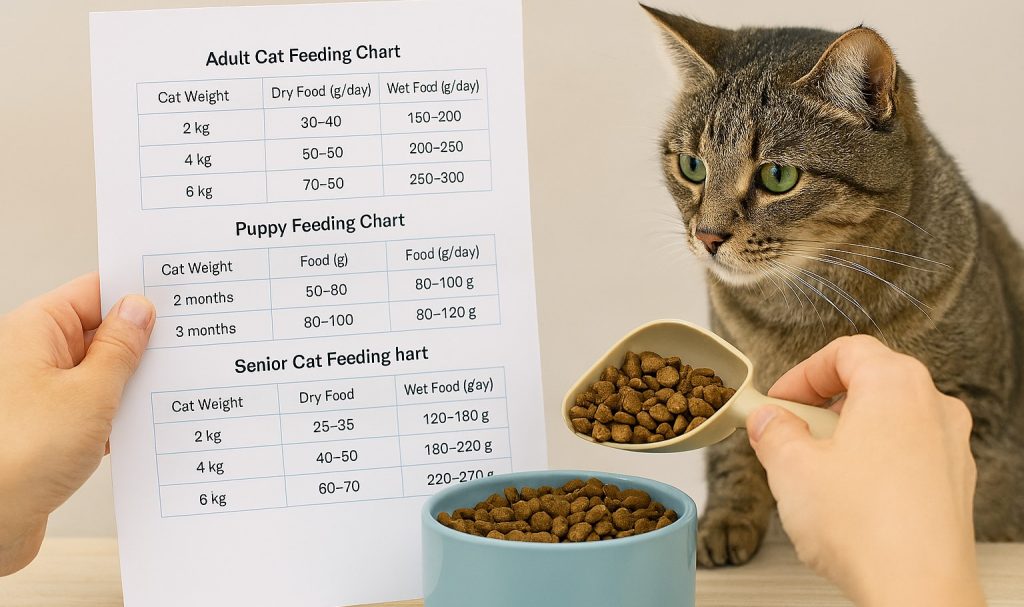
How to estimate daily portions of cat food bowls for cats with whisker fatigue starts with two separate questions. How many calories does your cat need? And what feeding setup makes eating comfortable? A shallow, wide dish may be easier for some cats, but dish shape does not determine how much food belongs in a meal. The phrase “whisker fatigue” is common online, yet evidence for it as a distinct medical condition is limited. Treat food refusal or discomfort as a clue to investigate, not as a diagnosis.
This guide explains how to estimate daily portions of cat food bowls for cats with whisker fatigue using a calorie target, the food’s energy label, and a simple kitchen scale. It also discusses cat food bowls for whisker fatigue as a bowl-design topic rather than a medical cure.
Separate feeding comfort from calorie needs
A cat’s whiskers are sensitive touch organs. Some cats appear to prefer bowls with wider openings or lower sides, but that observation alone does not prove that touching a bowl causes pain. Cats may refuse a particular dish because of odor, noise, depth, location, stress, food freshness, or illness. Observe your own cat without turning every feeding hesitation into whisker fatigue. A broad, easy-to-clean plate is a reasonable comfort experiment if your cat eats normally and has no signs of disease.
Daily calories depend on ideal body condition, age, reproductive status, activity, and medical conditions. The number of dishes, the dish diameter, and its depth do not alter the calories a cat needs. How to estimate daily portions of cat food bowls for cats with whisker fatigue therefore begins with nutritional planning. If your cat is losing weight, seems hungry despite eating, or avoids meals, arrange a veterinary assessment instead of simply enlarging the bowl or increasing the portion.
Establish a daily calorie target
For a healthy adult cat, ask your veterinarian for an appropriate calorie target based on ideal weight and body condition. A general calorie chart can provide a starting range, not a personal prescription. The World Small Animal Veterinary Association lists approximately 240–270 kilocalories daily for an average healthy adult cat weighing about 10 pounds and in ideal condition. Some cats need less or more, particularly if weight management, pregnancy, growth, or illness changes energy demands. Recheck the plan as weight and condition change.
Include all edible calories: dry food, wet food, treats, toppers, and food used to give medicine. A cat that eats 20 calories in treats does not have those calories available again for its normal meal. Avoid automatically cutting a sick cat’s food to reach a calculated target. Kittens, pregnant or nursing cats, and cats with diabetes or kidney disease need individualized advice. A separate daily cat-food portion guide gives more general context; here the focus is measuring accurately despite a wide or shallow feeding dish.
Convert calories into grams of food
Read the exact food package for kilocalories per kilogram, gram, can, or cup. Convert units before calculating. If dry food contains 3,600 kilocalories per kilogram, it contains 3.6 kilocalories per gram. Suppose your veterinarian’s target is 220 calories daily and all of it comes from that food. Divide 220 by 3.6 to obtain roughly 61 grams per day. This is only a worked arithmetic example, not a recommendation to feed every cat 220 calories. Different foods vary considerably in energy density.
For wet food, use the calories per can or pouch, then multiply by the fraction fed. If a can contains 90 calories, half a can provides about 45 calories. Subtract that amount from the daily budget before calculating the remaining dry-food grams. Use a kitchen scale when possible because kibble pieces and scoop packing make cup measurements inconsistent. How to estimate daily portions of cat food bowls for cats with whisker fatigue becomes simpler when you measure food by weight before transferring it to the chosen bowl. The dish is a serving vessel, not a measuring unit.
Split portions across meals without overfeeding
Once you know the daily amount, choose a realistic feeding schedule. For example, a cat allotted 60 grams daily might receive 20 grams at each of three meals. Another cat may prefer more frequent, smaller servings. Keep the daily total stable while adjusting meal frequency to your household and your cat’s needs. If your veterinarian recommends multiple small meals for a medical condition, follow that instruction. Never assume that a dish needs to be filled to the edge to be a complete serving.
Weigh the empty dish or use the scale’s tare function. Add the planned amount, then record leftovers. If your cat leaves food, do not immediately replace it with a full extra serving. First assess whether appetite is changing, the food has spoiled, or the dish placement is stressful. For wet food, discard uneaten food according to safe handling guidance rather than leaving it out indefinitely. How to estimate daily portions of cat food bowls for cats with whisker fatigue requires measuring the amount offered and, when useful, the amount actually eaten.
Set up a comfortable and hygienic feeding area
Offer a clean, stable dish in a quiet location away from the litter box. A shallow, broad dish is a practical option for cats that seem reluctant to put their faces into a narrow bowl. It should not tip when the cat eats. Wash food-contact surfaces regularly and avoid chipped finishes that are hard to clean. If you are evaluating materials and cleaning routines, the site’s guide to choosing a stainless steel cat food bowl covers maintenance questions. Comfort improvements are worthwhile even when the underlying whisker-fatigue theory remains uncertain.
Use the same measured meal in two different clean dishes on separate occasions while keeping the food and timing consistent. Observe whether your cat eats at a more normal pace, spills less, or seems more willing to approach. Do not interpret one meal as proof of a diagnosis. A cat may eat less because of dental pain, nausea, stress, or another illness. For wet meals, a low-profile bowl can also make it easier to spread food in a thin layer. Read about cat bowls for wet food for practical dish-shape considerations.
Monitor weight, appetite and warning signs
Check weight on a consistent scale and ask your veterinarian to assess body condition periodically. Do not judge adequacy only by whether the bowl is emptied. Some cats consistently finish meals while gaining excess weight; others leave food despite an appropriate daily allotment. Record daily intake, weight trends, vomiting, stools, and changes in behavior. Adjust the calorie target with veterinary guidance based on these observations, rather than reacting to a single hungry-looking meal. A small change in energy density can make a large difference over several weeks.
Seek veterinary advice promptly if your cat stops eating, suddenly eats much less, drops weight, drools, paws at the mouth, or seems painful when chewing. These problems should not be dismissed as whisker fatigue. How to estimate daily portions of cat food bowls for cats with whisker fatigue should improve measurement accuracy, not mask disease. When uncertainty persists, bring the food label, your portion record, and a photo of the feeding setup to the appointment. This helps distinguish nutrition planning from possible medical problems.
Frequently Asked Questions
The most common mistakes involve measuring by bowl fullness or assuming a wide plate automatically solves appetite problems. Neither approach accounts for calories, individual needs, or possible illness. Use the answers below to keep portioning consistent.
Keep a written calculation and revisit it when you change foods. A different recipe may contain a different number of calories per gram even when the package size and kibble shape appear similar.
Does a shallow bowl change how many calories my cat needs?
No. Bowl shape affects serving comfort and access, not energy requirements. Portion size should be based on the cat and the food’s calorie density.
Is whisker fatigue a confirmed medical diagnosis?
The term is widely used, but strong clinical evidence for a distinct disorder is limited. Persistent food avoidance needs medical evaluation.
Can I measure cat food by filling the bowl halfway?
That method is unreliable. Bowls differ in shape and foods differ in density. Weigh grams or use accurately measured servings.
What if I feed both wet and dry food?
Calculate calories from both foods and from treats. Subtract wet-food calories from the daily target before determining dry-food grams.
Should I immediately change portions when my cat eats less?
First check for illness, food changes, stress, or dental discomfort. Contact a veterinarian promptly for substantial or persistent appetite loss.
Final Words
How to estimate daily portions of cat food bowls for cats with whisker fatigue is best handled with a calorie budget, food-label arithmetic, and a kitchen scale. A broad shallow dish can be a comfortable serving option, but it does not justify larger meals. Measure once, divide across scheduled feedings, and monitor what your cat actually eats. Ask a veterinarian to help set the target for your individual cat.
A guide to cat food bowls for whisker fatigue may help with dish considerations, but feeding discomfort should not be self-diagnosed. How to estimate daily portions of cat food bowls for cats with whisker fatigue remains a nutrition task first. If appetite, weight, or chewing behavior changes, seek medical advice promptly.