
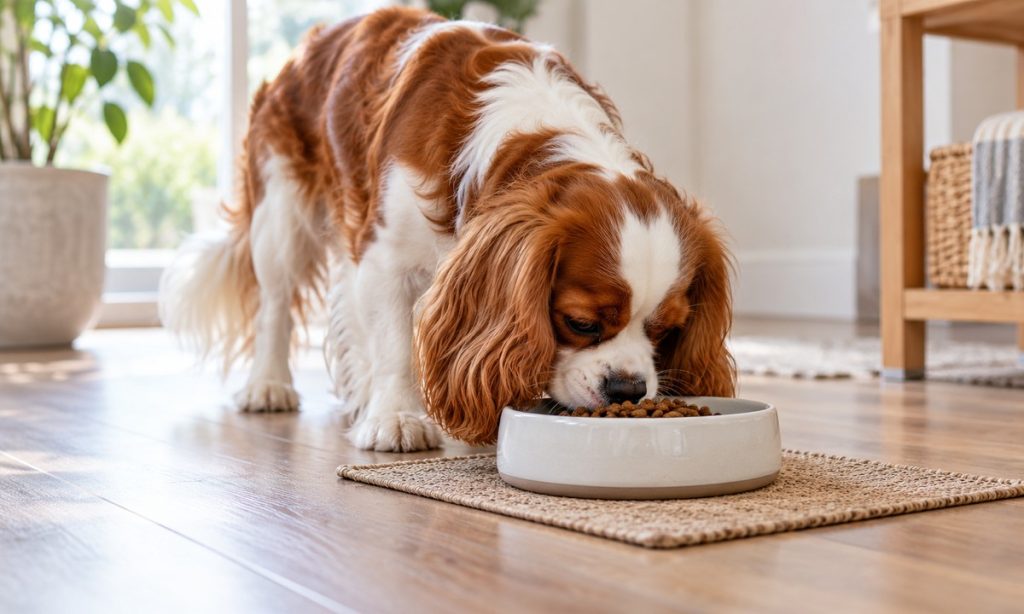
A peaceful meal can become complicated when a dog eats too quickly, walks away, guards the bowl, struggles to reach food, or feels unsettled by noise. How to make mealtimes easier starts with noticing what is getting in the way instead of changing everything at once. A predictable schedule, comfortable feeding spot, suitable bowl setup, measured portions, and calm household routine can reduce friction. If your search includes dog bowls for Cavalier King Charles Spaniels, remember that bowl shape is only one part of a comfortable meal. The dog’s posture, appetite, health, and behavior matter too. This guide offers practical steps and explains when a mealtime problem calls for veterinary advice. Small adjustments to the setting, timing, and feeding setup can make a noticeable difference while keeping the dog’s comfort and health in view.
Start by identifying the mealtime problem
Watch a few meals before making changes. Does your dog seem hungry but leave food behind? Is the dog gulping, coughing, dropping kibble, turning away, or looking uncomfortable? Does another pet approach the bowl? Does the dog eat better when the room is quiet? These clues can point toward different solutions. For most households, how to make mealtimes easier depends on the dog’s specific obstacle. How to make mealtimes easier is not the same for a fast eater, a nervous dog, and a dog with dental pain.
Keep a simple note of meal times, food amounts, treats, water intake, and anything unusual. Record whether the food is eaten, how long the meal takes, and any vomiting, gagging, loose stool, or behavior change. A short log gives your veterinarian useful context if the concern continues.
Create a predictable feeding routine
Feed at reasonably consistent times and in a familiar place. Dogs often settle more easily when the next meal is predictable. Follow the daily amount recommended for your dog’s age, body condition, activity, and health. Use the food label as a starting point, not a personalized prescription, and ask your veterinarian to adjust the plan when weight or medical needs change.
Measure the amount rather than estimating by eye. Divide the daily portion into the number of meals that suits your dog and household. Puppies, dogs with certain health conditions, or dogs that struggle with large meals may need a different schedule. Ask the veterinary team before increasing meal frequency or changing the total calories.
How to make mealtimes easier can include reducing unpredictable snacks. Too many treats or table scraps may reduce appetite for a complete meal or make daily calories harder to track. If training rewards are helpful, set aside part of the dog’s regular food or count treats within the daily plan.
Choose a calm, safe feeding location
Place food and water in a quiet, low-traffic area where the dog can eat without being bumped or startled. Keep the station away from busy doorways, noisy appliances, and children’s play areas. Some dogs do better with a little privacy; others prefer being near family. Let behavior guide the setup while keeping supervision appropriate.
In a multi-pet home, feed animals separately if one steals food, crowds another, or guards a bowl. Use different rooms, a gate, or another safe separation method. Do not punish growling around food; it is a warning that the dog feels threatened. A veterinarian or qualified behavior professional can help build a safer plan.
Keep cleaning products, medications, and small objects away from the feeding area. Put food away after the meal if required for the diet or household routine, and wash bowls regularly. A stable, clean surface makes the station easier to use and maintain.
Make the bowl and eating position comfortable
Choose a bowl that lets the dog reach food without pushing the muzzle into a narrow opening or chasing a light dish across the floor. A non-slip base or mat can help when a bowl slides. The bowl should be stable, easy to clean, and sized so the dog can eat without awkwardly scraping the sides.
Bowl height is individual. A raised dish is not automatically more comfortable or safer for every dog. Consider the dog’s size, posture, mobility, and veterinary history. If bending seems difficult, the dog has arthritis, or swallowing appears uncomfortable, ask the veterinarian before changing to an elevated setup. For additional guidance, see how bowl height and shape can affect a dog’s meal.
For a Cavalier King Charles Spaniel, assess the actual dog rather than relying on a breed label. A shallow, stable dish may be easier for one dog, while another eats comfortably from a standard bowl. If long ears dip into food or the dog repeatedly paws at the dish, ask a veterinarian or groomer about practical adjustments that do not restrict normal eating.
How to make mealtimes easier sometimes means changing only the bowl’s position or adding a washable mat. Make one small adjustment at a time and observe whether the dog’s posture and pace improve.
Adjust the pace without making eating stressful
If a dog gulps meals, ask your veterinarian whether slowing the pace is appropriate. A puzzle feeder or a few small portions spread across a safe, washable surface may encourage slower eating. Choose a method the dog can use without frustration, and supervise new feeding equipment. Stop if the dog chews or tries to swallow parts of it.
Avoid turning every meal into a difficult task. Some dogs become more frustrated when food is hidden or the feeder is too complicated. Start with an easy setup and increase the challenge only if the dog remains relaxed. Do not use a slow feeder to manage coughing, repeated gagging, vomiting, or trouble swallowing; those signs need veterinary assessment.
If the dog eats too slowly or stops early, do not keep adding tempting extras without understanding why. Food preference, stress, overfeeding, dental discomfort, nausea, and disease can affect appetite. How to make mealtimes easier includes recognizing when a behavior change may be a health signal.
Make special diets and medication meals manageable
A dog eating a veterinary-prescribed diet may need a gradual transition or a precise feeding plan. Follow the clinic’s instructions and ask what to do if the dog refuses the food. Do not mix in ingredients or supplements without checking first, since they may alter the plan or interfere with a medical condition.
If a medication is given with food, confirm whether it can be given with the dog’s regular meal and whether the entire dose must be eaten. Some medicines have specific food instructions. Do not hide medication in a large portion if the dog may leave some behind. Ask the veterinary team for options when medication administration becomes a struggle.
How to make mealtimes easier for a dog on a special diet can involve a consistent routine, a quiet room, and clear instructions for every family member. Keep the food bag or diet notes accessible so no one accidentally offers an unapproved snack.
When appetite changes need veterinary attention
Contact a veterinarian when a dog suddenly eats less, refuses meals, seems painful while chewing, or has a persistent change in eating habits. Prompt advice is especially important for puppies, older dogs, dogs with chronic disease, or pets taking medication. Seek urgent care if appetite loss occurs with repeated vomiting, severe lethargy, abdominal swelling, trouble breathing, collapse, or inability to keep water down.
Look for signs such as dropping food, chewing on one side, drooling, pawing at the mouth, bad breath, or reluctance to chew. Dental disease and oral pain can make eating difficult. Do not pry open the mouth if the dog is distressed. Tell the veterinarian what the dog normally eats, when the change began, and whether water intake or stool has changed.
If there is food guarding, fear, or conflict with another pet, keep people and animals safely separated during meals. Avoid reaching into the bowl or taking food away to test the dog. How to make mealtimes easier in this situation begins with preventing a bite and getting appropriate professional guidance.
A simple plan to try this week
First, keep the dog’s usual food and total daily amount stable unless a veterinarian advises otherwise. Choose a quiet location, serve at predictable times, and use a stable bowl that is easy to clean. Separate pets if needed. Then observe the dog’s posture, pace, appetite, and comfort for several meals.
Change one factor at a time. If a new bowl, schedule, or feeder makes the dog more anxious, return to the previous safe arrangement and seek advice. Keep notes rather than relying on memory. How to make mealtimes easier is a process of matching the environment to the dog while staying alert to medical signs.
Frequently Asked Questions
Should I leave my dog’s food out all day?
That depends on the dog’s health, appetite, and household. Scheduled meals make portions and appetite changes easier to monitor. Ask your veterinarian which method fits your dog.
Will a raised bowl make eating easier?
Not necessarily. Bowl height should reflect the dog’s comfort and health. Ask a veterinarian before raising the bowl if your dog has mobility, swallowing, or digestive concerns.
What can I do if my dog eats too quickly?
Ask whether a simple slow-feeding approach is suitable. Supervise new equipment and seek veterinary advice for coughing, gagging, vomiting, or difficulty swallowing.
Why does my dog suddenly avoid the bowl?
A change in appetite may relate to stress, food, oral pain, nausea, or illness. Contact your veterinarian if it persists or comes with other symptoms.
Can I add toppers to encourage my dog to eat?
Check with your veterinarian first, especially if your dog has a medical condition or follows a prescribed diet. Added foods can change calories or interfere with the plan.
Final Words
How to make mealtimes easier is usually about finding the specific obstacle: routine, noise, bowl position, speed, competition, or discomfort. Keep meals predictable, portions measured, and the feeding place calm. Make one safe change at a time and track what happens. If appetite changes suddenly or eating seems painful, contact a veterinarian. For breed-specific bowl considerations, review dog bowls for Cavalier King Charles Spaniels alongside your dog’s individual needs.









