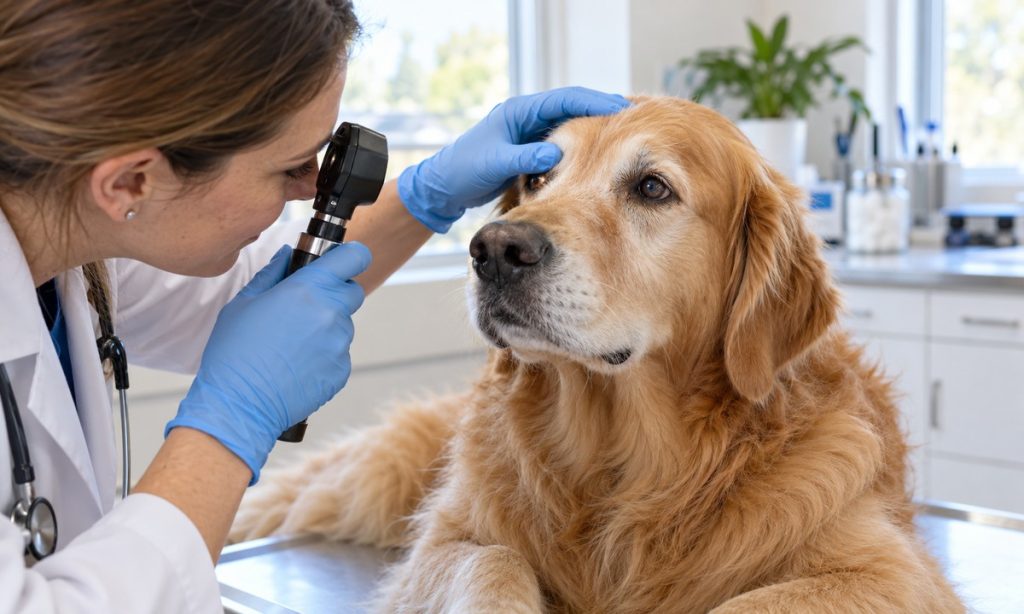
When a dog’s eye looks cloudy, color alone cannot reveal what changed or how urgent it is. The haze may sit on the cornea, lens, or fluid-filled spaces inside the eye. Each location points veterinarians toward different possibilities. How veterinarians diagnose cloudy eyes in dogs depends on the timing, symptoms, examination findings, and sometimes tests for disease elsewhere in the body. A careful exam can separate age-related lens changes from cataracts, ulcers, inflammation, glaucoma, and other conditions. If you are searching for eye drops for dogs with cloudy eyes, first find out what is causing the haze. The wrong medication can delay care or worsen some eye problems. The examination can distinguish urgent problems from age-related changes and guide whether tests or treatment are needed.
Why a cloudy appearance needs an examination
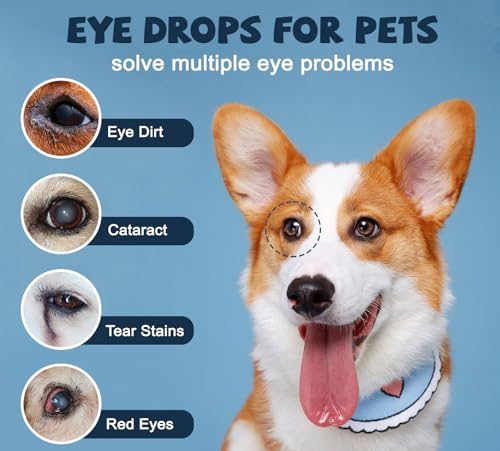
“Cloudy eye” describes an appearance, not a diagnosis. A bluish haze behind the pupil can reflect nuclear sclerosis, a common age-related lens change. A dense opacity in the lens may be a cataract. A blue-white film on the front surface can involve corneal swelling, injury, or inflammation. Glaucoma, uveitis, dry eye, infection, and other disorders may also reduce the eye’s clarity.
How veterinarians diagnose cloudy eyes in dogs starts by locating the change. The cornea is the clear outer surface; the lens sits behind the pupil. An owner’s view through a phone camera cannot reliably show which structure is involved. Even a gradual change deserves a veterinary call because early signs can be subtle and causes need different treatment.
What information the veterinarian gathers
The visit usually begins with a history. The veterinarian may ask when the cloudiness first appeared, whether one or both eyes are affected, and whether the change is getting worse. Details about squinting, tearing, discharge, rubbing, light sensitivity, vision changes, or pain can help set priorities.
Share any recent scratch, rough play, grooming, chemical exposure, illness, or new medication. Mention diabetes or other known conditions and bring a current medication list. Photos taken over several days can show change, but they do not replace an examination. How veterinarians diagnose cloudy eyes in dogs also depends on age, breed, medical history, and whether the dog can navigate familiar spaces.
The clinician may first assess general health and behavior. A painful or frightened dog may need a slower approach, another handler, or a referral setting. Do not force the eyelids open at home to prepare for the appointment.
The eye examination, step by step
External structures and vision responses
The veterinarian looks at the eyelids, lashes, tear film, conjunctiva, cornea, pupils, and symmetry of the eyes. They may check how the dog responds to movement or light and whether each pupil changes as expected. These observations help assess vision and identify obvious irritation, swelling, discharge, or injury.
How veterinarians diagnose cloudy eyes in dogs may include examining the eye with magnification and a focused light. This can help show whether haze is on the surface or deeper inside. The clinician may examine both eyes even when only one looks abnormal, because comparison can reveal subtle differences.
Staining the cornea
A fluorescein stain may be placed on the eye to look for scratches or ulcers on the corneal surface. Damaged areas retain the dye and become easier to see under suitable light. This test matters because some medications, including certain anti-inflammatory eye drops, can be unsafe when an ulcer is present. The veterinarian decides whether staining is appropriate based on the exam.
Checking tear production and eye pressure
A tear test can measure how much moisture the eye produces over a short period. The veterinarian may recommend it when dry eye is possible. Tonometry measures pressure inside the eye. Pressure that is too high can point toward glaucoma; unusually low pressure may occur with inflammation. These checks are quick, but the clinician interprets them alongside other findings.
How veterinarians diagnose cloudy eyes in dogs is not a single-test process. A normal result on one test does not rule out every eye condition. The doctor combines history, visual inspection, tear production, pressure, staining, and examination of internal structures.
Looking at the lens and the back of the eye
An ophthalmoscope or other specialized instrument helps the veterinarian examine the lens and, when visible, the retina and structures at the back of the eye. A cataract is an opacity within the lens. Nuclear sclerosis is a different age-related change; the lens becomes denser but often remains transparent enough for light to pass through. Their appearance can be difficult for owners to distinguish without an eye exam.
Sometimes the pupil is dilated with medication so the veterinarian can see more of the lens and retina. Dilation may take time and can temporarily affect the dog’s close vision or light sensitivity. The clinician will explain what to expect and whether the drops are suitable. If the cloudiness blocks the view, additional testing or referral may be needed.
How veterinarians diagnose cloudy eyes in dogs can also involve evaluating whether a lens has shifted, whether inflammation is present, or whether the retina appears abnormal. Findings may prompt a blood test or other testing for an underlying illness. Diabetes, for example, can be associated with cataracts, so the veterinarian may consider the whole dog rather than treating the eye as an isolated problem.
When bloodwork or specialist testing may help
Not every cloudy eye requires laboratory tests. If the exam suggests a systemic cause, the veterinarian may recommend bloodwork, urine testing, or imaging. The choice depends on the dog’s signs, age, history, and eye findings. Tests can help look for diabetes, infection, inflammation, or other conditions that influence treatment.
A veterinary ophthalmologist may be recommended when the diagnosis is uncertain, the eye is severely painful, vision is at risk, or treatment is complex. Specialists have additional equipment and training for detailed eye examinations and surgery decisions. How veterinarians diagnose cloudy eyes in dogs may therefore include a referral rather than a final diagnosis at the first general practice visit. For guidance on urgency, see when a dog with cloudy eyes should see a veterinarian.
What the diagnosis means for treatment
Treatment follows the cause. Some age-related lens changes need monitoring rather than medication. Cataracts may lead to a discussion about vision, underlying disease, and whether specialist evaluation is appropriate. Corneal ulcers, dry eye, infection, inflammation, and glaucoma each require a different plan. A cloudy appearance alone cannot tell an owner which approach is safe.
Do not use leftover prescriptions, human redness-relief drops, or another pet’s medication. A product that helped a prior problem may be unsuitable now. If the veterinarian prescribes drops, ask what each one does, how often to give it, how long to continue, and what side effects require a call. The article comparing cataracts with other causes of cloudy eyes explains why the location of the haze matters, but only an exam can identify an individual dog’s condition.
When to seek urgent care
Call a veterinarian promptly for any new cloudiness. Seek same-day advice if it appeared suddenly, is worsening, or comes with squinting, redness, swelling, discharge, rubbing, a visibly injured eye, or sudden vision changes. A painful eye, chemical exposure, bulging, blood, or trouble opening the eye can require emergency care. Ask the clinic how quickly your dog should be seen.
Until you receive advice, keep your dog calm and prevent rubbing if you can do so safely. Do not press on the eye or try to remove an embedded object. If a chemical entered the eye, call an emergency clinic or veterinary poison service for immediate instructions. How veterinarians diagnose cloudy eyes in dogs is safest when the examination is not delayed by home treatments. Knowing how veterinarians diagnose cloudy eyes in dogs also helps owners understand why a clinician may need several tests.
Frequently Asked Questions
Can a veterinarian diagnose a cataract by looking at a photo?
A photo may show a change, but it cannot reliably identify the affected eye structure or rule out urgent problems. An examination and, when needed, diagnostic tests are required.
Will every dog with cloudy eyes need eye drops?
No. Treatment depends on the cause. Some conditions need monitoring, while others require medication, surgery, or specialist care.
Does a cloudy eye always mean my dog is losing vision?
No. Some causes affect vision more than others. A veterinarian can assess visual responses and determine whether the opacity is limiting sight.
Why might the veterinarian test both eyes?
Comparing both eyes can reveal subtle differences and help assess whether a condition affects one eye or both. Some systemic problems can involve both eyes.
Should I use eye drops before the appointment?
Do not start leftover, human, or non-prescribed drops. Call the clinic and follow its instructions because some medications can worsen certain eye conditions.
Final Words
How veterinarians diagnose cloudy eyes in dogs depends on finding where the haze is and what is causing it. A careful exam may include corneal staining, tear testing, pressure measurement, and inspection of the lens and retina. Sudden cloudiness, pain, injury, redness, or vision trouble deserves prompt veterinary attention. If you are considering eye drops for dogs with cloudy eyes, make diagnosis the first step. The right treatment follows the findings, not the color of the eye.
Reference
- MSD Veterinary Manual: Physical Examination of the Eye in Animals
- American College of Veterinary Ophthalmologists: Cataracts vs. Nuclear Sclerosis
- Cornell University College of Veterinary Medicine: Canine Cataracts
- American College of Veterinary Ophthalmologists: Corneal Ulcers
- MSD Veterinary Manual: Ophthalmic Emergencies in Small Animals
- American College of Veterinary Ophthalmologists: The Eye Lens and Cataracts