A fat supplement can add energy to a horse’s ration, but whether that change is useful depends on the horse’s needs and the rest of its diet. Before starting one, ask your veterinarian what goal you are trying to reach, what to measure, and when to review the results. This is especially helpful for an older horse, where dental health, forage intake, exercise, and medical conditions can all affect weight and comfort. Set a baseline before the first serving so later changes are easier to interpret. Track the ration, appetite, body condition, weight estimate, and any digestive or behavior changes. If you are discussing a fat supplement for senior horses, use your veterinarian’s plan rather than judging progress from one photo or another owner’s experience.
Agree on the goal before the diet changes
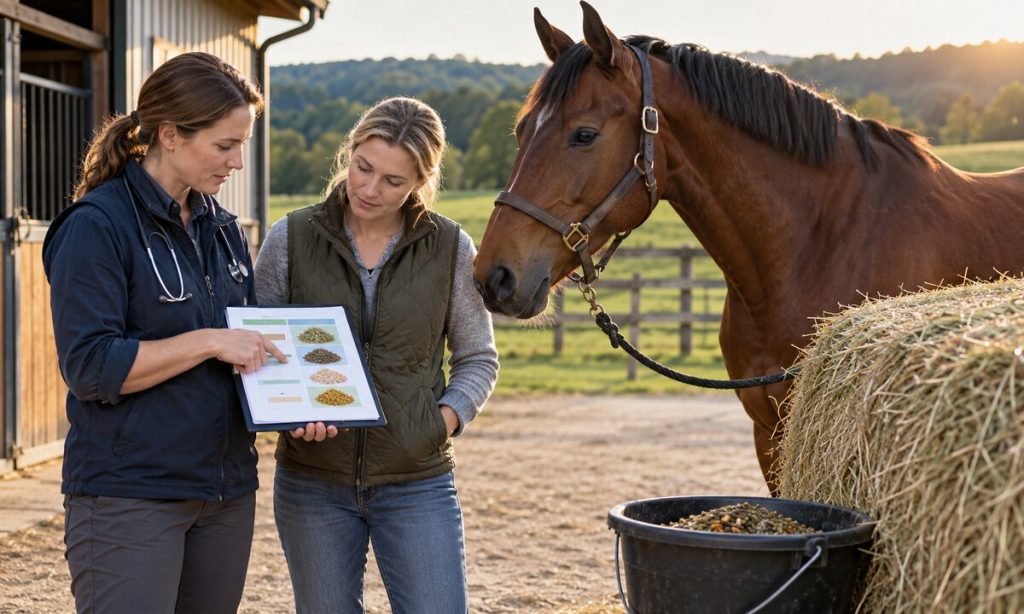
Ask the veterinarian why additional fat is being considered. Is the goal to add calories, support weight maintenance, replace part of another energy source, or address a specific feeding challenge? A horse that is losing weight may need dental care, parasite assessment, or an evaluation for illness before the ration is changed. A supplement does not explain or treat the cause of weight loss by itself.
Review the full ration together, including hay, pasture, complete feed, treats, oils, and other supplements. Bring labels and feeding amounts. If the horse has PPID, insulin dysregulation, prior laminitis, or another condition, ask whether the proposed change fits the horse’s broader management plan. Fat content alone does not describe a feed’s total nutrient balance or sugar and starch content.
Confirm how to introduce the change, whether it replaces or adds to another feed, and how long to wait before reassessment. Ask what signs should prompt a call sooner. Do not add several new feeds at once unless the veterinarian recommends it; otherwise, it may be difficult to tell which change affected appetite, manure, or weight.
Build a baseline that you can repeat
Record the horse’s current body weight estimate, body condition, appetite, feed offered, and feed left uneaten. If you use a weight tape, measure in the same place and at a similar time of day. A tape is not an exact scale, but repeated readings can help show direction when taken consistently.
Ask the veterinarian to assess body condition and, if relevant, muscle condition. Take side and rear photographs in consistent lighting and from the same distance. Note whether ribs, topline, neck, or hindquarters look different. Do not rely on a single visual sign; hair coat, winter shedding, posture, and lighting can change how a horse appears.
Include context in the record. Note hay lot, pasture access, turnout, exercise, weather, dental treatment, medication, and any other ration changes. A horse may gain or lose weight when workload or forage changes, even if the supplement stays the same. Also note whether the horse can comfortably reach and chew its feed, especially if it is older. The veterinarian needs to see those factors to interpret the trend.
Track intake and tolerance during the introduction
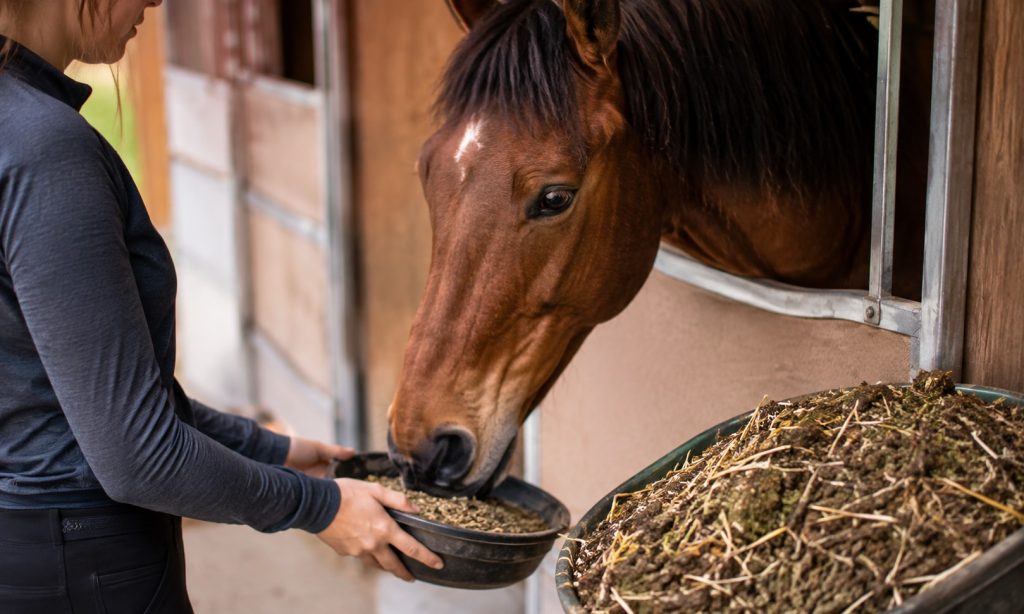
Follow the feeding instructions and veterinarian’s plan. Record the start date, amount offered, and whether the horse eats it. Note any change in appetite, manure, water intake, abdominal comfort, or energy. If the horse refuses the feed or develops persistent digestive changes, contact the veterinarian before increasing the amount or adding another ingredient to improve taste.
Keep the rest of the ration as consistent as practical while you assess the new plan. If a change is needed for health or welfare, make it with veterinary guidance and record the date. Do not force a horse to eat a supplement that causes distress, and do not use a larger serving than directed to speed up weight gain.
Ask how often the veterinarian wants you to measure body condition and weight. A suitable interval depends on the horse, the goal, and any health condition. For some older horses, monitoring also includes checking that the horse can chew, has enough time and access to eat, and is maintaining comfort and normal behavior.
Review trends instead of expecting a quick result
Look for gradual, repeatable changes that fit the agreed goal. If the purpose is weight maintenance, stable measurements may be a useful result. If weight gain is intended, the veterinarian can help decide whether the change is appropriate and whether another cause is limiting progress. More weight is not always better; an overweight horse may need a different plan. Ask the veterinarian to define the target body condition and what to do once the horse reaches it. The ration may need adjustment at that point. If progress is slower or faster than expected, review the measurements before changing the serving. For horses with metabolic conditions, body weight alone may not capture all of the health questions the veterinarian needs to monitor.
Public owner reports about fat supplements vary. Some describe weight changes over weeks, while others mention delayed results, appetite preferences, or uncertainty about whether the supplement or another diet change made the difference. These reports are anecdotal and cannot establish cause or a reliable timeline. A consistent log is more useful for your horse than comparing it with another owner’s result.
At the planned review, bring the log, labels, and photos. Ask whether to continue, adjust, stop, or investigate dental, medical, or management factors. Contact the veterinarian sooner for continuing weight loss, refusal to eat, repeated diarrhea, colic signs, weakness, or other unexpected changes. Do not increase the amount or change the whole ration without a plan.
Frequently Asked Questions
How soon should a fat supplement change a horse’s weight?
There is no universal timeline. It depends on the horse’s needs, total ration, health, and activity. Ask your veterinarian when to reassess.
What should I track after starting a fat supplement?
Record serving amount, intake, weight estimate, body condition, manure, appetite, exercise, and other changes in feed or routine.
Should I keep feeding a fat supplement if the horse refuses it?
Call your veterinarian. Do not force the feed or add other ingredients without checking whether they fit the horse’s plan.
Can a senior horse’s weight loss be caused by teeth?
Dental problems can affect chewing and intake, but weight loss has several possible causes. Ask a veterinarian to assess the horse.
Is extra fat appropriate for every senior horse?
No. The whole ration, body condition, workload, and health conditions matter. A veterinarian can determine whether it fits the horse’s needs.
Final Words
Before introducing extra fat, agree on a goal, a baseline, and a follow-up plan with your veterinarian. Record the full ration, serving amount, appetite, body condition, and weight trend, while noting exercise and other changes. Contact the veterinarian if the horse’s appetite, digestion, comfort, or weight changes unexpectedly. If you are considering a fat supplement for senior horses, use consistent observations and the horse’s health history to guide the discussion. A measured review helps determine whether the diet change is meeting its purpose or needs a different approach.