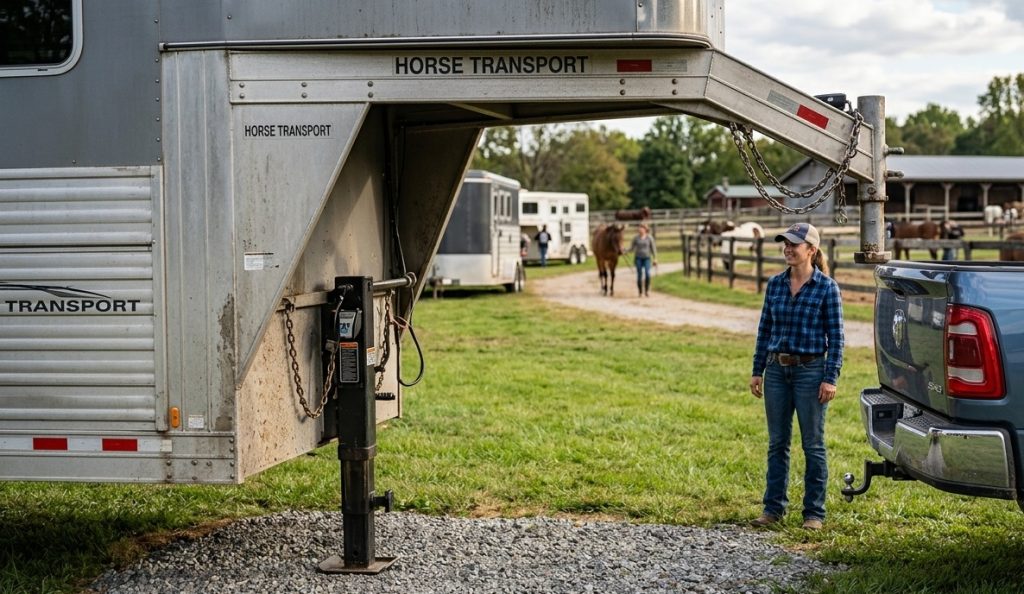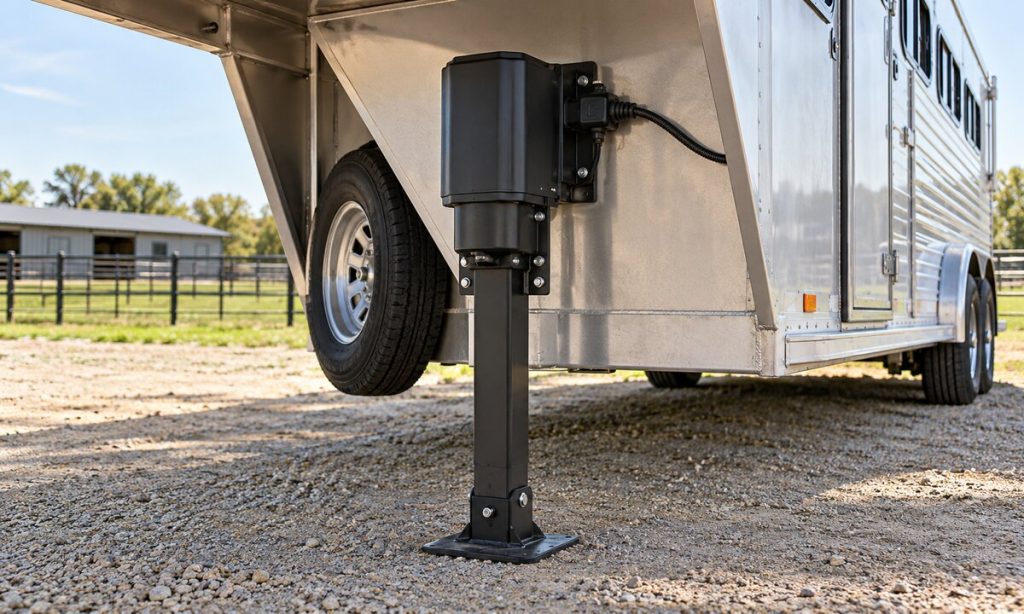
An electric jack makes it easier to raise and lower a gooseneck trailer, but it still needs regular inspection and careful cleaning. Dust, manure, road grime, moisture, and corrosion can hide wear or interfere with wiring and moving parts. Maintenance also depends on the jack design, trailer, battery setup, and manufacturer’s instructions. Before cleaning, identify the model and read its manual so you know which parts may be lubricated and how to isolate electrical power. If you are looking at an electric jack for a gooseneck horse trailer, remember that choosing capacity and fitting are separate from routine upkeep. This guide explains how to clean, inspect, and test a jack safely, and when to stop using it and arrange service.
Make the trailer safe before maintenance
Park the trailer on firm, level ground in a well-lit area, away from traffic. Secure the tow vehicle and trailer against movement, set the parking brake, and chock the trailer wheels. Keep people and animals clear of the jack’s path. Follow the jack and trailer manuals for switching off or disconnecting electrical power before cleaning or inspecting wiring.
Do not put any part of your body under a trailer supported only by its jack. A jack can slip, fail, or tip. If work requires access beneath a raised trailer, use properly rated safety stands and follow the trailer manufacturer’s service procedure. If you are unsure how to secure the trailer, have a qualified trailer technician do the work.
Never exceed the jack’s rated capacity or use it to lift the trailer in a way the manufacturer prohibits. Keep the trailer coupled or uncoupled only as specified for the task. Do not work on a loaded or unstable setup simply because the jack is holding it in place.
Clean the jack without wetting electrical parts
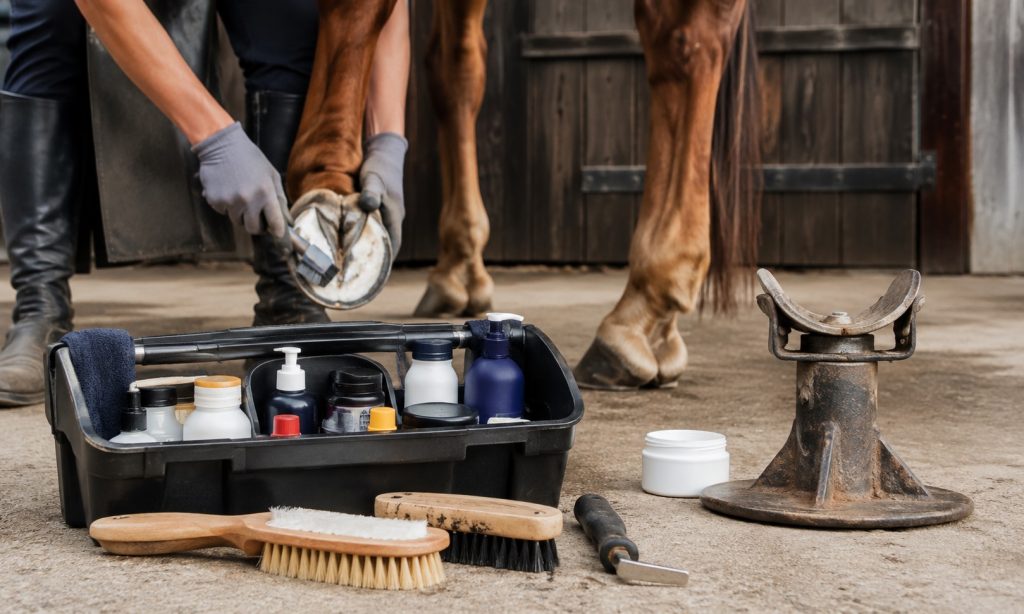
Remove loose dirt with a dry cloth or soft brush. Clean the outer jack tube, housing, mounting area, and footplate without pushing grit into seals or moving joints. If the manual allows a damp cloth, use it sparingly and keep water away from the motor, switch, battery connections, wiring, and fuse area. Do not hose down or pressure-wash the jack.
Wipe off manure, salt, and road grime promptly because residue can hold moisture against metal. Use only cleaners approved for the jack’s materials and finish. Avoid solvents, strong acids, abrasive pads, and general-purpose sprays on electrical components unless the manual explicitly allows them. Dry all cleaned surfaces before reconnecting power.
Do not lubricate every visible part automatically. Some jacks have sealed components; others have specific lubrication points and service intervals. Use only the lubricant and method stated in the manual. Excess lubricant can collect grit or reach surfaces where it does not belong. If you cannot find the service instructions, ask the jack manufacturer or a qualified technician before adding grease or oil.
Inspect the structure and moving parts
With the power isolated, inspect the outer tube, inner leg, footplate, mounting bracket, welds, and visible fasteners. Look for cracks, bends, loose hardware, deformation, heavy rust, or a mounting plate that has shifted. Check whether the jack is square to its mount and whether the footplate sits flat when deployed. Do not straighten or weld a damaged jack yourself.
Look for scoring, dents, excessive play, or debris around the telescoping leg. Check that the leg is not bent and that the footplate is not cracked or unstable. If a part binds, moves unevenly, or makes unusual noise, stop using the jack and have it inspected. Do not force it through a bind with a longer handle or a power tool.
Inspect the manual override handle and access point if your model has one. Keep the handle stored where it is available during an emergency, but do not attempt manual operation unless the manufacturer’s procedure is clear. Some systems require power isolation, a specified tool, or a specific sequence. Incorrect operation can damage gears or create an unsafe load.
Check the battery, wiring, and controls
Look over accessible battery connections, ground wires, connectors, switches, fuse holders, and cable insulation. Watch for loose connections, fraying, chafing, cracked insulation, corrosion, heat marks, or exposed conductor. Do not touch bare wire or test a powered circuit if you are not qualified. Replace damaged wiring only with the correct parts and ratings.
A weak battery, poor ground, blown fuse, damaged wire, or control fault can cause a jack to slow, stop, or work intermittently. Owner discussions often describe different suspected causes, but those accounts cannot diagnose your jack. If power is inconsistent, stop repeated cycling and ask a technician to inspect the battery and circuit. Never install a higher-rated fuse to prevent it from blowing.
Check that the battery is charged and maintained according to its own instructions. Do not assume it charges from the tow vehicle; wiring and charging arrangements vary. Ask the trailer or jack manufacturer how the system is designed, and use only the recommended charging method. Keep battery terminals clean and protected as instructed, and avoid creating sparks near a battery.
Test operation after inspection
Once the jack is clean, dry, and reconnected according to the manual, test it on a stable, level surface with the trailer secured. Operate the switch briefly and listen for smooth, even movement. Watch for hesitation, unusual noise, vibration, overheating, a burning smell, or a footplate that tilts. Stop immediately if anything seems abnormal.
Do not test by raising a loaded horse trailer beyond the jack’s intended use. Follow the manufacturer’s operating limits and make sure the load is stable. Record the date of the inspection, any maintenance performed, and any irregular behavior. A written record makes changes easier to spot and helps a technician understand the problem.
Know when to stop using the jack
Take the jack out of service if it has a crack, bent leg, loose mount, damaged wiring, exposed conductor, repeated fuse failure, excessive heat, smoke, or movement that is uneven or unreliable. Do not rely on it to hold a trailer while you troubleshoot. Arrange professional inspection or replacement before the next trip.
If the jack fails while the trailer is coupled, keep people clear and avoid improvised repairs under load. Use the manufacturer’s emergency procedure or contact roadside or trailer service. If a horse is on board, prioritize a safe location and the horse’s welfare. Do not crawl under the trailer or place hands near pinch points to free a jammed jack.
Frequently Asked Questions
Can I wash an electric jack with a hose?
Do not hose or pressure-wash it unless the manufacturer explicitly permits that method. Water can reach electrical parts or seals.
How often should I lubricate an electric trailer jack?
Follow the jack manual. Some parts are sealed, and lubrication points and intervals vary by model.
Why does my electric jack stop working intermittently?
Possible causes include battery, wiring, ground, fuse, motor, or switch problems. Stop repeated cycling and have the system checked.
Can I replace a blown fuse with a larger one?
No. Use only the specified fuse rating. A repeated failure needs diagnosis by a qualified person.
Can I work under a trailer held up by the jack?
No. A jack alone is not a safe support for working underneath. Use properly rated stands and the manufacturer’s service procedure.
Final Words
Keep an electric jack clean and dry, inspect the structure and wiring, and follow the model-specific schedule for lubrication and testing. Secure the trailer before maintenance, keep clear of pinch points, and never work underneath a trailer supported only by its jack. Stop using it if it binds, overheats, has damaged wiring, or cannot hold its intended load reliably. When maintaining an electric jack for a gooseneck horse trailer, the manual and a qualified technician are the right guides for repairs or electrical faults. Routine checks can reveal problems early, but they do not replace professional service when a part is damaged.